
Related photographs
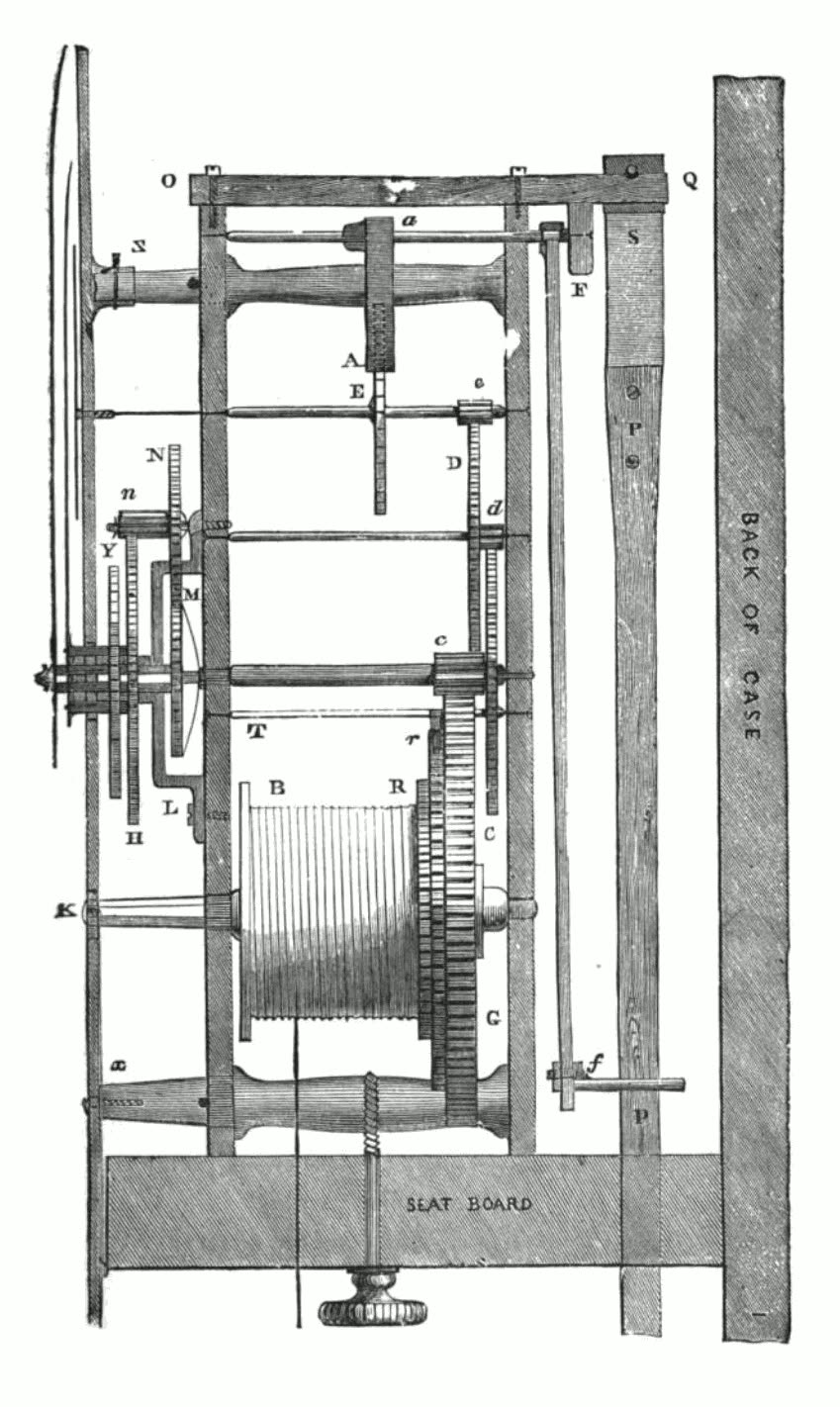
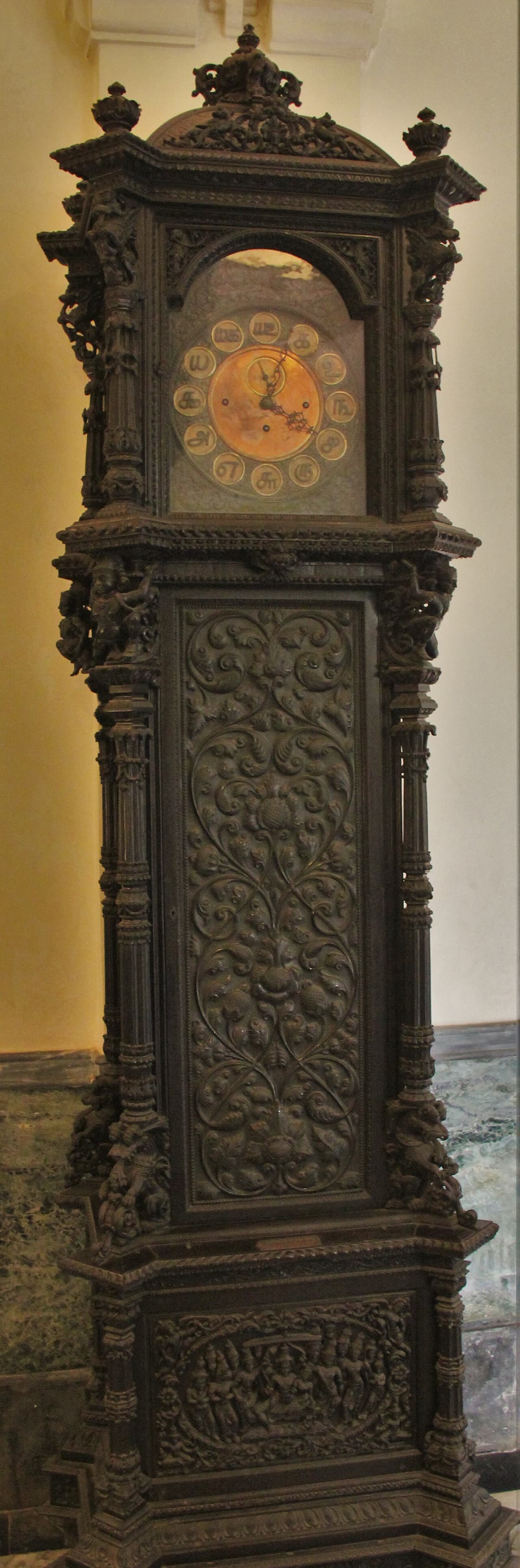
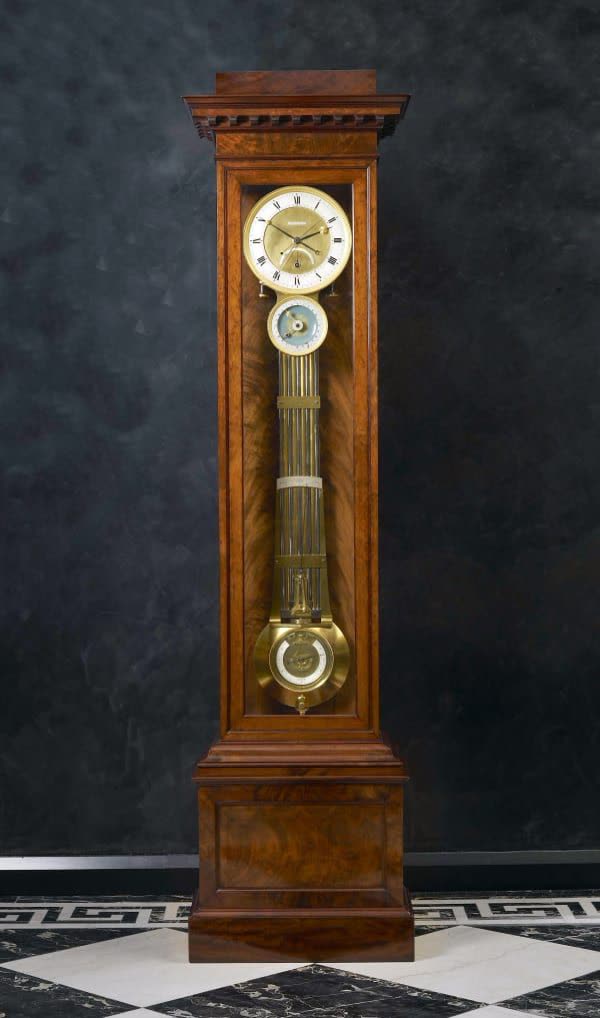
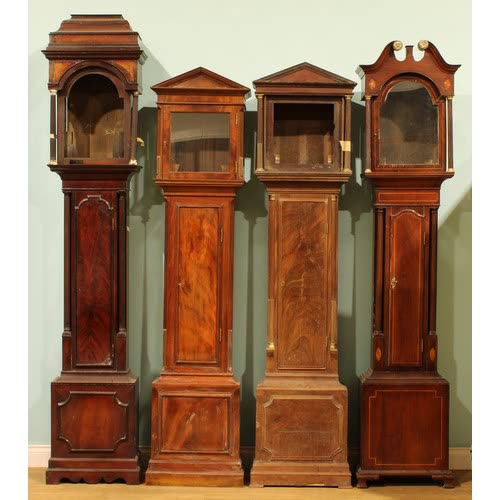
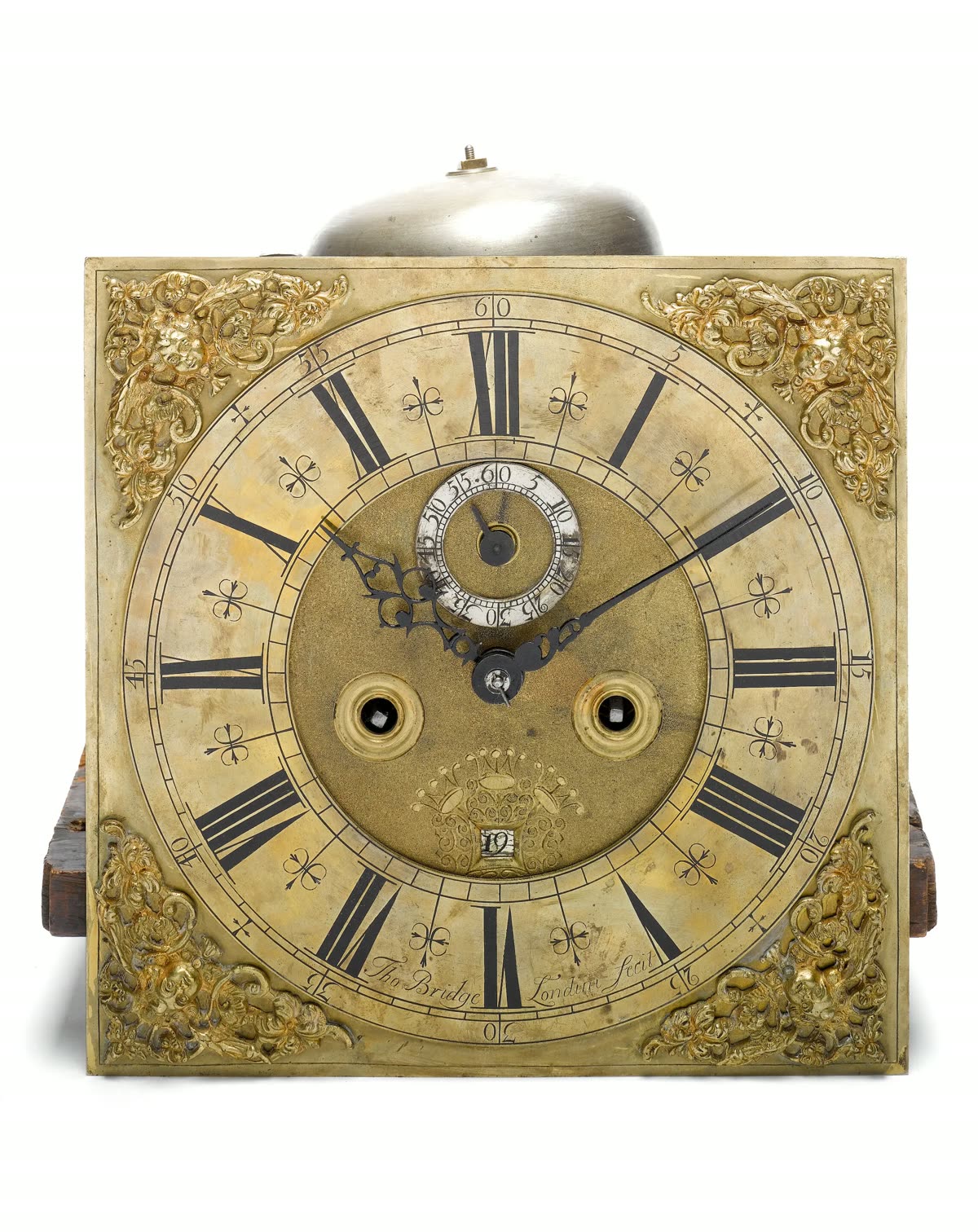
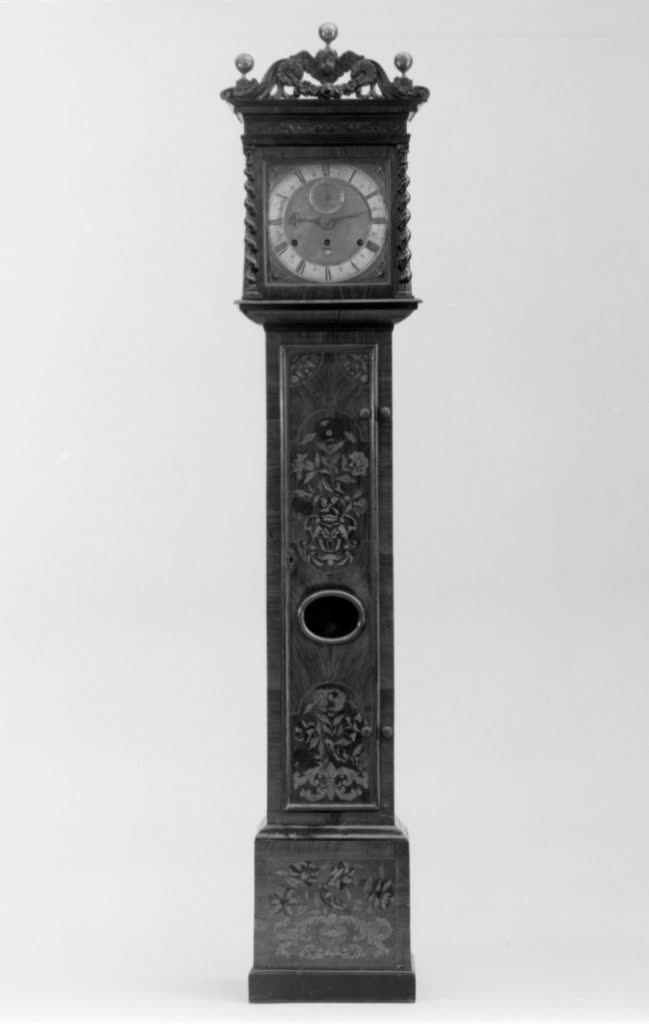
No confidently matched photograph of this subject has been found yet. These photographs show a closely related record, and are not examples of the type described on this page.
An antique clock is a mixed-material object: steel pivots, brass wheels, a wooden or metal case, glass, paint and sometimes textiles or adhesives respond differently to their surroundings. Good storage reduces avoidable change rather than trying to make every clock look new. A stable, clean interior location away from leaks, direct sunlight and strong heat sources is a better starting point than an unmonitored attic or basement.
Examine the clock before choosing how to handle it. Loose glazing, lifting veneer, detached ornament and cracked joints can make a normal lifting point unsafe. Support the structure from sound parts of the base and case, not the finial, handle or decorative columns unless their load-bearing function is established. Large or fragile clocks need enough people and an agreed route; moving a longcase clock is a specialist task, not just furniture removal.
Pendulums and weights are significant moving loads. Do not transport a clock with them free to swing. Identify how they are attached and follow the clockmaker's or maker's instructions for removal and secure packing; do not guess at hidden hooks or retainers. Label each removed item so its original position is preserved. Springs may still contain stored energy even when a clock has stopped, so avoid dismantling movements during preparation.
Environment should be considered for the whole object. Damp promotes corrosion and mould, while large humidity fluctuations can stress wood, veneers and joints. A single humidity target is not suitable for every historical case and finish. Record the room's conditions and seek object-specific conservation advice for vulnerable pieces rather than placing desiccant, heaters or humidifiers inside a case without a plan.
Dust removal has limits. A soft, clean tool may be appropriate for stable external surfaces, but flaking decoration, degraded textiles and lifting finishes should not be brushed casually. Do not spray household cleaner, polish or oil into a clock. Brass polishing can remove original lacquer and surface evidence; aggressive cleaning of a dial can erase numerals. Cleaning the movement is servicing work, not an extension of dusting the case.
Decide separately whether the clock should run. Displaying it unwound can be the appropriate conservation choice when its mechanical condition is unknown. A recently serviced working clock requires the routine specified by its clockmaker, not a generic oiling interval. Repeatedly restarting a clock that stops can convert a symptom into wear. Establish the fault before making adjustments or adding lubrication.
Keep a photographic inventory of the case, dial, movement where safely visible, inscriptions and detachable parts. Record dimensions, provenance, earlier treatment and the storage location. During a move, document what was removed and how it was packed; afterwards check for new damage before restarting. For valuable historical evidence, conservation should come before restoration, and restoration before purely functional repair. The safest owner intervention is often to improve the surroundings and leave the object itself unchanged.
What museum conservators recommend
Conservation staff at The Henry Ford list careless handling, improper cleaning and repair, over-winding and storage or display in a poor environment among the main causes of damage to clocks; by a poor environment they mean high or fluctuating humidity or temperature, too much light, pests or pollution. For wooden clocks their fact sheet gives a winter target of 70°F with 35–50% relative humidity and a summer range of 70–75°F with 40–60%. Metals do best at about 68°F and 30% relative humidity, but the fact sheet adds that clocks combining metal with wood, ivory or tortoiseshell should be kept at the slightly higher humidity recommended for wooden cases. Dust left on metal attracts moisture and speeds corrosion, and painted or varnished wooden clocks should be kept where bright light does not fall on them, because light darkens and fades finishes. Wooden pieces should also be moved and examined from time to time for the small holes, about 2 mm across, that powder post beetles bore, looking especially under legs and drawers.
When lifting, the same guidance says to grasp a clock at its sturdiest part and never by its handle, whose fixings may have weakened with age, and to wear cotton or rubber gloves for metal parts because the oils and salts on hands lead to corrosion. Icon, the UK's Institute of Conservation, warns that moisture from hands is corrosive to dials of every kind and can lift painted or printed features, and it recommends cotton or surgical rubber gloves for especially vulnerable dials. Icon also advises against leaving a clock stopped for more than a month; where that cannot be avoided, the clock should be examined professionally, and re-lubricated if necessary, before it is started again. For watches, the Canadian Conservation Institute recommends a dry, dust-free place at a steady temperature, away from vibration, with each piece wrapped in acid-free paper inside a strong box of metal or a stable plastic such as styrene. The British Antique Dealers' Association suggests keeping clocks that are not in use in a box or display case, because dust and soot can clog their moving parts.
Written from the guidance and records listed under Sources, credited to each publisher and put in our own words; each statement was checked against the cited page.