
Clock type · Domestic
Longcase (Grandfather) Clocks
VerifiedTall, freestanding weight-driven clocks with a long trunk enclosing the pendulum and weights, standardised in England after the introduction of the anchor escapement.
Construction and interpretation
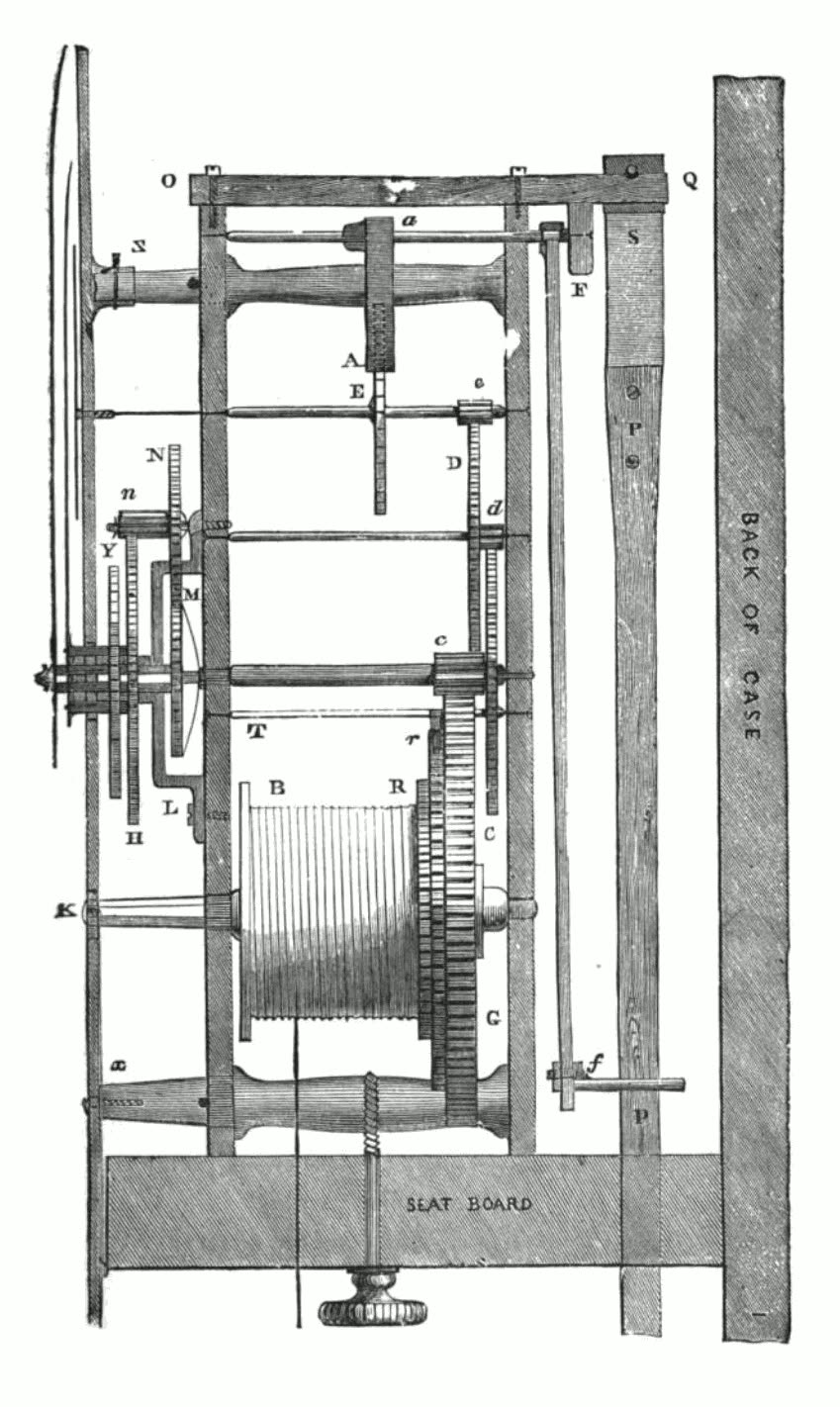
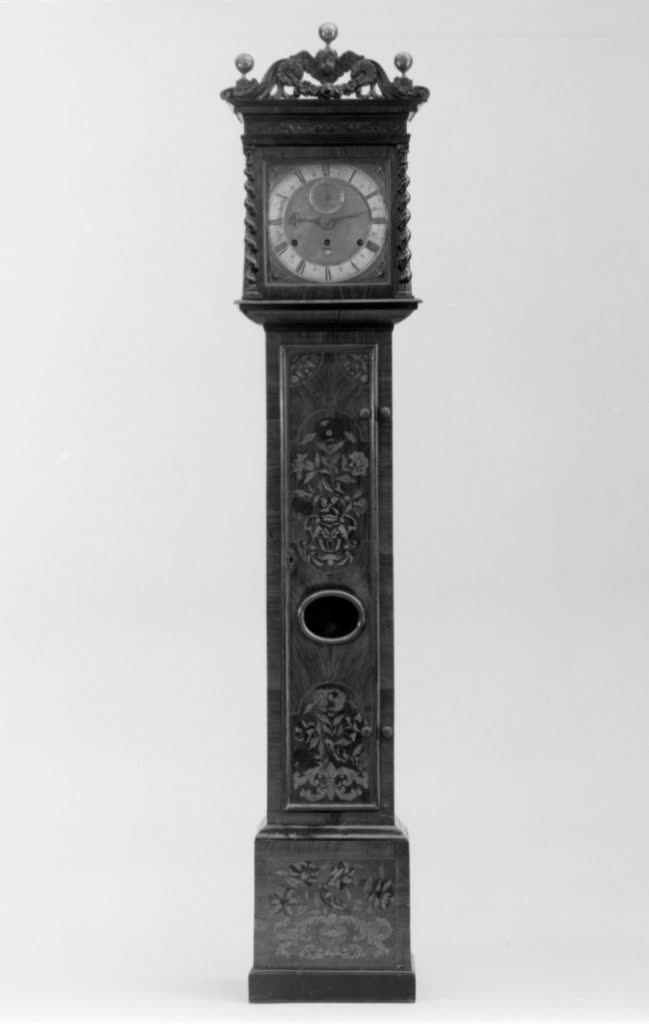
The longcase form exists because of two separate requirements that happened to coincide. The tall case appeared in clocks around 1660 to give the driving weights a long fall, before the anchor escapement existed. Once the anchor escapement — credited to Robert Hooke in about 1658 — made a long, slow-swinging seconds pendulum practical, the same case proved ideal for enclosing it. William Clement is credited with developing the recognisable longcase form in 1670. Keep the weight-drop explanation and the pendulum explanation distinct: neither alone accounts for the shape.
A seconds pendulum, sometimes called a Royal pendulum, beats once per second and measures roughly a metre to the centre of its bob. That length, not fashion, fixes the minimum height of the trunk. Eight-day examples carry two weights on cables or chains for going and striking trains; thirty-hour examples often manage with a single weight and a rope drive. The consulted source notes typical overall heights of about 1.8–2.4 metres, a description of common practice rather than a rule every workshop followed.
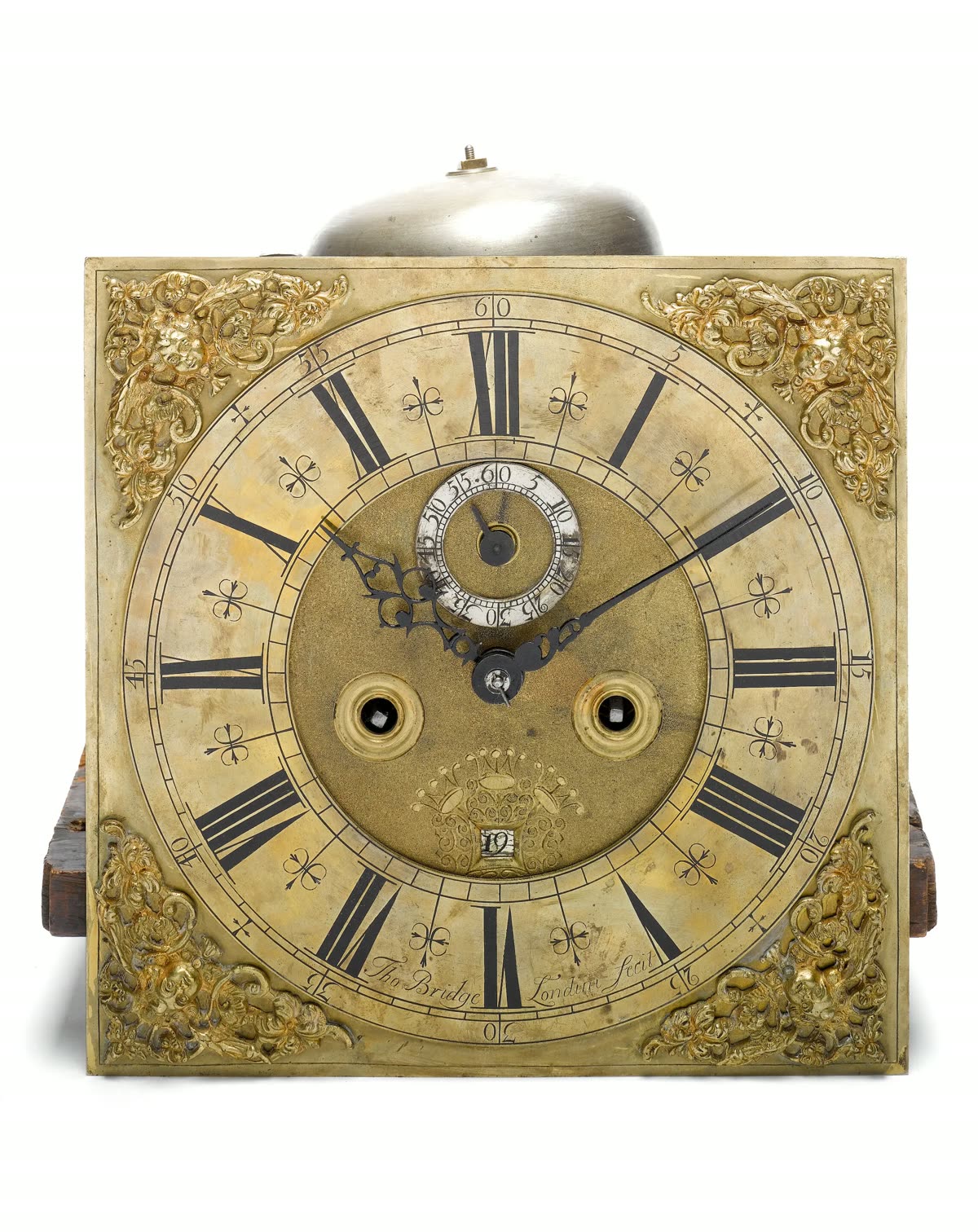
Dating rests on the relationship of movement, dial and case, and those three are frequently of different periods. A brass dial with cast spandrels points to earlier work; a painted dial indicates later manufacture. The consulted article itself illustrates the hazard: it shows a clock whose movement dates to about 1700 but whose case is a late nineteenth- or early twentieth-century South Indian replacement with a Tamil-numeral brass dial. Record each assembly separately before claiming a date for the whole clock.
| Feature | What it means | Evidence to seek |
|---|---|---|
| Anchor escapement | Made the long seconds pendulum practical | Escapement geometry, not case height |
| Seconds pendulum | Beats once per second; about a metre long | Measured length to bob centre |
| Weight drop | The case first served the falling weights | Cable, chain or rope arrangement |
| Married examples | Movement, dial and case of different dates | Separate dating evidence for each part |
A tall case with a long pendulum is not proof of an eight-day movement or an early date; verify the train count and dial construction before describing the clock.
Evidence to record
- Measure the pendulum rather than assuming a seconds beat.
- Date movement, dial and case independently.
- Record weight suspension: cable, chain or rope.
- Note regional case and dial features without forcing an English attribution.
Movement & mechanism
- Weight-driven trains, typically eight-day (two weights) or thirty-hour (one weight)
- Anchor escapement with a seconds pendulum in most eight-day English work; earlier examples used verge escapements before c. 1670
- Rack striking (from c. 1675–1690) superseding the earlier locking-plate system
- Brass dial with silvered chapter ring on earlier work, giving way to painted dials from the later eighteenth century
Identification
- Trunk door width and waist proportions relative to hood help indicate period and region
- Brass dial with cast spandrels suggests pre-1770s work; painted dial suggests later manufacture
- Check whether the movement, dial and case are original to one another — married examples are common
- Seconds pendulum (approximately one metre) beats once per second and is a strong indicator of longcase, as opposed to shorter-pendulum bracket clocks
Terminology
- Hood — the removable upper case section housing the dial and movement
- Trunk — the long waist section concealing the pendulum and weights
- Plinth (base) — the lower case section
- Seconds pendulum — a pendulum of roughly one metre, beating seconds
Known variations
- Thirty-hour single-weight longcase
- Eight-day two-train (striking) longcase
- Musical/quarter-chiming longcase
- Moonphase-dial longcase
Collecting notes
Longcase clocks are widely collected and the market strongly rewards an original, unmarried case, dial and movement with a legible maker's signature. Provincial English makers are extensively documented in county-by-county reference works, which makes attribution and dating more reliable than for most clock categories.
Photographs
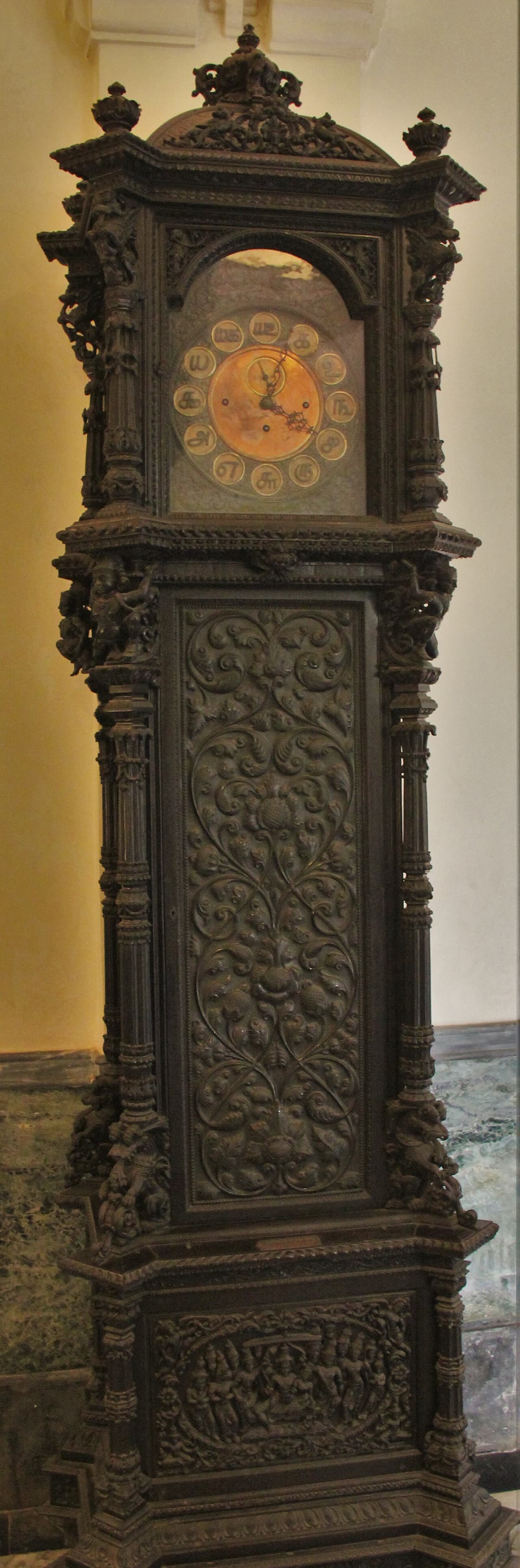
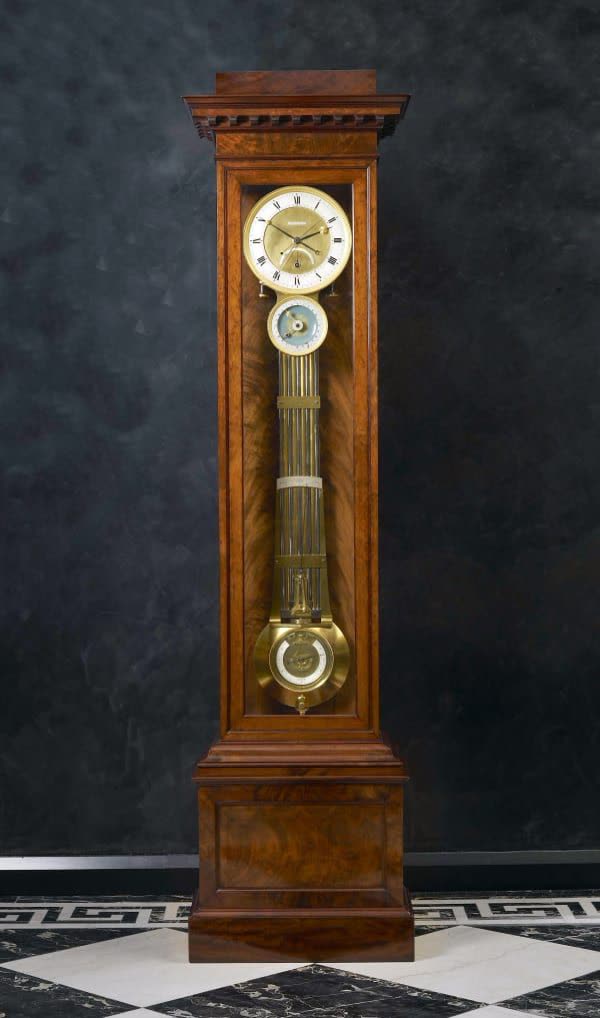
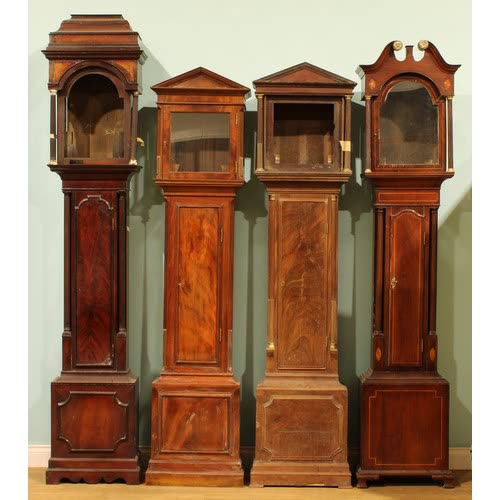
Photographs are illustrative examples of the type, not necessarily the exact object described. Verify details against the source file page.
Sources & references
- Britten, F. J., Old Clocks and Watches and Their Makers
- Loomes, B., Grandfather Clocks and Their Makers
- https://en.wikipedia.org/wiki/Longcase_clock
Where sources disagree, the disagreement is stated rather than resolved silently.