
London, England · 1743–1834
Thomas Weeks
Partially verifiedMaker of ornamental automaton clocks and mechanical curiosities
Life & work
Thomas Weeks was an English clockmaker and jeweller who operated a well-known emporium in London throughout the late 18th and early 19th centuries.
His business, frequently referred to as The Royal Mechanical Museum or Weeks' Mechanical Museum, was originally established at 3-4 Tichborne Street before operating in Coventry Street. Following the precedent set by James Cox and the firm of Jaquet Droz, Weeks specialized in the creation and exhibition of highly ornamental automaton clocks. The establishment became a notable trade attraction in London, housing a collection that included figures displaying complex mechanical effects.
Weeks' professional output was diverse, encompassing the creation of specialized mechanical cabinets and furniture alongside his horological work. After his death in 1834, the contents of his museum were dispersed through an auction sale.
The fuller biography summarises the open references listed under Sources; each statement was checked against the cited passage. Confirm key dates in period documents before relying on them.
Training, contributions & innovations
- He developed a specific type of escapement for use in his horological movements.
Documented works
- The Weeks' cabinet, a mechanical wonder featuring a barrel organ, is preserved at Raby Castle.
- The famous silver swan automaton, acquired by Weeks at a lottery sale, is now in the collection of the Bowes Museum.
Collecting significance
The catalogued pieces listed on this page show the kinds of objects auction houses, dealers and museums attribute to this maker; each attribution is the source's own.
Firms, key models & movements
No firm, model or movement in this encyclopedia is yet recorded under this maker's name.
In the object catalogue
2 catalogued objects are recorded under Thomas Weeks. Attributions are as given by each source and are not independent authentication.
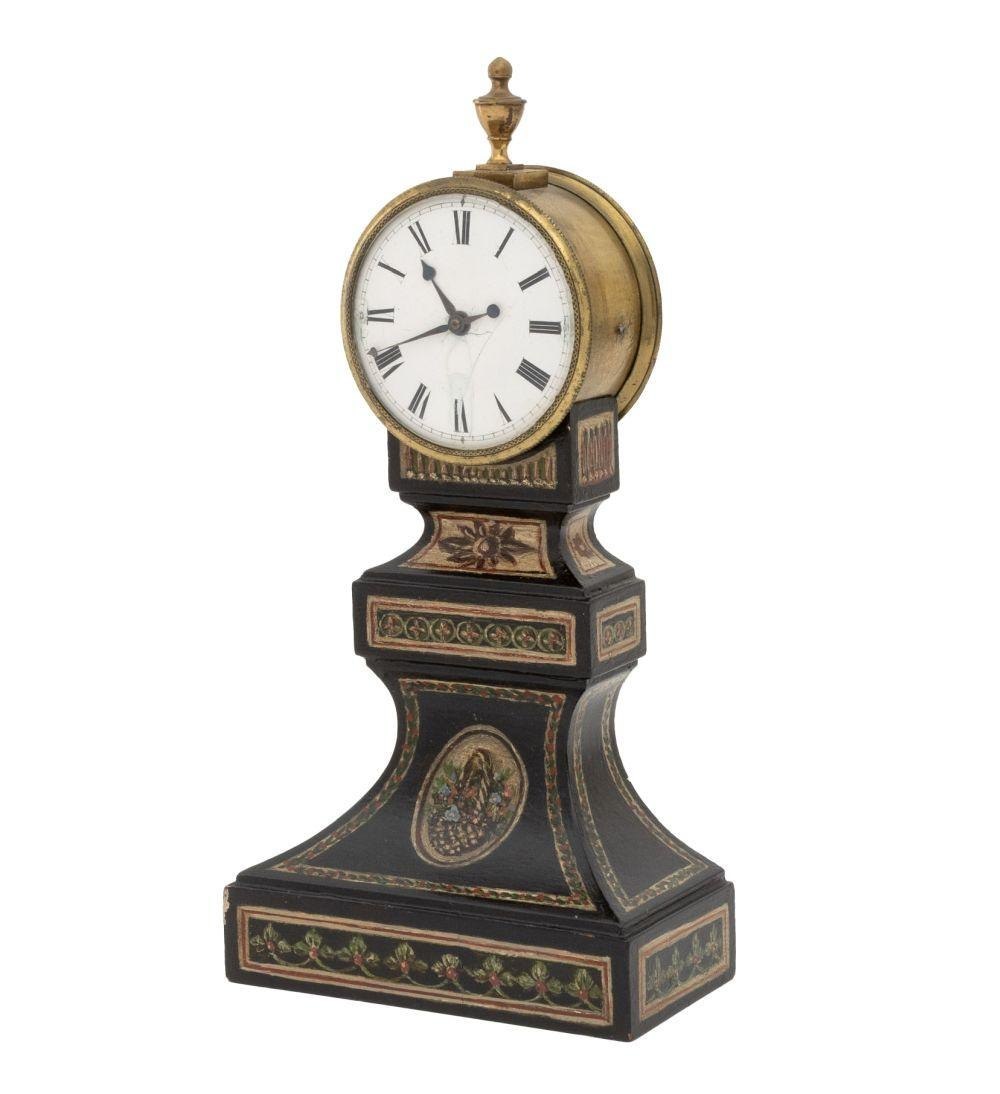
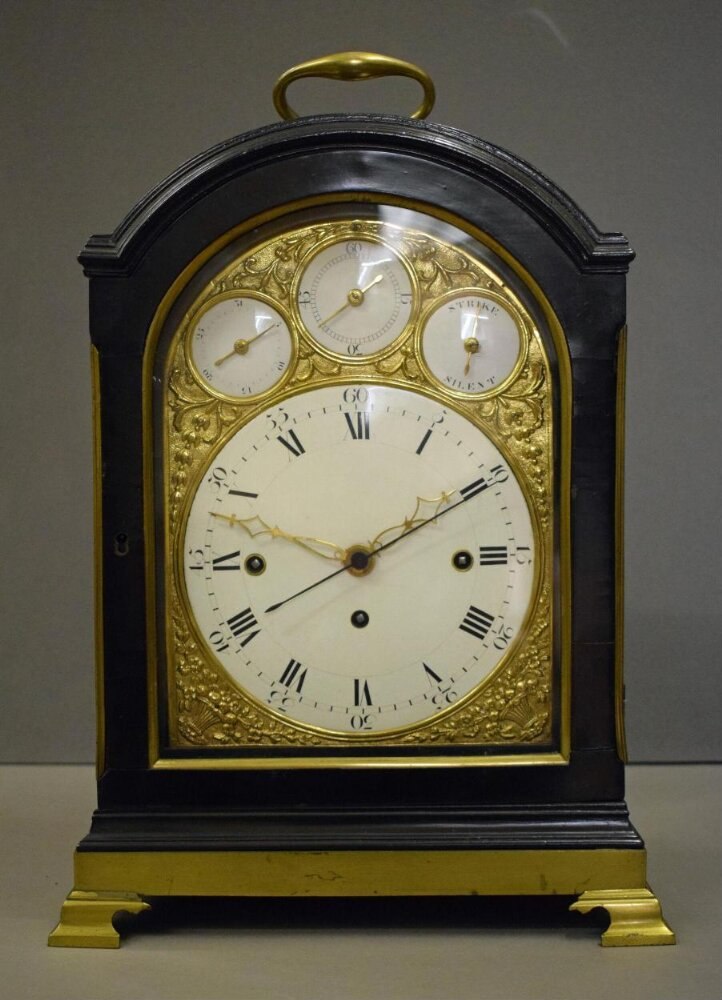
- Bracket clock by Thomas WeeksBracket clock · 1780-1790
- Regency-style ebonized and polychrome mantel clockMantel clock · early 19th century
Sources & references
- Thomas Weeks, British Museum, retrieved 2026-11-03 (paraphrased; text © the publisher)
- A Regency ormolu-mounted white marble mantel timepiece, first quarter 19th century | Christie's, Christie's, retrieved 2026-11-03 (paraphrased; text © the publisher)
- A REGENCY ORMOLU-MOUNTED BLACK AND WHITE MARBLE MANTLE TIMEPIECE , WEEKS MUSEUM, CIRCA 1820 | Christie's, Christie's, retrieved 2026-11-03 (paraphrased; text © the publisher)
- Mr. Cox’s Perpetual Motion • A Mechanical and Philosophical Time Piece • So Capital a Performance | Rare Book Collections @ Princeton, rarebooks.blogs.princeton.edu, retrieved 2026-11-03 (paraphrased; text © the publisher)
- The secrets of Thomas Weeks' cabinet | BIFMO, bifmo.furniturehistorysociety.org, retrieved 2026-11-03 (paraphrased; text © the publisher)
- Bonhams : An early 19th century ormolu and white marble mantel timepiece Weekss [sic], Tichborn Street, Bonhams, retrieved 2026-11-03 (paraphrased; text © the publisher)
Where sources disagree, the disagreement is stated rather than resolved silently.