
Watch family · Transitional
Trench Watches (Wire-Lug Transitional Watches)
VerifiedSmall watches with wire lugs soldered onto an existing pocket-watch-style case, worn on a leather strap, representing the direct mechanical and stylistic bridge between the pocket watch and the purpose-built wristwatch.
Movement & mechanism
- Movements are, in the great majority of surviving examples, conventional small pocket-watch calibres rather than movements purpose-designed for the wrist
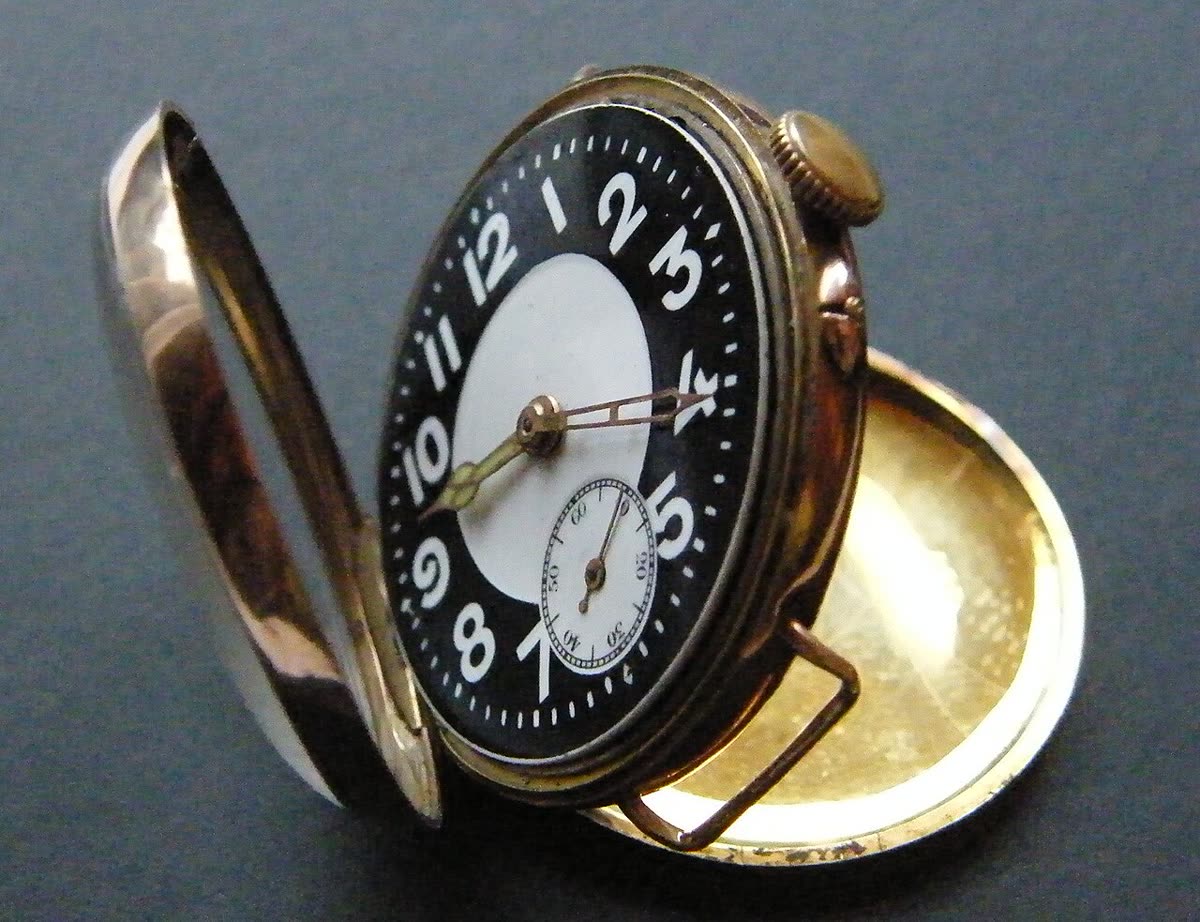
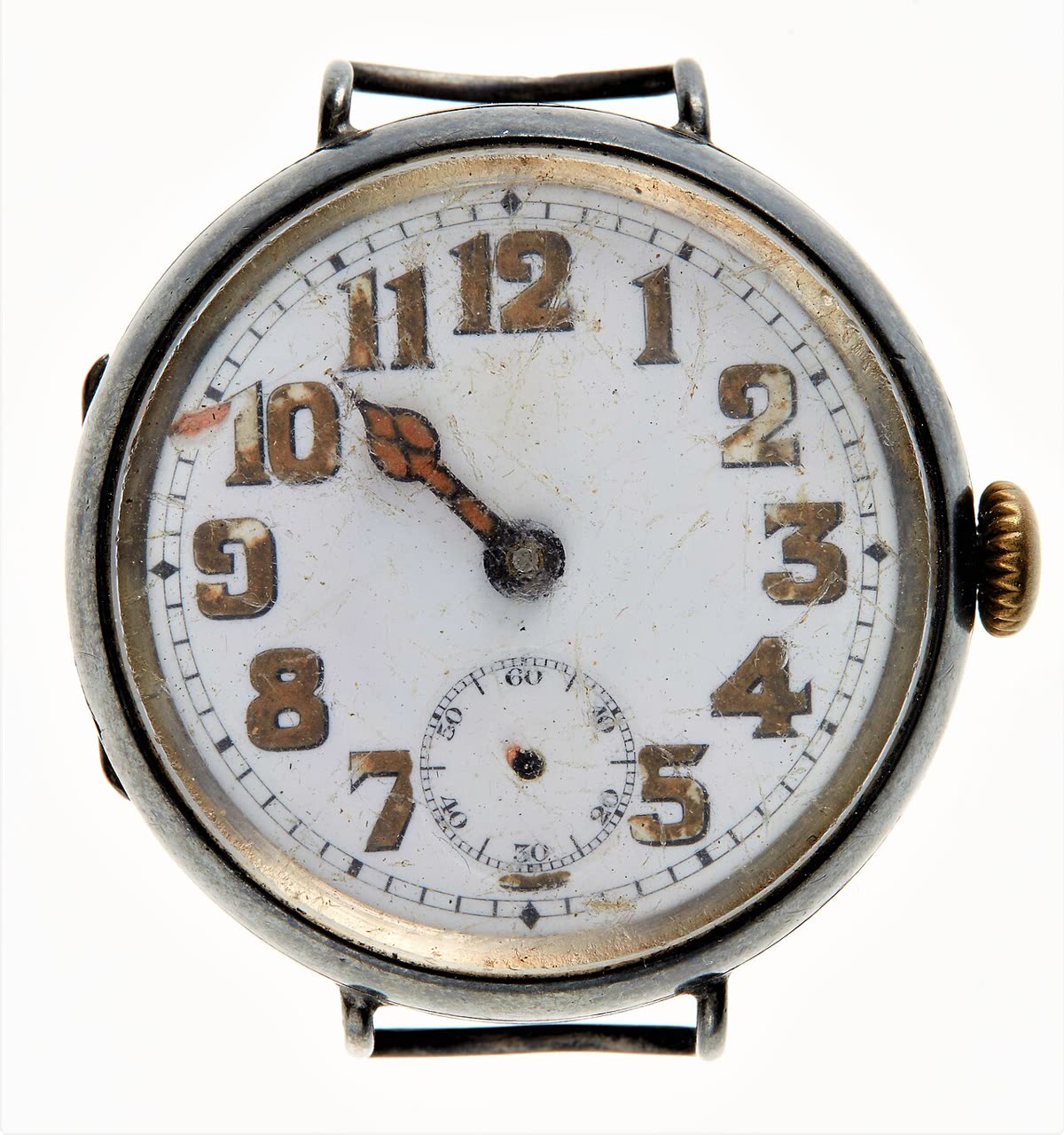
- Wire lugs soldered directly to a case originally intended to be pocket-carried
- Often fitted with a protective grille ('shrapnel guard') over the crystal for military use
- Luminous (radium-based) numerals and hands, in period, for night visibility
Identification
- Soldered wire lugs, often visibly a later addition to an otherwise pocket-watch-style case
- Case back or movement still resembling a small pocket watch in construction and layout
- Protective wire grille over the crystal on genuine military examples
- Radium luminous material, now a recognised handling hazard requiring appropriate care
Terminology
- Wire lug — a simple soldered wire loop allowing a strap to be fitted to an otherwise pocket-watch-style case
- Shrapnel guard — a protective wire grille fitted over the crystal
- Officer's watch — a period term for these strap-worn conversions
Known variations
- Civilian wire-lug conversion
- Military-issue trench watch with shrapnel guard
- Officer's private-purchase trench watch
Pocket-watch ancestry
This is the transitional category itself: trench watches were, quite literally, small pocket watches with wire lugs soldered on so they could be worn on the wrist, driven by the practical demands of trench warfare where consulting a pocket watch on a chain was impractical; the type documents the actual mechanical and cultural handover from pocket to wrist that all other wristwatch families ultimately descend from.
Collecting notes
A historically important transitional category bridging pocket and wrist watch collecting; genuine period examples with original lugs, dial and radium markings (handled with appropriate care) are of considerable historical interest distinct from their modest mechanical specification.
Background
Trench watches emerged as a transitional design between the pocket watch and the modern wristwatch to address the impracticality of traditional pocket-carried timepieces during World War I. Manufacturers often utilized movements originally designed in the 1890s for ladies’ pendant watches when creating these pieces. Structural characteristics of these watches included hinged front and back covers derived from pocket watch construction. Strap attachments were designed as wire-like loops rather than the integrated lugs found on later, purpose-built wristwatches.
Written from the encyclopedia entries listed under Sources; each statement was checked against the cited text.
Defining features
- Dials on these watches typically featured enamel surfaces with wide white numerals and a luminescent radium hour hand.
Later development
- Numerous manufacturers including Omega, Longines, Elgin, and Rolex produced these military timepieces during the First World War.
- Terminology for these devices shifted from the name wristlet to the modern wristwatch in the early 1930s.
Photographs
Photographs are illustrative examples of the type, not necessarily the exact object described. Verify details against the source file page.
Sources & references
- Trench watch, Wikipedia (English), retrieved 2026-10-28 (text CC BY-SA 4.0)
- Cutmore, M., Watches 1850–1980
- General First World War military equipment histories.
Where sources disagree, the disagreement is stated rather than resolved silently.