
Watch family · Style & purpose
Field Watches
VerifiedRobust, highly legible watches derived from military-issue designs, typically featuring a plain dial, luminous markers, a shatter-resistant crystal and a simple case.
Movement & mechanism
- Standard lever movement selected for reliability rather than refinement
- Often shock-resistant mounting in later examples
- Simple three-hand or sub-seconds layout
Identification
- Plain, high-contrast dial with arabic or simple baton markers
- Fixed wire or spring-bar lugs, often on a plain strap
- Case-back or dial military issue markings on genuine period examples
Terminology
- Trench watch — the First World War precursor form (see separate entry)
Known variations
- WWI/WWII-issue field watch
- Civilian field-style watch
Pocket-watch ancestry
Field watches descend directly from the trench watch conversions of pocket movements into wrist cases during the First World War, retaining the plain, legible dial approach already used on military pocket watches.
Collecting notes
Genuine period military-issue field watches with documented issue markings are collected distinctly from later civilian 'field watch style' models.
Background
Military watch specifications like MIL-W-46374 emerged to provide accurate, reliable, and often disposable timepieces for military personnel. These wristwatches were developed to meet stringent requirements for magnetism, vibration, and water resistance in various combat and field environments. Designers prioritized extreme legibility by incorporating numerical fonts influenced by the German DIN standards and earlier GROTESK styles. Watches were constructed from materials ranging from corrosion-resistant steel to plastic to ensure functionality in harsh conditions.
Luminous paint was initially applied to hands and dials to facilitate dark viewing, eventually transitioning to safer, hermetically sealed tritium vials. The Frankford Arsenal played a central role in creating these dial specifications, drawing inspiration from existing, highly readable instrumentation. Over time, these watches evolved to encompass quartz movements, rotating bezels, and modular parts to improve synchronization and maintainability for users. The scope of these specifications eventually expanded to serve a broader range of military specialties, including pilots and those requiring high-altitude durability.
Written from the encyclopedia entries listed under Sources; each statement was checked against the cited text.
Defining features
- Watches built to these specifications require fixed or integral watchband bars rather than springbars.
- Luminous painted hands often include a clear coating to prevent the paint from flaking off.
Later development
- The MIL-W-46374 specification began as a replacement for the earlier MIL-W-3818 series during the Vietnam War.
Photographs

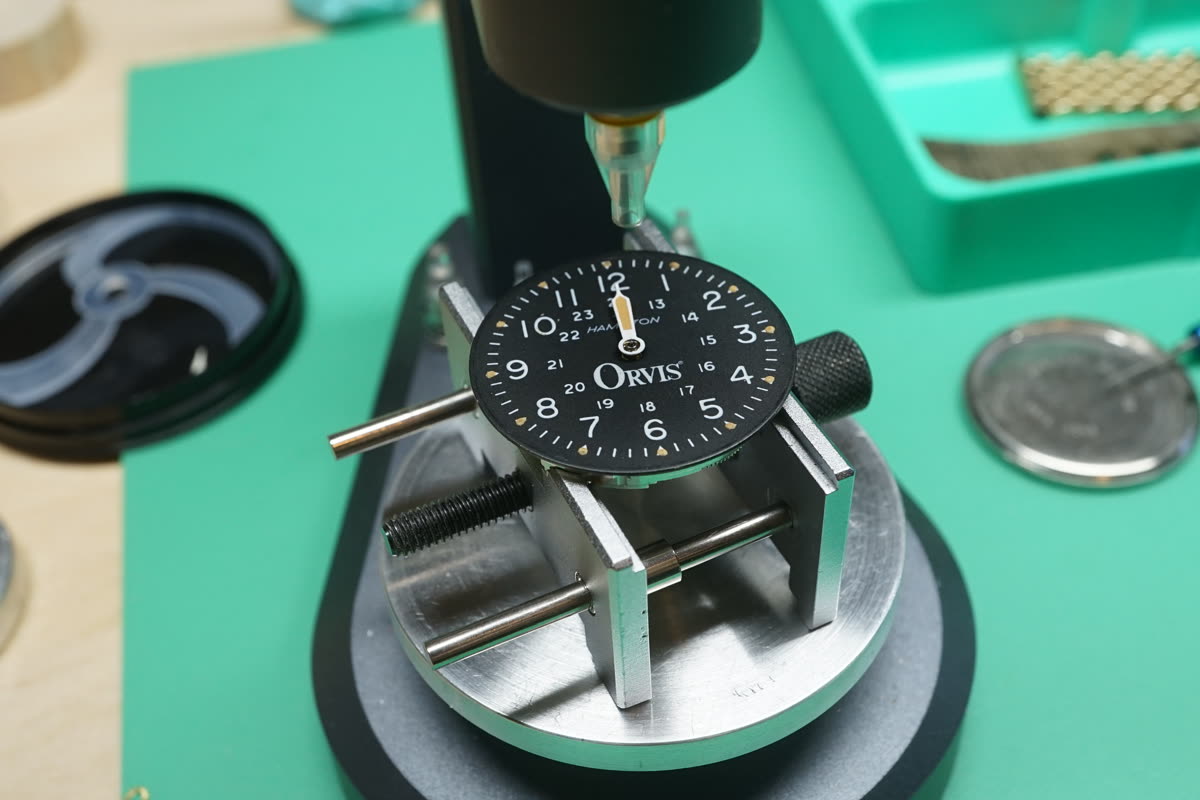
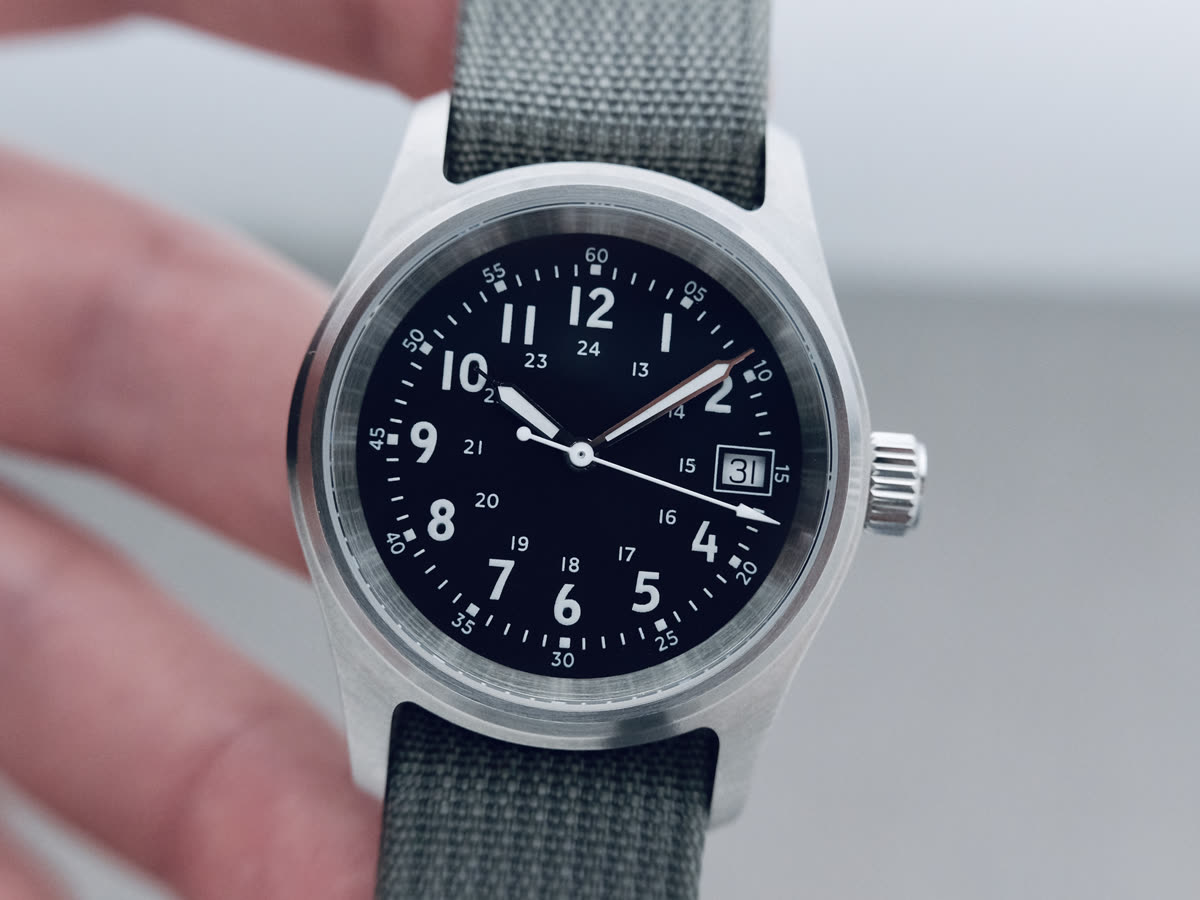
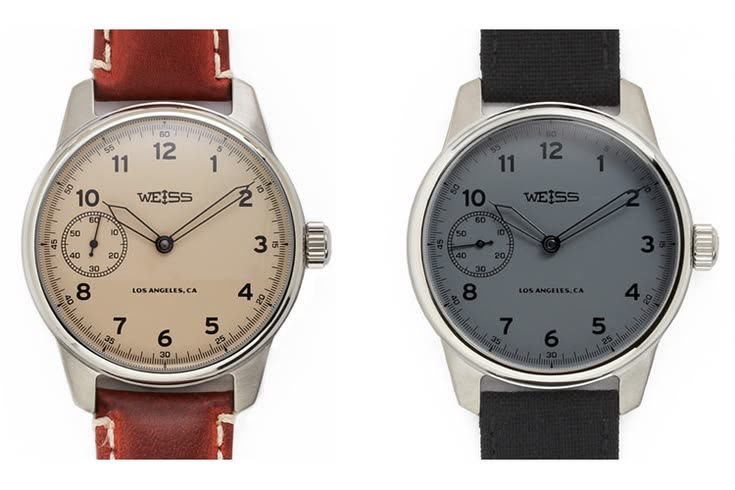
Photographs are illustrative examples of the type, not necessarily the exact object described. Verify details against the source file page.
Sources & references
- MIL-W-46374, Wikipedia (English), retrieved 2026-10-28 (text CC BY-SA 4.0)
- Cutmore, M., Watches 1850–1980
Where sources disagree, the disagreement is stated rather than resolved silently.