
Watch family · Style & purpose
Super-Compressor Case Dive Watches
Partially verifiedDive watches built around a patented case system (marketed under the Super-Compressor name) in which increasing water pressure presses the case back more tightly against its gasket, supplied as a generic case by a specialist case maker to numerous watch brands rather than made in-house by any single manufacturer.
Movement & mechanism
- Case back sealed by a compressible gasket that is forced tighter against the case as ambient water pressure increases, rather than relying solely on a screwed-down back
- Frequently fitted with two crowns: one for winding and setting, the other operating an internal rotating timing bezel
- Movement supplied by whichever brand commissioned the case, with no single movement type unique to the category
Identification
- Twin-crown case layout, with the second crown at 2 o'clock operating an internal bezel visible through the crystal
- Case back marked with the case maker's Super-Compressor trademark alongside the watch brand's own markings
- Internal rotating bezel read through the crystal rather than an external bezel around the case
Terminology
- Super-Compressor — the trademarked case system supplied to many brands by a specialist case manufacturer
- Internal bezel — a rotating timing scale set inside the crystal rather than around the case exterior
Known variations
- Twin-crown internal-bezel dive watch
- Compressor-style watch without the twin-crown feature, sold under similar styling by other case makers
Pocket-watch ancestry
The Super-Compressor case has no pocket-watch precedent, being a purpose-built response to the specifically wristwatch-era, mid-twentieth-century problem of sealing a wrist-worn case against water pressure at diving depth, an issue that simply did not arise for a pocket watch.
Collecting notes
Collected across the many brands that used the same case system, meaning identification of the underlying case type (rather than any single manufacturer) is central to the category; genuine period examples with both original crowns, correct crystal and matching case-back markings are of particular interest given how often the more delicate second crown and gasket assembly required servicing or replacement.
Background
Super-Compressor cases were developed and produced by the Swiss casemaker Ervin Piquerez S.A. (EPSA) throughout the 1960s and early 1970s. These cases were designed with a specialized sealing method meant to increase water resistance as the watch descended to greater depths. A spring mechanism incorporated into the case back ensured that the back remained tight against the gasket without requiring constant maximum compression.
Rather than manufacturing complete watches, EPSA supplied these specialized housings to over 100 different brands that integrated their own movements and dials. While common in dual-crown configurations, the Super-Compressor design was also applied to single-crown models and cases without rotating bezels.
Written from the sources listed under Sources (makers, museums, auction houses and specialist publications are paraphrased, not reproduced); each statement was checked against the cited text, and claims a maker makes about its own work are attributed to it.
Defining features
- Many Super-Compressor cases feature distinctive cross-hatching marks on the crowns to assist with underwater operation.
- Authentic EPSA cases often bear a recognizable helmet logo stamped on the interior or exterior of the case back.
- Most vintage watches utilizing these cases were rated to a depth of 600 feet.
Later development
- Notable examples of watches housed in these cases include the Jaeger-LeCoultre Polaris, the Longines Legend Diver, and various Enicar Sherpa models.
- Some variants were utilized by military organizations, including the Royal Australian Navy and the Polish Navy.
Photographs
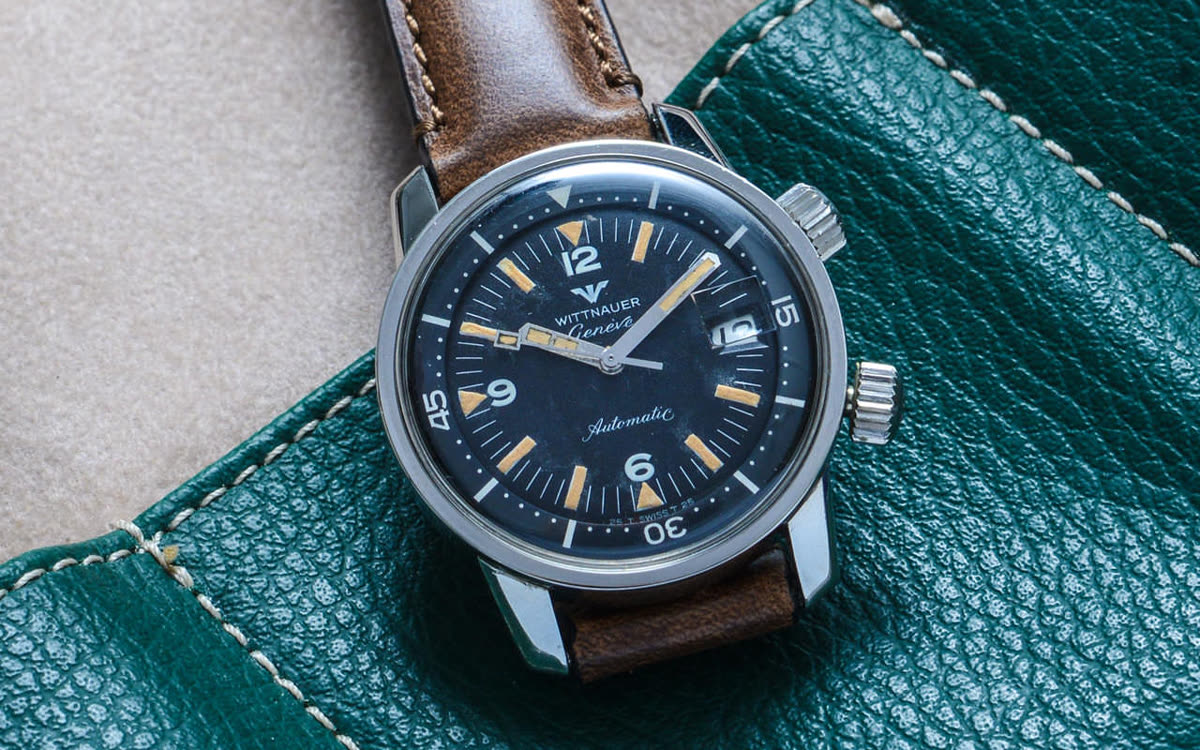
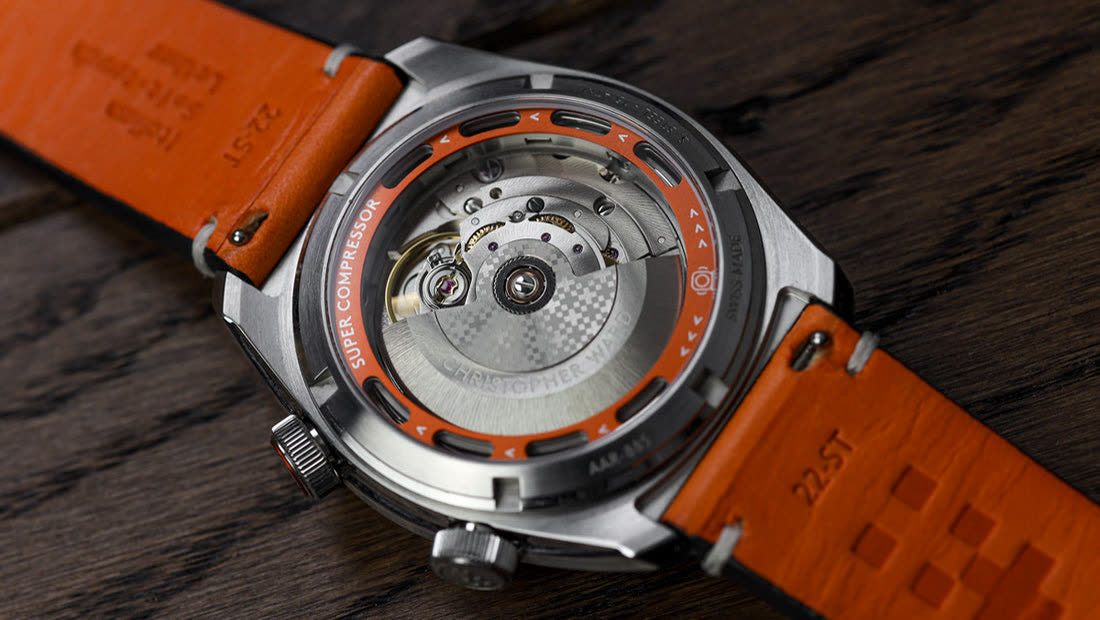
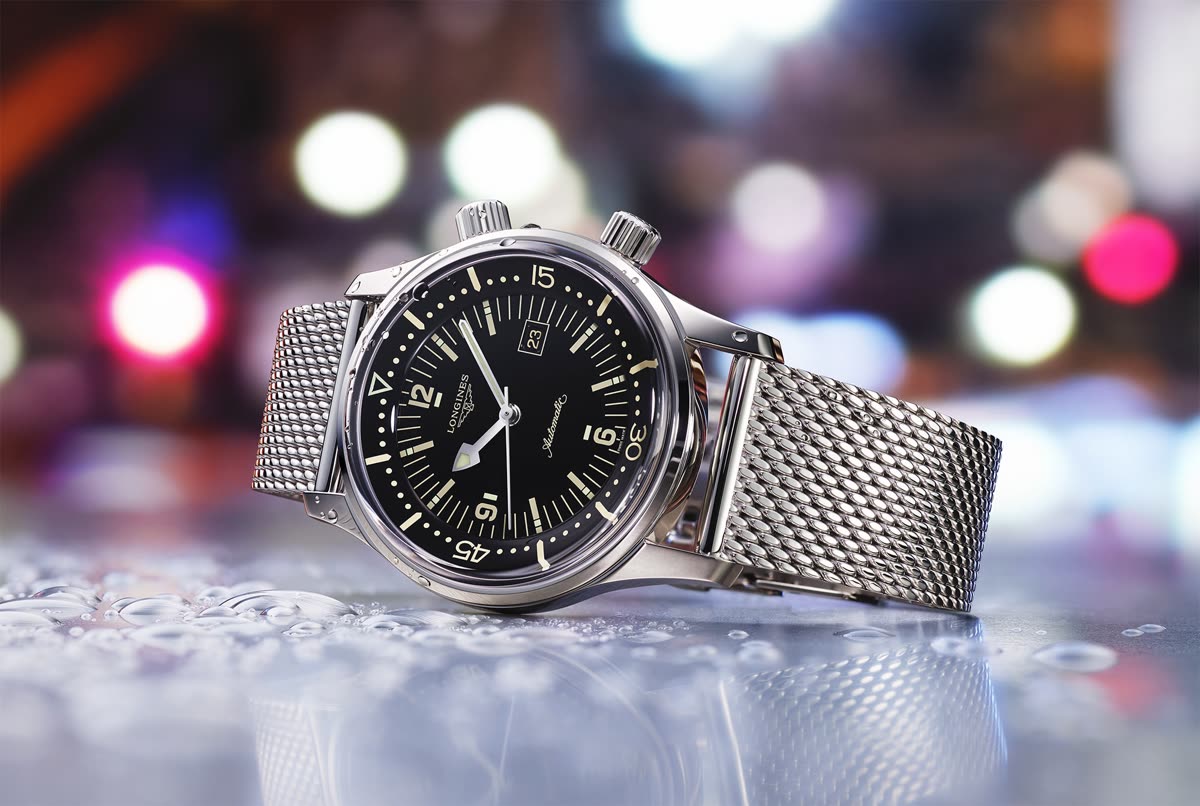
Photographs are illustrative examples of the type, not necessarily the exact object described. Verify details against the source file page.
Sources & references
- A guide to Super Compressors, Worn & Wound, retrieved 2026-10-30 (paraphrased; text © the publisher)
- Casemakers extraordinaire: the Ervin Piquerez story, Coronet, retrieved 2026-10-30 (paraphrased; text © the publisher)
- Fluidtight watch case, Ervin Piquerez (US patent 2,959,911), retrieved 2026-10-30 (paraphrased; text © the publisher)
- General dive-watch collecting literature; comprehensive brand-by-brand documentation of Super-Compressor case usage is incomplete here.
Where sources disagree, the disagreement is stated rather than resolved silently.