
Watch family · Style & purpose
Skin Diver Watches
Needs researchA compact, no-frills style of dive watch aimed at snorkelling and shallow free-diving ('skin diving') rather than saturation or professional deep diving, typically smaller and simpler than the larger tool dive watches developed for military and commercial divers of the same period.
Movement & mechanism
- Standard wristwatch movement in a smaller, thinner waterproof case than contemporary professional dive watches
- Simple screw-down or snap case back sealed to a moderate depth rating adequate for surface swimming and shallow diving
- Uni-directional or bi-directional rotating timing bezel, generally with a plainer scale than professional saturation-diving bezels
Identification
- Smaller case diameter than contemporary professional dive watches of the same maker, typically under about 36mm
- Simpler, often unnumbered rotating bezel compared with dedicated saturation-diving models
- Moderate depth rating printed or engraved on the dial or case back, generally well under the ratings claimed by dedicated professional tool divers
Terminology
- Skin diving — free diving or snorkelling without self-contained breathing apparatus, as distinct from scuba diving
- Skin diver — the collectors' term for the compact watch style aimed at this activity
Known variations
- Compact skin diver with fixed bezel
- Compact skin diver with rotating bezel
- Ladies' skin diver
Pocket-watch ancestry
The skin diver watch has no pocket-watch precedent, arising entirely from the mid-twentieth-century popularisation of recreational snorkelling and free diving as a wrist-worn accessory market distinct from, and smaller than, the professional dive-watch tool category that developed alongside it.
Collecting notes
A popular vintage entry point distinct from, and generally less expensive than, dedicated professional tool dive watches of the same period; because the term describes a size and market position rather than a fixed specification, attribution relies on comparing case size and depth rating against a maker's contemporary professional models.
Background
Skin diver watches emerged during the mid-twentieth century as a response to the growing popularity of recreational underwater sports, particularly following the development of the Aqua-Lung. These timepieces were designed to serve as a middle ground for individuals who desired a functional timing instrument for weekend waterside adventures without the bulk of professional saturation-diving equipment. According to Aquastar, the defining character of the style is the case design, which typically features integral lugs that flow straight out of the watch head, creating a sleek, unified appearance. Unlike larger tool watches, these timepieces emphasize an ergonomic profile that allows them to be worn comfortably under a shirt cuff.
Written from the sources listed under Sources (makers, museums, auction houses and specialist publications are paraphrased, not reproduced); each statement was checked against the cited text, and claims a maker makes about its own work are attributed to it.
Defining features
- Early models often utilized large, unprotected crowns and tall acrylic domes.
Later development
- The category experienced a transition in the mid-1960s as professional dive watches consolidated around larger 40 mm cases and higher water-resistance standards.
Where sources differ
- Definition. This record gives: “typically smaller and simpler than the larger tool dive watches developed for military and commercial divers”. Aquastar identifies the integral-lug case, rather than size or simplicity alone, as the style's defining feature.
Photographs




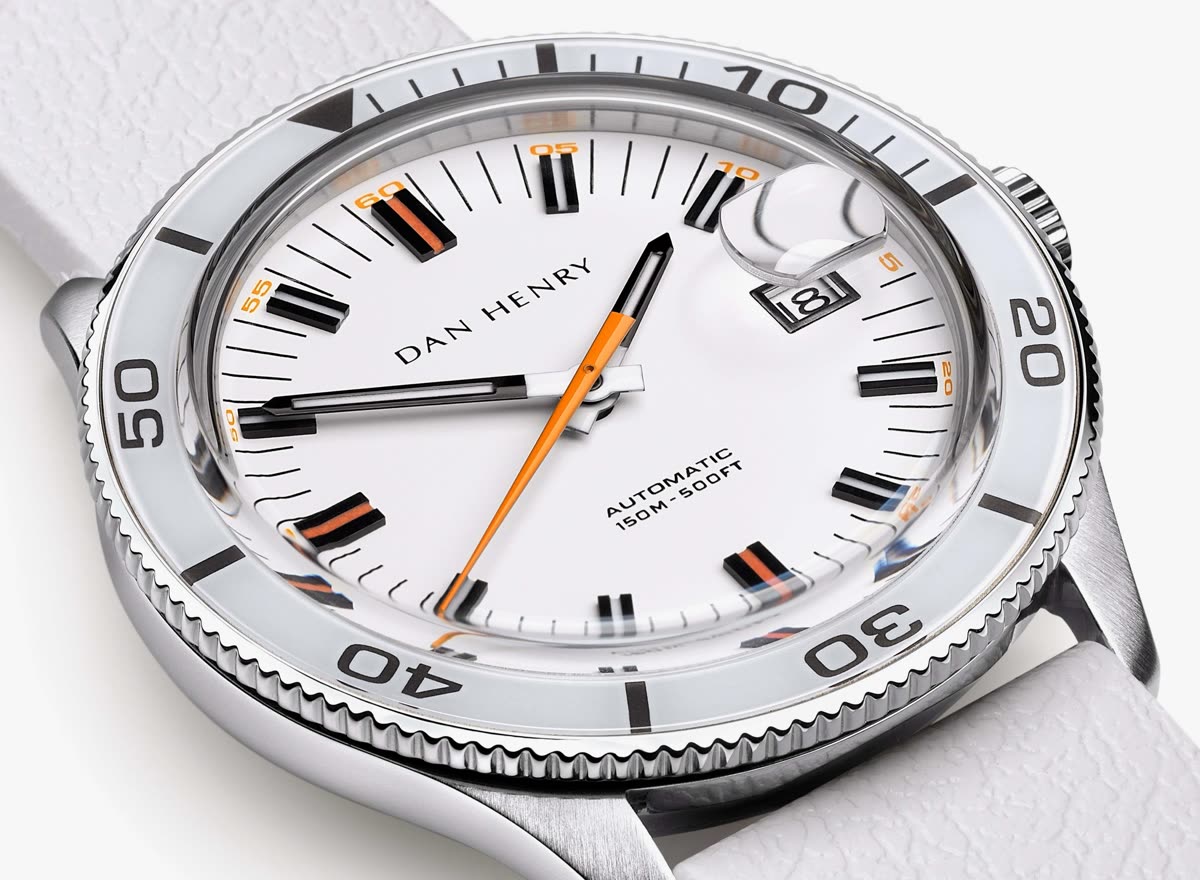
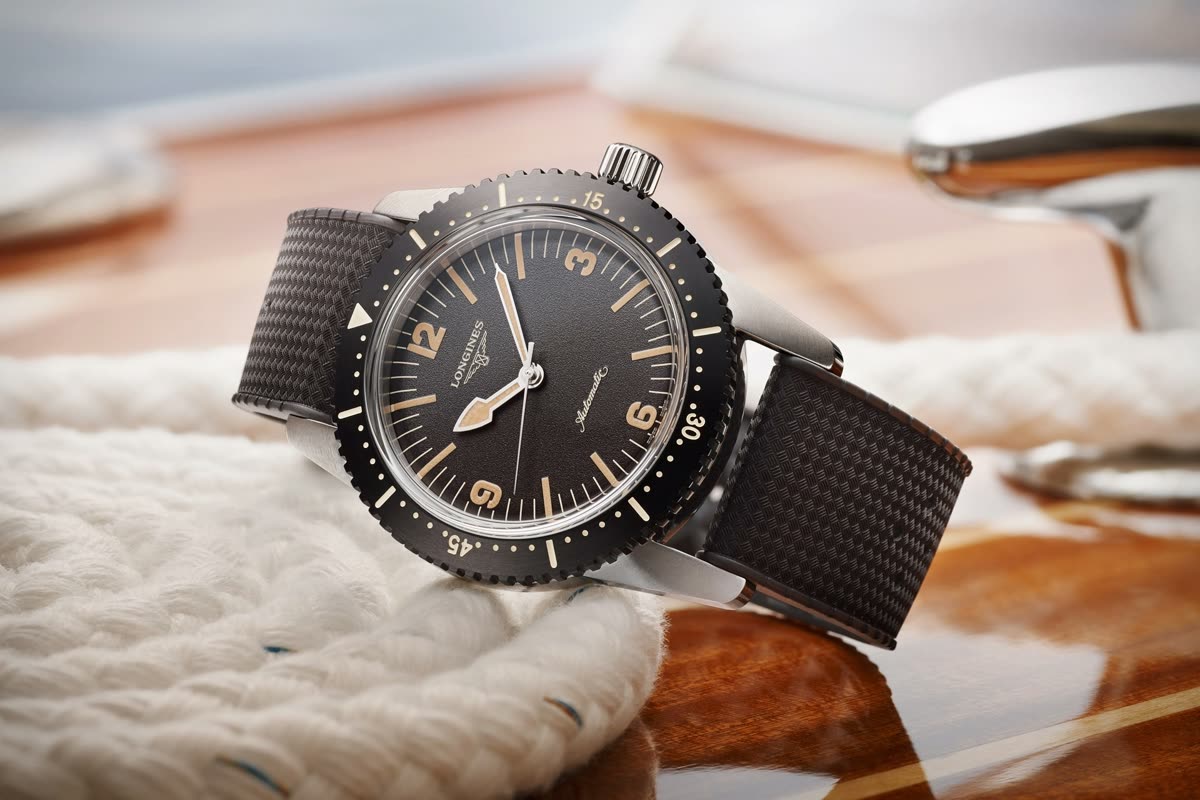
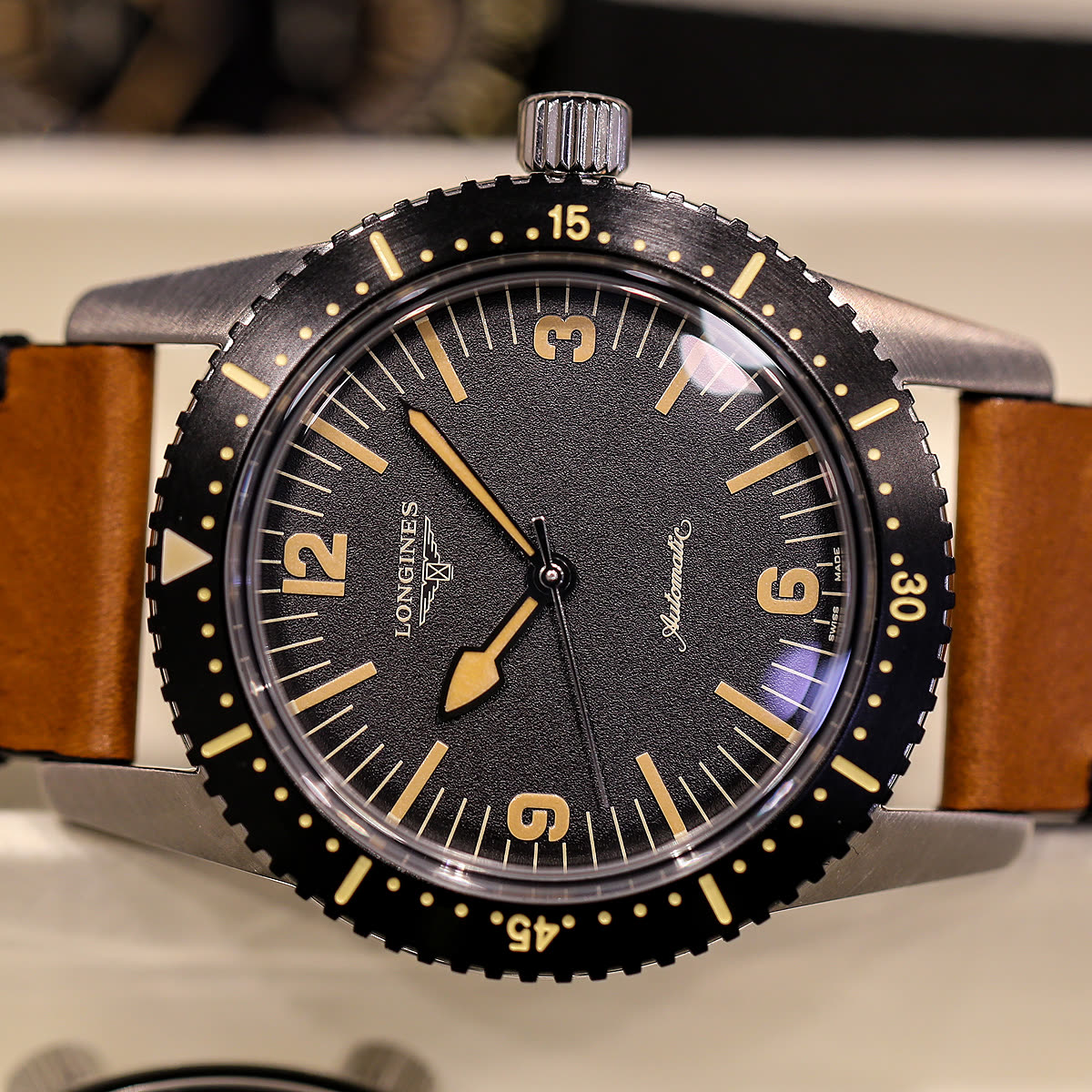
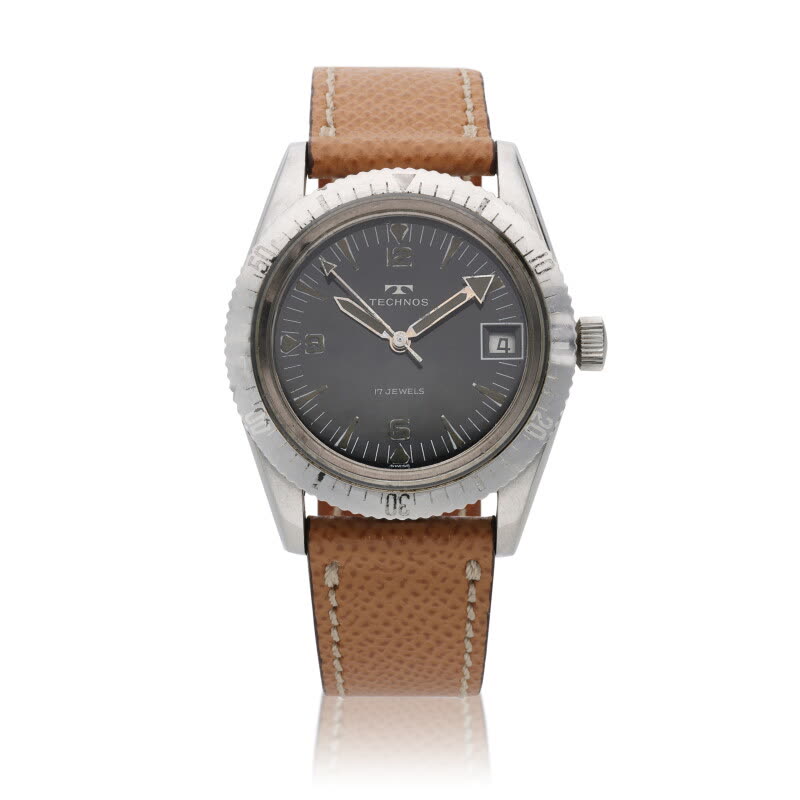
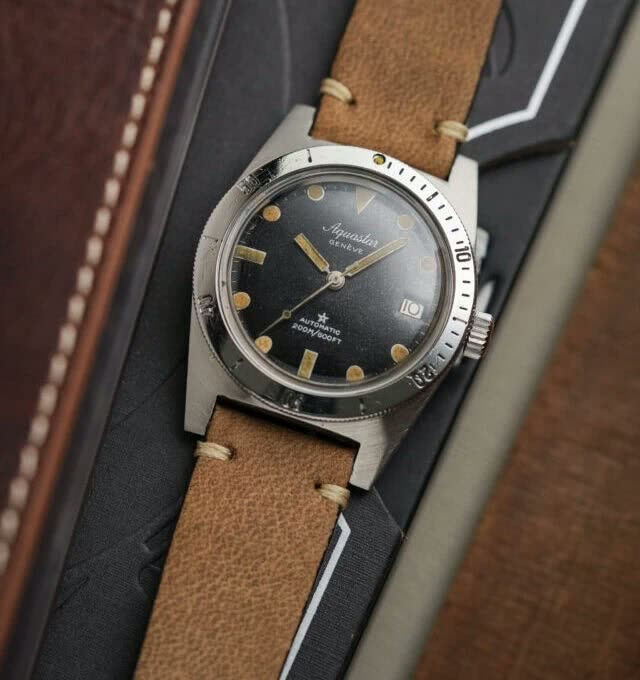
Photographs are illustrative examples of the type, not necessarily the exact object described. Verify details against the source file page.
Sources & references
- The skin diver watch: a brief history, The Calibrated Wrist, retrieved 2026-10-30 (paraphrased; text © the publisher)
- Some major players in the 1960s dive watch market, Coronet, retrieved 2026-10-30 (paraphrased; text © the publisher)
- Skin diver watches, the 1957 Aquastar Model 60, Aquastar, retrieved 2026-10-30 (paraphrased; text © the publisher)
- General dive-watch collecting literature; the boundary between 'skin diver' and standard dive watch sizing is not consistently defined across sources.
Where sources disagree, the disagreement is stated rather than resolved silently.