
High-grade lever pocket watch movement family · United States
Waltham Railroad-Grade Movements (Vanguard and related grades)
Needs researchRepresentative rather than a single unique object: the Vanguard and comparable Waltham railroad grades illustrate American industrial precision watchmaking built to meet railway time-service standards.
Technical facts
- Escapement
- Lever, typically adjusted to temperature and multiple positions
- Jewel count
- Commonly 21 or 23 jewels in the highest railroad grades — verify against the specific movement, not the grade name alone
- Regulation
- Micrometric regulator common on later production
Historical significance
- Representative rather than a single unique object: the Vanguard and comparable Waltham railroad grades illustrate American industrial precision watchmaking built to meet railway time-service standards.
- Individual surviving examples vary enormously in specification (jewel count, adjustment, case), so any specific example must be documented on its own terms rather than assumed to match a generic 'Vanguard' description.
Background
In 1866 the Pennsylvania Railroad ordered Model 1857 Appleton, Tracy & Co. grade 15-jewel watches from the American Watch Company, which RailsWest describes as the first American watches made specifically for railroad use. The Model 1870 Crescent Street, an 18-size, 15-jewel movement with a chronometer balance adjusted to heat and cold, was the first American watch designed and marketed especially as a railroad watch. It took its name from the street in Waltham where the company's factory stood, and it was advertised from 1870 as the American Railroad Watch.
The Model 1870 was made until September 1883, with a total production of 17,900 movements, and the 18-size Model 1883 Crescent Street replaced it in 1885 as Waltham's highest-grade full-plate watch. In 1894 the American Waltham Watch Co. introduced the 18-size, 17-jewel Vanguard, advertised as the finest 18-size movement in the world; as other grades were added, the model became known as the Model 1892.
Written from the sources listed under Sources (makers, museums, auction houses and specialist publications are paraphrased, not reproduced); each statement was checked against the cited text, and claims a maker makes about its own work are attributed to it.
Construction and mechanism
- The Model 1892 Vanguard remained Waltham's highest-grade 18-size watch, with later versions of 19, 21 and 23 jewels, all adjusted to temperature and five positions.
- Other Model 1892 railroad grades included the Crescent Street (19 and 21 jewels, adjusted to temperature and five positions) and the 17-jewel Riverside and Railroader (adjusted to temperature and three positions).
Later history
- The company did not register "Crescent St." as a trademark until 1911, although the application claimed use since May 1870.
Photographs
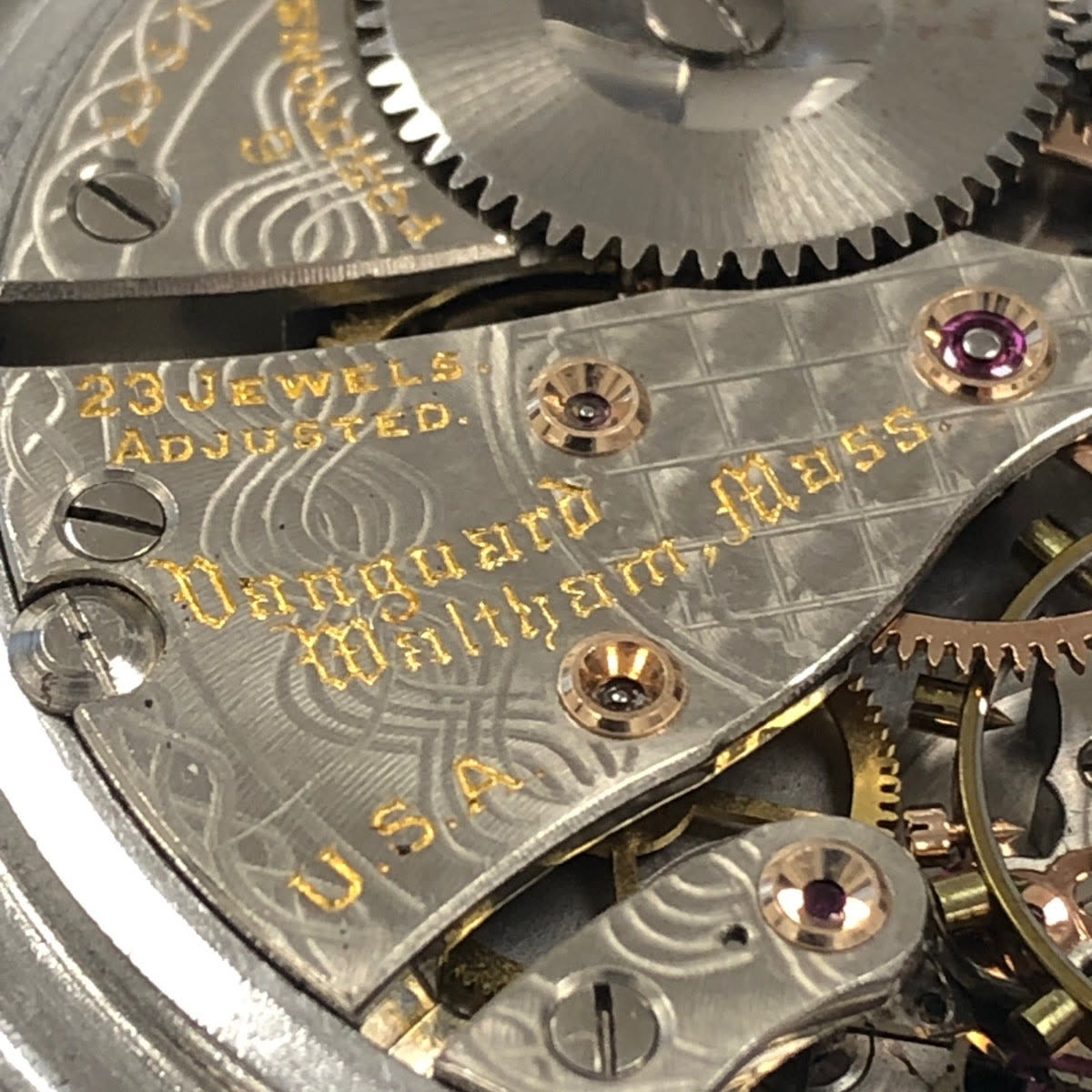
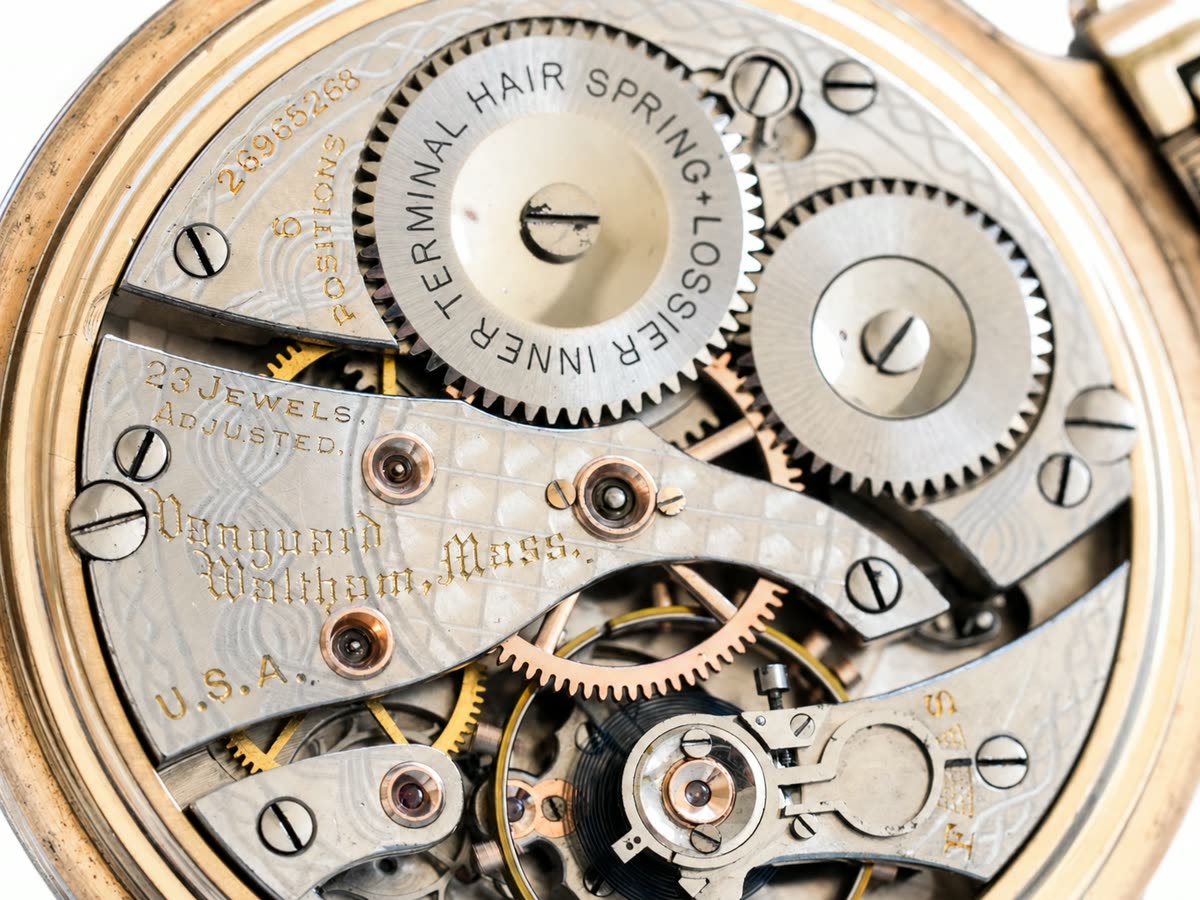
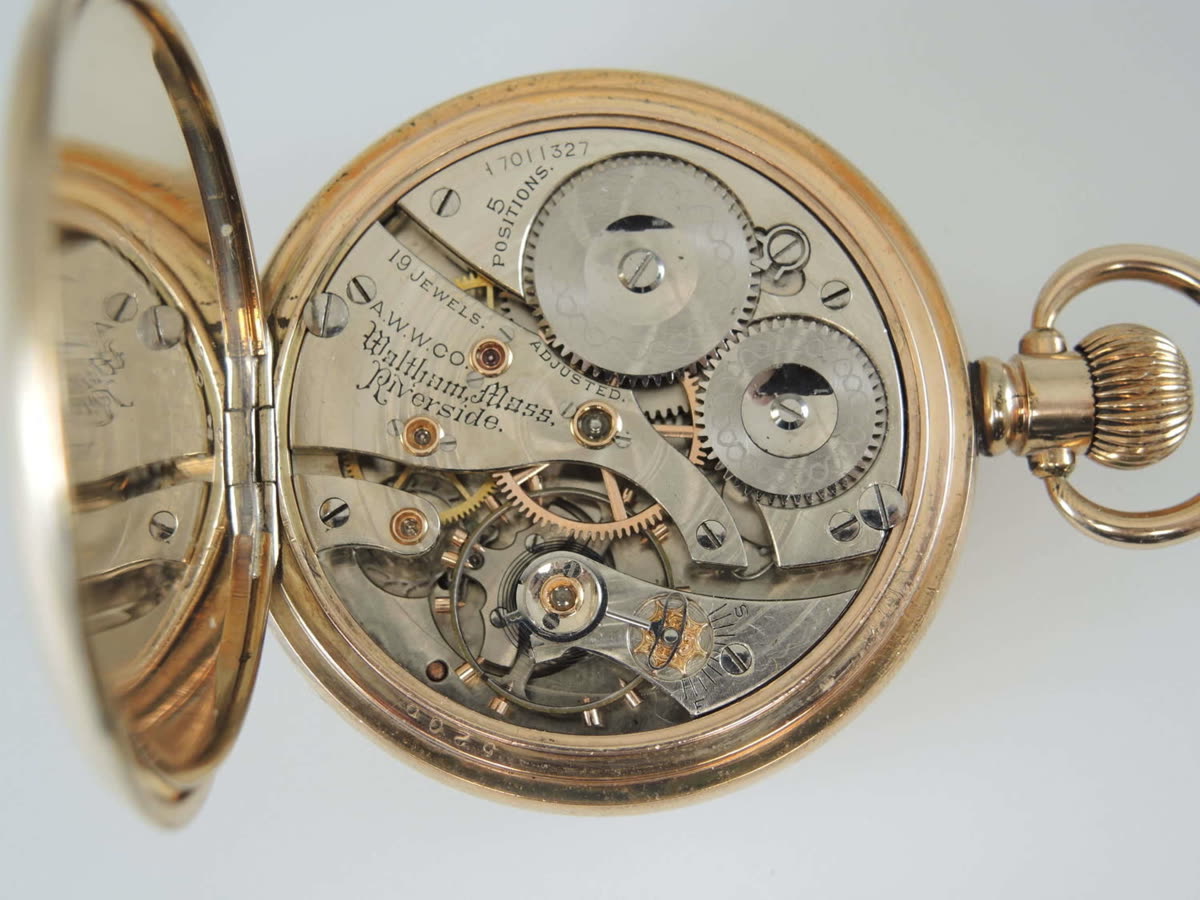
Photographs are illustrative examples of the type, not necessarily the exact object described. Verify details against the source file page.
Sources & references
- American Waltham Watch Co., RailsWest, retrieved 2026-10-30 (paraphrased; text © the publisher)
- The Waltham "Crescent Street" watch: what's in a name?, Pocket Watch Database, retrieved 2026-10-30 (paraphrased; text © the publisher)
- NAWCC Bulletin, articles on Waltham railroad grades
- Individual example provenance must be sourced per object; none asserted generically here
Where sources disagree, the disagreement is stated rather than resolved silently.