
Water-driven astronomical clock tower · China (Kaifeng)
Su Song's Astronomical Clock Tower
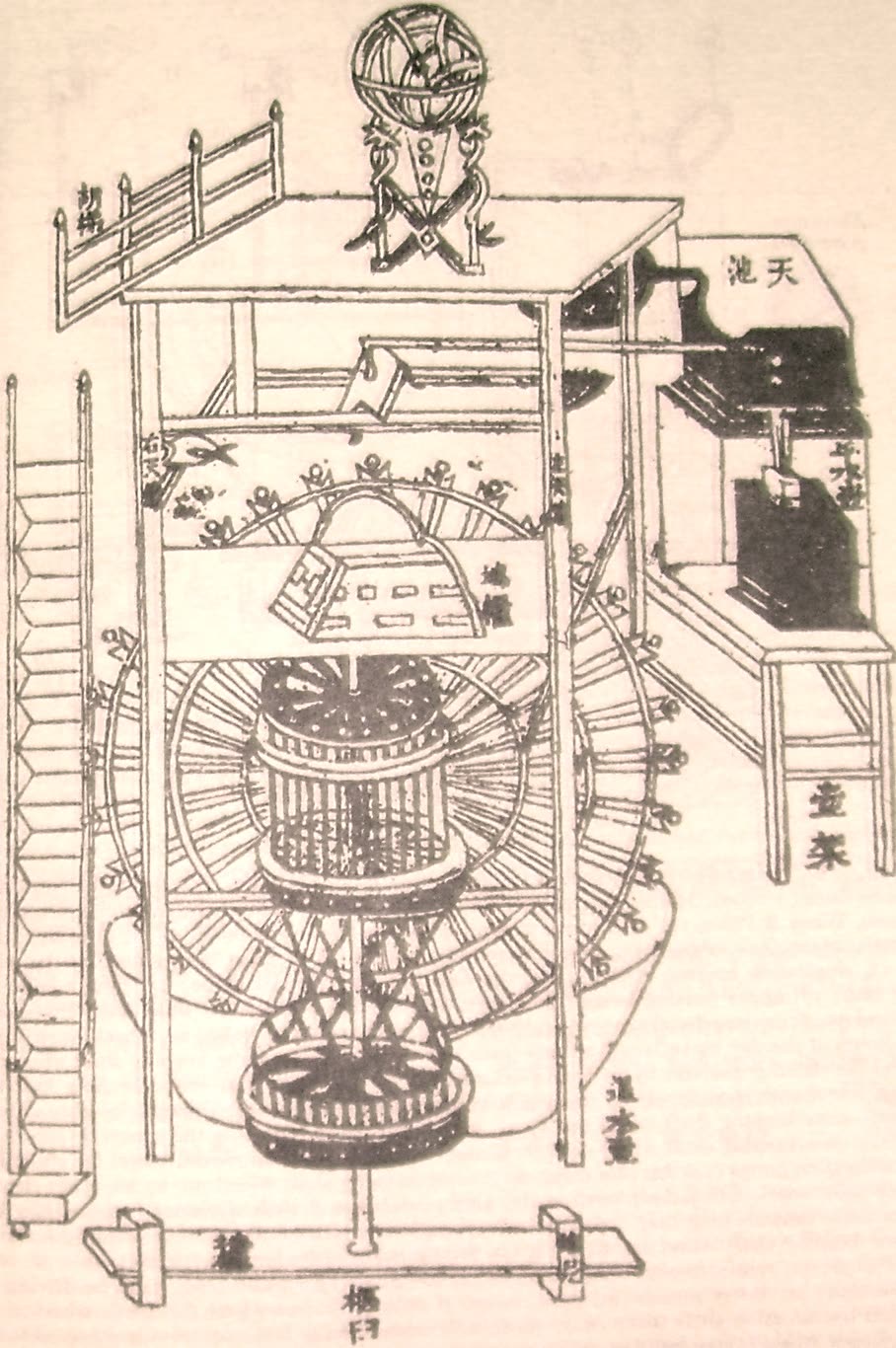
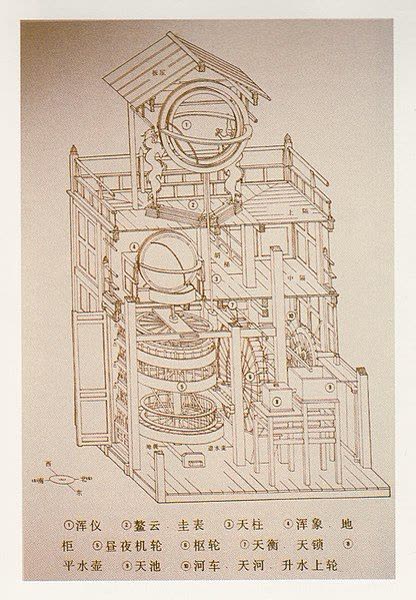
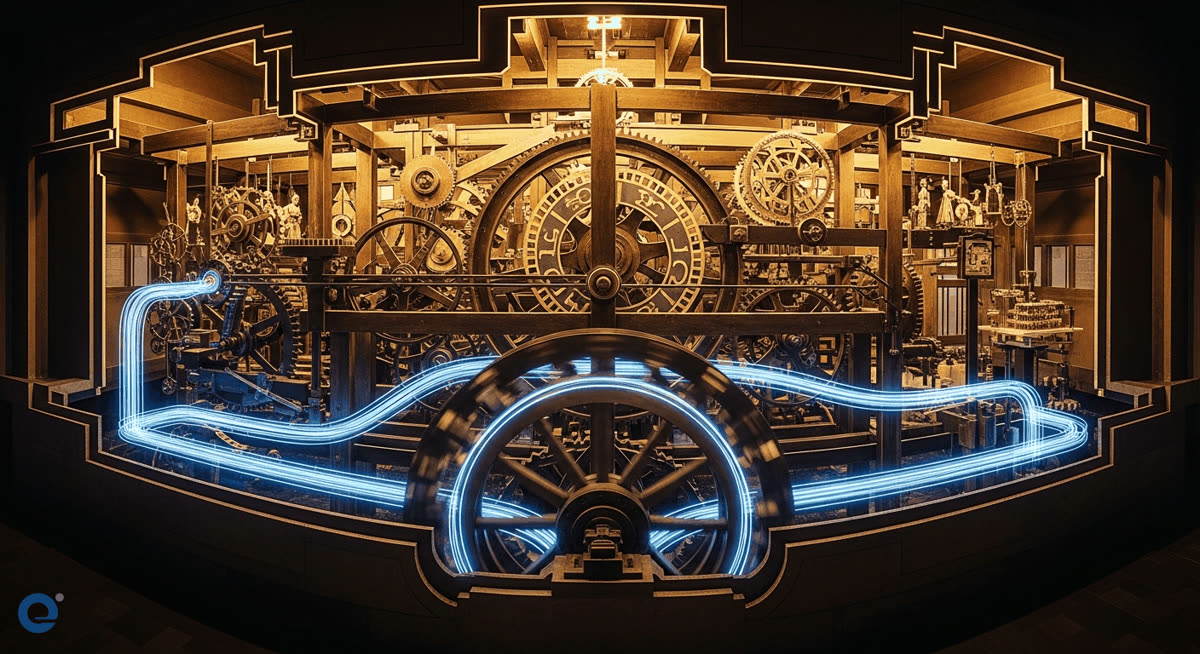
Partially verifiedA monumental water-driven armillary and celestial globe with an escapement-like water-wheel mechanism, described in Su Song's treatise Xin Yixiang Fayao.
Technical facts
- Power
- Water wheel with scoops and check mechanism
- Survival
- Destroyed; known from the treatise
Historical significance
- A monumental water-driven armillary and celestial globe with an escapement-like water-wheel mechanism, described in Su Song's treatise Xin Yixiang Fayao.
Background
Commissioned by Emperor Zhezong of Song in 1086, Su Song designed this water-powered astronomical clock tower to showcase scientific and national superiority. The project involved a wooden pilot model completed in 1088, with final bronze components cast by 1090 and the work completed in 1094. Su Song authored a 1092 treatise, Xinyi Xiangfayao, to document the machine's intricate mechanical design and illustrate its various components.
Written from the encyclopedia entries listed under Sources; each statement was checked against the cited text.
Construction and mechanism
- It incorporated an endless power-transmitting chain drive referred to as the tian ti.
- Mannequins dressed in miniature clothes exited doors to announce time by presenting plaques, ringing bells, or beating drums.
Later history
- The clock tower was dismantled in 1127 AD following the relocation of the imperial capital from Kaifeng.
Where sources differ
- Date. This record gives: “c. 1088–1092”. The cited history has a wooden pilot model finished in 1088, bronze parts cast by 1090 and the work completed in 1094.
Photographs
Photographs are illustrative examples of the type, not necessarily the exact object described. Verify details against the source file page.
Sources & references
- Su Song, Wikipedia (English), retrieved 2026-10-28 (text CC BY-SA 4.0)
- Needham, J., Wang L. & Price, D. J. de S., Heavenly Clockwork
- Su Song, Xin Yixiang Fayao
Where sources disagree, the disagreement is stated rather than resolved silently.