
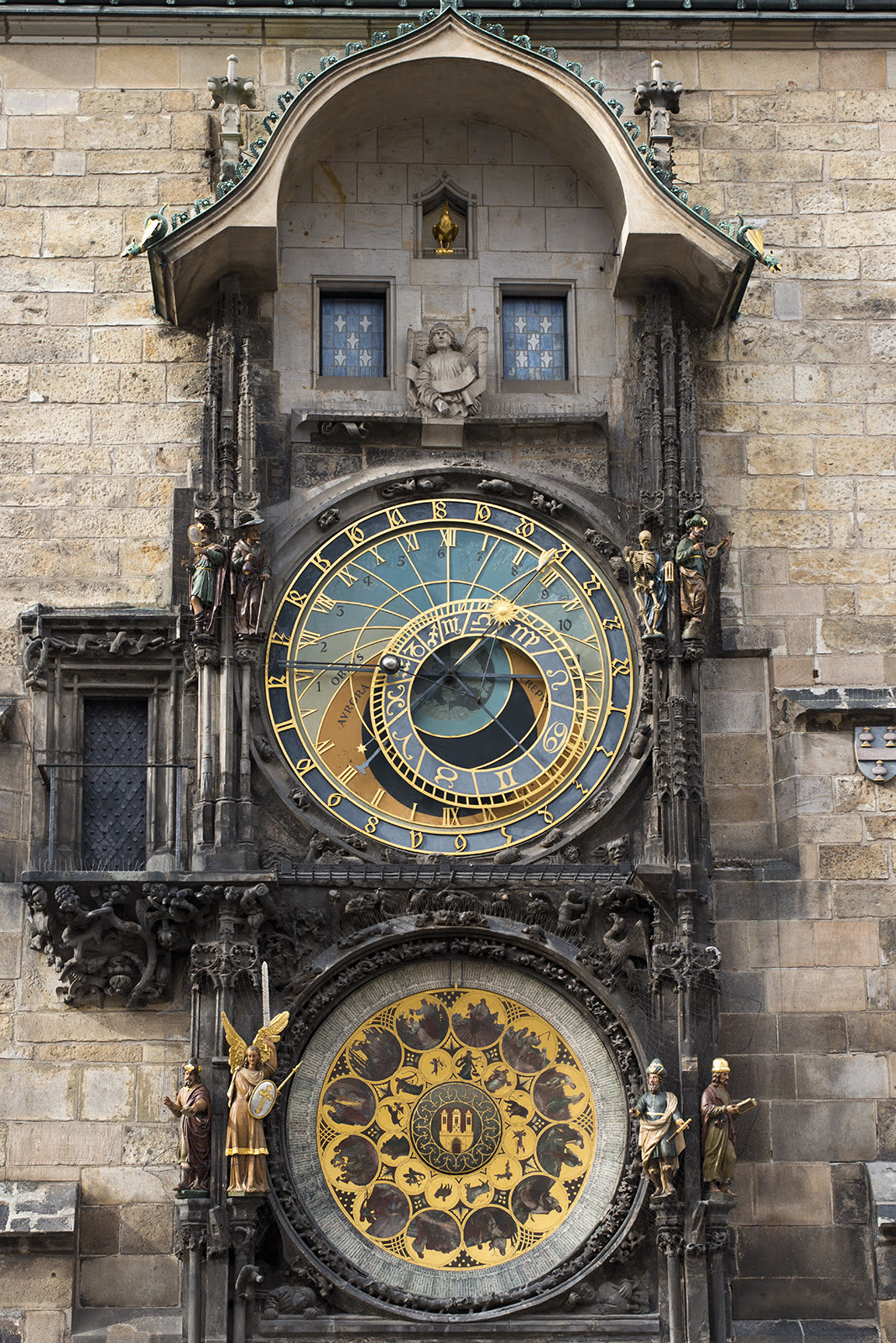
Astronomical clock with calendar dial and mechanical figures · Czech Republic (Bohemia)
Prague Astronomical Clock (Orloj)
Partially verifiedOne of the oldest astronomical clocks in the world still operating, showing the position of the sun and moon against the zodiac in addition to time.
Technical facts
- Astronomical dial
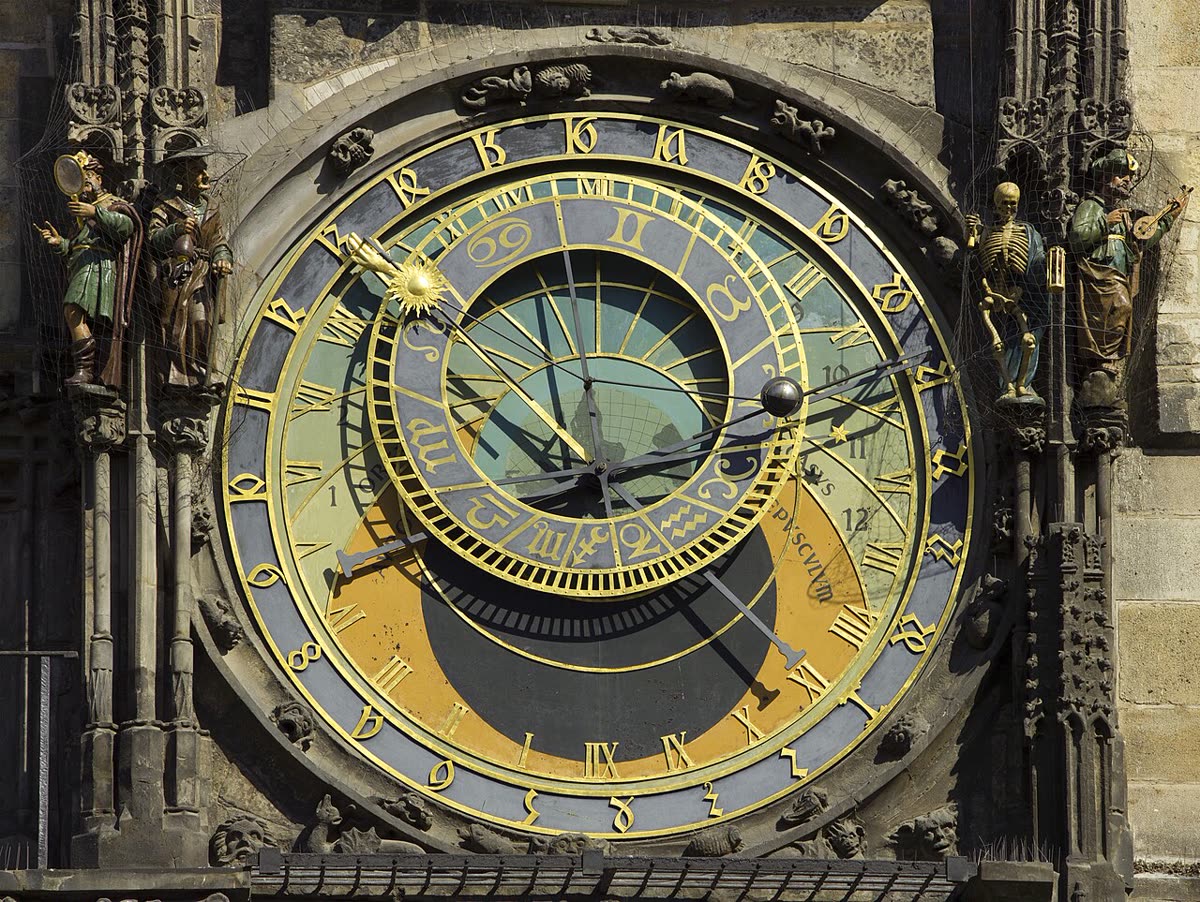
- Shows time, sun and moon position against zodiac, using a Prague-specific (not modern) astronomical projection
- Calendar dial
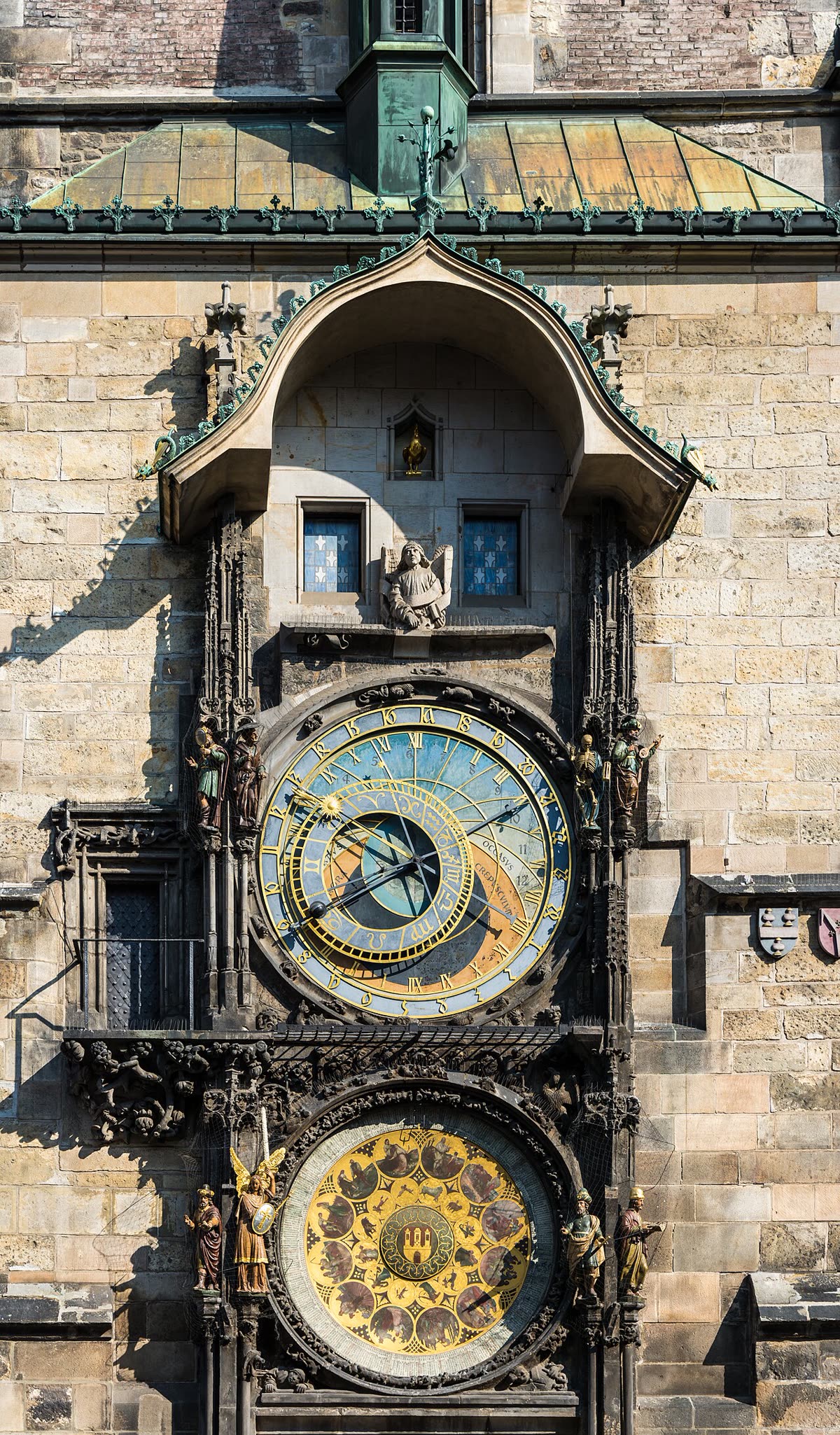
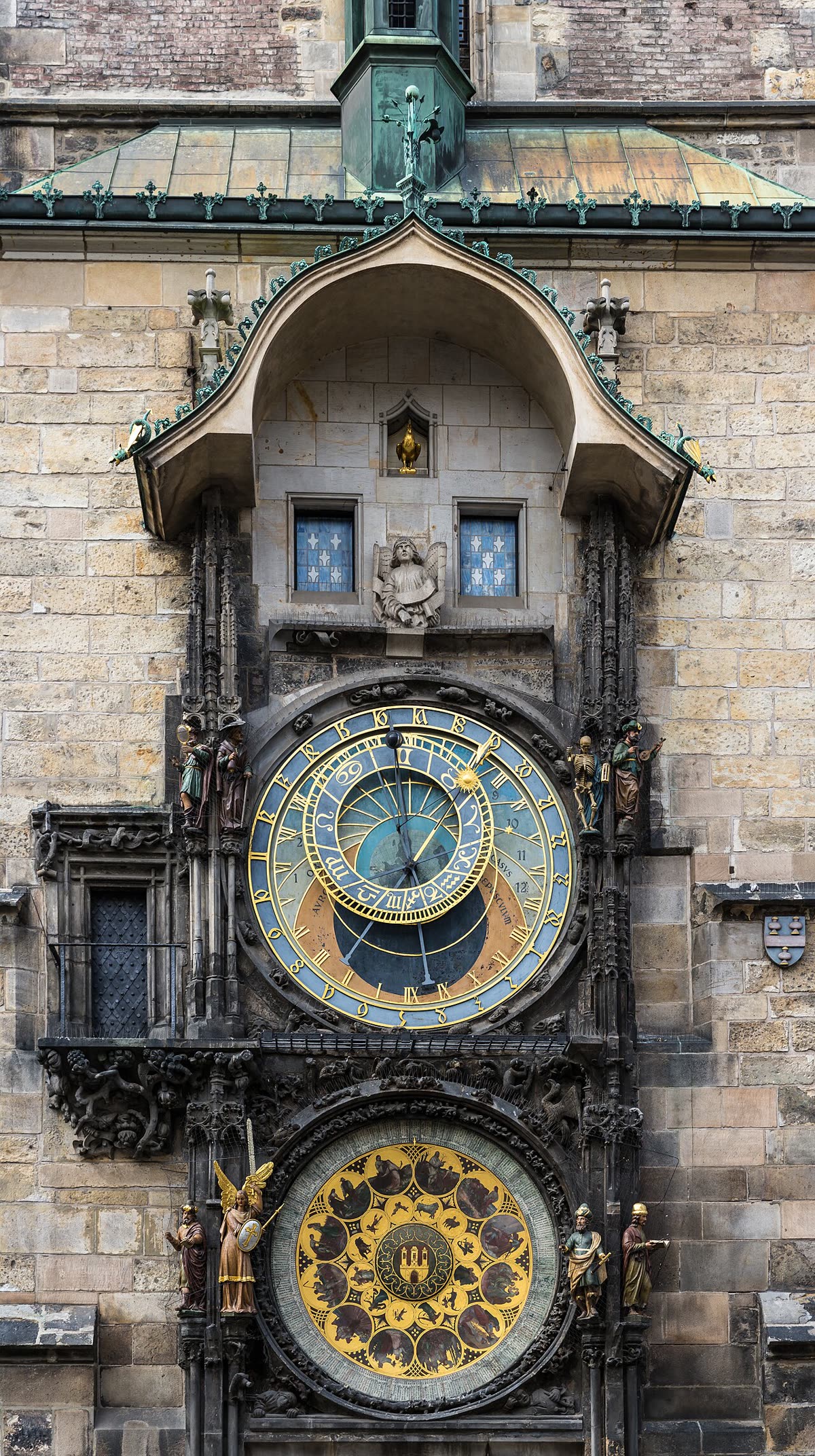
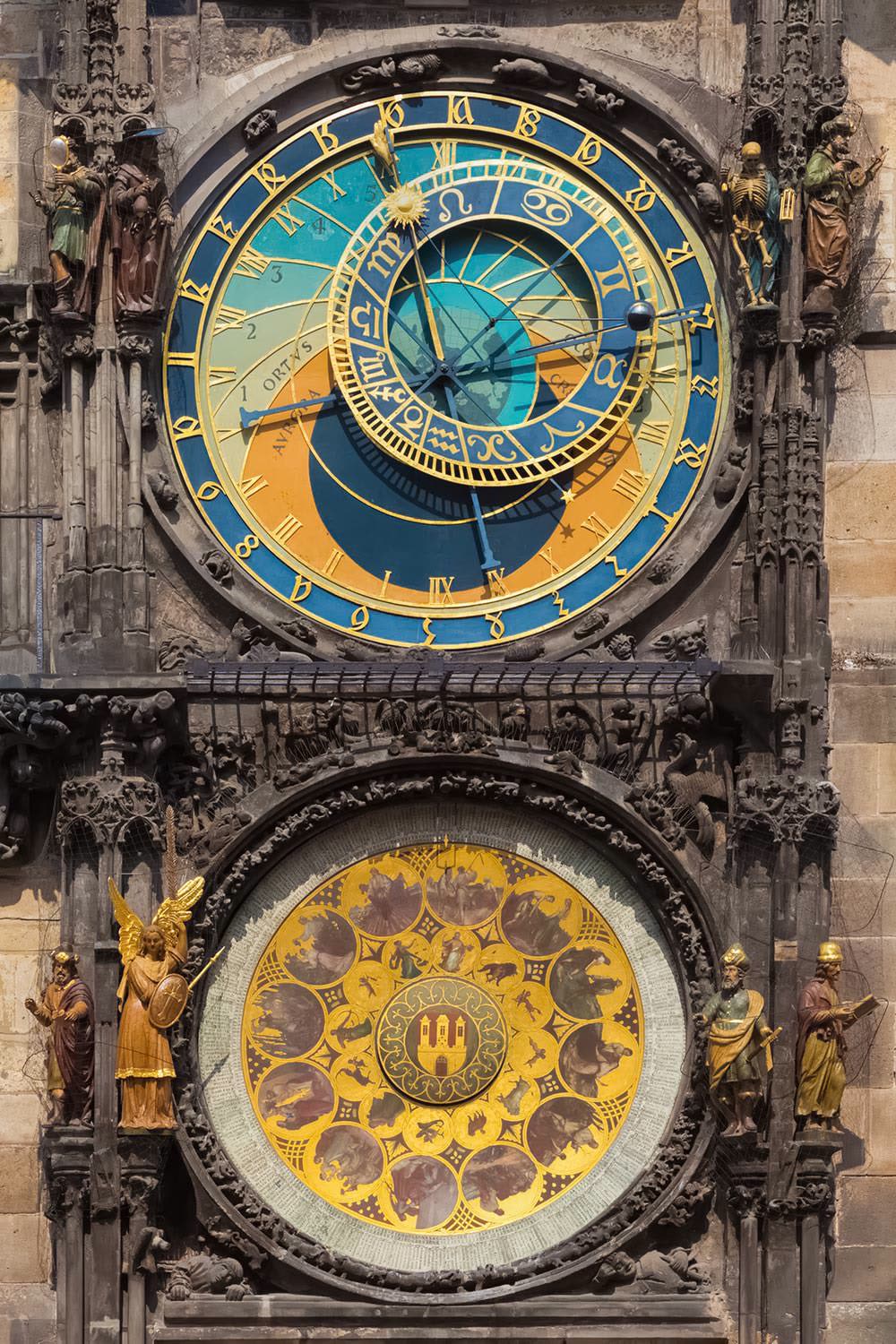
- Added in the 15th century, with a 19th-century calendar-plate replacement by Josef Mánes
- Figures
- Mechanical apostles and allegorical figures animate on the hour
Historical significance
- One of the oldest astronomical clocks in the world still operating, showing the position of the sun and moon against the zodiac in addition to time.
- Has been damaged and rebuilt multiple times, notably after fire damage in 1945; the surviving mechanism is a mixture of medieval design intent and multi-century restoration and replacement work, which should be stated plainly rather than presenting it as untouched medieval fabric.
- A long-associated legend about the clockmaker being blinded to prevent him building a rival clock is folklore, not documented history, and should not be repeated as fact.
Background
The Prague astronomical clock, also known as the Orloj, is a medieval astronomical clock mounted on the southern wall of the Old Town Hall in Prague. The oldest mechanical components and the astronomical dial were created in 1410 by the horologist Mikuláš of Kadaň and the mathematician Jan Šindel. Later additions to the clock included a calendar dial and gothic sculptural decorations added around 1490. The clock operates as a form of mechanical astrolabe, displaying the position of the Sun and Moon in the sky alongside various astronomical details.
Written from the encyclopedia entries listed under Sources; each statement was checked against the cited text.
Construction and mechanism
- An hourly animation known as The Walk of the Apostles includes moving figures and a skeleton representing Death that strikes the time.
- The calendar dial features medallions that represent the various months of the year.
Later history
- Following extensive fire damage in 1945, the Orloj was repaired and returned to service in 1948.
- The clock underwent a major renovation in 2018 that included replacing an electric mechanism with an original 1860s design.
- The clock remains housed at the Old Town Hall in Prague's Old Town Square.
Photographs
Photographs are illustrative examples of the type, not necessarily the exact object described. Verify details against the source file page.
Sources & references
- Prague astronomical clock, Wikipedia (English), retrieved 2026-10-28 (text CC BY-SA 4.0)
- Prague City Tourism, official Orloj history published materials
- Antiquarian Horological Society, comparative articles on astronomical clocks
Where sources disagree, the disagreement is stated rather than resolved silently.