
Grand complication pocket watch · Switzerland
Patek Philippe Calibre 89
Partially verifiedMade for the firm's 150th anniversary with 33 complications; for decades presented as the most complicated portable timepiece.
Technical facts
- Complications
- 33 (manufacturer count)
- Examples
- Four, in different case metals
Historical significance
- Made for the firm's 150th anniversary with 33 complications; for decades presented as the most complicated portable timepiece.
Background
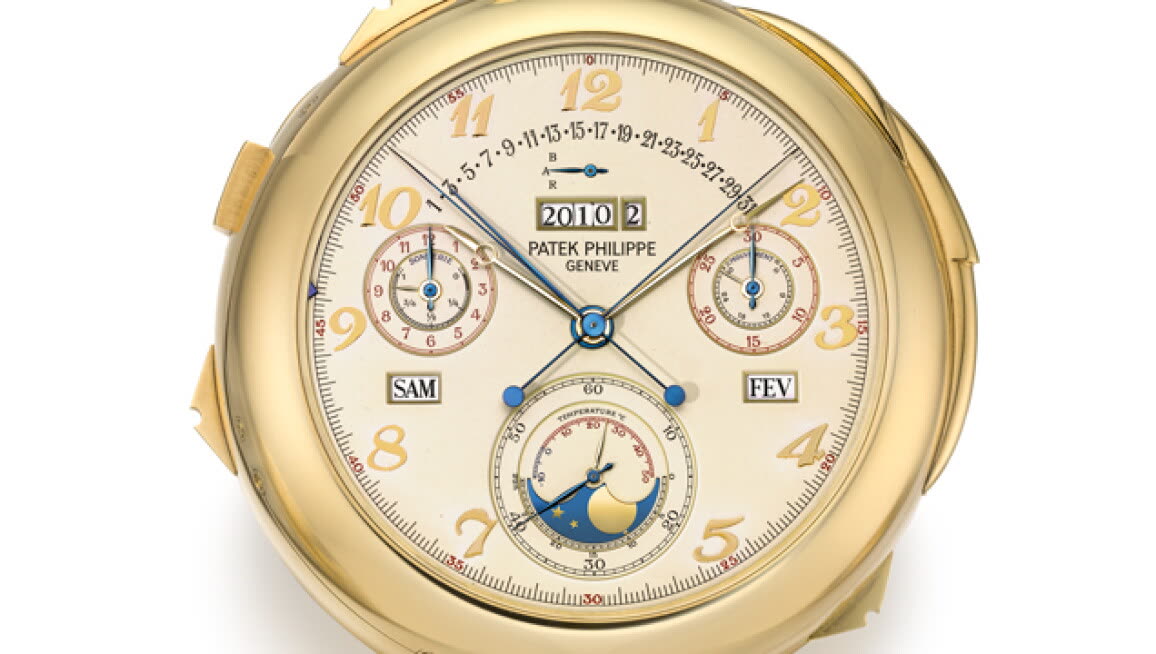
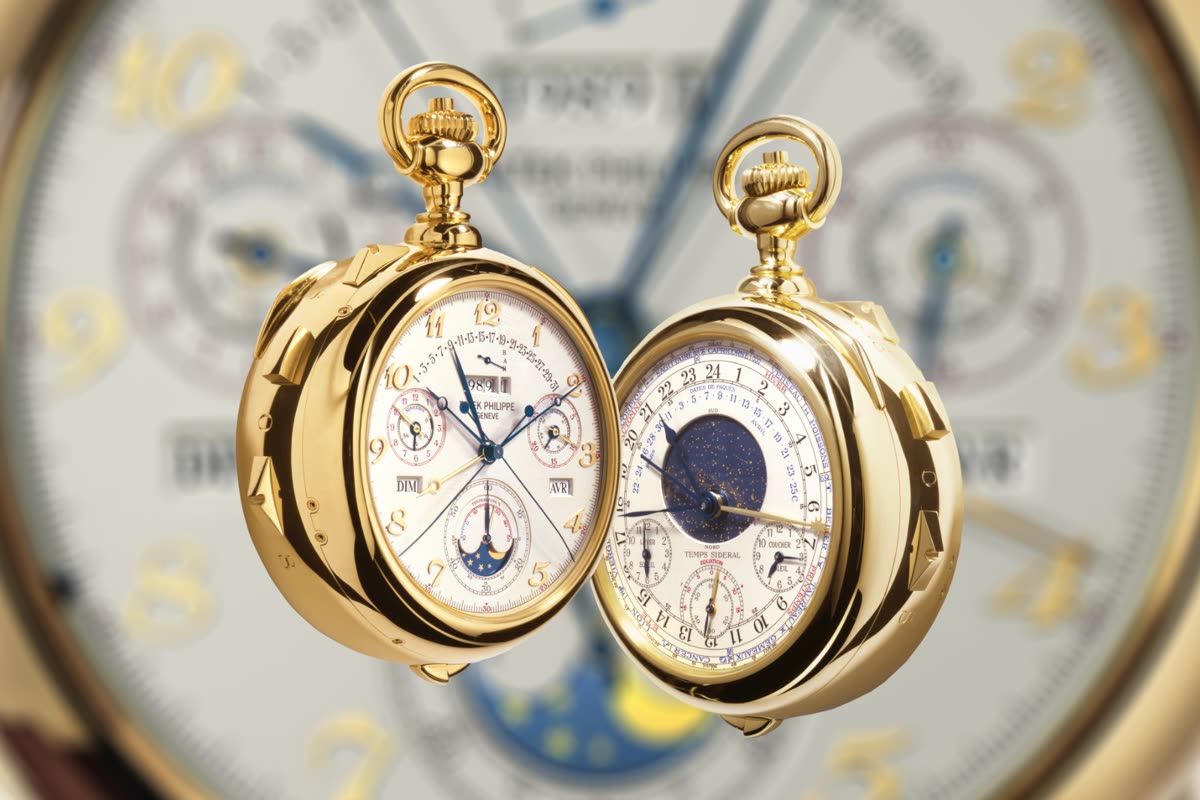
The Patek Philippe Calibre 89 was created in 1989 to commemorate the firm's 150th anniversary. The development process for this timepiece involved five years of research and development followed by four years of manufacturing. Upon its completion, the watch was declared by its maker to be the most complicated timepiece in existence at the time.
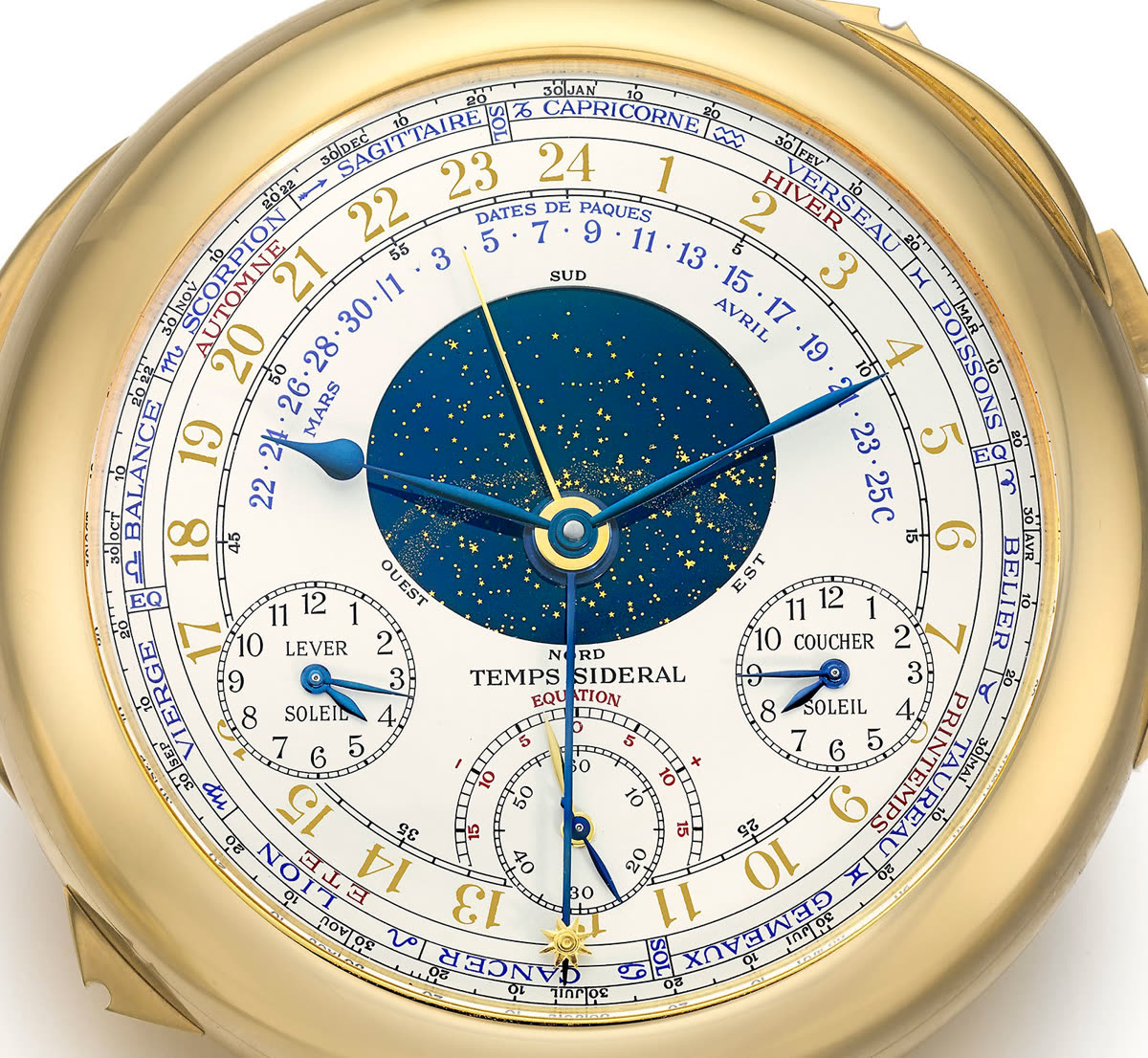
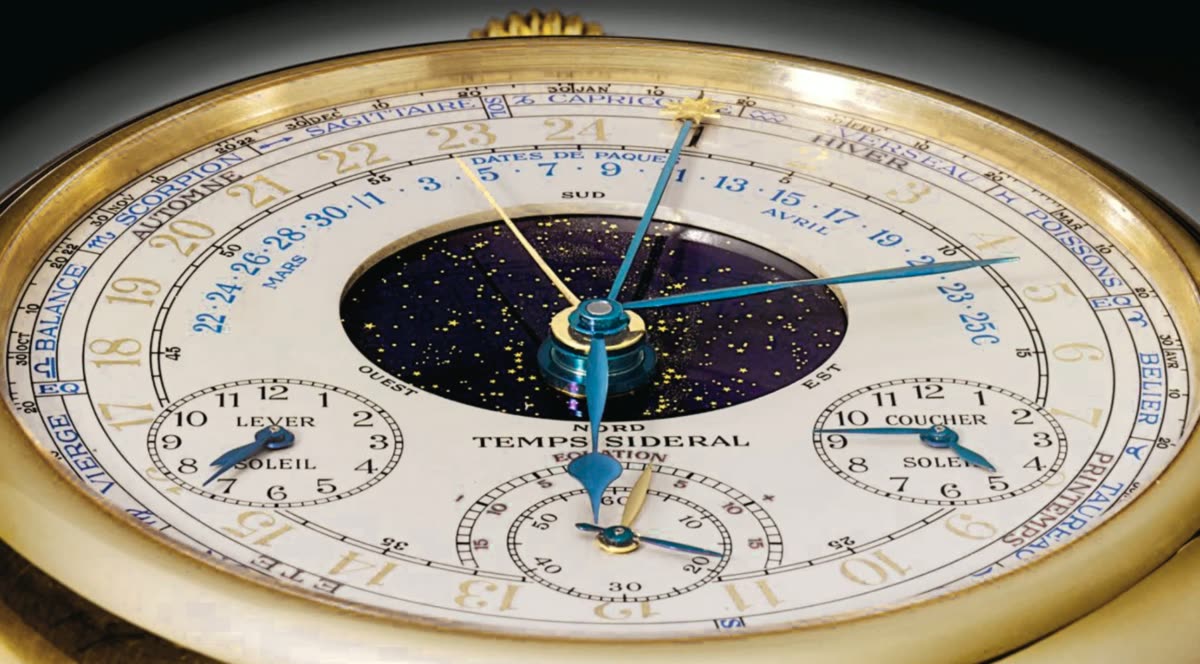
The watch is a heavy instrument, weighing 1.1 kilograms in total. Its mechanical design includes 24 hands and 1,728 individual components. The movement incorporates diverse functions, such as a star chart and a thermometer.
Written from the encyclopedia entries listed under Sources; each statement was checked against the cited text.
Construction and mechanism
- The watch features 33 distinct complications.
- Construction materials include 18 carat gold or platinum.
- Four individual watches were produced, with one version created in each of four metal types.
Later history
- Examples in yellow gold and white gold were sold at auction by Antiquorum in 2009 and 2004, respectively.
- A yellow-gold version appeared at Sotheby's in 2017 but failed to sell.
Photographs
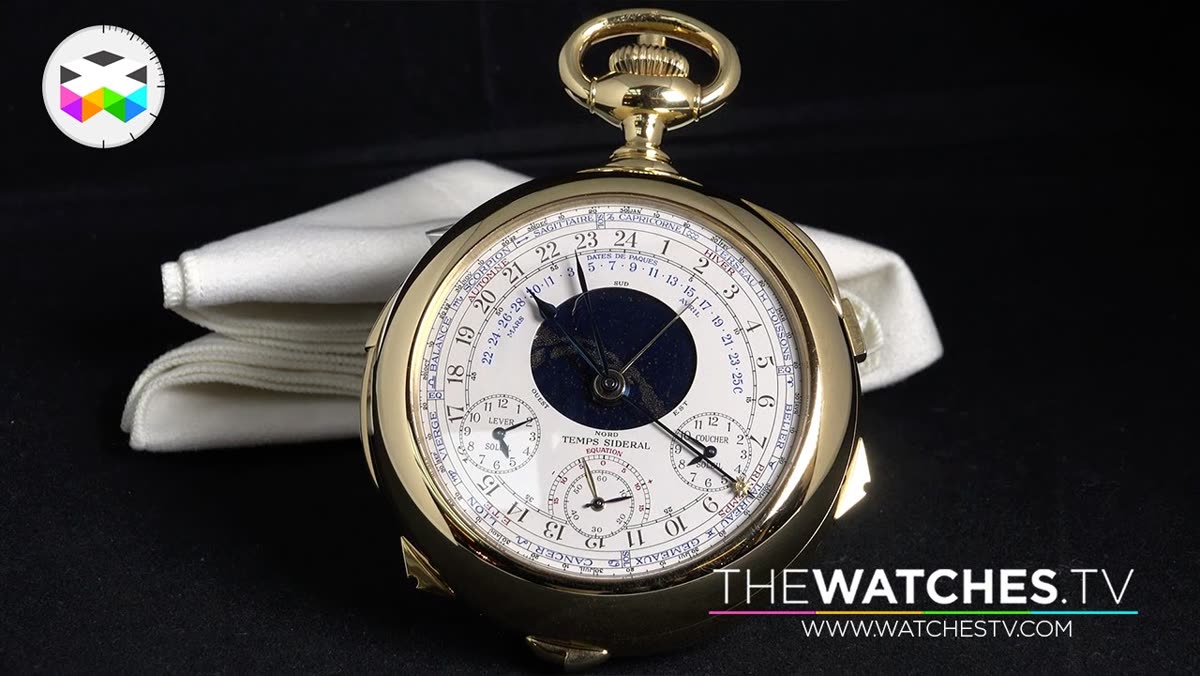
Photographs are illustrative examples of the type, not necessarily the exact object described. Verify details against the source file page.
Sources & references
- Patek Philippe Calibre 89, Wikipedia (English), retrieved 2026-10-28 (text CC BY-SA 4.0)
- Patek Philippe Museum publications
Where sources disagree, the disagreement is stated rather than resolved silently.