
France / Switzerland / England · Mechanisms in production by the mid-19th century; refined mainsprings of the type through the 20th century
Perpetual Calendar Watch Mechanism
Needs researchOne of the 'grand complications' prized in fine watchmaking, and a useful teaching example of mechanical calendar logic.
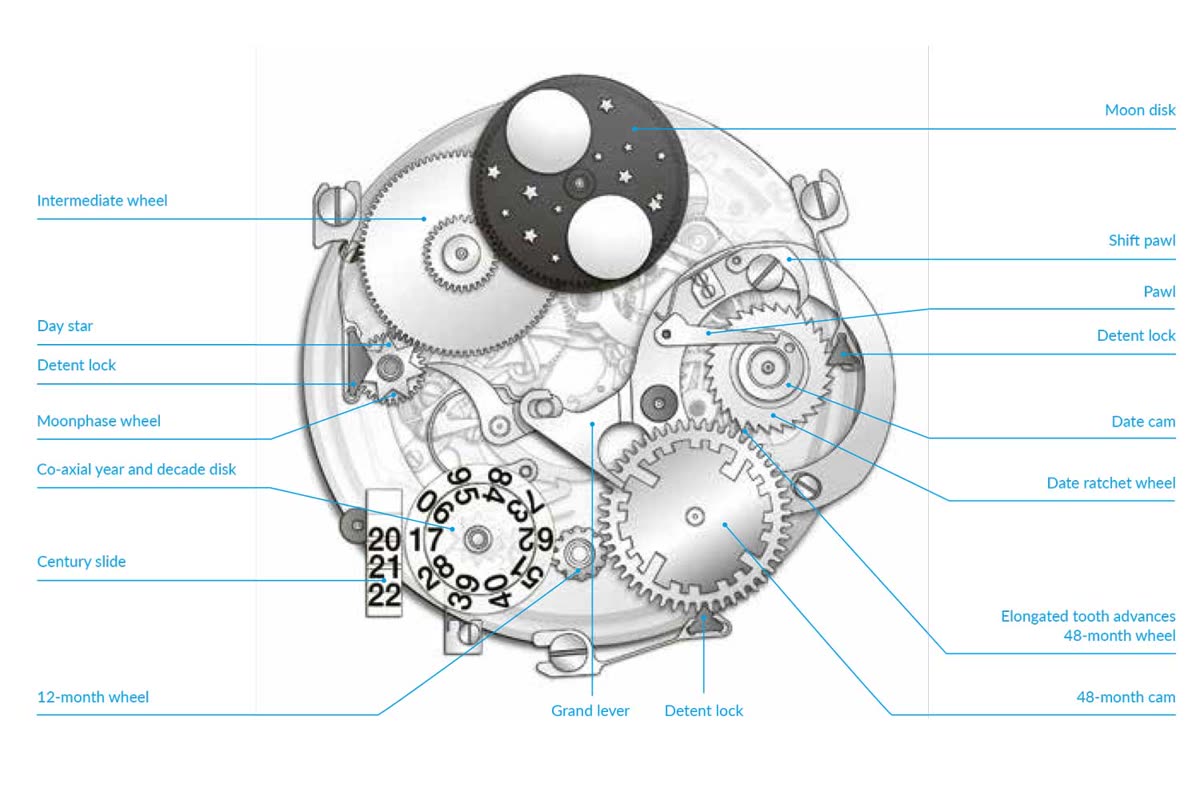
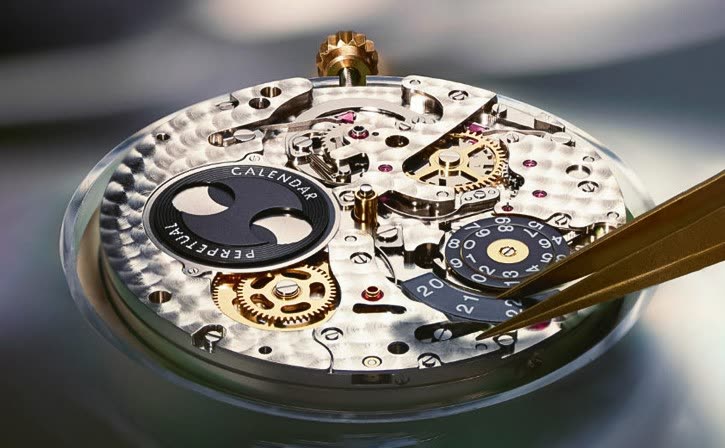
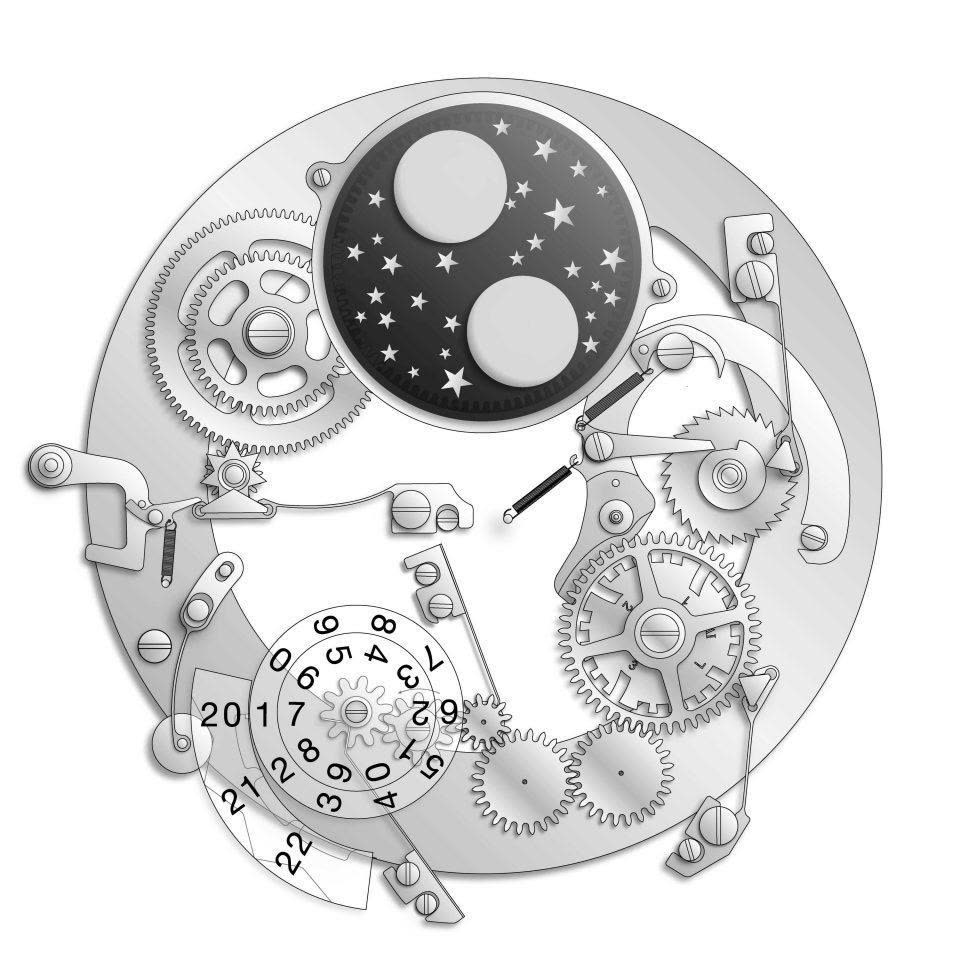
A perpetual calendar mechanism tracks the varying month lengths and leap years mechanically, usually via a stack of cams reading a four-year (or longer) cycle, so the date, day, month and moon phase (where fitted) advance correctly without manual correction except at the turn of a non-leap century.
Unlike the escapement or overcoil, no single named inventor and confirmed patent number for the perpetual calendar complication as a whole is well established in the mainstream literature available to this project; claims naming a single inventor should be treated cautiously.
Background
The perpetual calendar is a horological complication that tracks the day, month, and position in the leap year cycle automatically. This mechanism addresses the need for manual correction when transitioning between months of varying lengths, including the adjustment for leap years. Operation is generally achieved through a cam mechanism that completes a rotation over four years, allowing the identification of leap years.
Alternative designs exist that utilize a disk completing a rotation once per year via a twelve-step cam. Rare iterations of this complication account for the fact that most secular years are not leap years. Extremely select models further refine this logic by accounting for the rule that only secular years divisible by 400 are leap years.
Written from the encyclopedia entries listed under Sources; each statement was checked against the cited text. Passages from sources in other languages are given in English translation.
Later history
- Since 1990, International Watch Co. has produced a model capable of accounting for non-leap secular years.
How to verify this yourself
This entry is marked needs-research for a specific founding patent. Consult the Patek Philippe Museum's published history and INPI/Swiss IPI archives directly rather than relying on unsourced marketing timelines before citing a first inventor or patent number.
Manufacturers known to have used it
- Patek Philippe
- Audemars Piguet
- many haute horlogerie manufacturers
Photographs
Photographs are illustrative examples of the type, not necessarily the exact object described. Verify details against the source file page.
Sources & references
- Quantième perpétuel, Wikipedia (French), retrieved 2026-10-28 (text CC BY-SA 4.0)
- Patek Philippe Museum, published company history
- No single verified founding patent identified in project research to date — flagged for further archival work
Where sources disagree, the disagreement is stated rather than resolved silently.