
Low-cost pin-lever pocket watch · United States
Ingersoll 'Yankee' Dollar Watch
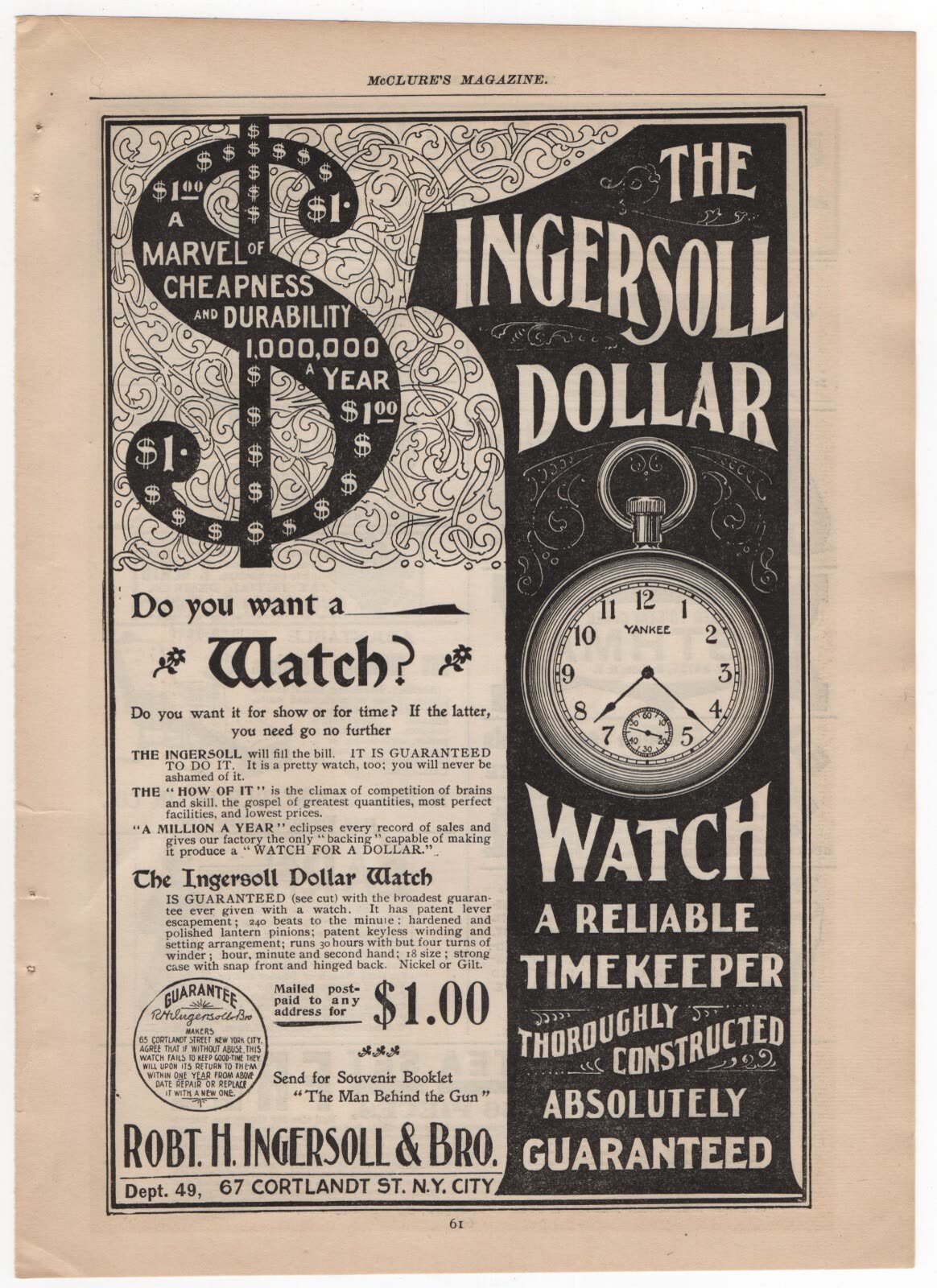
Partially verifiedMarketed at one US dollar, the Yankee watch became an emblem of mass-market affordability, reportedly selling in very large numbers over its production life and popularised further by celebrity endorsement claims in period advertising that should be treated as period marketing rather than independently verified fact.
Technical facts
- Escapement
- Pin-pallet (Roskopf-type) lever
- Case
- Inexpensive base-metal case, typically nickel or similar
Historical significance
- Marketed at one US dollar, the Yankee watch became an emblem of mass-market affordability, reportedly selling in very large numbers over its production life and popularised further by celebrity endorsement claims in period advertising that should be treated as period marketing rather than independently verified fact.
- An American parallel to the Swiss Roskopf concept: a self-consciously cheap, simplified watch aimed at a mass consumer market rather than the precision-watch trade.
Background
The Yankee watch was introduced by the Ingersoll Watch Company in 1896 as an affordable timepiece for the general public. The watch was designed to be cheaply mass-produced using stamped parts, ensuring it remained accessible to a wide consumer base. The Yankee achieved immense commercial success, with the Waterbury Clock Company producing thousands of units daily to meet the high demand. Nearly 40 million dollar watches were sold over 20 years, and Ingersoll coined the phrase "The watch that made the dollar famous!"
Written from the encyclopedia entries listed under Sources; each statement was checked against the cited text.
Construction and mechanism
- The movement of the watch typically utilizes a pin-pallet escapement design.
- The watch was manufactured without jewels to keep production costs low.
- The physical width of the Yankee watch is approximately eighteen size, or two inches.
Later history
- The manufacturing rights and the business associated with these timepieces eventually transitioned through various corporate entities, including the United States Time Corporation.
Photographs
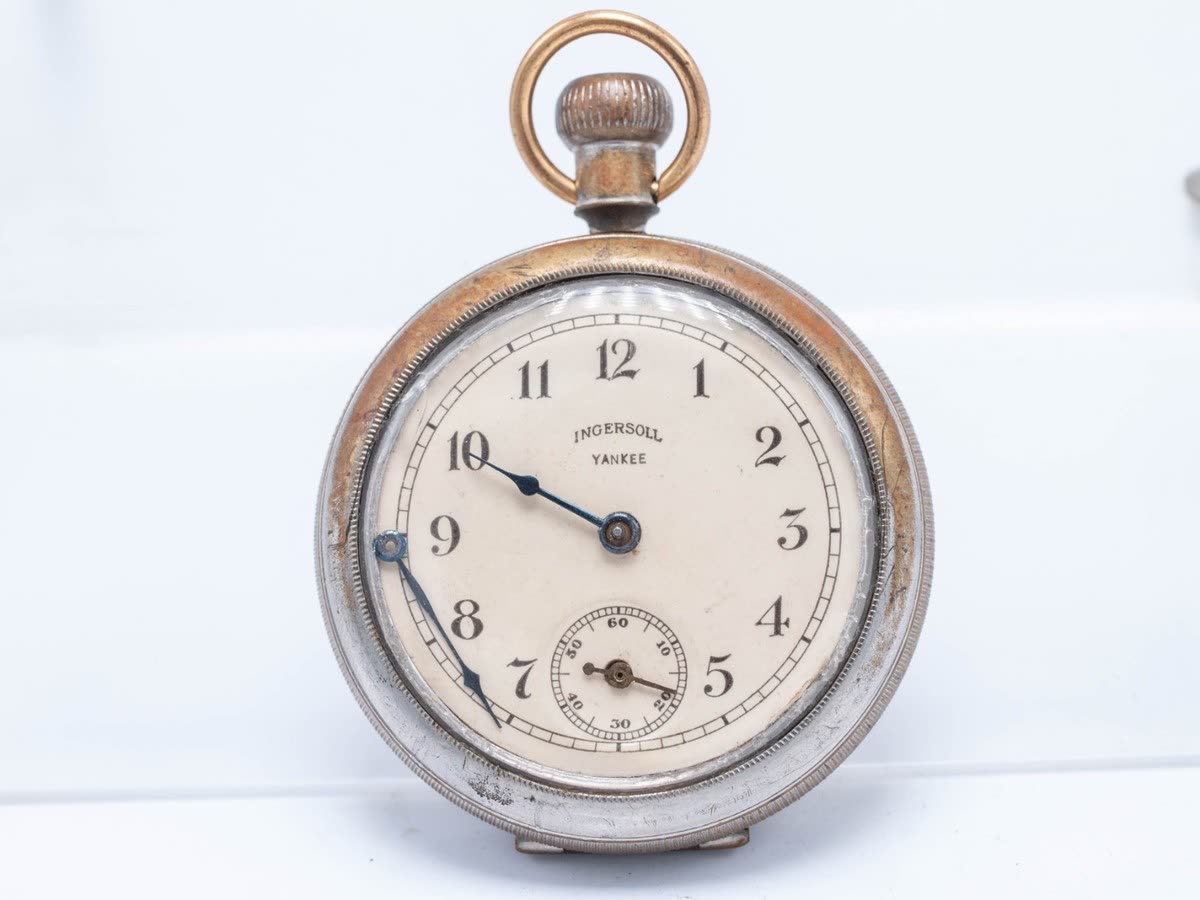
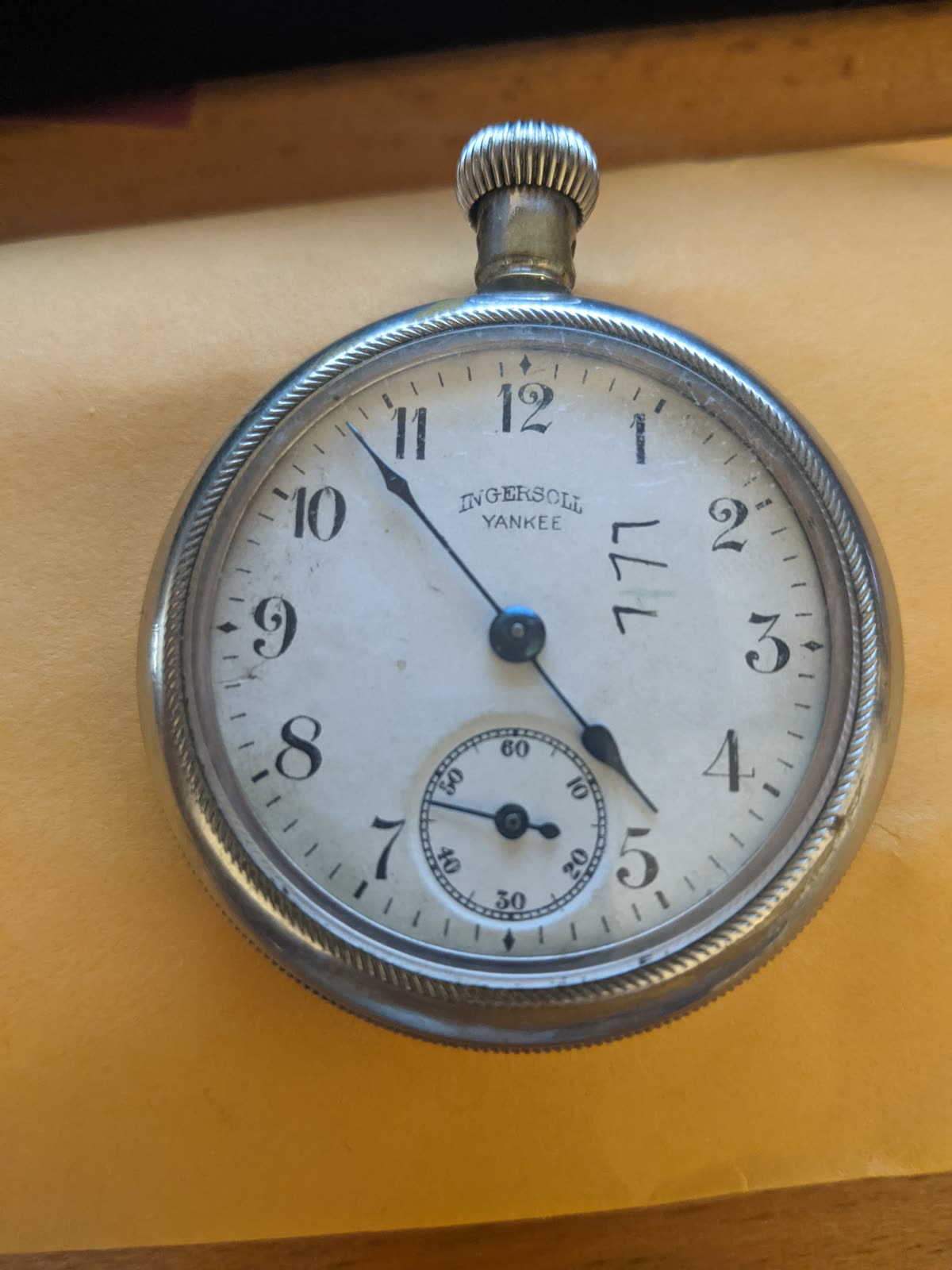
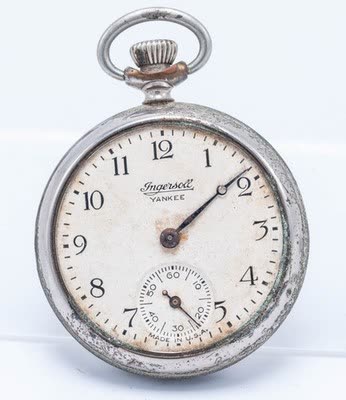
Photographs are illustrative examples of the type, not necessarily the exact object described. Verify details against the source file page.
Sources & references
- Dollar watch, Wikipedia (English), retrieved 2026-10-28 (text CC BY-SA 4.0)
- Ingersoll Watch Company, Wikipedia (English), retrieved 2026-10-28 (text CC BY-SA 4.0)
- NAWCC Bulletin, articles on the Ingersoll Yankee watch and dollar-watch trade history
Where sources disagree, the disagreement is stated rather than resolved silently.