
Museum · Prescot, United Kingdom
Prescot Museum
Local museum interpreting the Prescot watch-movement and tool trade.
Institution photographs
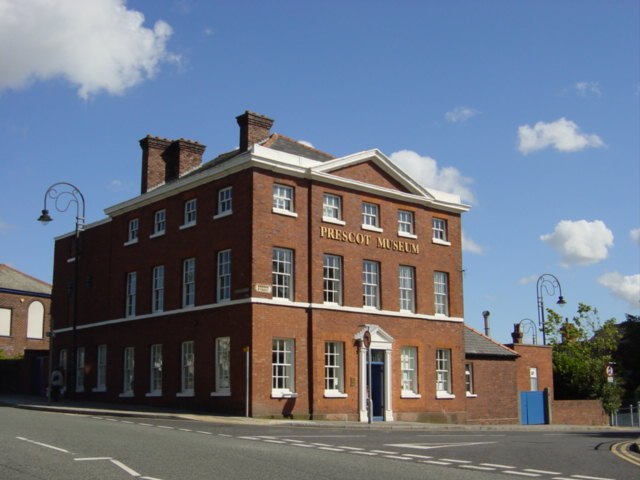
The caption identifies the institution shown; follow the source record for attribution and context.
Overview
Prescot Museum, run by Knowsley Council in Merseyside, is a social-history museum about the people, places and businesses of Knowsley. Watchmaking is one of the local industries it covers, alongside pottery, cable making and coal mining. Prescot was an important centre of the Lancashire watch-movement and watch-tool trade, which is why the town appears in British horological history.
The museum states that its collection holds more than 14,500 objects, a large share of them ephemera and photographs, with three-dimensional items including tools. The figure covers the whole local-history collection, not only horology, so it should not be quoted as a count of watches or watch parts.
The museum moved from Georgian premises to a shopping-centre site and says it kept and refreshed its most significant displays. It currently warns that sections are being replaced over several months and some areas will be cordoned off.
Collection focus
- Prescot and Lancashire watchmaking within local social history
- Tools, photographs and ephemera
- Other Knowsley industries for context
Using it for research
- Ask specifically about watchmaking tools, photographs or trade records; the published count covers all subjects.
- Record whether a source is an object, a photograph or a document.
- The museum accepts donations relating to Knowsley history; contact it before offering material.
Before you visit
- The museum says it remains open while displays are refreshed, but particular objects may not be accessible. Check before travelling to see something specific.
- Confirm current opening times on the official site.