
Museum · Biel/Bienne, Switzerland
Omega Museum
Company collection and archive covering Biel watch production from the nineteenth century onwards.
Institution photographs
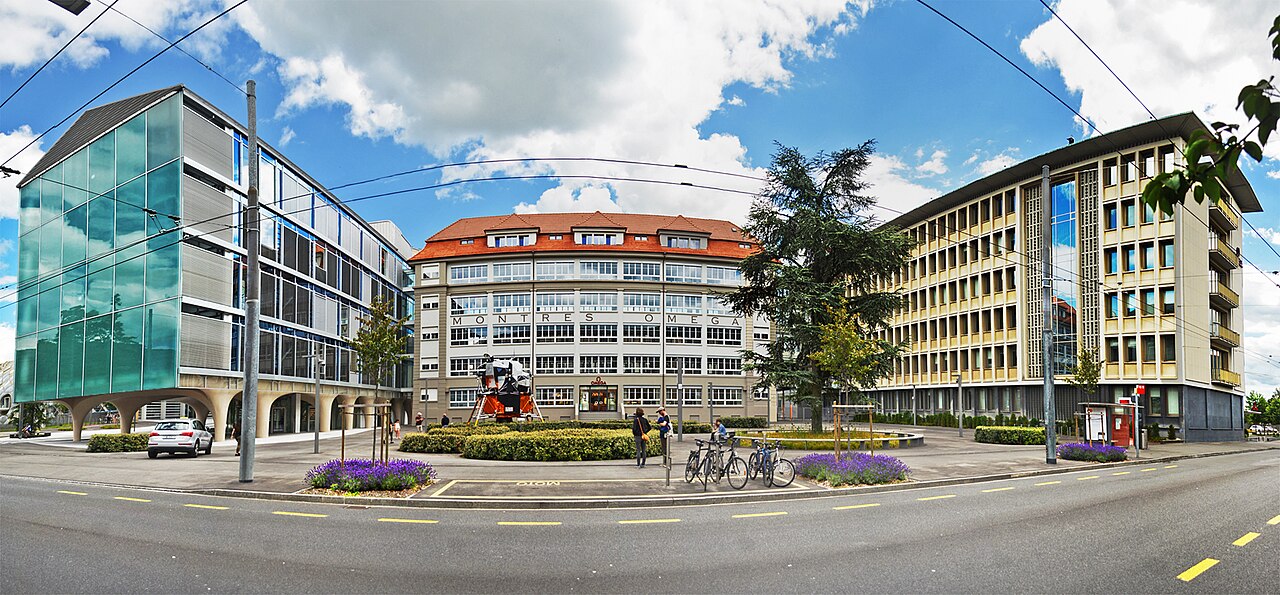
The caption identifies the institution shown; follow the source record for attribution and context.
Overview
The Omega Museum occupies the first floor of the Cité du Temps in Biel/Bienne. The official account describes the museum's relocation to this building in 2019 and an exhibition combining historic watches with films, showcases and interactive experiences. It is a brand museum: its account is a valuable institutional source for Omega's presentation of its history, not independent authentication of any privately owned watch.
A giant walk-in Speedmaster and an animation of the co-axial escapement explain mechanisms at exhibition scale. Neither should be mistaken for a surviving production movement or an operating calibre diagram. The museum also interprets Olympic timing, women's watchmaking, lunar exploration and James Bond watches. These strands show different uses of the brand, from measurement of sporting events to products associated with popular culture.
A long steel-bracelet-shaped display provides a chronological framework for the watches, with treasury windows along the route. The useful research question is which exact model or object is being described, rather than whether every example with a similar name shares the same movement or provenance. Planet Swatch on the second floor is a separate museum experience within the same building and should be cited separately.
Collection focus
- Historic Omega watches in a chronological display
- Walk-in Speedmaster and co-axial escapement animation
- Olympic timing, women's watches and lunar-exploration themes
- James Bond-related watch displays
Using it for research
- Distinguish an exhibition model or animation from a historic watch.
- Use exact references and object captions when comparing Speedmaster variants.
- Keep Omega Museum citations separate from Planet Swatch in the same building.
Before you visit
- Use the Cité du Temps directions for access from Biel/Bienne; the official page describes public-transport links and limited parking nearby.
- Group and school visits require advance contact with the reservations team and confirmation of availability. Do not treat a request as a confirmed booking.
- Check the official visitor page for current closures and admission conditions, and ask whether a specific watch is currently displayed.