
Museum · Geneva, Switzerland
Patek Philippe Museum
Geneva watchmaking and enamel work, with an extensive antique collection alongside the manufacturer's own.
Institution photographs
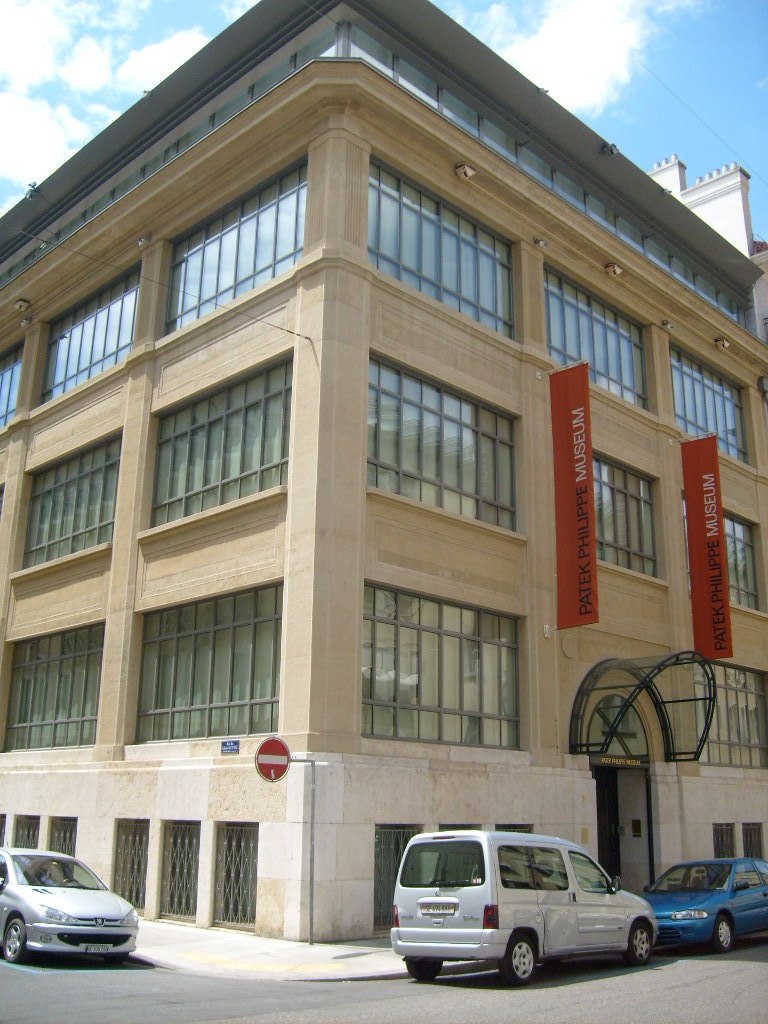
The caption identifies the institution shown; follow the source record for attribution and context.
Overview
The Patek Philippe Museum in Geneva is built around the collection assembled by Philippe Stern, honorary president of the manufacture. Its official page describes around 2,500 watches, automata, precious objects and miniature enamel portraits spanning five centuries of Genevan, Swiss and European watchmaking, together with a library of more than 8,000 works on timekeeping. These are the museum's own figures.
The museum separates two collections by floor. The Antique Collection, on the second floor, contains more than 1,000 pieces from the beginnings of the portable timekeeper around 1500 to the nineteenth century, including early portable watches, enamelled pocket watches, musical automata and technical timepieces. The Patek Philippe Collection, on the first floor, presents the firm's own pocket and wristwatches made since 1839. Because the museum belongs to a manufacturer, its account of the brand's history is the company's own; use independent sources where attribution or priority matters.
The ground floor shows nineteenth-century workbenches, antique tools and the museum's restoration atelier. That makes the building useful for seeing how hand tools and bench layout relate to the finished objects upstairs, but a visible atelier is not an offer of public servicing or authentication.
Collection focus
- Early portable watches and Genevan enamelled pocket watches
- Patek Philippe pocket and wristwatches since 1839
- Miniature enamel portraits, automata and an 8,000-volume horological library
- Historic workbenches, tools and a restoration atelier
Key pieces
- Patek Philippe watch shown at the Great Exhibition, London, 1851
- The museum states that this watch uses Jean Adrien Philippe's stem-winding system patented in 1845 and was presented to Queen Victoria at the 1851 exhibition. Museum reference
- First known perpetual-calendar wristwatch (1925)
- Described by the museum as the first known perpetual-calendar wristwatch, made by Patek Philippe. 'First known' is the manufacturer's claim and should be cited as such. Museum reference
- Calibre 89 (1989)
- The museum describes this 33-complication watch as made for the firm's 150th anniversary. Museum reference
Collection highlights are not a guarantee of current display; confirm with the institution before travelling.
Using it for research
- Cite the museum's description as the manufacturer's own account, especially for claims of being first.
- Keep the Antique Collection (other makers, before 1839 onwards) separate from the firm's own production when citing objects.
- Ask about library access separately from a museum visit; this page does not state its terms.
Before you visit
- The museum recommends checking current opening hours and booking tickets online in advance on its plan-your-visit page.
- Temporary thematic exhibitions change; the 2026 Nautilus anniversary exhibition is stated to run until early 2027.
- The restoration atelier on display is not a public repair or valuation service.