
Museum · Oxford, United Kingdom
Ashmolean Museum
Collection including English clocks and watches.
Institution photographs
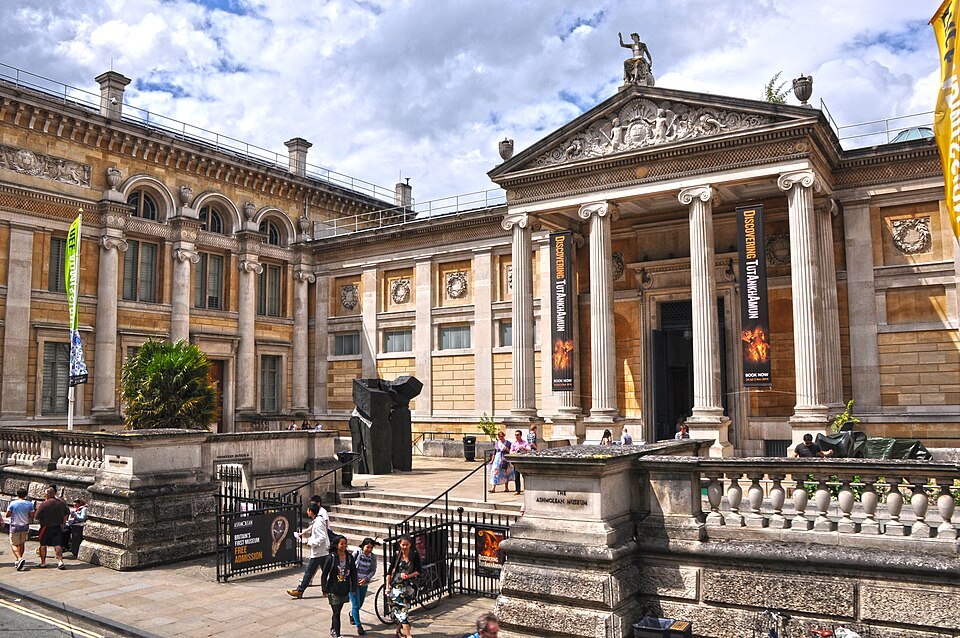
The caption identifies the institution shown; follow the source record for attribution and context.
Overview
The Ashmolean Museum in Oxford places watches within its wider collections of metalwork, jewellery and decorative arts. Its official collection introduction identifies three principal watch bequests: Bentinck Hawkins, J. Francis Mallet and Eric Bullivant. The resulting collection illustrates watch design and case decoration from the middle of the sixteenth century to the middle of the nineteenth. That stated scope should not be confused with the date of every object or with a catalogue of currently displayed pieces.
The official Silver Gallery page identifies watches and clocks on one wall of Gallery 55 on Level 2. This arrangement makes the relationship between timekeeping and goldsmiths' work especially visible. Case decoration, engraving and material are important historical evidence, but they do not determine the condition or originality of the hidden movement. Researchers should therefore keep aesthetic description separate from technical attribution.
A named highlight is the silver-cased verge watch in the form of a skull, attributed to France around 1630–1640 and recorded as WA1947.191.58. The gallery interprets skull-shaped watches through mottoes reminding the owner of mortality. This is a particular attributed object, not evidence that every skull watch is French or of the same date. The collection page also lists David Thompson's 2007 handbook, Watches in the Ashmolean Museum, as a route into more detailed study.
Collection focus
- Sixteenth- to nineteenth-century watch design and case decoration
- Watches and clocks within the Silver Gallery
- Skull-shaped watches and mortality imagery
Key pieces
- Silver-cased verge watch in the form of a skull
- WA1947.191.58; the official gallery attributes this cast, engraved and gilt silver watch to France, c. 1630–1640. Museum reference
Collection highlights are not a guarantee of current display; confirm with the institution before travelling.
Using it for research
- Retain the accession number and the museum's approximate date and attribution.
- Consult the named watch handbook for technical context; do not infer a movement specification from case decoration.
- Separate collection bequests from loans and confirm whether a study request concerns a displayed or reserved object.
Before you visit
- The museum is on Beaumont Street, Oxford; the official gallery page locates the Silver Gallery at Gallery 55, Level 2.
- Check the plan-your-visit page for temporary gallery or lift closures, access facilities and current admission arrangements.
- The visitor page requires booking for groups and distinguishes general admission from ticketed exhibitions. Confirm arrangements for the type of visit you intend.