
Roxbury, United States
Simon Willard and Sons
Partially verifiedHigh-quality clocks including tallcase, lighthouse, and patent timepieces
History
Simon Willard, an inventor and clockmaker, established his business in Roxbury, Massachusetts, between 1777 and 1780 after initially working in Grafton.
In 1823, he entered into a partnership with his son, Simon Willard Jr., which lasted for five years until the son established his own shop in Boston in 1828. The family produced a wide array of timepieces throughout the 18th and 19th centuries, ranging from tower and shelf clocks to his famous patent timepieces. Simon Willard maintained a distinguished career, serving as the caretaker of Harvard College clocks for over 50 years and producing clocks for the United States Capitol.
The extended history summarises the open references listed under Sources; each statement was checked against the cited passage. Confirm key dates in period documents before relying on them.
Key models
- Lighthouse Clock
- The lighthouse clock is an 8-day weight-driven mantel clock characterized by its exposed works under a glass dome.
- Banjo Clock
- Improved Timepieces, commonly referred to as banjo clocks, represent a major technological and design contribution by Simon Willard.
Major innovations
- Simon Willard invented the Patent Alarm Timepiece, which is widely known today as the lighthouse clock.
- He developed a clock jack mechanism for roasting meat, for which he received a privilege in 1784.
Known markings
- Clocks were often signed with inscriptions such as Simon Willard, Willard Patent, or Simon Willard and Son's Pattent.
Serial numbers
No serial-number system for this maker is recorded in the cited references.
Collecting significance
The catalogued pieces listed on this page show the kinds of objects auction houses, dealers and museums attribute to this maker; each attribution is the source's own.
In the object catalogue
2 catalogued objects are recorded under Simon Willard and Sons. Attributions are as given by each source and are not independent authentication.
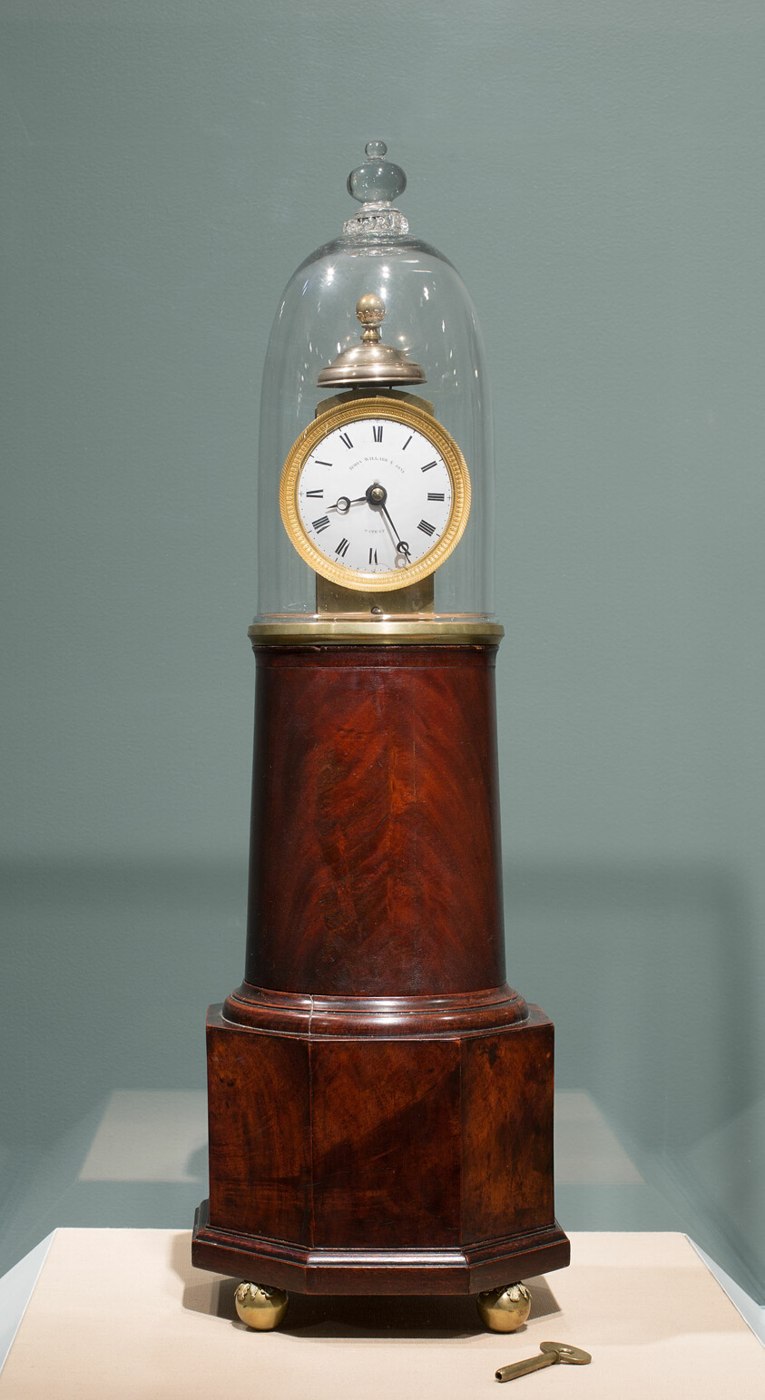
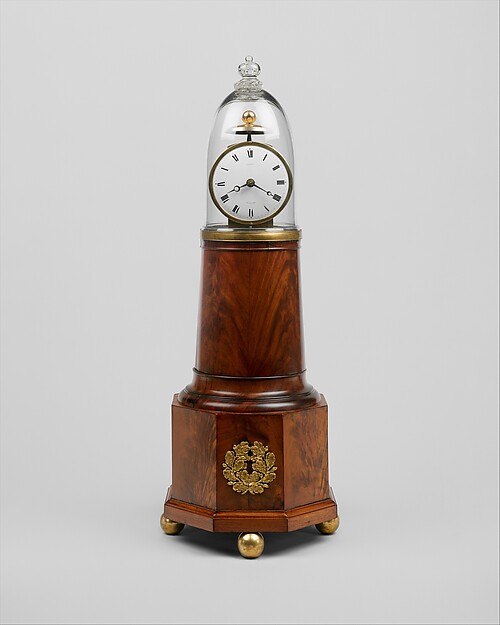
- Lighthouse ClockNovelty & automaton clock · 1825–30
- Simon Willard ClockMantel clock · 1825–30
Sources & references
- Willard House and Clock Museum and the Willard Family Clockmakers, NAWCC Bulletin, retrieved 2026-11-03 (paraphrased; text © the publisher)
- Lighthouse clock, Wikipedia (English), retrieved 2026-11-03 (text CC BY-SA 4.0)
- Simon Willard – People – Waywiser Home, chsi.emuseum.com, retrieved 2026-11-03 (paraphrased; text © the publisher)
- Elgintime - Simon Willard, elgintime.com, retrieved 2026-11-03 (paraphrased; text © the publisher)
- Research on Antiques & Collectibles, info4antiques.com, retrieved 2026-11-03 (paraphrased; text © the publisher)
Where sources disagree, the disagreement is stated rather than resolved silently.