
Magazine · Makers & history
The Hamilton 992B: The Zenith of American Railroad Timekeeping
The Hamilton 992B stands as the final, most refined iteration of the American railroad pocket watch, representing decades of industrial evolution. It remains a benchmark for precision, durability, and the high-standard requirements of North American railway time service.
November 24, 2026 · 4 min read
AI-drafted from search research. Not yet editorially reviewed — check important facts against the cited sources.
Key takeaways
- Produced from 1940–1969, the 992B is the successor to the earlier 992 grade.
- Features a 21-jewel movement with an Elinvar hairspring for temperature stability.
- Certified for use on major North American railroads as a 'railroad grade' timepiece.
- Requires professional care; never attempt to oil or adjust the movement yourself.
- Serial numbers can be used to date the movement to specific production years.
What is a Hamilton 992B?
The Hamilton 992B is not merely a watch; it is a monument to industrial-era engineering. Within the hierarchy of Railroad Watches, the 992B occupies the top tier. It was designed to meet the rigorous specifications that emerged during the expansion of the American railway network, where timing was a matter of life and death. Unlike mass-produced consumer timepieces of the era, the 992B was built to sustain extreme accuracy under the vibrations and temperature fluctuations inherent in train operations.
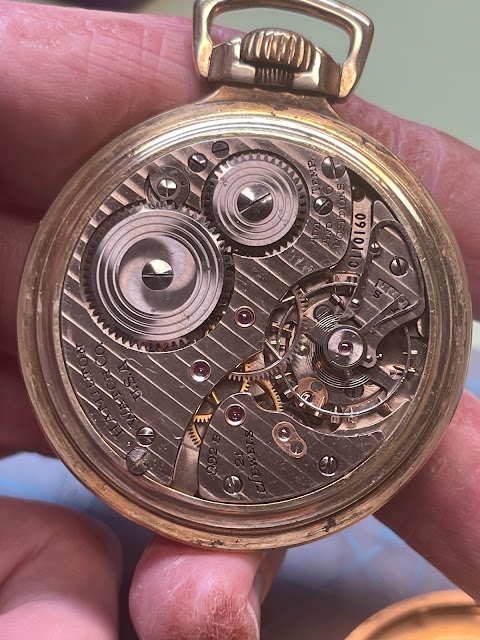
Every 992B was a Lever-Escapement Pocket Watch constructed with 21 jewels, ensuring that friction was minimized at critical contact points within the gear train. The watch utilized an Elinvar-Extra hairspring, a technological marvel of the mid-20th century that was virtually unaffected by magnetism or temperature change. This kept the balance wheel oscillating at a consistent frequency, a prerequisite for the Railroad Grade certification mandated by railroad companies.
The 992B Lever Escapement
The History and Development of the 992B
The development of the 992B was the culmination of Hamilton's experience with the Hamilton 992. While the original 992 was a workhorse, the 992B introduced refinements in metallurgy and assembly that made it superior. Introduced in 1940, it arrived at a time when American manufacturing was hitting its peak before the transition to military production—though the 992B remained a civilian stalwart alongside its tactical cousins like the Hamilton 4992B. How the Railroad Made the American Watch is a story of standardization; the 992B was the answer to a challenge that had begun with Waltham and Elgin decades prior.
During the mid-20th century, the Swiss–American Factory Rivalry reached a fever pitch. While Swiss makers were experimenting with different escapements, the American approach favored robust, bridge-based movements that were easy for a local watch inspector to disassemble, clean, and regulate. The 992B was the last great expression of this philosophy before the quartz crisis of the 1970s shifted the industry's focus toward digital timekeeping.
Identifying and Dating Your Hamilton 992B
Because of the precise nature of factory record-keeping at the time, you can often Date a Pocket Watch by Its Serial Number. The serial number is engraved on the movement itself, not the case. Owners should be aware that the case and the movement were often sold separately; it was common for a railroader to purchase a high-grade movement and house it in a case that met the dust-proof and impact requirements of their specific railroad.
| Maker | Movement Grade | Key Features |
|---|---|---|
| Hamilton | 992B | 21J, Elinvar Hairspring |
| Waltham | Vanguard | 21/23J, Adjusted |
| Elgin | B. W. Raymond | 21J, Temperature Compensated |
| Illinois | Bunn Special | 21/23J, Motor Barrel |
Care and Maintenance of Vintage Hamilton Watches
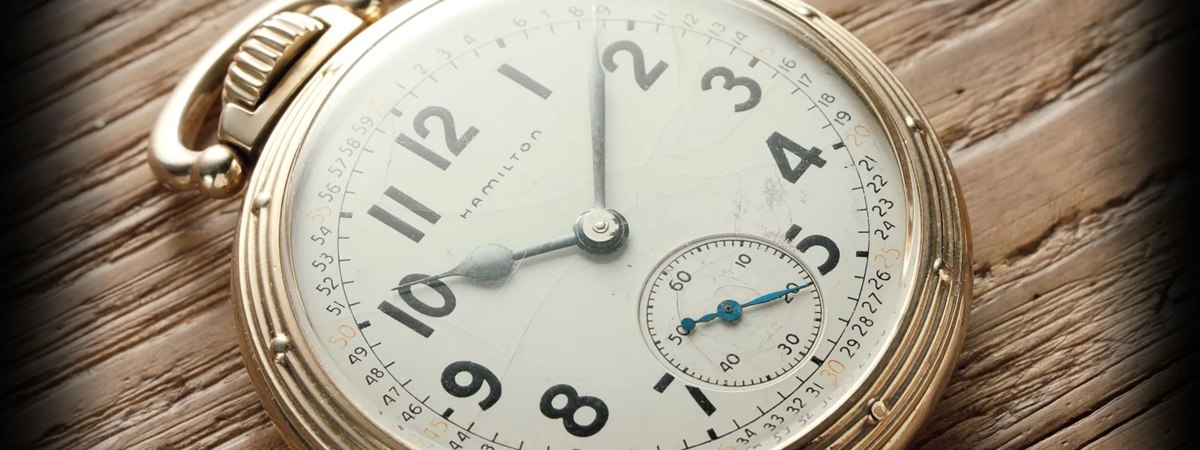
To properly maintain these watches, one must understand How to Wind and Set a Pocket Watch. The 992B is a lever-set watch. This means you must unscrew the front bezel to pull out a small lever—usually located at the 2 o'clock position—before the hands can be moved. This design prevents the user from accidentally changing the time while winding, a common safeguard for Railroad Grade watches.
Hamilton vs. Waltham and Elgin: The Market Context
When comparing the 992B to the Waltham Vanguard or the Elgin B. W. Raymond, the difference often comes down to personal preference in aesthetics and movement finishing. Waltham, the older company (founded 1850), had a storied history with the Model 1883, but by the 1940s, Hamilton had successfully positioned the 992B as the 'watch of railroad accuracy.' Elgin provided fierce competition with the Veritas, but the 992B’s combination of the Elinvar hairspring and its sheer manufacturing consistency helped it dominate the mid-century market.
How can one verify the authenticity of a 992B configuration?
Authentication of the Hamilton 992B involves inspecting the integrity of the movement against the original factory specifications. Because the 992B was a standard issue for decades, watchmakers often performed modular swaps during service. Verification requires checking that the bridge markings, jeweling configuration, and dial style align with the documented production period of the specific movement serial number.
| Feature | What it suggests | What to check next |
|---|---|---|
| Elinvar Extra balance | Presence of the definitive temperature-compensated hairspring | Ensure no hairspring deformation exists |
| Case markings | Compliance with railroad grade inspection standards | Confirm case-movement serial matching if available |
| Lever-set mechanism | The hallmark of railroad-grade safety protocols | Verify smooth actuation without force |
| Micro-regulator | Adjustability for precision timing | Check for stripped adjustment screws |
What to record
- Record the movement serial number located on the top plate.
- Document the specific dial type (e.g., Montgomery, Gothic, or Arabic numerals).
- Photograph the Elinvar Extra signature on the balance bridge.
- Note the case manufacturer mark inside the back cover.
- Capture the physical condition of the jewels to detect oil darkening or wear.
Understanding Railroad Grade Standards
What Is a Railroad Pocket Watch? It is a question often defined by the specific rules of the company hiring the engineer. Most roads required a watch to be size 16 or 18, with at least 17 jewels, and adjustment to five positions, temperature, and isochronism. The Hamilton 992B exceeded these requirements comfortably, which is why it remained on approved-watch lists for decades, long after other manufacturers had faded from the professional rail sector.
Frequently asked questions
Why is the Elinvar Extra hairspring significant for the 992B?
The Elinvar (Elastic Invariable) hairspring was engineered by Hamilton to minimize the effects of temperature fluctuations on the oscillation rate. In the variable environments encountered by railroad engineers, this material ensured that the watch maintained consistent timekeeping without needing frequent re-regulation, a vital requirement for safe train scheduling.
Does a non-original case affect the watch's railroad-grade status?
Railroad grade refers primarily to the movement's technical specifications, such as its 21-jewel count, temperature adjustment, and lever-set mechanism. While a period-correct case is preferred for provenance, a movement that meets all Hamilton internal standards retains its technical rating even if housed in an aftermarket or replacement case of appropriate quality.
Sources
- Cutmore, M., The Pocket Watch Handbook — pocket-watch construction
- Published factory grade and serial literature (Hamilton, Elgin, Illinois, Waltham)
- Pocket Watch Database — maker-specific movement serial and grade records, a secondary compilation
- Published railroad time-service rules and approved-watch lists (various roads)
- NAWCC publications on railroad time service and watch inspection
- NAWCC Bulletin articles on railroad timekeeping standards
- Use exact calibre drawings and supplier marks for individual attribution; this article does not authenticate a specific watch.