
Component record · Train
Repeater Hammer
Partially verifiedOne of the steel hammers in a repeating watch that strike the gongs (or, in older work, a bell) to sound the time.
What it does
Converts the striking train's lifts into clean blows on the gongs, usually one hammer for low notes (hours) and one for high notes (minutes), with both sounding the quarters.
How it works
When the repeat slide or pusher is operated, the racks fall against the snails to measure hours, quarters and minutes. As the striking train runs, pallets lift each hammer and let it fall under its spring onto its gong, giving one blow per tooth of the rack.
The hammer must strike and immediately rebound. Bankings or dampers limit its travel so that it does not rest against the gong and muffle it, and so that it does not bounce and strike twice.
Hammer spring strength, banking position and the distance from hammer to gong are adjusted together to give clear, even blows; this adjustment strongly affects the sound of a repeater.
Evolution
Early repeaters struck a bell in the case. Coiled wire gongs, generally credited to Breguet in the late eighteenth century, allowed thinner cases and became standard.
Known variations
- Two-hammer quarter and minute repeaters
- Additional hammers for carillon (three or more gongs)
- Dumb repeaters where the hammer strikes a block felt through the case
Identification for collectors
- Two polished hammers at the edge of the movement facing the gong feet
Common failure modes
- Weak hammer springs giving faint blows
- Misadjusted bankings causing blocking or double strikes
- Hammer heads worn or touching the case
Photographs
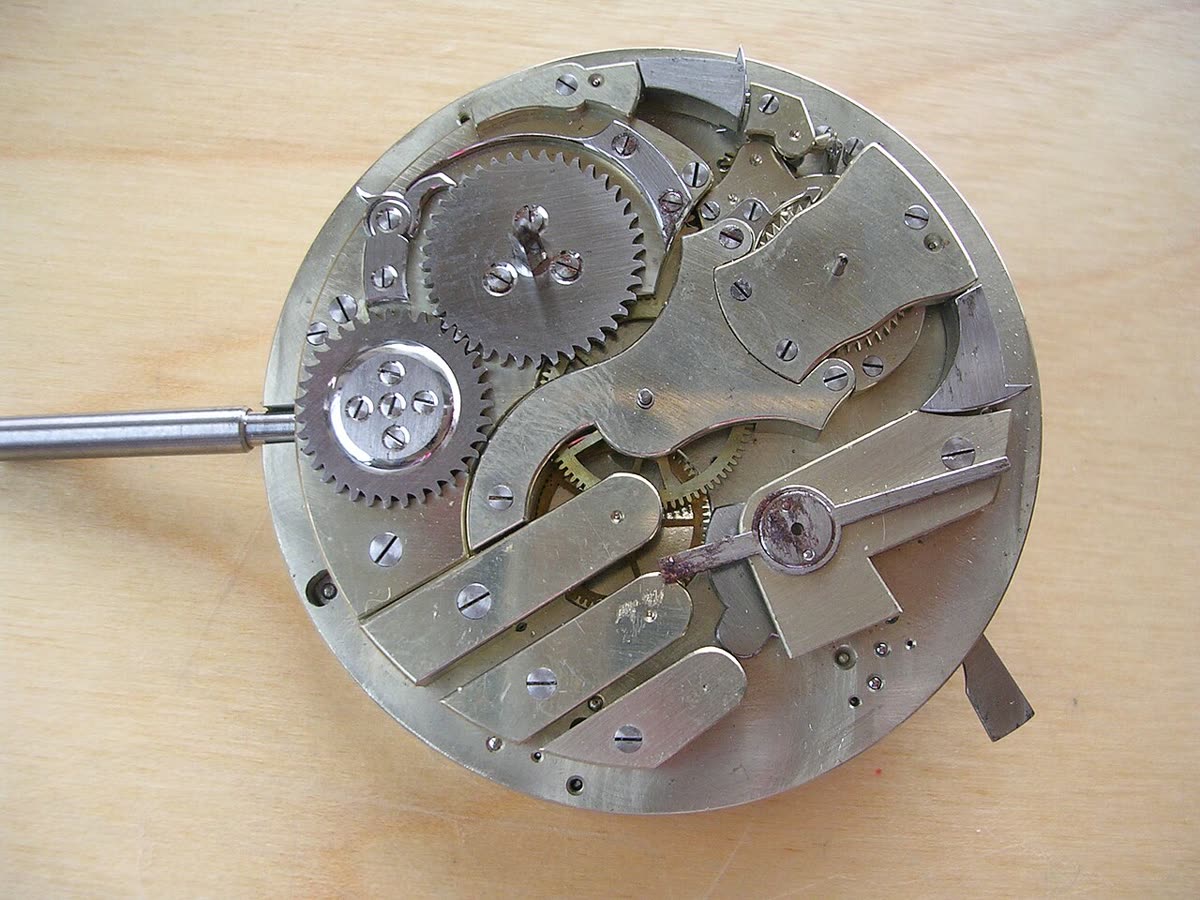
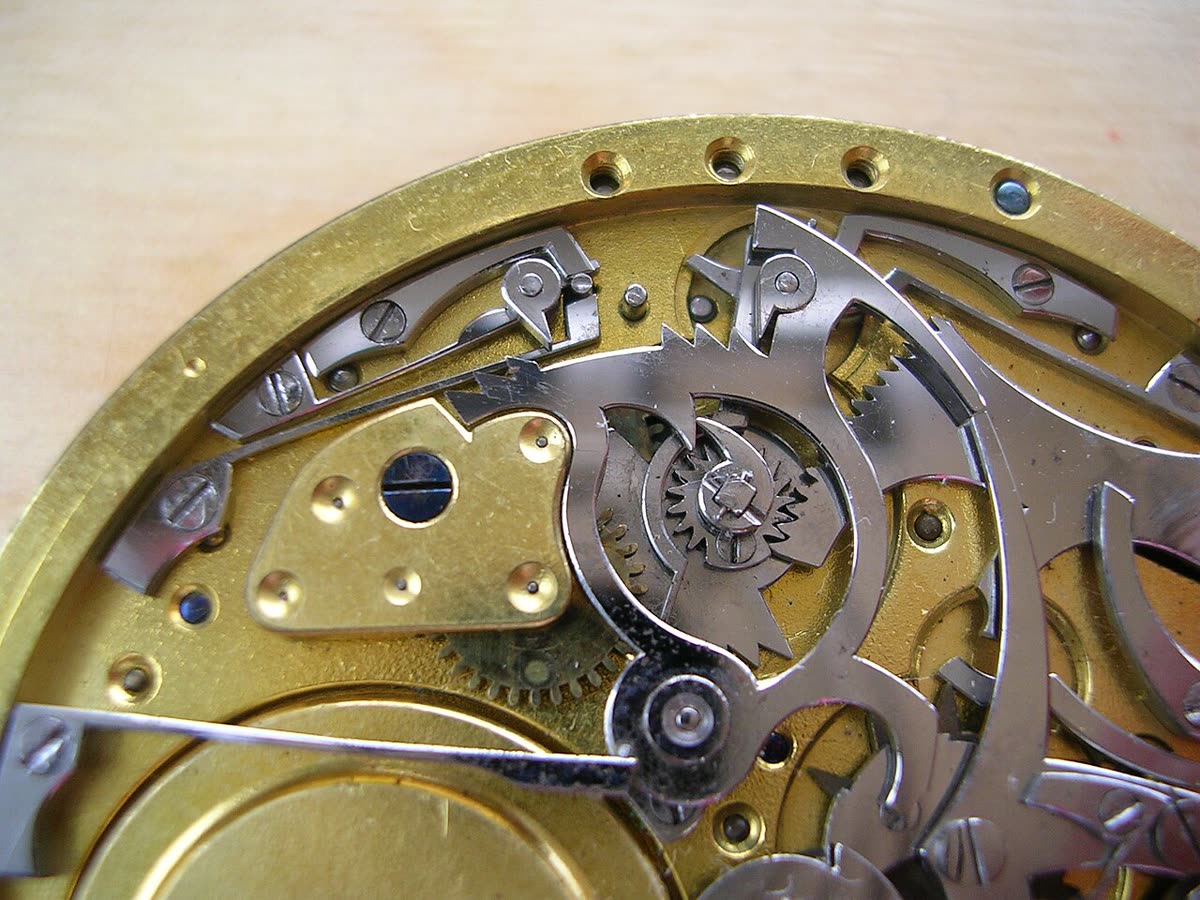
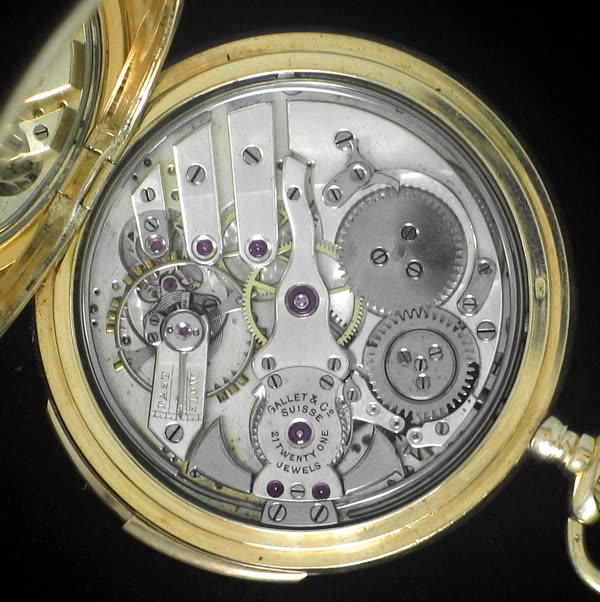
Photographs are illustrative examples of the type, not necessarily the exact object described. Verify details against the source file page.
Sources & references
- de Carle, D., Practical Watch Repairing
- de Carle, D., Watch and Clock Encyclopedia
- Fried, H. B., The Watch Repairer's Manual
- Daniels, G., Watchmaking
- Britten, F. J., Old Clocks and Watches and Their Makers
Where sources disagree, the disagreement is stated rather than resolved silently.