
Component record · Train
Minute Counter Jumper
Partially verifiedThe spring jumper that holds the chronograph's minute-counter wheel in position between steps, so the counter advances cleanly once per minute.
What it does
Keeps the minute counter steady and precisely indexed; without it the counter would drift or sit between minute marks.
How it works
A finger on the chronograph centre wheel engages an intermediate wheel (or the counter wheel directly) once per revolution of the seconds hand. That brief engagement advances the minute counter by one tooth.
The jumper's pointed or rounded beak rests between the counter wheel's teeth. As the finger pushes the wheel on, the jumper rides over a tooth and drops into the next space, snapping the counter into position and holding it there for the rest of the minute.
Some high-grade designs store energy so that the counter jumps exactly at the minute rather than being pushed over a few seconds; such 'precisely jumping' minute counters are a feature of a few modern calibres.
Evolution
The basic jumper has changed little; refinements concern the timing and crispness of the jump.
Known variations
- Semi-instantaneous counters advanced over a few seconds
- Instantaneous or precisely jumping counters
Identification for collectors
- A minute hand that creeps or stops between marks points to a weak jumper or worn finger
Common failure modes
- Weak or broken jumper spring
- Worn finger on the chronograph wheel
- Counter wheel teeth damaged by forced resetting
Photographs
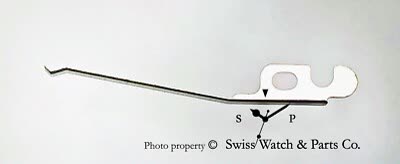
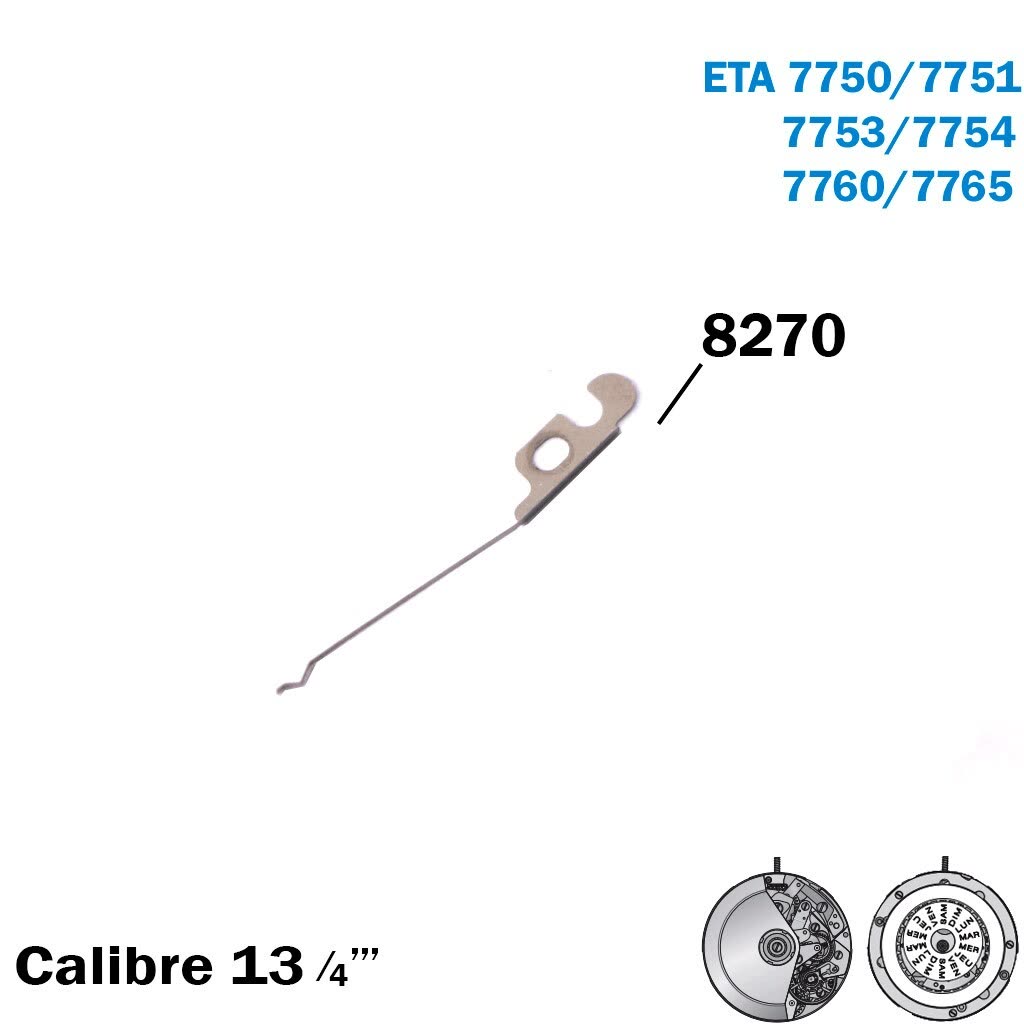
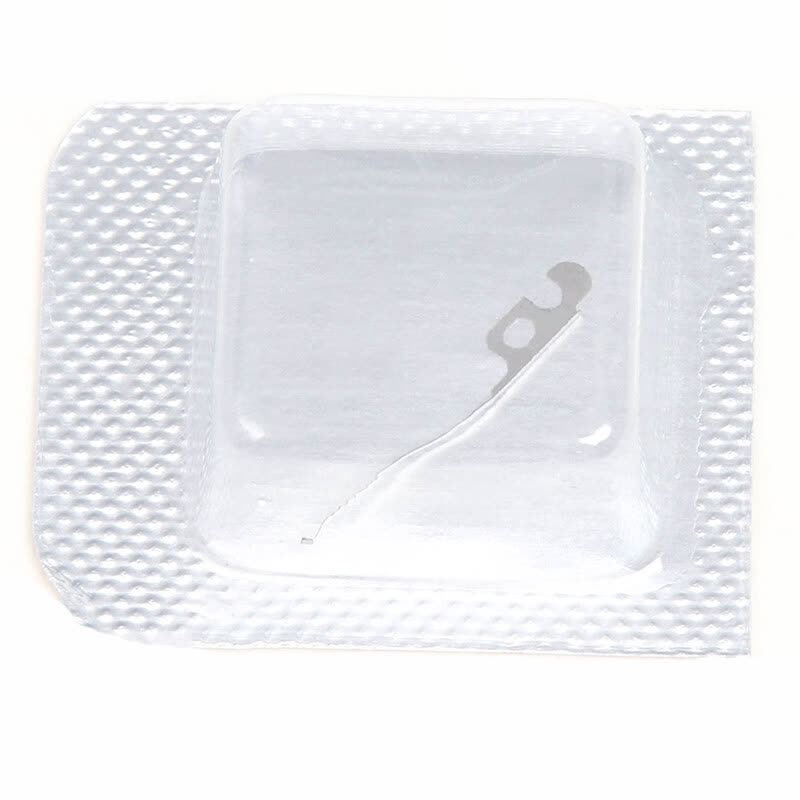
Photographs are illustrative examples of the type, not necessarily the exact object described. Verify details against the source file page.
Sources & references
- Fried, H. B., The Watch Repairer's Manual
- de Carle, D., Watch and Clock Encyclopedia
- Reymondin, C.-A., et al., The Theory of Horology (Swiss Federation of Technical Colleges)
Where sources disagree, the disagreement is stated rather than resolved silently.