
Component record · Train
Hour Recorder Wheel
Partially verifiedThe wheel that drives the chronograph's hour counter, usually indicating up to twelve hours of elapsed time.
What it does
Records elapsed hours when the chronograph runs and is held stopped, then reset, with the rest of the chronograph.
How it works
In many classic calibres the hour counter takes its drive continuously from the mainspring barrel through a friction coupling. A brake lever controlled by the chronograph holds the counter while the chronograph is stopped and releases it when it starts.
Because it is driven from the barrel rather than counted by a finger, the hour hand moves gradually rather than jumping each hour. Reset is by a hammer on its own heart cam.
Other designs count hours from the minute counter by further steps, so the method varies with the calibre.
Evolution
Twelve-hour counters became common in mid-twentieth-century chronographs, adding long-interval timing to the minute counter.
Known variations
- Barrel-driven hour counters with friction and brake
- Hour counters stepped from the minute counter
Identification for collectors
- A third register on the dial, usually at six o'clock, reading to twelve hours
Common failure modes
- Slipping friction drive causing the counter to lag
- Brake not holding, so the counter runs on when stopped
- Counter not zeroing because of hammer misadjustment
Photographs
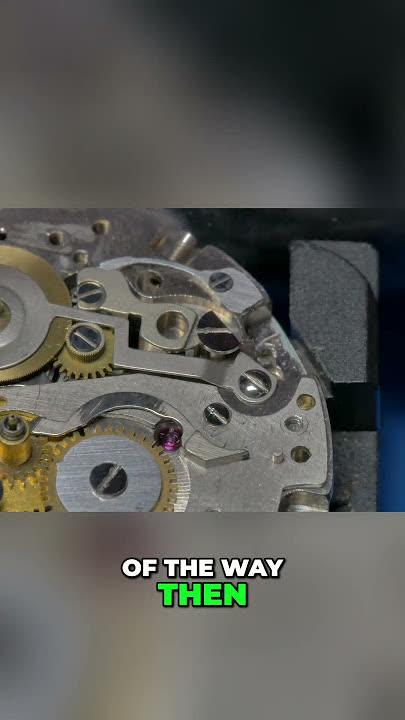
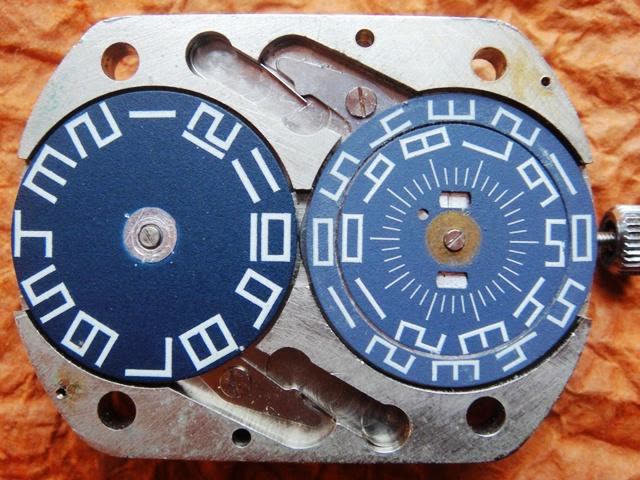
Photographs are illustrative examples of the type, not necessarily the exact object described. Verify details against the source file page.
Sources & references
- Fried, H. B., The Watch Repairer's Manual
- de Carle, D., Watch and Clock Encyclopedia
- Reymondin, C.-A., et al., The Theory of Horology (Swiss Federation of Technical Colleges)
Where sources disagree, the disagreement is stated rather than resolved silently.