
Component record · Dial & hands
Day Disc
Partially verifiedA disc printed with the days of the week, shown in a dial aperture in day-date watches.
What it does
Displays the day of the week, advanced once a day with the date and held by its own jumper or star.
How it works
The calendar train advances the day disc once every twenty-four hours, often through a seven-toothed day star; a jumper locates the disc.
Bilingual discs carry fourteen positions, two names per day in different languages, and the wearer chooses the language by stepping the disc through quick set.
Discs were supplied for different markets, so the language and abbreviations are a clue to where a watch was sold.
Evolution
Quick-set day, by crown or pusher, spread in the 1970s; multilingual discs became a marketing feature.
Known variations
- Single-language disc
- Bilingual disc
- Discs with weekend days in a different colour
Identification for collectors
- A language not matching the watch's market may indicate a replacement disc
Common failure modes
- Worn printing
- Bent disc fouling the dial
- Day not changing because the day star or jumper is damaged
Photographs
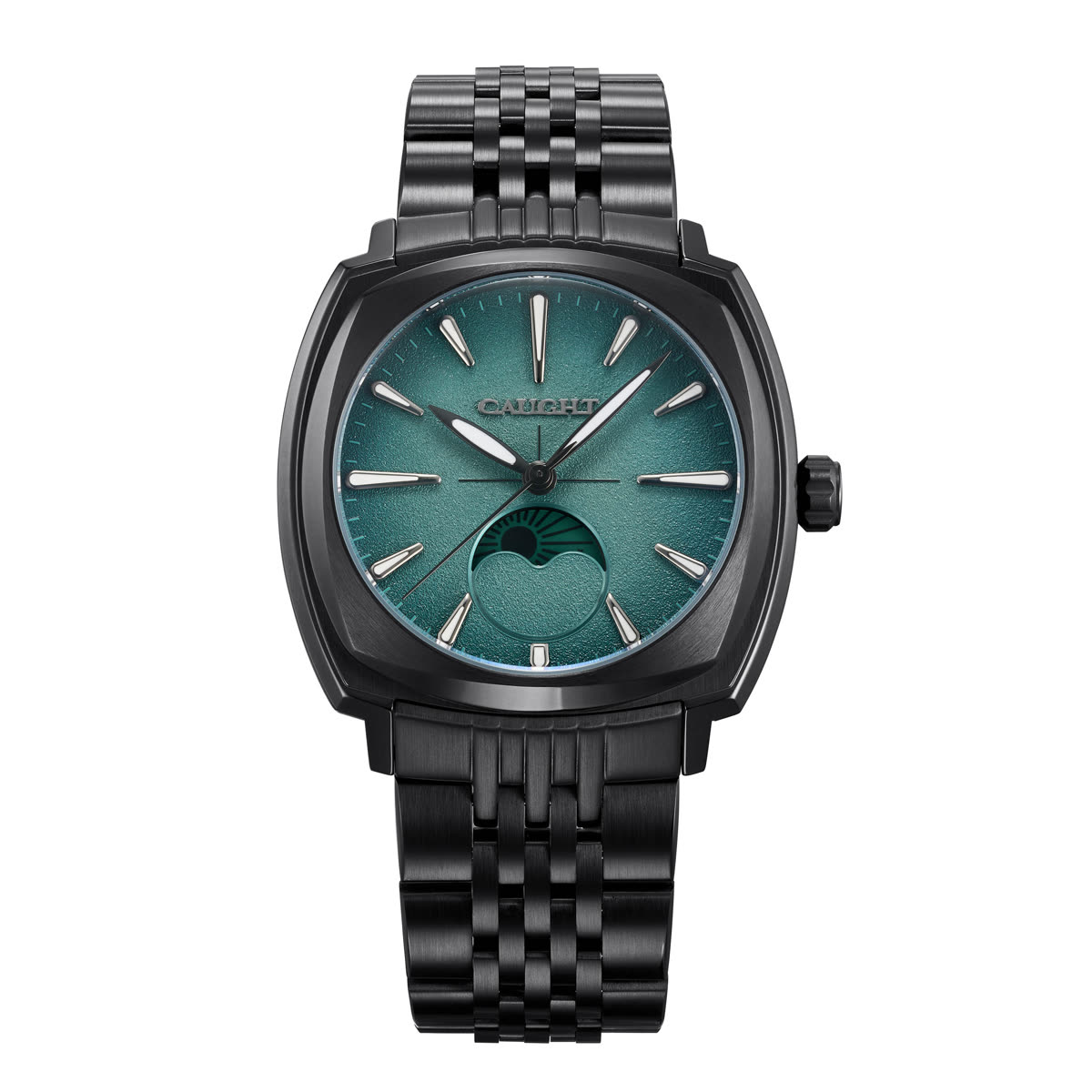
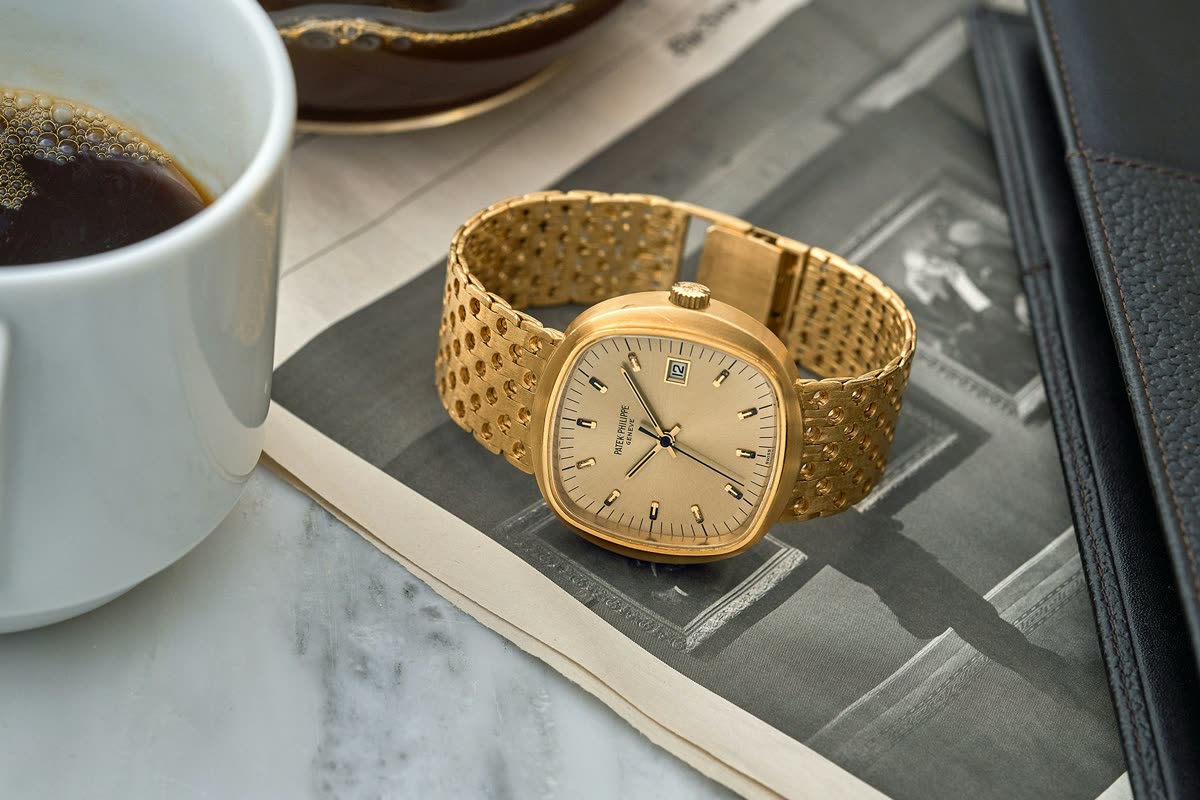
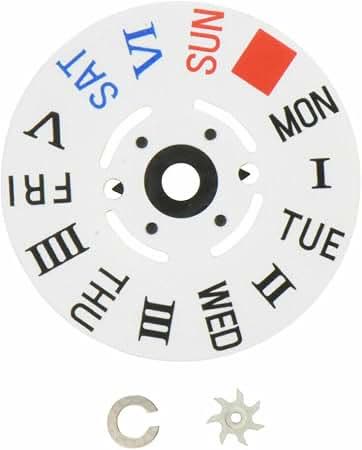
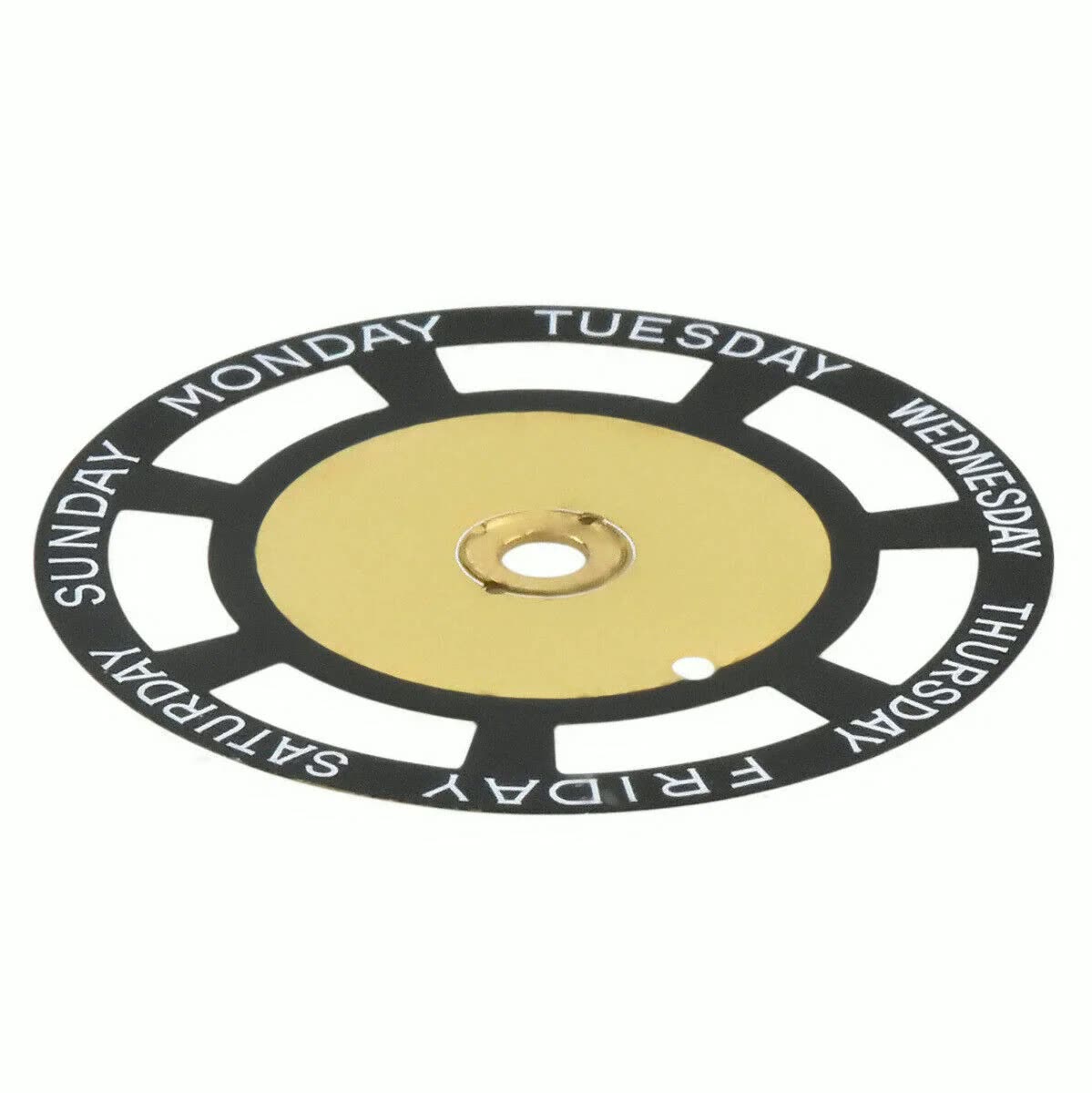
Photographs are illustrative examples of the type, not necessarily the exact object described. Verify details against the source file page.
Sources & references
- de Carle, D., Practical Watch Repairing
- de Carle, D., Watch and Clock Encyclopedia
- Fried, H. B., The Watch Repairer's Manual
- Daniels, G., Watchmaking
Where sources disagree, the disagreement is stated rather than resolved silently.