
Component record · Train
Train Bridge
Partially verifiedThe bridge that carries the upper pivots of the going-train wheels, usually the third and fourth wheels and often the escape wheel and centre wheel.
What it does
Holds the train wheels upright and at the correct depth of engagement, with the correct end-shake, so that power passes cleanly from the barrel to the escapement.
How it works
Bridges are located on the main plate by steady pins and held by screws. When the train bridge is fitted, each wheel's upper pivot must enter its jewel or hole; the bridge is lowered gently and the wheels are coaxed into their holes before the screws are tightened.
After fitting, each wheel should spin freely and show a little end-shake. A bridge that binds a wheel when its screws are tightened usually means a pivot is out of its hole, a bent pivot, or dirt under the bridge.
Some calibres use a single train bridge, others split it into separate bridges or cocks, and three-quarter plate movements cover the train with one large plate instead.
Evolution
Separate bridges allowed thinner movements and simpler servicing than the full plate. Bridge shapes became a signature of individual makers and calibre families.
Known variations
- Single train bridge
- Separate bridges or cocks for individual wheels
- Three-quarter plate covering the whole train
Identification for collectors
- Bridge shape and screw positions are among the quickest ways to identify a calibre
- Bridges from different movements of the same family are not always interchangeable
Common failure modes
- Overtightened screws binding the train
- Bent steady pins or worn steady-pin holes misaligning pivots
- Damaged jewels in the bridge
Photographs
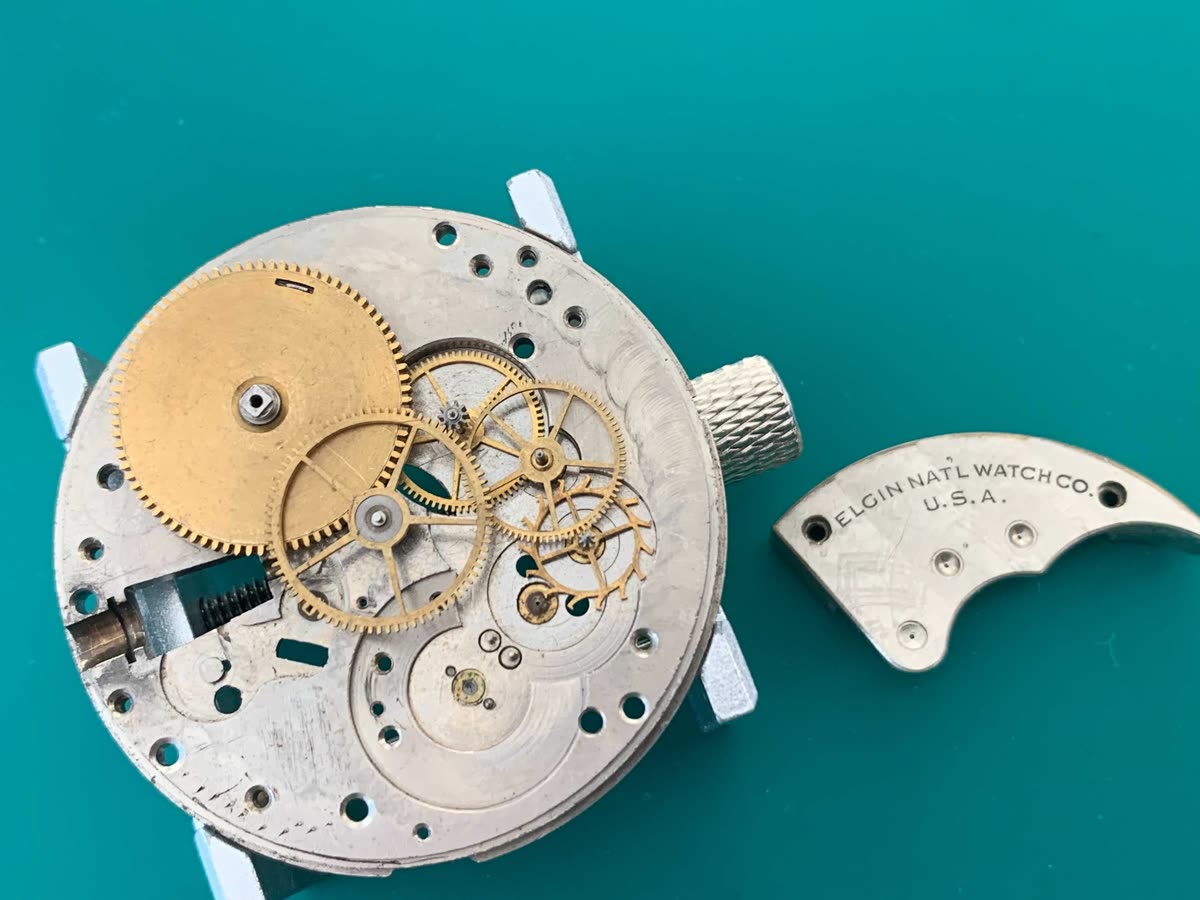
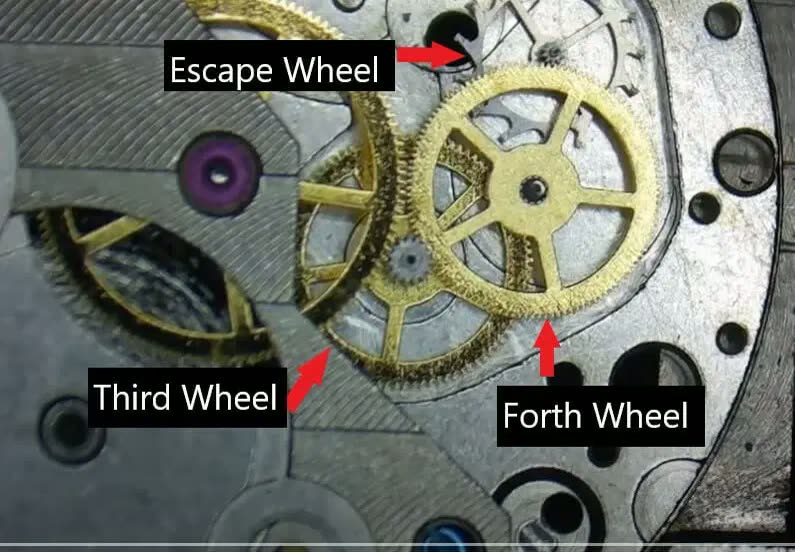

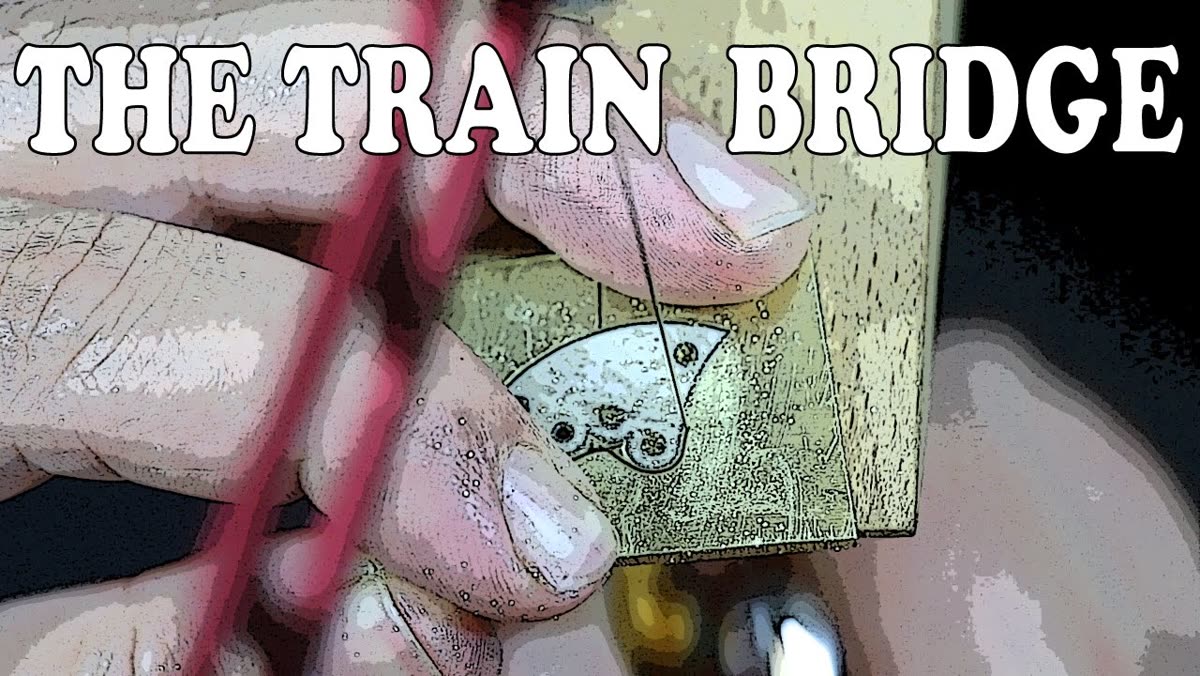
Photographs are illustrative examples of the type, not necessarily the exact object described. Verify details against the source file page.
Sources & references
- de Carle, D., Practical Watch Repairing
- de Carle, D., Watch and Clock Encyclopedia
- Fried, H. B., The Watch Repairer's Manual
- Daniels, G., Watchmaking
Where sources disagree, the disagreement is stated rather than resolved silently.