
Component record · Power
Barrel Arbor Hook
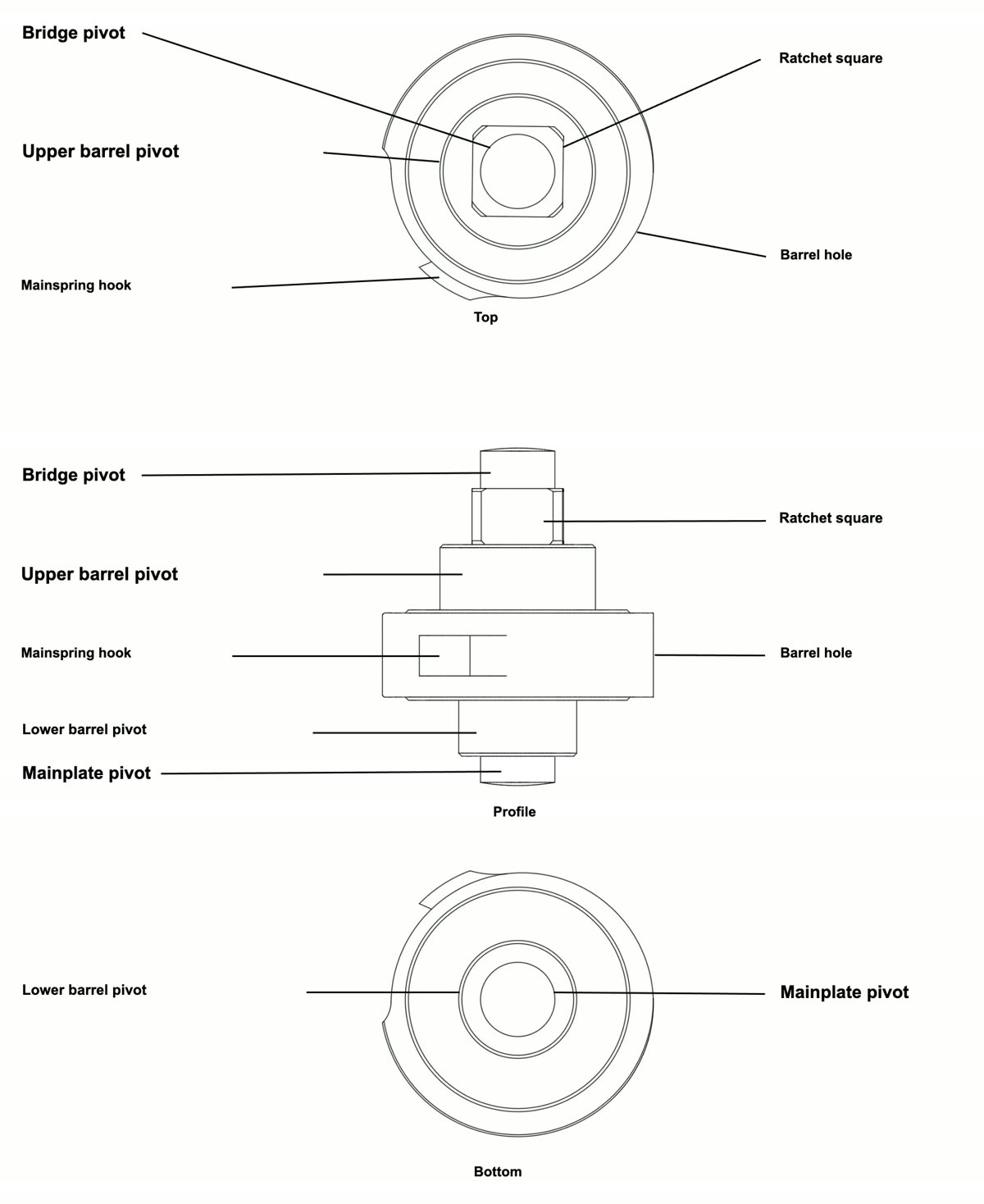
Partially verifiedThe small raised hook (or, in some designs, a slot) on the central core of the barrel arbor that catches the eye pierced in the mainspring's inner coil.
What it does
Anchors the inner end of the mainspring to the arbor, so that turning the arbor during winding coils the spring tightly around it.
How it works
Winding turns the barrel arbor through the ratchet wheel while the outer end of the spring stays attached to the barrel wall. The hook on the arbor drags the spring's inner coil round with it, so each turn wraps more of the spring around the core and stores energy.
The hook must be just high enough to hold the eye but low enough not to cut into or distort the next coil. The inner coil of the spring is formed into a curve that hugs the core closely, so that it does not lift away from the hook under load.
A traditional bench guideline relates the core to the barrel: the arbor's core is roughly one third of the inside diameter of the barrel, and the spring fills about half of the remaining space, leaving room for it to coil and uncoil. Correct proportions matter more than any single dimension.
Evolution
Little changed in principle, though modern mainsprings arrive pre-formed with their inner coil shaped, and calibre-specific arbors made matching springs a question of ordering the correct part rather than forming the eye by hand.
Known variations
- Raised hook formed on the arbor core
- Slotted or notched core used with some spring ends
- Clock barrel arbors with a hook or pin engaging a hole in the spring
Identification for collectors
- A spring that lets the crown turn without building resistance, but with no broken spring visible, points to a slipping eye or a worn hook
- Polished, rounded edges on the hook show long wear
Common failure modes
- Hook worn or rounded so that the spring slips
- Torn eye in the spring's inner coil
- Inner coil not formed to the core, lifting off the hook under load
- Spring breaking at the inner coil, the commonest place for a mainspring to fail
Photographs
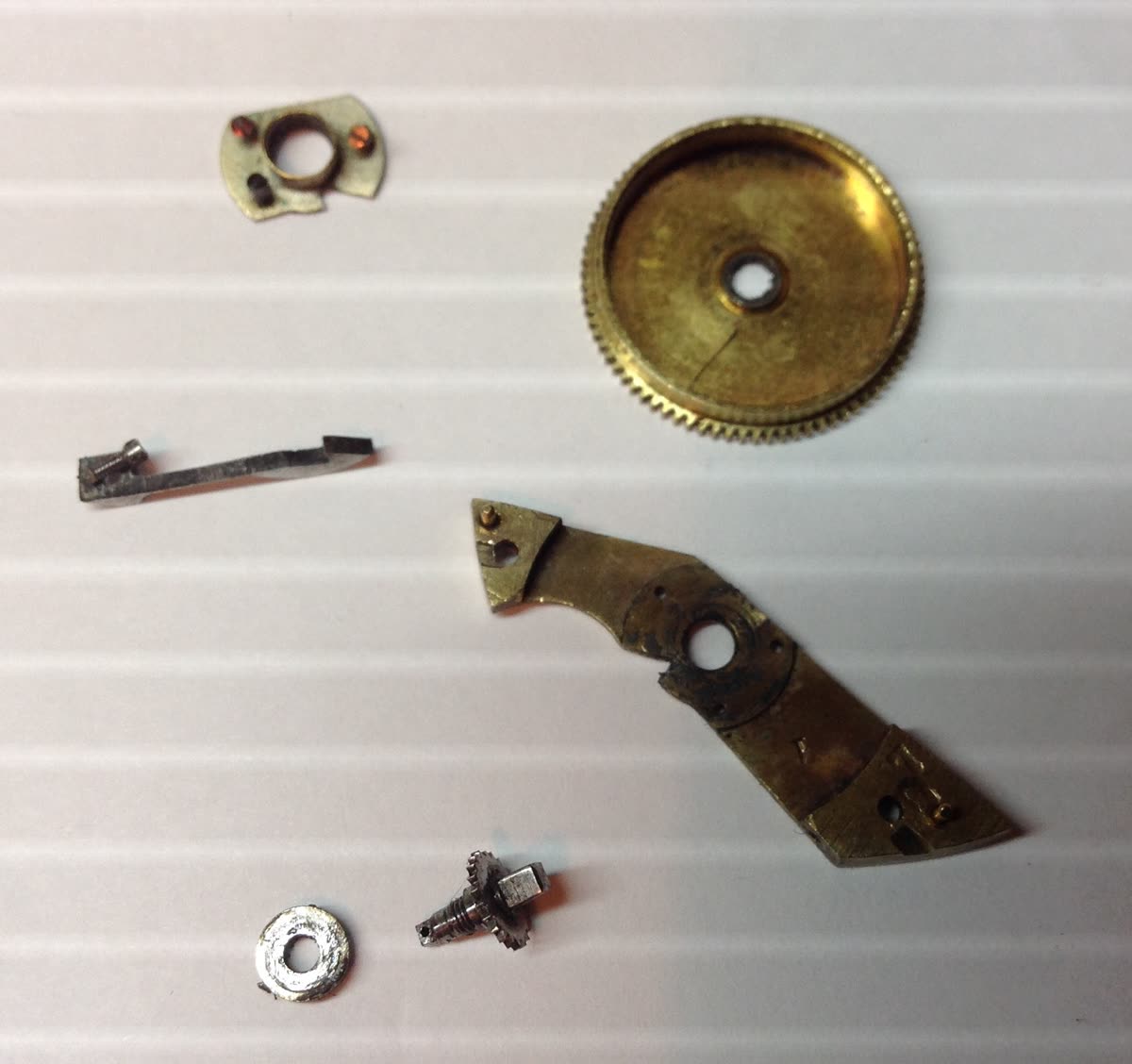
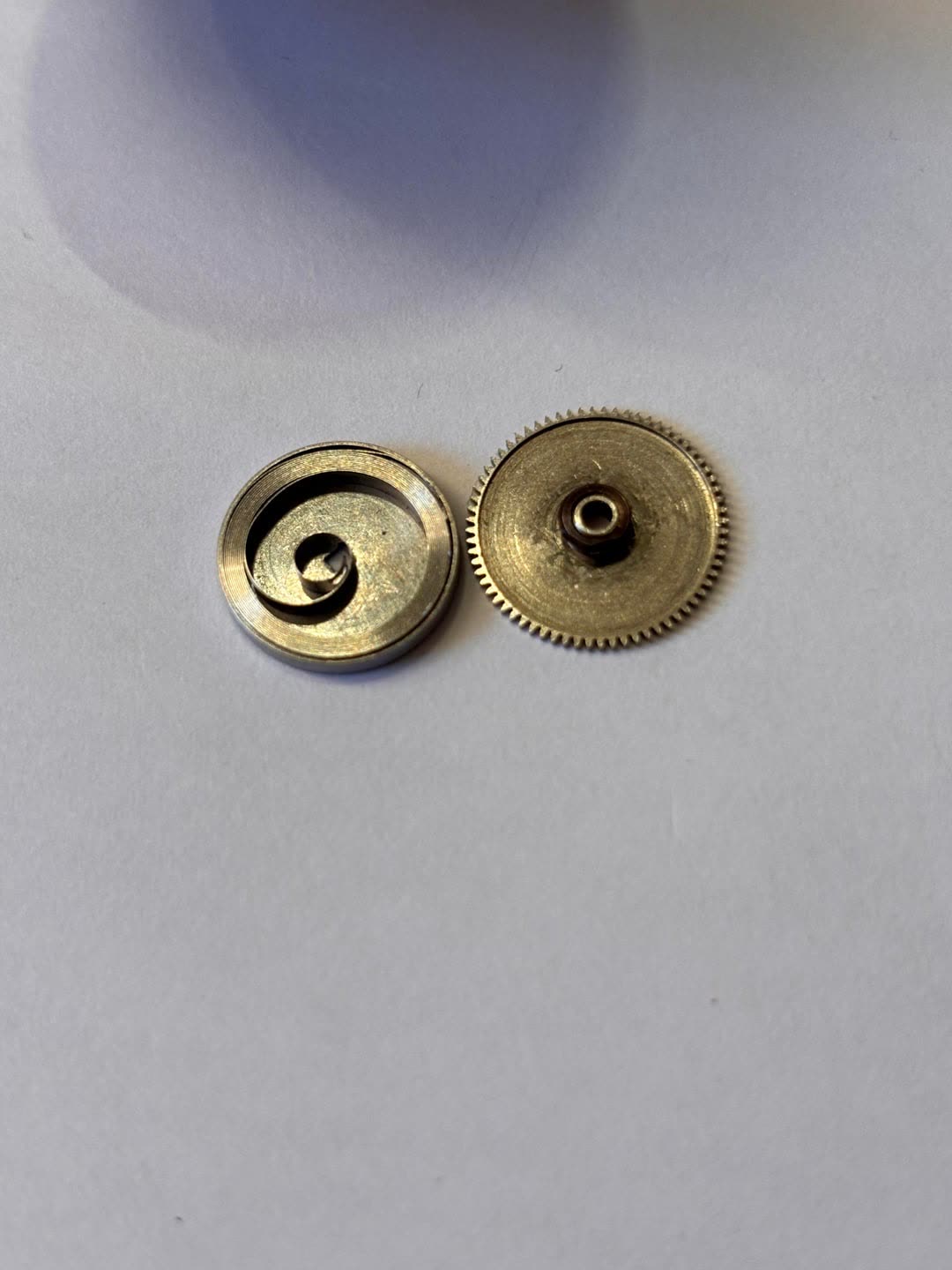
Photographs are illustrative examples of the type, not necessarily the exact object described. Verify details against the source file page.
Sources & references
- de Carle, D., Practical Watch Repairing
- de Carle, D., Watch and Clock Encyclopedia
- Fried, H. B., The Watch Repairer's Manual
- Daniels, G., Watchmaking
Where sources disagree, the disagreement is stated rather than resolved silently.