
Component record · Plates & finishing
Balance Bridge
Partially verifiedA support for the balance fixed at both ends, spanning the balance, instead of the single-footed balance cock.
What it does
Holds the balance's upper jewel more rigidly than a cantilevered cock, which helps the balance resist shocks and keeps its pivots aligned.
How it works
A balance cock is held by one foot, so a hard knock can flex it and the balance's position can shift slightly. A bridge, supported at both ends, flexes far less.
With a bridge in place, regulation is usually by a free-sprung balance (adjusting weights on the rim) or by a regulator mounted on the bridge itself, depending on the design.
The bridge is removed in the same way as a cock, with the balance usually lifting away with it so that it can be put aside safely.
Evolution
Bridges over the balance have appeared in high-grade and robust calibres throughout the twentieth century and are common in modern manufacture movements.
Known variations
- Full balance bridge with two feet
- Single-footed balance cock (the alternative)
Identification for collectors
- The balance is covered by a bar screwed down on both sides, rather than a single cantilevered cock
Common failure modes
- Bridge not seated, binding the balance
- Damaged jewel or shock setting in the bridge
Photographs
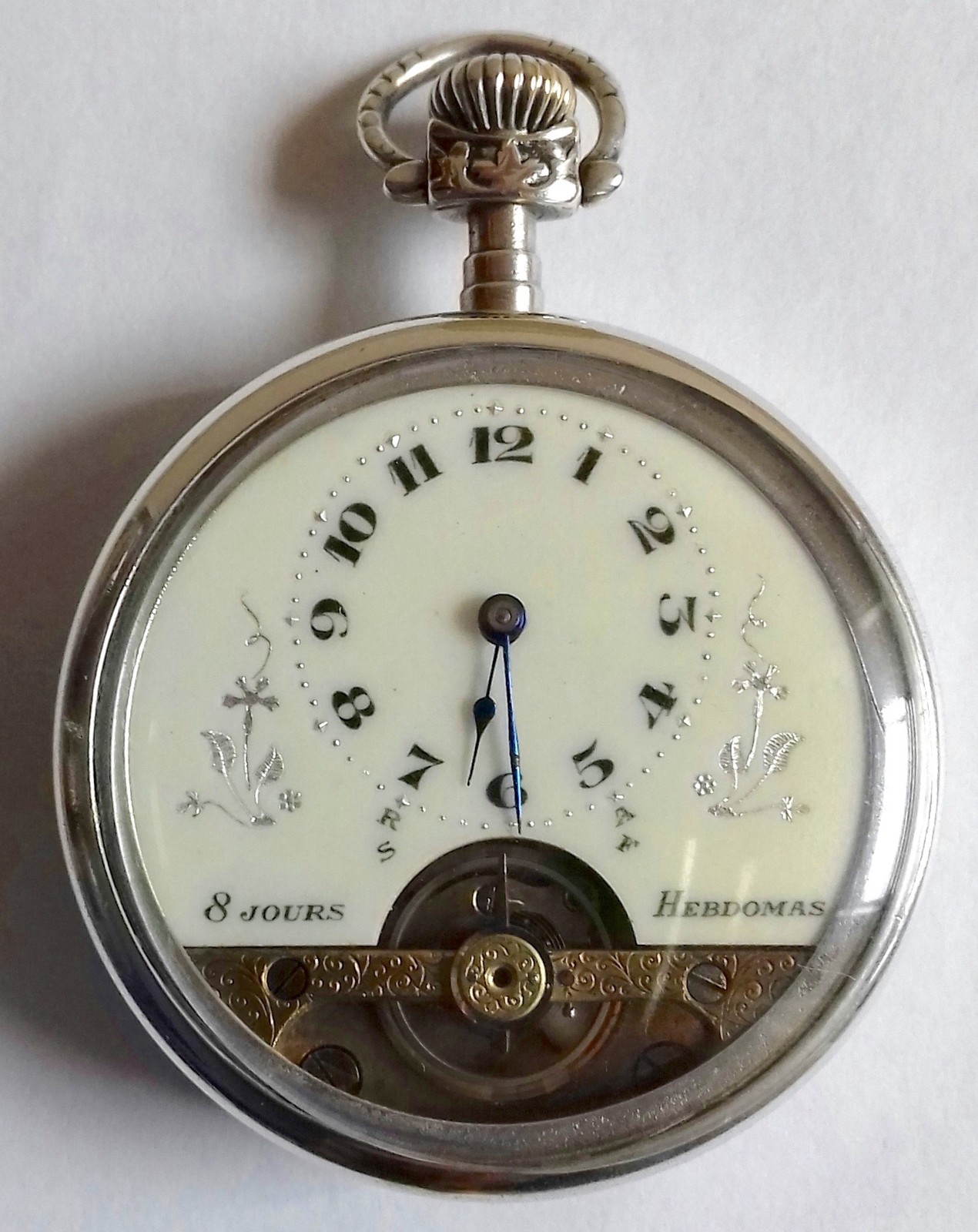
Photographs are illustrative examples of the type, not necessarily the exact object described. Verify details against the source file page.
Sources & references
- de Carle, D., Practical Watch Repairing
- de Carle, D., Watch and Clock Encyclopedia
- Fried, H. B., The Watch Repairer's Manual
- Daniels, G., Watchmaking
Where sources disagree, the disagreement is stated rather than resolved silently.