
Complication · Precision
Constant Force Escapement
Partially verifiedAn escapement that delivers a consistent amount of energy to the balance regardless of mainspring tension.
Definition
An escapement that delivers a consistent amount of energy to the balance regardless of mainspring tension.
Historical origin
A historic quest in horology, from remontoires to modern silicon blade solutions.
How it works
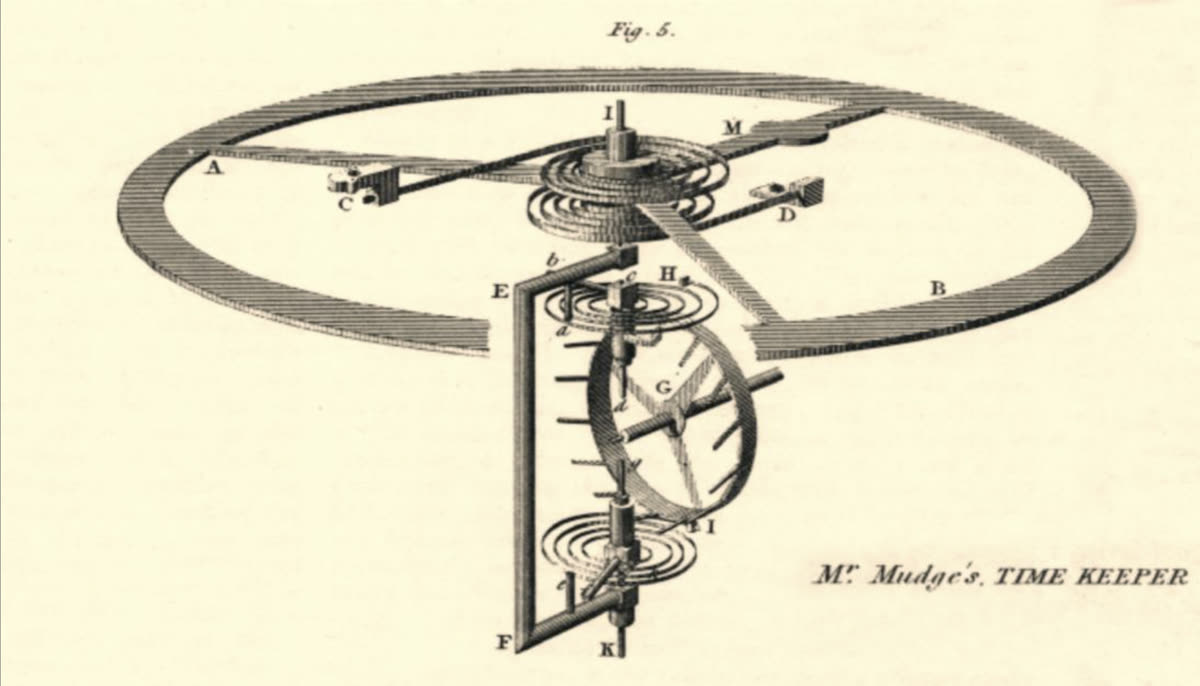
A small intermediate spring (remontoire) or a flexible blade stores a tiny amount of energy and releases it in discrete pulses.
This isolates the escapement from the varying torque of the mainspring.
Pocket watch context
Found in high-grade chronometers and some experimental English lever watches.
Wristwatch context
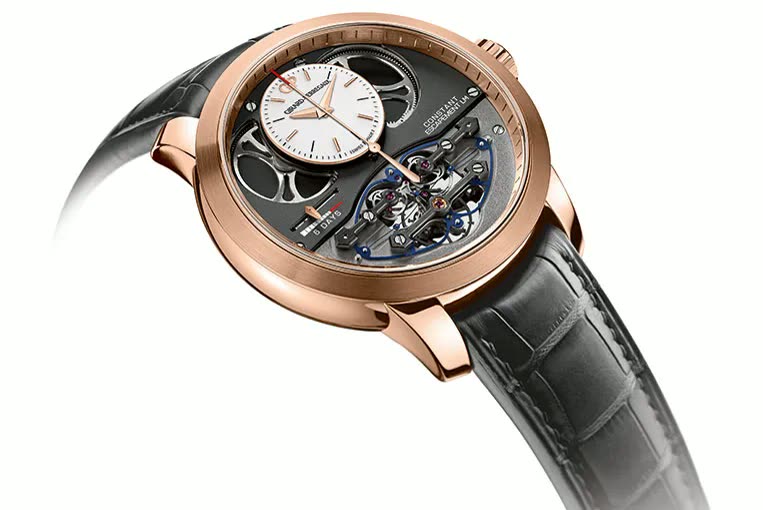
Revived in modern watches like the Girard-Perregaux Constant Escapement.
Identification
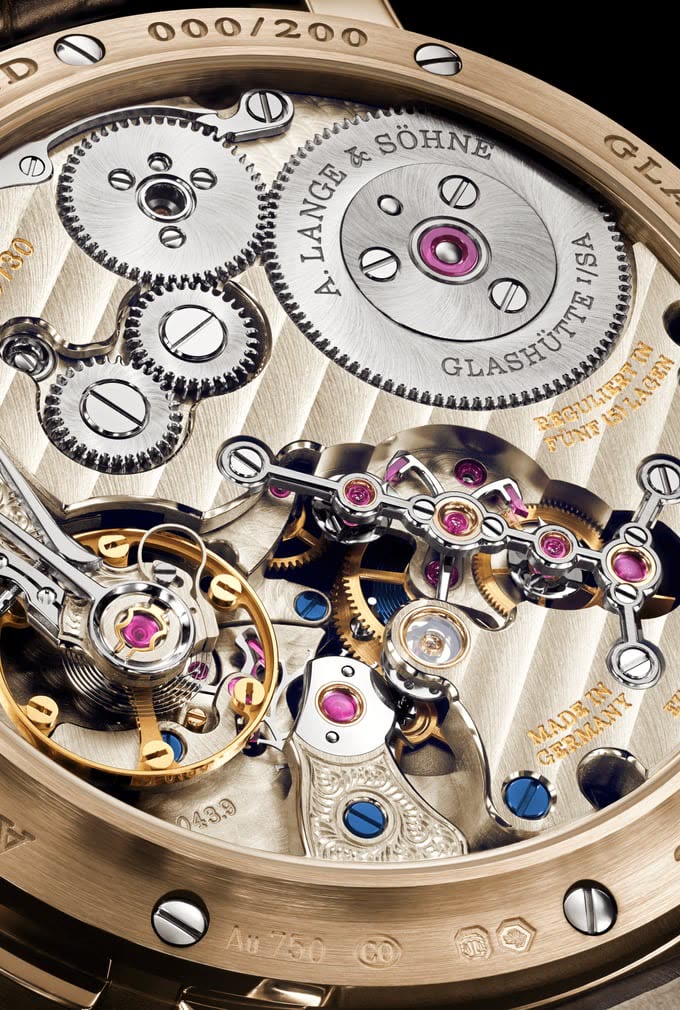
- A small spring or blade visible snapping back and forth near the escapement
Servicing notes
Requires advanced understanding of escapement dynamics.
General guidance only. Complicated mechanisms should be assessed and serviced by a qualified watchmaker or clockmaker specialist, not adjusted at home.
Background
The Constant Escapement is a horological mechanism designed to address the problem of inconsistent energy delivery to the balance wheel as a mainspring uncoils. Girard-Perregaux claims its version is one of the first true constant force escapements to be unveiled. Development began with Nicolas Dehon, who conceived the idea based on the physical phenomenon of buckling when applying pressure to a flexible card. The project continued under Stéphane Oes, who utilized silicon components and deep reactive-ion etching to bring the mechanism to fruition.
At its core, an intermediary silicon blade, six times thinner than a human hair, stores energy and releases it in discrete pulses to the balance. This mechanism allows the movement to maintain a consistent beat rate regardless of the remaining power in the twin barrels. While other manufactures have used remontoires or fusee and chain systems to provide a more constant force, the Girard-Perregaux system is integrated directly into the escapement. Europa Star reports that the escapement sounds so different from a conventional one that ordinary timing machines cannot measure its accuracy, and a high-powered laser camera is needed.
Written from the sources listed under Sources (makers, museums, auction houses and specialist publications are paraphrased, not reproduced); each statement was checked against the cited text, and claims a maker makes about its own work are attributed to it.
Construction and action
- The mechanism relies on a 14-micron thick silicon blade that undergoes buckling to transmit energy to the balance wheel.
- Two escape wheels, each featuring three teeth, are used to transfer energy to the time display.
- Energy is provided by two barrels coupled in parallel, which contain a total of four mainsprings.
Use and later history
- Girard-Perregaux presented the mechanism in a functioning commercial timepiece for the first time at the BaselWorld watch fair.
Photographs
Photographs are illustrative examples of the type, not necessarily the exact object described. Verify details against the source file page.
Sources & references
- In-Depth: The Girard-Perregaux Constant (Force) Escapement, Explained, Hodinkee, retrieved 2026-10-30 (paraphrased; text © the publisher)
- Escapements – Girard-Perregaux: buckling towards constant force, Europa Star, retrieved 2026-10-30 (paraphrased; text © the publisher)
- Explaining the innovative and long-awaited Girard-Perregaux Constant Escapement, SJX Watches, retrieved 2026-10-30 (paraphrased; text © the publisher)
- de Carle, D., Watch and Clock Encyclopedia
- Britten, F. J., Old Clocks and Watches and Their Makers
- Horological Journal (British Horological Institute), technical articles
Where sources disagree, the disagreement is stated rather than resolved silently.