
Complication · Display
Compass Indication
Partially verifiedA magnetic or electronic compass built into a watch: a needle on the dial or in the pendant, a separate compass capsule inside the case, or a compass mode shown by the hands or display.
Definition
A magnetic or electronic compass built into a watch: a needle on the dial or in the pendant, a separate compass capsule inside the case, or a compass mode shown by the hands or display.
Historical origin
Compass-and-sundial instruments came first; watches with a compass on the dial survive from the late eighteenth century, and compass-watches were patented from the 1890s (sources differ on which came first; see below).
How it works
A magnetised needle on a low-friction pivot indicates magnetic north; because a magnet near a mechanical movement can magnetise its springs, the compass has to be kept apart from the movement or the movement made antimagnetic.
Electronic compass watches use a magnetic sensor and show the bearing on the display or with the hands.
Sundial compasses use the compass to orient the dial so its gnomon reads correctly.
Pocket watch context
Pocket watches with a compass on the dial survive from the late eighteenth century, and inventors patented compass-watches, some combined with sundials or map readers, from the 1890s.
Wristwatch context
Wristwatches carry the compass either as a capsule hidden in the case (IWC Porsche Design, Wenger) or electronically (Casio Pro Trek, Tissot T-Touch); a compass-rose bezel without a needle is only a direction scale used with the sun or a separate compass.
Identification
- A magnetic needle on the dial, in the pendant or under a hinged movement
- A compass mode on a digital or touch-screen watch
- A compass-rose bezel without a needle is a direction scale, not a compass
Servicing notes
This is specialist work. Levers, springs and cam profiles in complicated work are calibre-specific, and incorrect reassembly commonly damages parts that cannot be bought. Refer the movement to a watchmaker experienced with this mechanism.
General guidance only. Complicated mechanisms should be assessed and serviced by a qualified watchmaker or clockmaker specialist, not adjusted at home.
Background
According to Compassipedia, the first patent for a compass-watch was filed by Léon Lotz on October 25, 1891, consisting of a magnetic needle rotating above the watch hands. Modern integration of this complication presents challenges because magnets can interfere with the operation of mechanical watch movements. IWC used highly tuned ETA 2892 movements whose springs, wheels and other parts were replaced with alloys having very little magnetic field, and the movement and dial lift on a hinge at 12 o'clock to uncover the compass. Electronic compass watches have since emerged, using sensors to provide bearing information on digital or analog displays, as demonstrated by the Casio Pro Trek line.
Written from the sources listed under Sources (makers, museums, auction houses and specialist publications are paraphrased, not reproduced); each statement was checked against the cited text, and claims a maker makes about its own work are attributed to it.
Construction and action
- Mechanical compasses in watches like the IWC Porsche Design and Wenger models are designed to be removable from the case for independent use.
- Casio electronic compasses include features like bearing memory, magnetic deviation correction, and continuous measurement modes.
- IWC's Porsche Design compass watch also carried an emergency signalling mirror on the back of the movement.
Where sources differ
- Origin. The Online Compass Museum (Compassipedia) says "the first mention known of a compass on a watch" is Léon Lotz's patent no. 216.984, filed on 25 October 1891, but the Science Museum Group catalogues a London watch of 1799 by Benjamin Webb whose dial has "a compass set at 11 o'clock".
Photographs
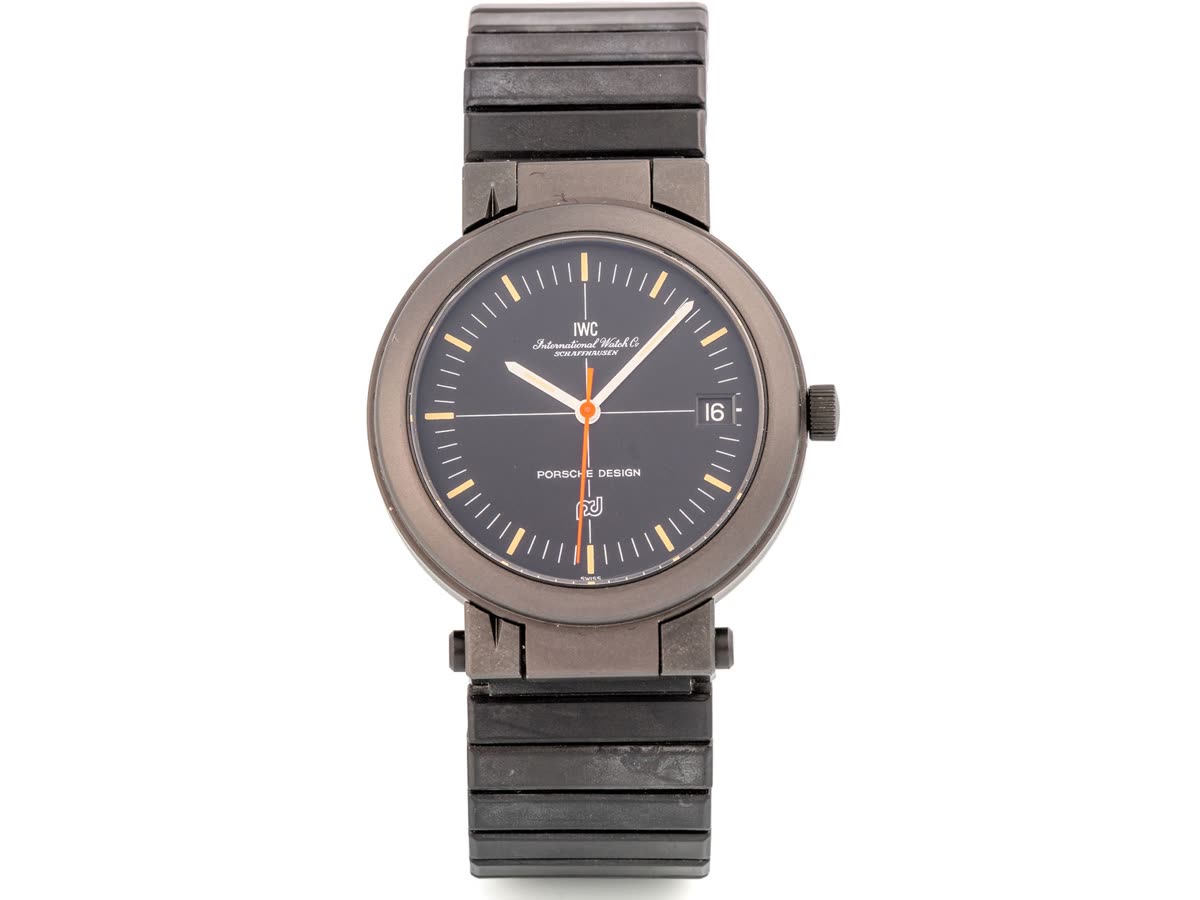
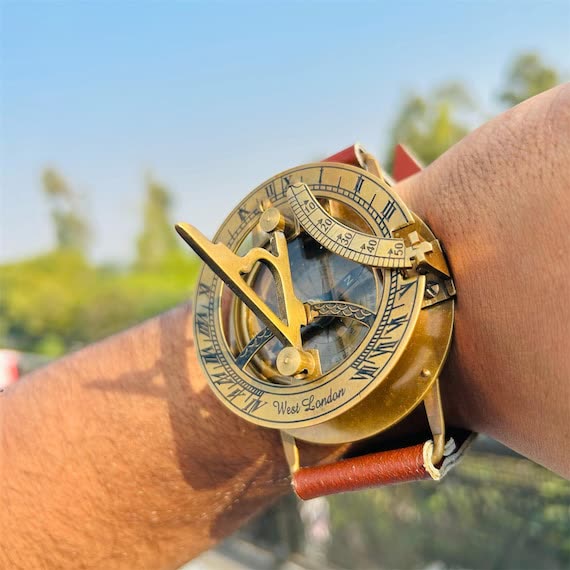
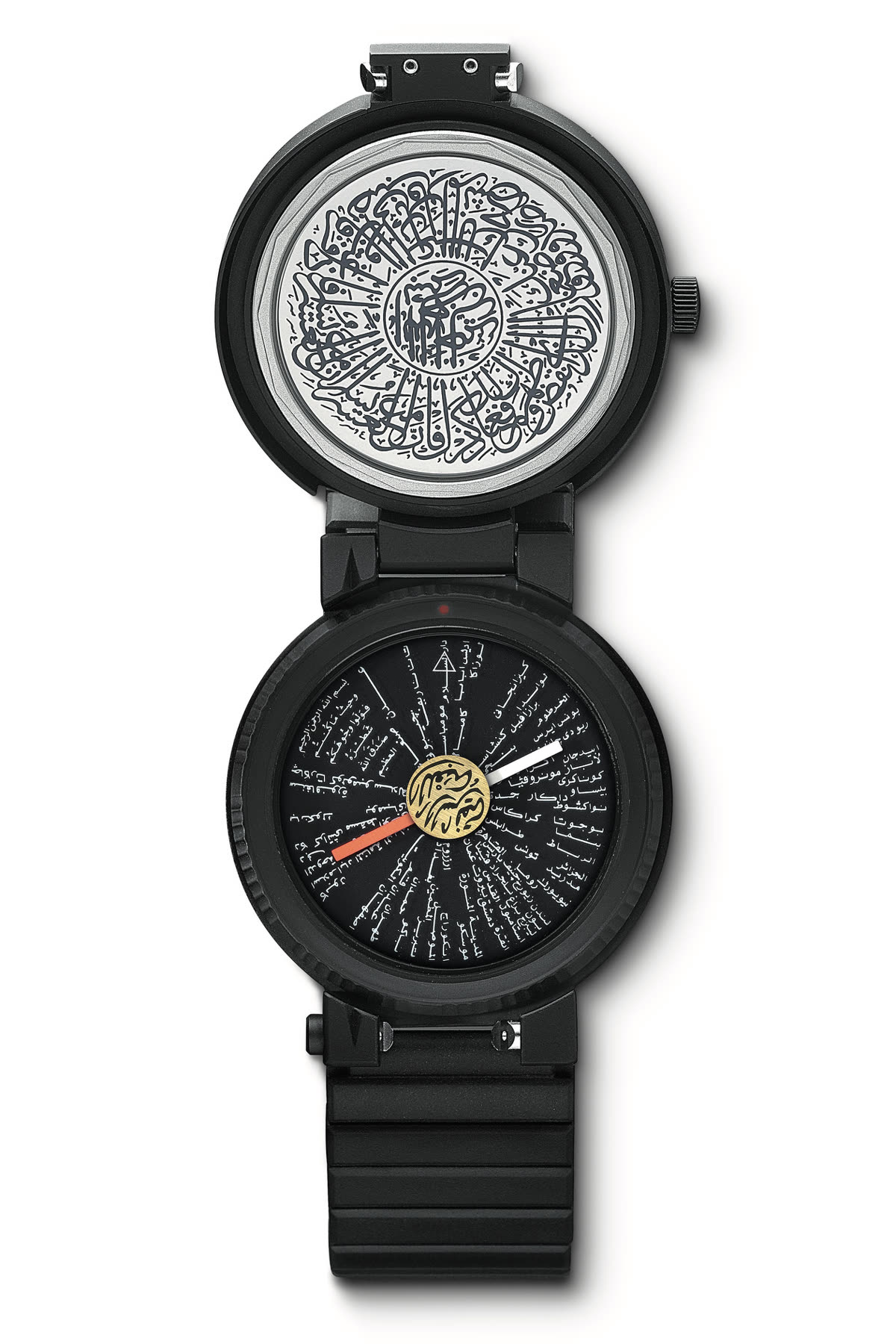
Photographs are illustrative examples of the type, not necessarily the exact object described. Verify details against the source file page.
Sources & references
- Compasses on watches, Compassipedia (Online Compass Museum), retrieved 2026-11-02 (paraphrased; text © the publisher)
- Watch and compass by Benjamin Webb, Science Museum Group, retrieved 2026-11-02 (paraphrased; text © the publisher)
- Let's Get Lost In The Legacy Of The IWC Porsche Design Compass Watch, Hodinkee, retrieved 2026-11-02 (paraphrased; text © the publisher)
- Casio Releases PRO TREK Watch with Flagship Sensor Performance in Smaller Case, Casio, retrieved 2026-11-02 (paraphrased; text © the publisher)
- Wenger Compass Watch, Europa Star, retrieved 2026-11-02 (paraphrased; text © the publisher)
- de Carle, D., Watch and Clock Encyclopedia
- Britten, F. J., Old Clocks and Watches and Their Makers
- Horological Journal (British Horological Institute), technical articles
Where sources disagree, the disagreement is stated rather than resolved silently.