
Complication · Display
Altimeter
Partially verifiedA complication that indicates altitude above sea level based on atmospheric pressure.
Definition
A complication that indicates altitude above sea level based on atmospheric pressure.
Historical origin
Adapted from aviation instruments for use in explorer's watches.
How it works
Uses an aneroid capsule (a sealed metal chamber) that expands or contracts with air pressure changes.
This motion is amplified through a lever system to move a dial pointer.
Pocket watch context
None.
Wristwatch context
Found in specialized tool watches like the Oris Big Crown ProPilot Altimeter.
Identification
- A secondary scale for altitude, often in feet or meters
- Requires a vented case to allow air pressure to reach the capsule
Servicing notes
The pressure chamber is sensitive to moisture; seals must be checked frequently.
General guidance only. Complicated mechanisms should be assessed and serviced by a qualified watchmaker or clockmaker specialist, not adjusted at home.
Background
According to Oris, altimetry in aviation is still commonly based on the barometric principle invented and patented in 1844 by the French engineer Lucien Vidie. This complication indicates altitude by measuring atmospheric pressure changes through a sealed, flexible aneroid cell or chamber. According to Oris, these cells expand or compress as ambient pressure shifts, moving a lever system that drives a pointer on a dial.
Measurements are influenced by local weather dynamics and require calibration to a known pressure or altitude reference to ensure accuracy. Because barometric sensors require air circulation, some models feature specialized crown mechanisms that open the case to the atmosphere.
Written from the sources listed under Sources (makers, museums, auction houses and specialist publications are paraphrased, not reproduced); each statement was checked against the cited text, and claims a maker makes about its own work are attributed to it.
Construction and action
- A protective membrane allows air circulation for pressure measurement while preventing moisture from entering the case.
Use and later history
- Favre-Leuba produced the first mechanical wristwatch with an integrated altimeter in 1962 using a manually wound movement, as reported by Swisswatches Magazine.
- Oris claims the development of the first mechanical wristwatch to integrate an altimeter with an automatic movement in 2014.
- Breva introduced the hand-wound Génie 02 Air, described by Hodinkee as a limited-run mechanical altimeter watch.
Photographs
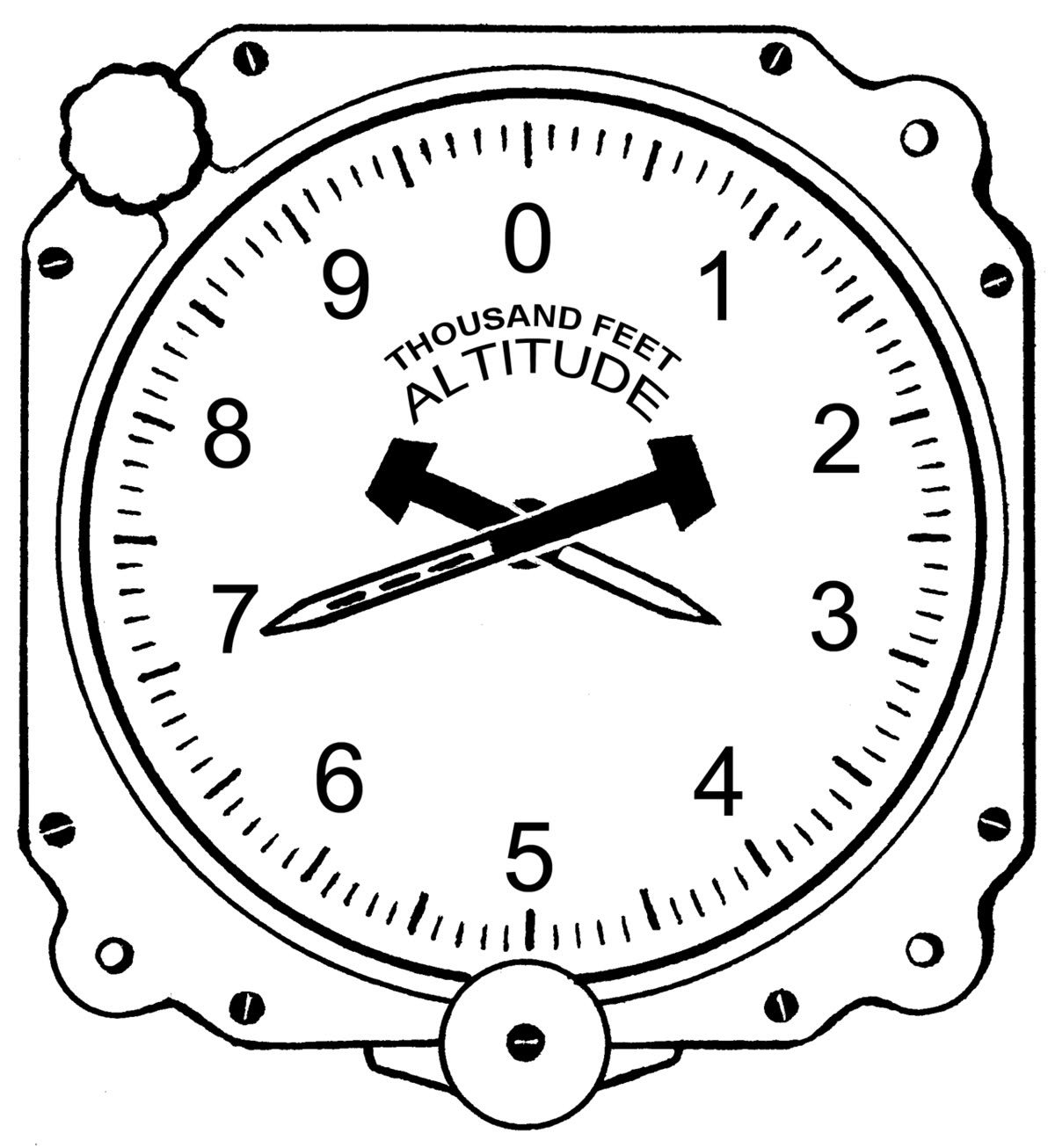
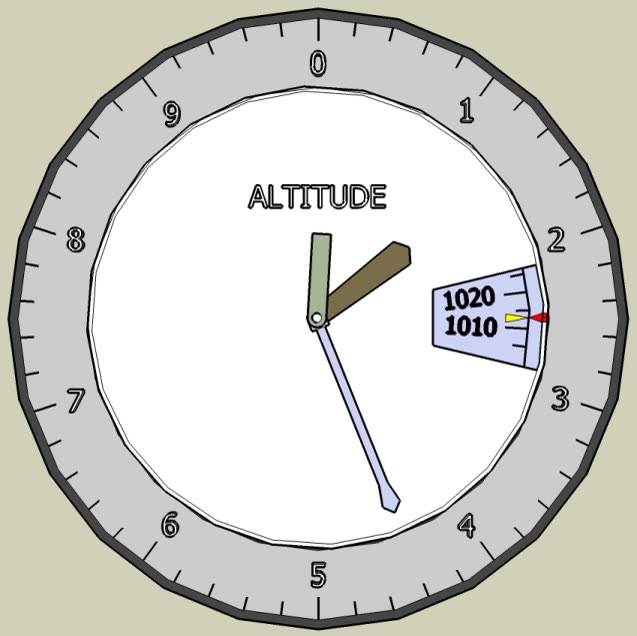
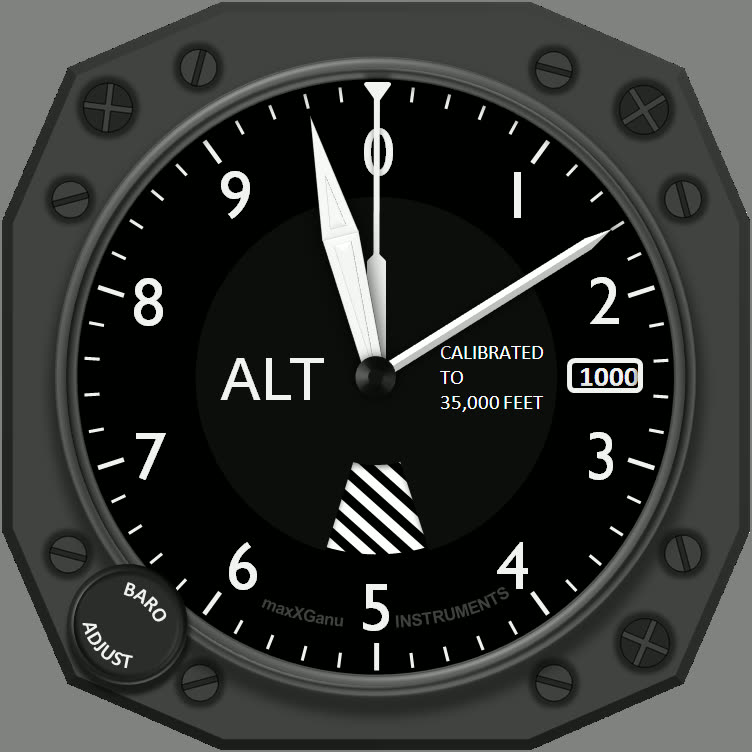
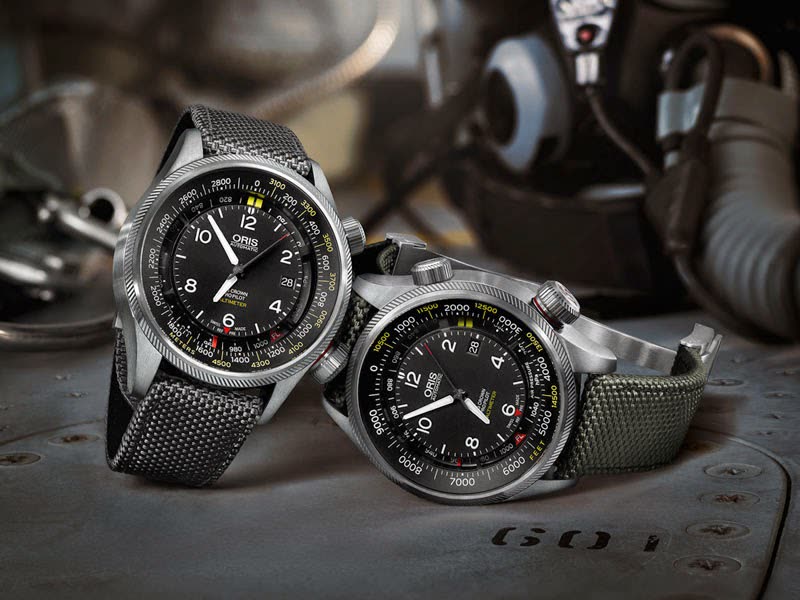
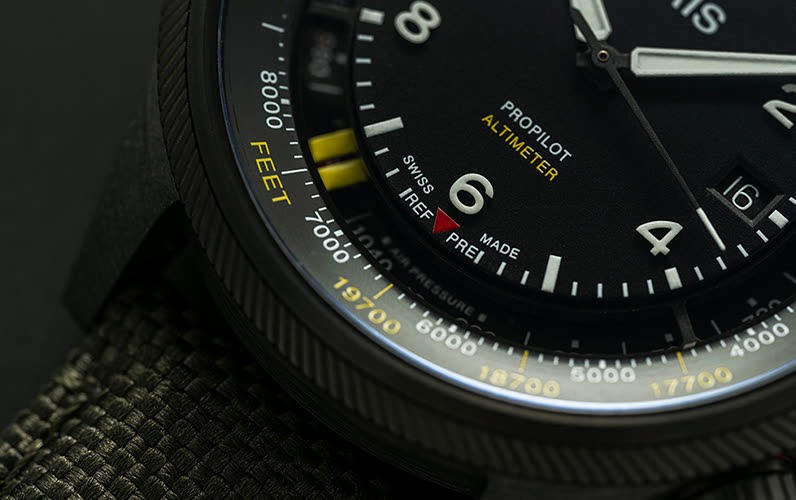
Photographs are illustrative examples of the type, not necessarily the exact object described. Verify details against the source file page.
Sources & references
- How does an altimeter work?, Oris, retrieved 2026-10-30 (paraphrased; text © the publisher)
- Oris ProPilot Altimeter: how an altimeter works in a mechanical watch, Swisswatches Magazine, retrieved 2026-10-30 (paraphrased; text © the publisher)
- Testing the Oris Big Crown ProPilot Altimeter in the Rocky Mountains, Hodinkee, retrieved 2026-10-30 (paraphrased; text © the publisher)
- de Carle, D., Watch and Clock Encyclopedia
- Britten, F. J., Old Clocks and Watches and Their Makers
- Horological Journal (British Horological Institute), technical articles
Where sources disagree, the disagreement is stated rather than resolved silently.