
Complication · Display
Portable Sundial
Partially verifiedA portable instrument telling time from the sun's position.
Definition
A portable instrument telling time from the sun's position.
Historical origin
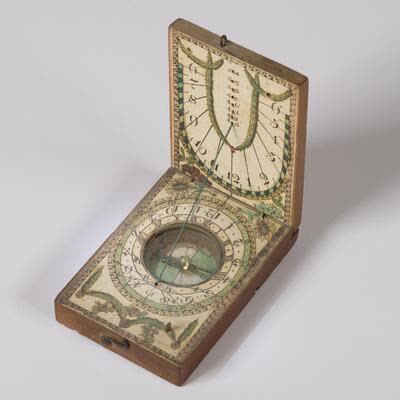
Portable sundials, including diptych and ring dials, were the practical portable timekeepers before mechanical watches became reliable and affordable.
How it works
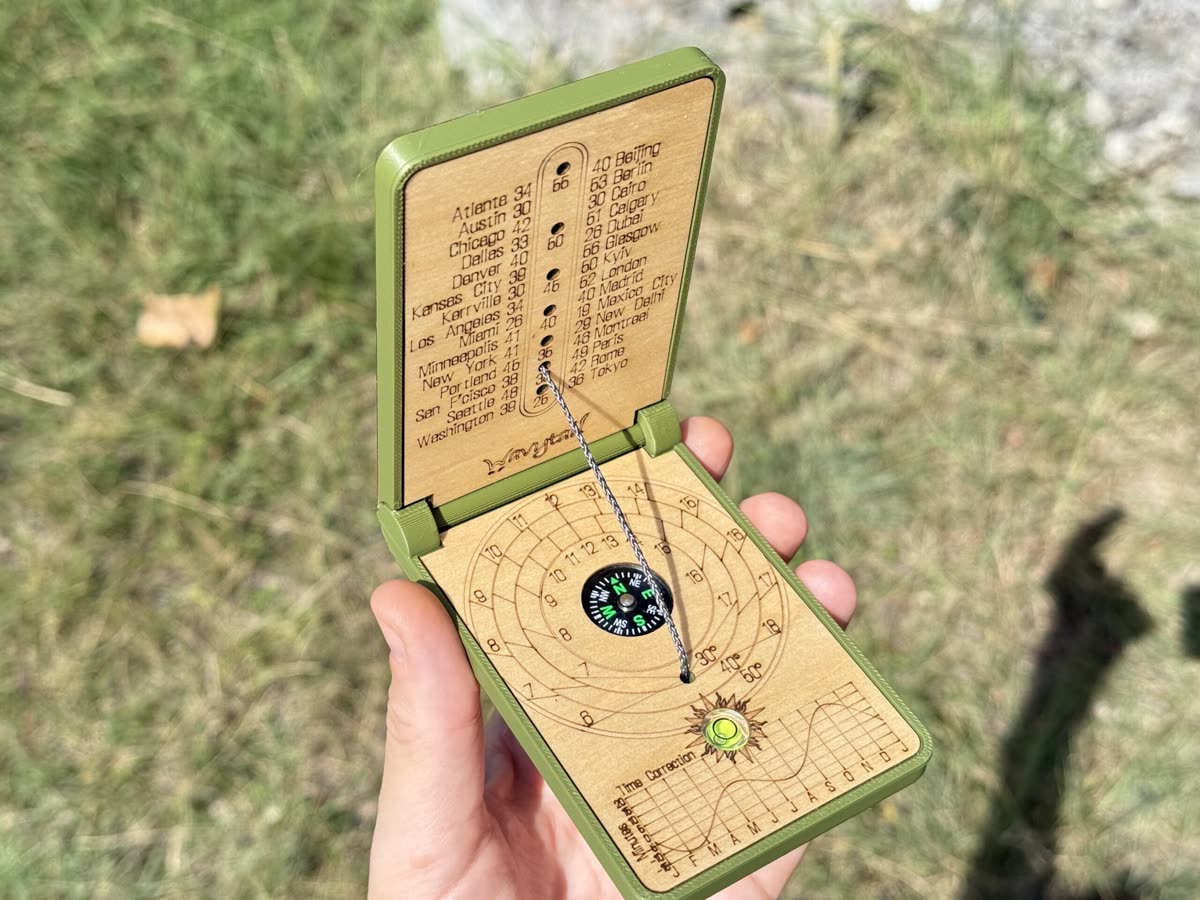
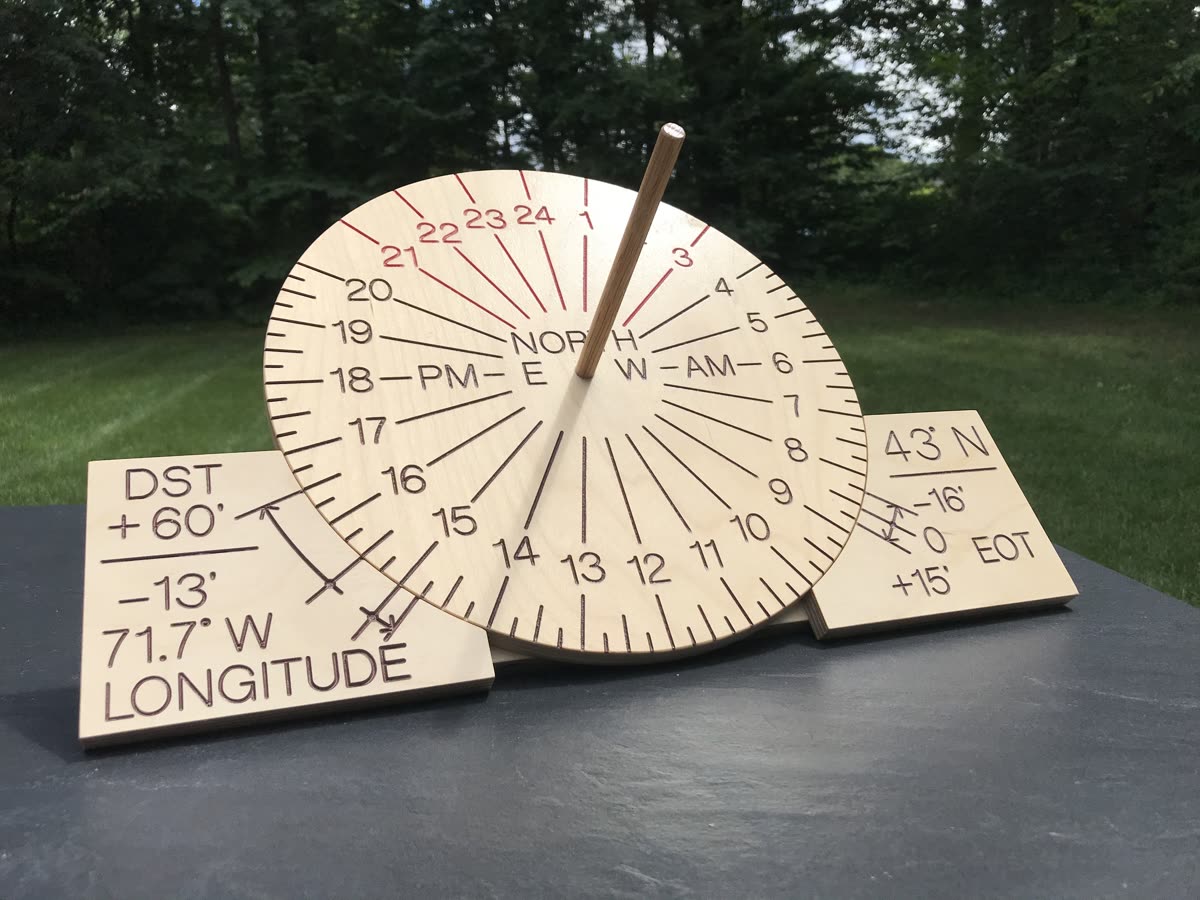
A gnomon casts a shadow across an hour scale drawn for a specific latitude; some designs are adjustable for latitude.
Correct use requires orientation to true north, which is why many portable dials incorporate a compass.
Pocket watch context
Portable dials were carried alongside early watches, and were used to check them.
Wristwatch context
Not a wristwatch complication, but the direct ancestor of portable timekeeping.
Clock context
Fixed sundials remain the reference against which early mechanical clocks were set.
Identification
- A gnomon and an hour scale, frequently with a latitude list or an adjustable arc
Servicing notes
Conservation of a historic dial is museum work: original engraving, gilding and hinges are the object's value, and cleaning removes evidence.
General guidance only. Complicated mechanisms should be assessed and serviced by a qualified watchmaker or clockmaker specialist, not adjusted at home.
Background
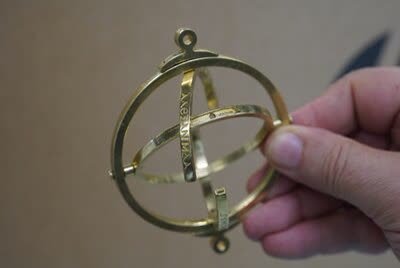
Portable sundials rely on various designs, such as ring, diptych, and cylindrical models, to measure time through the sun's position. William Oughtred is credited with inventing the universal equinoctial ring dial around 1600, a device inspired by the mariner's astrolabe. These instruments typically employ a style or gnomon, such as a thin slit or a folded string, to cast a shadow or beam of light onto scales representing hours or dates.
Some designs, such as the shepherd's dial or the Sunquest sundial, incorporate features to adjust for latitude or the equation of time. Operation frequently requires the user to orient the instrument toward true north or suspend it vertically to ensure accuracy.
Written from the encyclopedia entries listed under Sources; each statement was checked against the cited text.
Construction and action
- Shepherd's dials often feature hollow cylinders to allow the gnomon to fold inside when not in use.
- Sea rings integrate a universal ring dial with a magnetic compass to determine both time and magnetic variation.
Use and later history
- Edward Wright's 1610 sea ring allowed mariners to calculate time and magnetic variation simultaneously.
- The Sunquest sundial, created by Richard L. Schmoyer in the 1950s, utilizes an analemmic-inspired gnomon to match the accuracy of most pocket watches.
Photographs
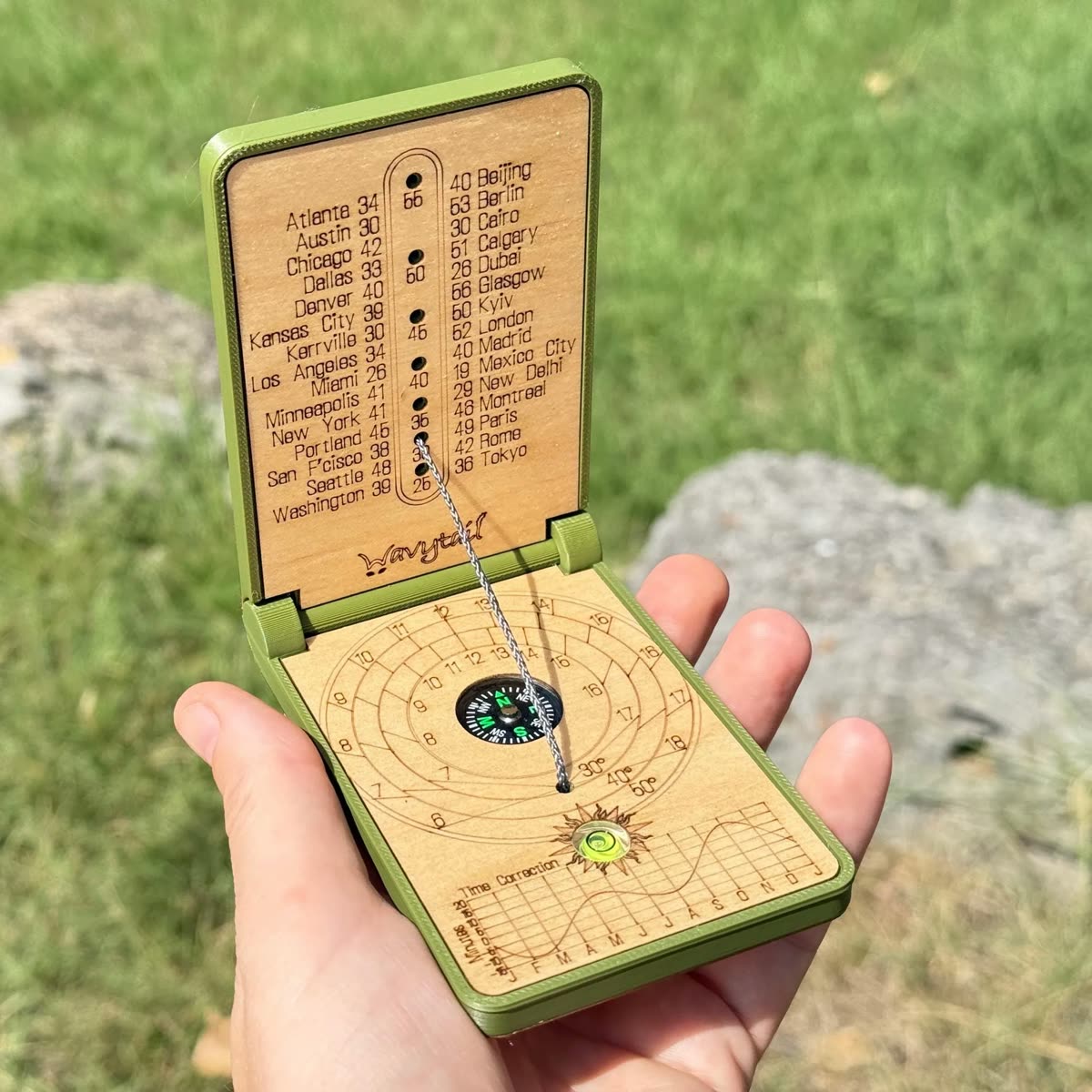
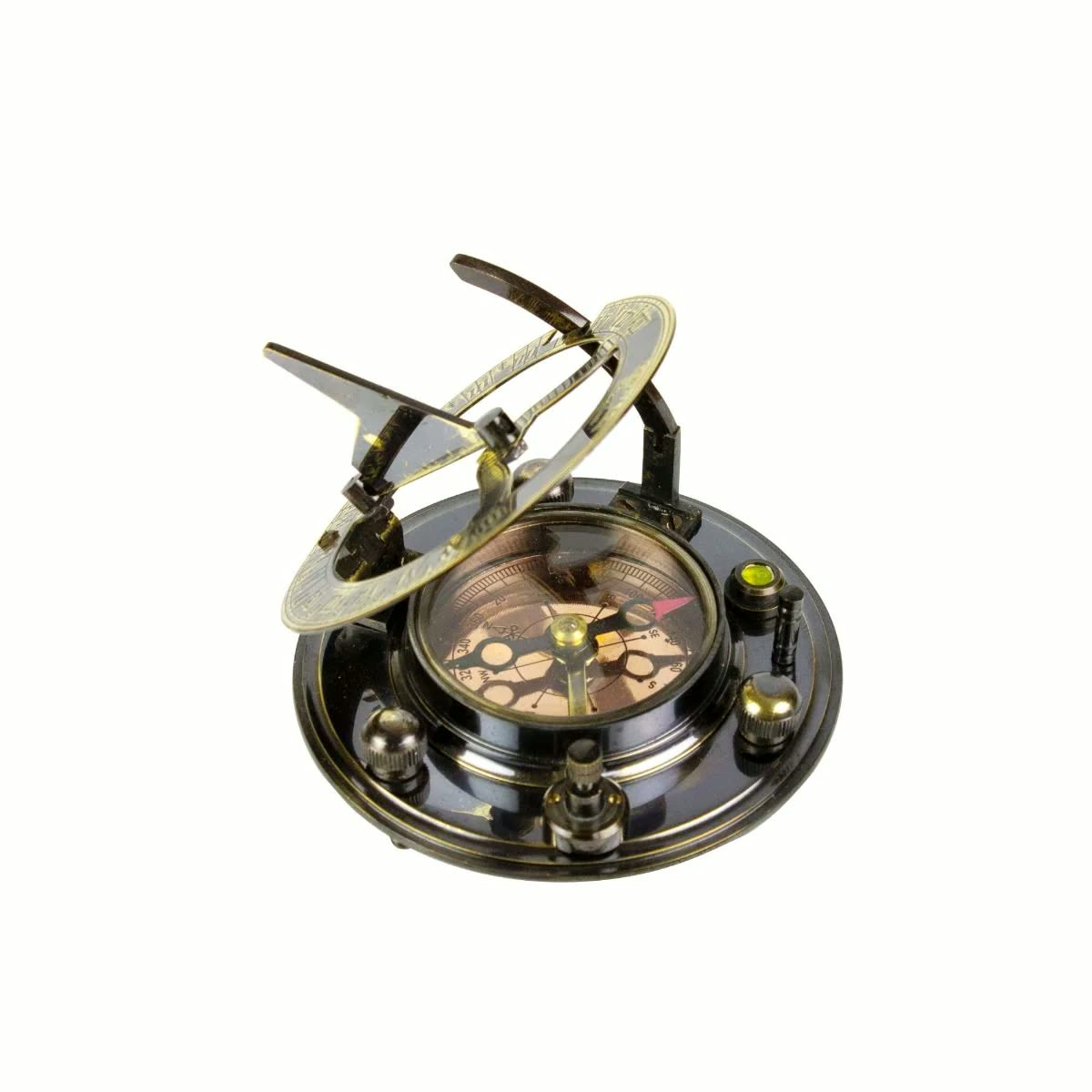
Photographs are illustrative examples of the type, not necessarily the exact object described. Verify details against the source file page.
Sources & references
- Sundial, Wikipedia (English), retrieved 2026-10-28 (text CC BY-SA 4.0)
- de Carle, D., Watch and Clock Encyclopedia
- Britten, F. J., Old Clocks and Watches and Their Makers
- Horological Journal (British Horological Institute), technical articles
Where sources disagree, the disagreement is stated rather than resolved silently.