
Clock type · Specialist
Orrery Clocks
Partially verifiedClocks specifically featuring an orrery—a mechanical model showing the positions and motions of planets and moons.
Background
The term orrery is derived from a device produced c. 1712 by John Rowley and named for his patron Charles Boyle, 4th Earl of Orrery. Mechanical planetary models have been created since the time of the Ancient Greeks, and the Antikythera mechanism is considered one of the first such devices. Giovanni Dondi built the first known clock driven mechanism of the system in 1348, utilizing gear trains to display the positions of celestial bodies.
These devices are typically driven by a clockwork mechanism with a central globe representing the Sun and planets situated at the ends of a series of arms. Historically, these models were used to illustrate or predict the relative positions and motions of the planets and moons.
Written from the sources listed below; each statement was checked against the cited text.
Condition and survival
- The Eisinga Planetarium remains a notable survival that has stayed in almost continuous operation since its creation between 1774 and 1781.
Movement & mechanism
- Similar to a planetarium but often more focused on the Earth-Moon-Sun relationship
- Driven by a clock movement or a manual crank
- Used for educational and demonstration purposes
Identification
- Mechanical model of the Earth and Moon orbiting the Sun
- Usually at the top of a clock case or as a standalone instrument
- Engraved rings showing zodiacal and calendrical data
Terminology
- Orrery
- Tellurium
- Solar system model
Known variations
- Manual and clock-driven versions
Collecting notes
Condition and originality are paramount. For technical clocks like regulators or atmospheric clocks, the completeness of the original mechanism is more important than case condition. For decorative clocks (Boulle, Empire), the quality of the case craft is central.
Photographs
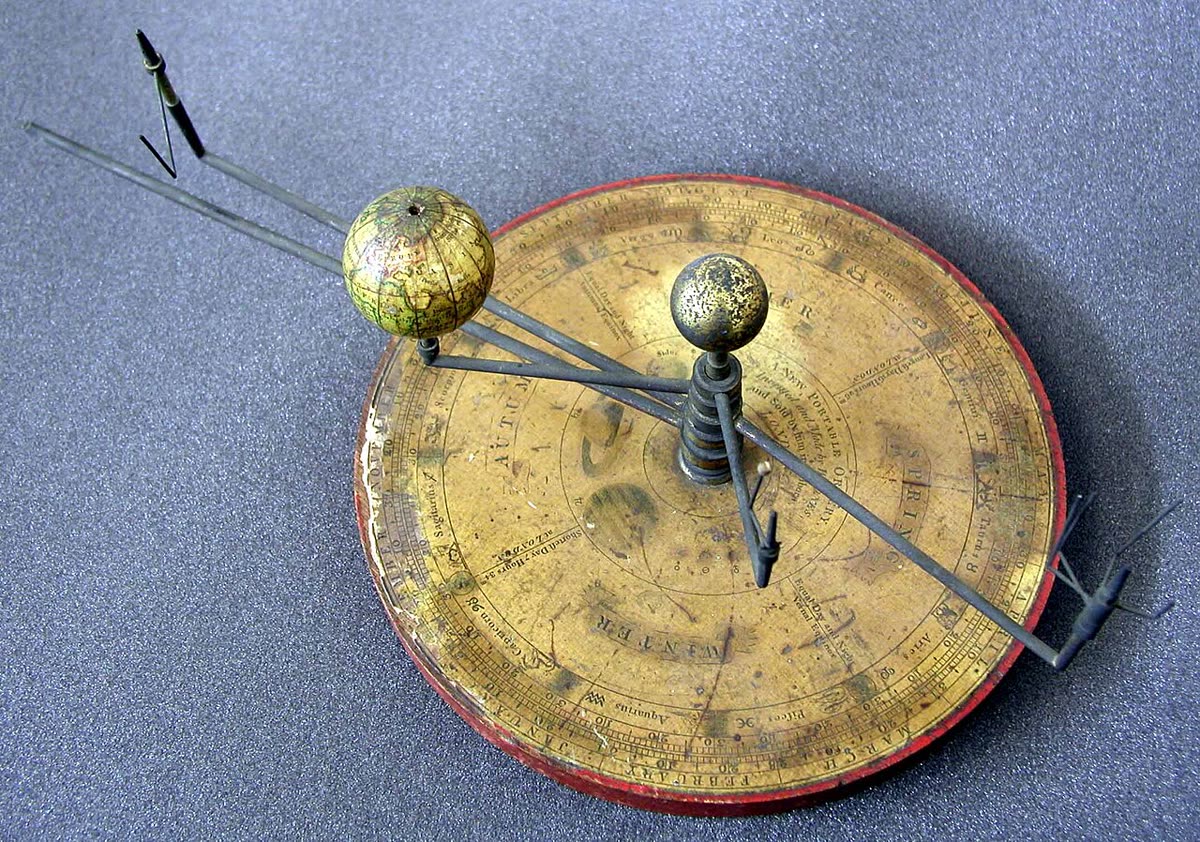
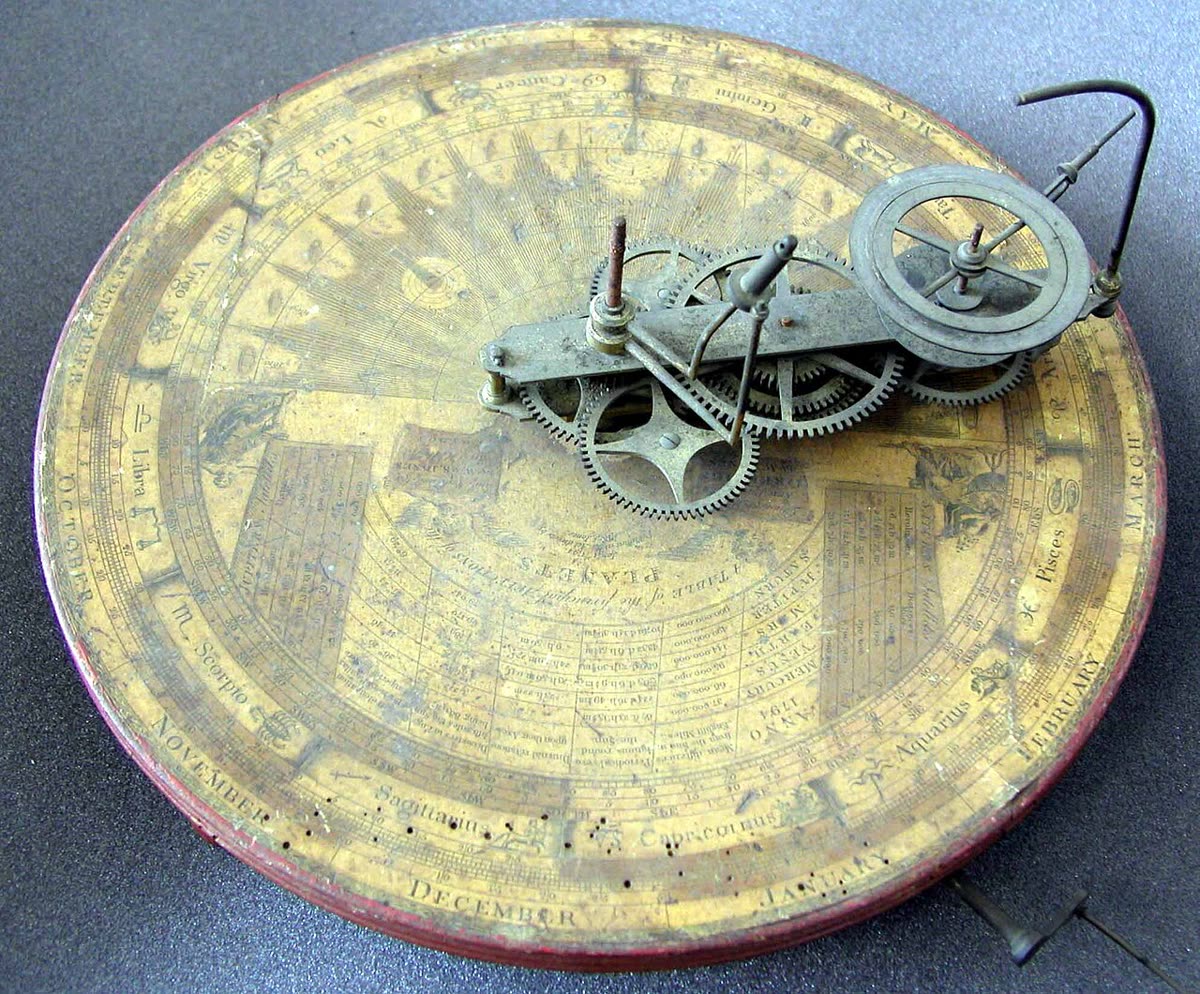
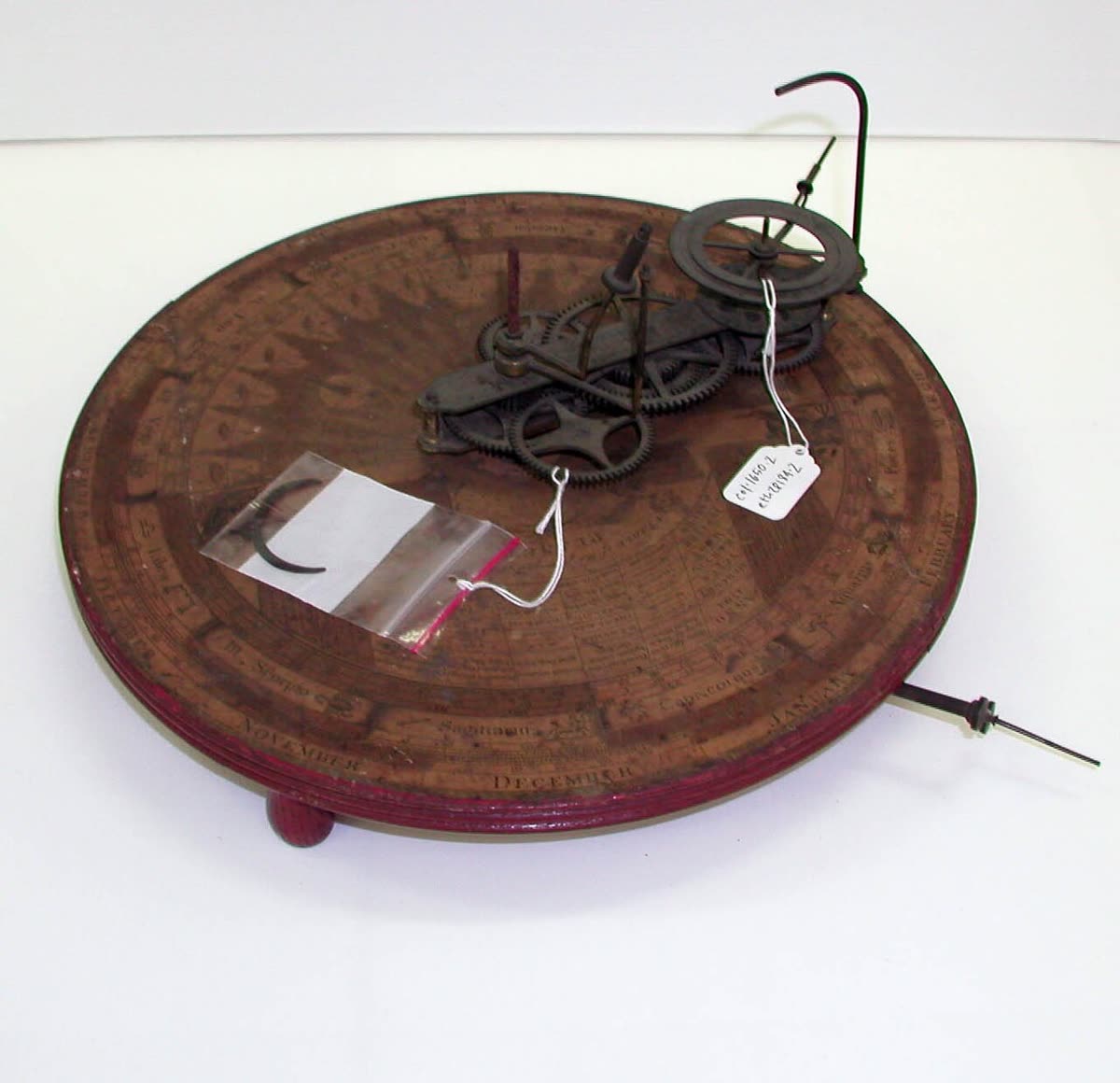
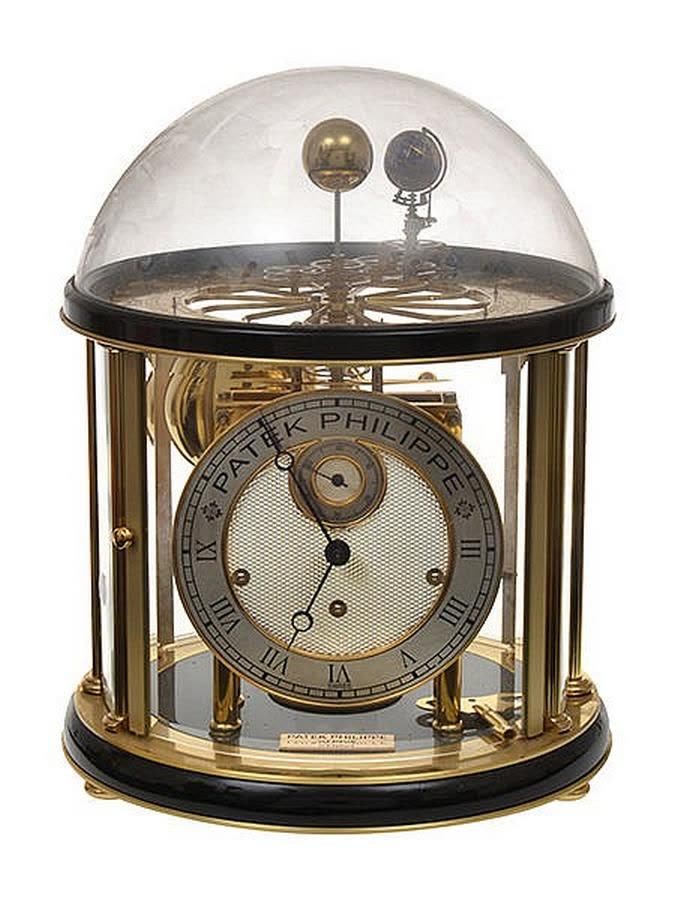
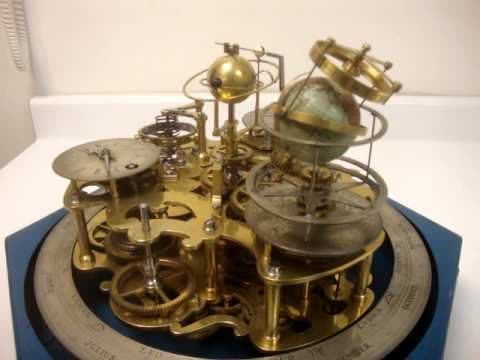
Photographs are illustrative examples of the type, not necessarily the exact object described. Verify details against the source file page.
Sources & references
- Orrery, Wikipedia (English), retrieved 2026-10-28 (text CC BY-SA 4.0)
- Britten, F. J., Old Clocks and Watches and Their Makers
- Loomes, B., The Early Clockmakers of Great Britain
- Museum catalogue records
Where sources disagree, the disagreement is stated rather than resolved silently.