
Clock type · Specialist
Planetarium Clocks
Partially verifiedClocks featuring a mechanical model of the solar system (a planetarium) driven by the movement.
Background
The medieval astrarium, or planetarium clock, was developed as a complex device to represent the movements of the planets in one timepiece. Early mechanical examples like the 14th-century astrarium by Giovanni Dondi dell'Orologio were modeled after the solar system and combined clock, calendar, and planetarium functions.
These devices were intended to serve as demonstration or exhibition pieces to showcase technical skill and represent a cosmic world view. Although early clockmakers utilized complex gear trains, their reliability was limited by the mechanical capabilities of the time and the use of the verge and foliot escapement.
Written from the sources listed below; each statement was checked against the cited text.
Recognising one
- These clocks may be recognized by their complex gear trains containing numerous wheels and pinions designed to show the positions of the sun, moon, and planets.
Condition and survival
- Original medieval examples are largely lost to history, but detailed descriptions have enabled the creation of modern reproductions.
Movement & mechanism
- Gear trains calculated to show the orbits of planets at their relative speeds
- Usually features the sun, earth, moon, and visible planets
- Often architectural in scale
Identification
- Three-dimensional model of the solar system
- Rotating planets around a central sun
- Exceptional technical complexity
Terminology
- Orrery
- Heliocentric
- Planetarium
Known variations
- Cathedral and domestic table versions
Collecting notes
Condition and originality are paramount. For technical clocks like regulators or atmospheric clocks, the completeness of the original mechanism is more important than case condition. For decorative clocks (Boulle, Empire), the quality of the case craft is central.
Photographs
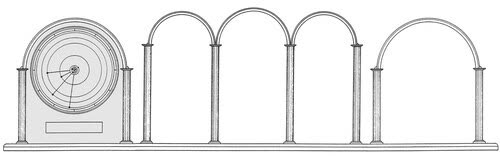
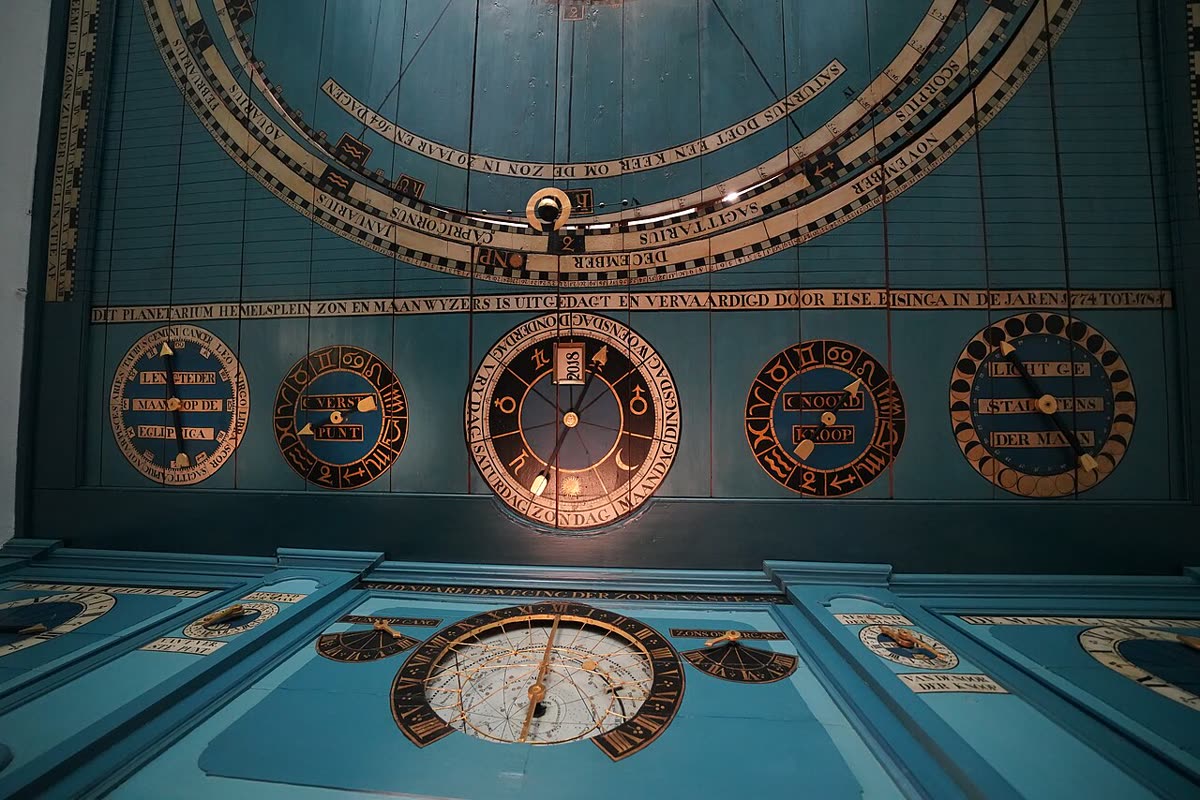
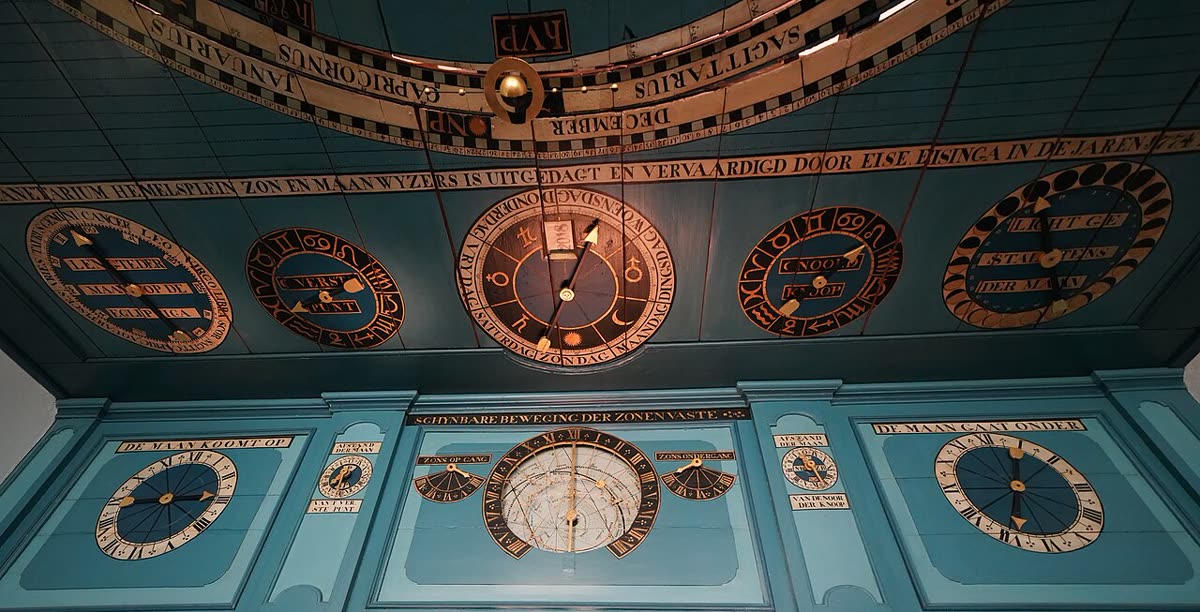
Photographs are illustrative examples of the type, not necessarily the exact object described. Verify details against the source file page.
Sources & references
- Astrarium, Wikipedia (English), retrieved 2026-10-28 (text CC BY-SA 4.0)
- Astronomical clock, Wikipedia (English), retrieved 2026-10-28 (text CC BY-SA 4.0)
- Britten, F. J., Old Clocks and Watches and Their Makers
- Museum catalogue records
Where sources disagree, the disagreement is stated rather than resolved silently.