Maker 3 pieces 5 pieces 2 pieces 56 pieces 1 piece 2 pieces 3 pieces 6 pieces 3 pieces 2 pieces 2 pieces 2 pieces 6 pieces 4 pieces 4 pieces 2 pieces 1 piece 87 pieces 1 piece 2 pieces 7 pieces 7 pieces 3 pieces 7 pieces 1 piece 2 pieces 5 pieces 5 pieces 1 piece 61 pieces 2 pieces 1 piece 3 pieces 2 pieces 1 piece 3 pieces 10 pieces 3 pieces 5 pieces 2 pieces 2 pieces 1 piece 4 pieces 2 pieces 1 piece 19 pieces 2 pieces 5 pieces 2 pieces 7 pieces 59 pieces 44 pieces 2 pieces 1 piece 1 piece 2 pieces 9 pieces 34 pieces 5 pieces 2 pieces 4 pieces 3 pieces 4 pieces 3 pieces 4 pieces 110 pieces 2 pieces 1 piece 2 pieces 2 pieces 3 pieces 1 piece 28 pieces 9 pieces 3 pieces 5 pieces 17 pieces 2 pieces 17 pieces 1 piece 1 piece 14 pieces 7 pieces 4 pieces 1 piece 2 pieces 1 piece 7 pieces 4 pieces 1 piece 3 pieces 8 pieces 2 pieces 2 pieces 4 pieces 5 pieces 4 pieces 4 pieces 2 pieces 2 pieces 7 pieces 2 pieces 5 pieces 17 pieces 1 piece 1 piece 2 pieces 4 pieces 15 pieces 8 pieces 2 pieces 2 pieces 4 pieces 8 pieces 1 piece 4 pieces 2 pieces 4 pieces 2 pieces 2 pieces 6 pieces 1 piece 1 piece 4 pieces 81 pieces 1 piece 2 pieces 2 pieces 11 pieces 5 pieces 5 pieces 1 piece 8 pieces 2 pieces 3 pieces 4 pieces 2 pieces 2 pieces 1 piece 1 piece 1 piece 2 pieces 2 pieces 3 pieces 1 piece 7 pieces 2 pieces 2 pieces 2 pieces 17 pieces 16 pieces 8 pieces 2 pieces 8 pieces 14 pieces 12 pieces 3 pieces 8 pieces 2 pieces 1 piece 4 pieces 26 pieces 5 pieces 2 pieces 1 piece 3 pieces 3 pieces 3 pieces 2 pieces 4 pieces 7 pieces 1 piece 2 pieces 5 pieces 5 pieces 5 pieces 4 pieces 9 pieces 2 pieces 3 pieces 3 pieces 2 pieces 1 piece 2 pieces 56 pieces 7 pieces 2 pieces 2 pieces 5 pieces 10 pieces 4 pieces 4 pieces 6 pieces 2 pieces 2 pieces 5 pieces 3 pieces 5 pieces 3 pieces 41 pieces 1 piece 2 pieces 9 pieces 5 pieces 6 pieces 2 pieces 2 pieces 31 pieces 2 pieces 44 pieces 2 pieces 2 pieces 2 pieces 1 piece 2 pieces 2 pieces 2 pieces 17 pieces 2 pieces 3 pieces 81 pieces 3 pieces 9 pieces 2 pieces 12 pieces 1 piece 1 piece 3 pieces 2 pieces 1 piece 6 pieces 1 piece 1 piece 5 pieces 2 pieces 1 piece 2 pieces 2 pieces 2 pieces 5 pieces 2 pieces 3 pieces 4 pieces 8 pieces 2 pieces 8 pieces 3 pieces 1 piece 2 pieces 5 pieces 4 pieces 1 piece 2 pieces 1 piece 5 pieces 3 pieces 2 pieces 1 piece 2 pieces 4 pieces 2 pieces 5 pieces 2 pieces 9 pieces 8 pieces 1 piece 10 pieces 5 pieces 6 pieces 2 pieces 7 pieces 1 piece 5 pieces 3 pieces 5 pieces 1 piece 14 pieces 1 piece 2 pieces 4 pieces 3 pieces 6 pieces 13 pieces 5 pieces 8 pieces 5 pieces 3 pieces 58 pieces 2 pieces 2 pieces 6 pieces 2 pieces 2 pieces 1 piece 1 piece 8 pieces 2 pieces 2 pieces 4 pieces 3 pieces 2 pieces 3 pieces 3 pieces 3 pieces 2 pieces 3 pieces 2 pieces 1 piece 2 pieces 2 pieces 6 pieces 4 pieces 2 pieces 1 piece 4 pieces 3 pieces 5 pieces 1 piece 5 pieces 26 pieces 2 pieces 2 pieces 5 pieces 2 pieces 2 pieces 1 piece 3 pieces 4 pieces 3 pieces 1 piece 3 pieces 2 pieces 2 pieces 2 pieces 178 pieces 5 pieces 1 piece 4 pieces 1 piece 13 pieces 3 pieces 6 pieces 262 pieces 1 piece 9 pieces 3 pieces 2 pieces 14 pieces 2 pieces 1 piece 1 piece 1 piece 4 pieces 3 pieces 24 pieces 1 piece 1 piece 1 piece 2 pieces 6 pieces 2 pieces 5 pieces 1 piece 2 pieces 3 pieces 2 pieces 7 pieces 3 pieces 10 pieces 6 pieces 1 piece 3 pieces 2 pieces 2 pieces 2 pieces 3 pieces 1 piece 1 piece 8 pieces 4 pieces 14 pieces 3 pieces 221 pieces 2 pieces 1 piece 1 piece 9 pieces 2 pieces 10 pieces 6 pieces 2 pieces 1 piece 1 piece 1 piece 1 piece 1 piece 2 pieces 2 pieces 1 piece 30 pieces 2 pieces 2 pieces 6 pieces 8 pieces 2 pieces 1 piece 1 piece 2 pieces 14 pieces 2 pieces 1 piece 18 pieces 1 piece 7 pieces 2 pieces 2 pieces 5 pieces 1 piece 1 piece 13 pieces 2 pieces 7 pieces 3 pieces 2 pieces 6 pieces 5 pieces 3 pieces 14 pieces 1 piece 6 pieces 3 pieces 1 piece 7 pieces 10 pieces 10 pieces 5 pieces 2 pieces 4 pieces 5 pieces 13 pieces 4 pieces 11 pieces 4 pieces 2 pieces 34 pieces 10 pieces 40 pieces 2 pieces 2 pieces 1 piece 19 pieces 3 pieces 1 piece 2 pieces 1 piece 83 pieces 1 piece 7 pieces 1 piece 4 pieces 1 piece 2 pieces 9 pieces 4 pieces 2 pieces 4 pieces 2 pieces 6 pieces 2 pieces 2 pieces 5 pieces 5 pieces 7 pieces 5 pieces 1 piece 2 pieces 1 piece 1 piece 2 pieces 2 pieces 3 pieces 4 pieces 2 pieces 4 pieces 1 piece 24 pieces 8 pieces Search objects Category All categories Pocket watch Wristwatch Clock Marine chronometer Movement Component Tool Type All types Alarm pocket watch Alarm wristwatch Astrolabe Astronomical compendium Automatic wristwatch Balance, escapement & train part Box & presentation case Bracket clock Calendar & astronomical watch Calendar & moon-phase watch Carriage clock Cartel clock Case Chain, fob & chatelaine Chronograph Chronograph & split-seconds watch Clock movement Comtoise clock Cuckoo & Black Forest clock Deck watch & deck chronometer Desk clock Dial Diptych sundial Diver's watch Early watch (16th–17th century) Eight-day marine chronometer Electric clock Enamel, form & pendant watch Escapement & demonstration model GMT & world-time watch Hand-wound wristwatch Horizontal sundial Hunter-case watch Jewellery & cocktail watch Lantern clock Longcase clock Mantel clock Marine chronometer (duration not stated) Military & trench watch Military pocket watch Model & teaching piece Musical & automaton watch Mystery clock Nocturnal Novelty & automaton clock One-day marine chronometer Open-face watch Other clock Other component Other scientific instrument Other sundial Pendulum & weight Perpetual calendar watch Pilot's watch Pocket chronometer & deck watch Pocket watch movement Quadrant Quartz & electronic watch Railroad watch Regulator Renaissance table clock Repeater & striking watch Repeating watch Ring & equinoctial sundial Ship's & marine clock Skeleton clock Stopwatch & timer Torsion & atmospheric clock Tourbillon & karrusel watch Tourbillon watch Travel & alarm clock Turret & tower clock Two-day marine chronometer Verge & fusee movement Verge & pair-cased watch Wall clock Watch key & accessory Watchmaker's lathe Watchmaker's tools & bench Wristwatch movement Ébauche & unfinished movement Source All sources americanhistory.si.edu analogshift.com antique-watch.com antiques-atlas.com antiquevintageclock.com app.bellmans.co.uk ashton-blakey-antiques.com auction.gorringes.co.uk auctionet.com auctions.chiswickauctions.co.uk auctions.dreweatts.com auctions.gardinerhoulgate.co.uk auctions.luxeauctioneers.com auctions.yahoo.co.jp badgersauctions.com bid.gorringes.co.uk blog.pocketwatchdatabase.com cars.bonhams.com catalog.antiquorum.swiss chrono-shop.net clevelandart.org collection.sciencemuseumgroup.org.uk collections.museumsvictoria.com.au collections.vam.ac.uk commons.wikimedia.org cottees.co.uk craftandtailored.com data.fitzmuseum.cam.ac.uk digitaltmuseum.no drouot.com empress.cc everywatch.com freemansauction.com hindmanauctions.com huntingtoncompany.com islamicworld.britishmuseum.org jacob-zech.com justaclockcollector.com laurent-fine-watches.myshopify.com laurentfinewatches.com loupethis.com marketplace.watchcharts.com mb.nawcc.org monochrome-watches.com mroatman.wixsite.com oliverandclarke.com onlineonly.christies.com pascalkarpwatchesexpertise.com perpetual.phillips.com phillips.com rauantiques.com sammler-uhren.com secondhandhorology.com shop.analogshift.com somlo.com the-saleroom.com theclockandwatchshop.co.uk theclockworks.org thekeystone.com theodorebruceauctionsnew.connectwp.invaluable.com timed.sworder.co.uk tokeimedic.com uhrerbe.com vintageclockparts.com vintageclocks.uk vintagewatchspecialist.com watchmuseum.org westfalen.museum-digital.de wjmorrisclocks.co.uk www.1stdibs.com www.acollectedman.com www.analogshift.com www.antiques-atlas.com www.antiquesboutique.com www.appletreeauction.com www.atlam-watches.co.uk www.bidsquare.com www.bonhams.com www.britishmuseum.org www.bukowskis.com www.bulangandsons.com www.castle-paradise.cz www.catawiki.com www.cazasikes.com www.chairish.com www.christies.com www.collectorsquare.com www.comune.ceriana.im.it www.cottees.co.uk www.craftandtailored.com www.dorotheum.com www.dorsetantiqueclocks.co.uk www.dreweatts.com www.ebay.com www.fellows.co.uk www.fontainesauction.com www.gazette-drouot.com www.invaluable.com www.kimnet.ch www.langantiques.com www.laurentfinewatches.com www.lempertz.com www.liveauctioneers.com www.lyonandturnbull.com www.metmuseum.org www.mhs.ox.ac.uk www.neumeister.com www.oliverandclarke.com www.passionchrono.com www.pendulumofmayfair.co.uk www.phillips.com www.proantic.com www.propertyroom.com www.rct.uk www.reading.ac.uk www.renaissanceantiques.com www.ricardo.ch www.rijksmuseum.nl www.rmg.co.uk www.schmitt-horan.com www.secondhandhorology.com www.sellingantiques.co.uk www.si.edu www.somlo.com www.sothebys.com www.ssongwatches.com www.tennants.co.uk www.the-saleroom.com www.tobiasbirch.com www.ukclocks.com www.vintagegoldwatches.com www.watch-auctions.co.uk www.watchpro.com www.watchprosite.com www.woolleyandwallis.co.uk
Browse makers and their key pieces · Louis Moinet profile
2 of 5699 objects · Page 1 of 1
Clock · Mantel clock
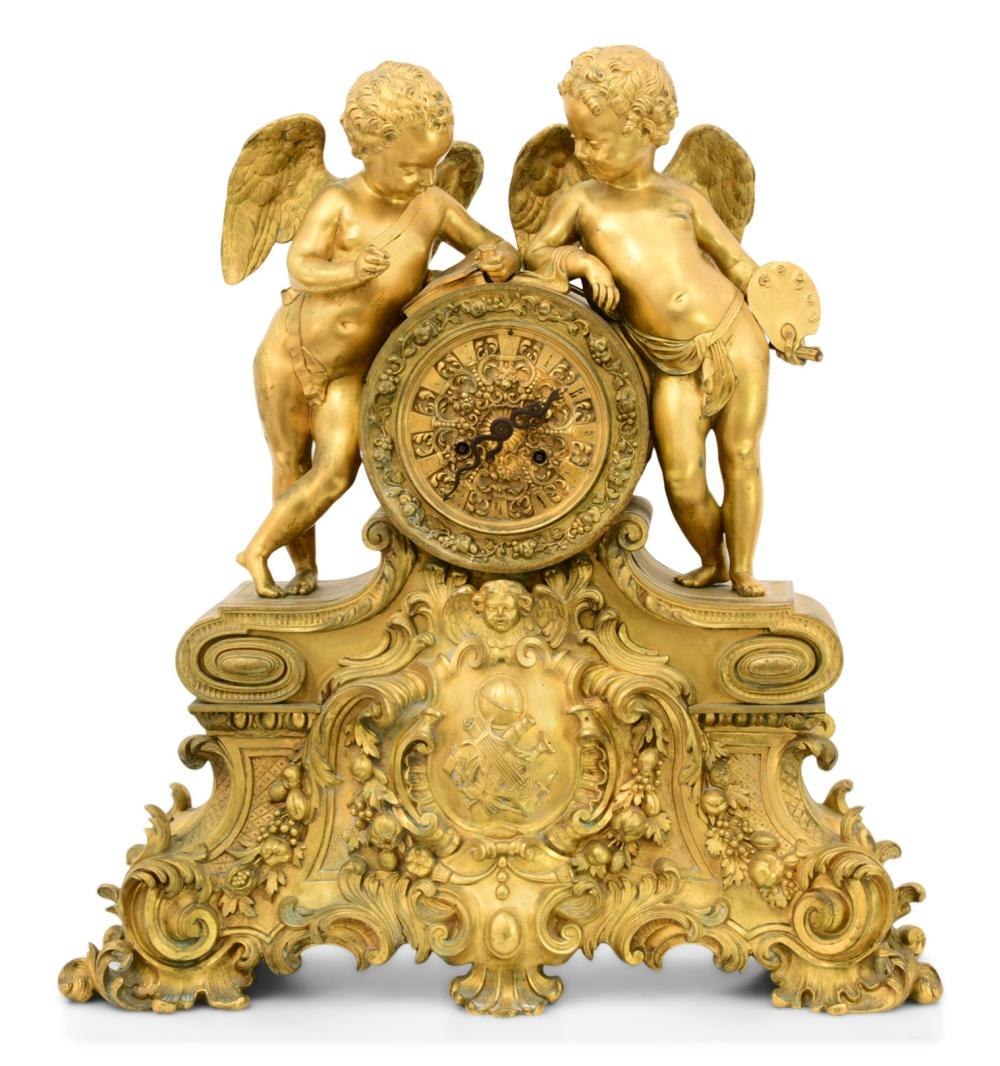
French Louis XV-Style Gilt Bronze Mantel Clock This early 19th-century French Louis XV-style mantel clock is housed in a gilt bronze case measuring 21 1/4 by 20 by 5 3/4 inches. The dial drum is surmounted by two winged cherubs, one resting beside it and the other holding an artist's palette, set over an ornate rocaille base decorated with scrollwork and fruit garlands. The auction cataloguer identifies the movement as an eight-day brass time and strike movement with silk thread suspension, marked 'L. Moinet, A Paris' and 'Douillon'.
Full description
www.invaluable.com · 50
Clock · Mantel clock
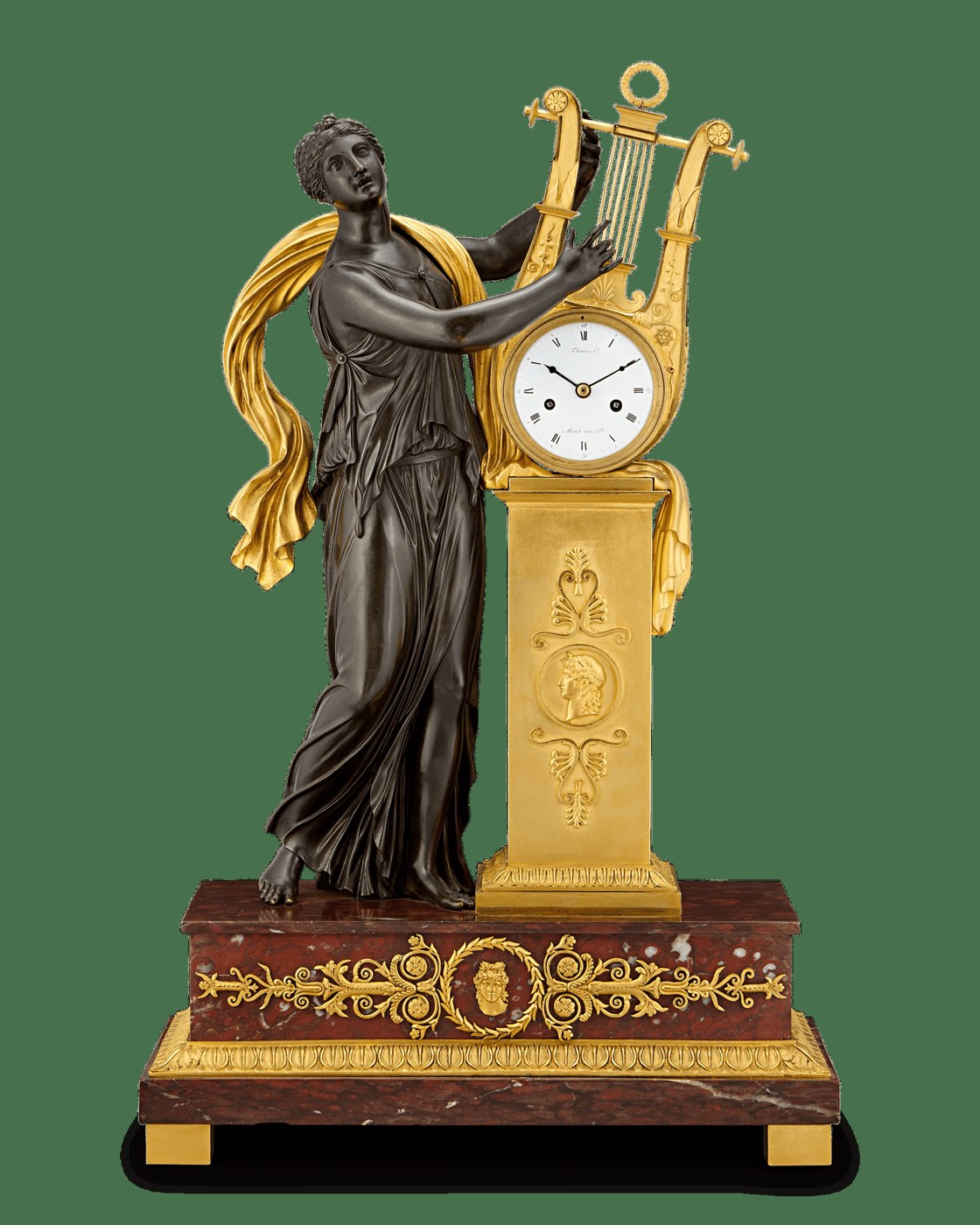
Empire Erato Mantel Clock by Thomire & Cie This mantel clock is an Empire-period timepiece constructed from gilt bronze, mercury-gilded bronze, and marble. The design features a figural sculpture of Erato, the Muse of lyric and romantic poetry, positioned beside a rectangular plinth that supports the clock movement. The clock dial is inscribed with the signatures of the bronzier Pierre-Philippe Thomire and the watchmaker Louis Moinet. The base is constructed of red marble ornamented with gilt-bronze foliage and a central medallion. Measuring 25 inches in height, 15 1/2 inches in width, and 8 1/2 inches in depth, the object reflects the collaborative output of Thomire and Moinet, who operated in Paris. The figure is shown holding a mercury-gilded lyre. Moinet, a noted horologist and author, was associated with the Société de Chronométrie, while Thomire was recognized for his work in the Neoclassical aesthetic.
Full description
rauantiques.com
1 / 1