
Source catalogue · individual objects
Object Catalogue
Individual objects described by auction houses, specialist dealers and collection catalogues. Attribution, dates and specifications remain source-reported unless independently established; rights clearance is pending.
Browse makers and their key pieces · ATO (Léon Hatot) profile
5 of 5699 objects · Page 1 of 1
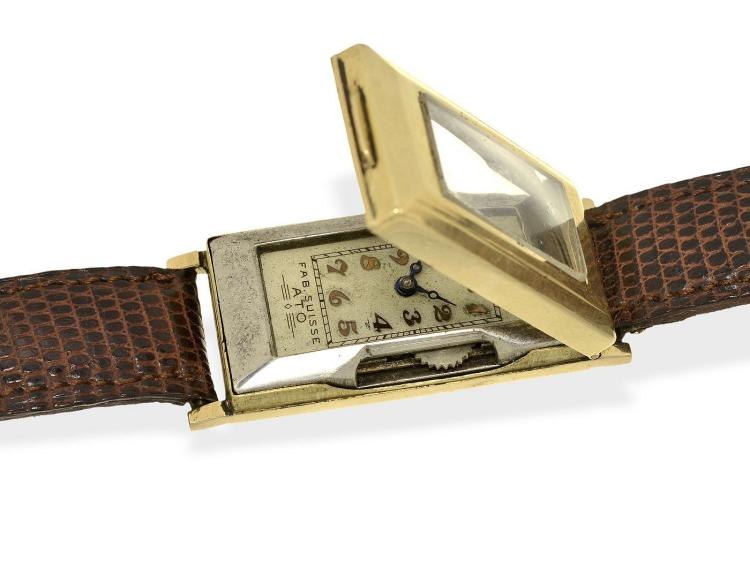
Wristwatch · Automatic wristwatch
ATO Rolls Hatots Patents 18K gold automatic wristwatch
This early automatic wristwatch features an 18K gold rectangular case measuring approximately 17 by 37 mm with a liftable front bezel mechanism. Built according to Hatots Patents, the entire movement is reported to move up and down for automatic winding. The piece is fitted with a hidden winding crown, an original dial signed 'FAB. SUISSE ATO', original hands, and a leather strap.
Full description
www.invaluable.com · 4059
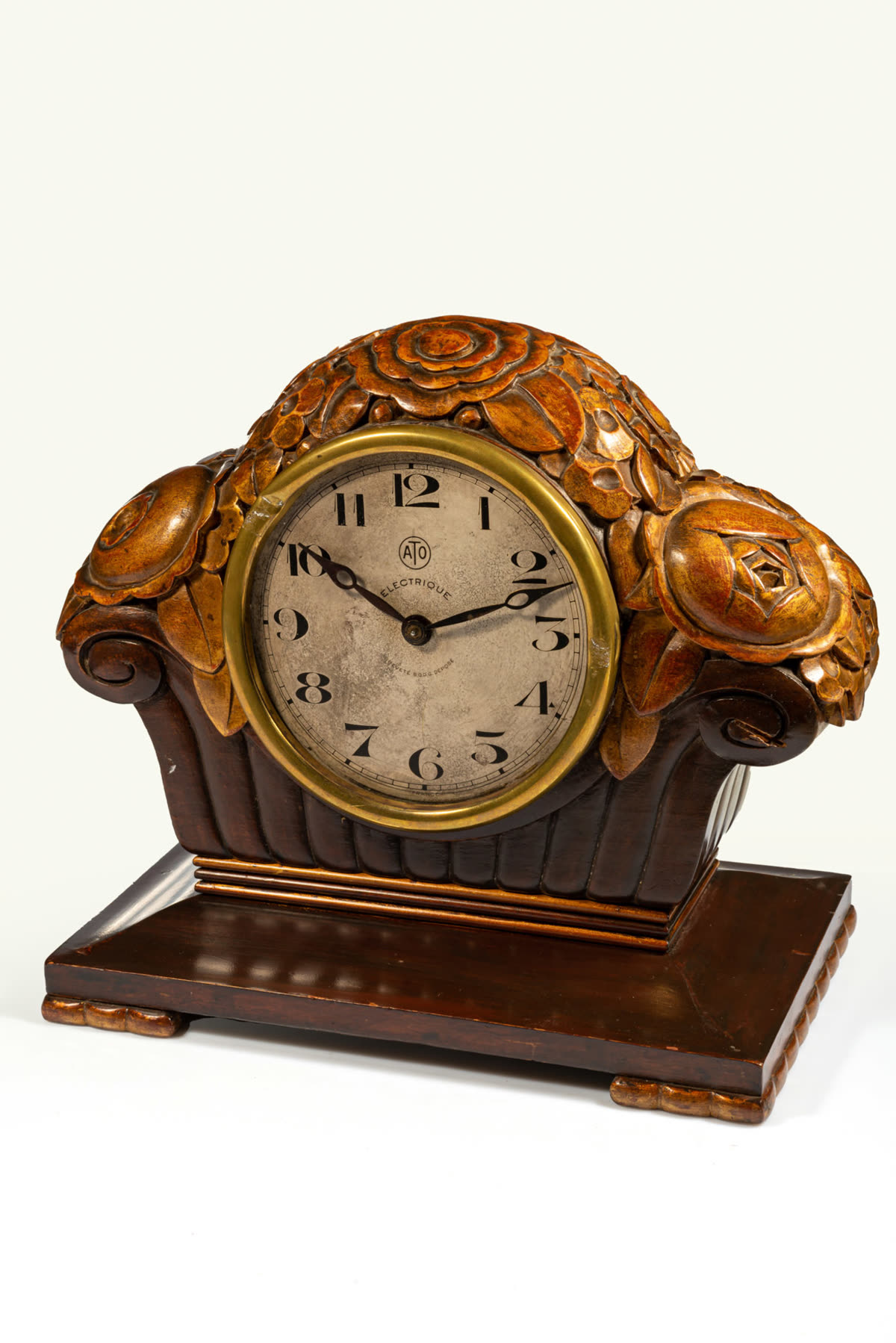
Clock · Electric clock
ATO - Léon Hatot Art Deco Electric Mantel Clock
This Art Deco electric mantel clock by Léon Hatot, Paris, is dated circa 1925-1930. The case, sculpted in the form of a basket of flowers from gilded wood and metal, is source-attributed to the French design partnership Sue & Mare, Paris. It measures 230 mm high, 220 mm wide, and 150 mm deep. The circular silvered dial features stylized Arabic hour numerals and the 'ATO ELECTRIQUE' emblem. The clock is powered by an unnumbered 120 mm caliber battery-driven movement with an electromagnetic pendulum, catalogued with movement number 3 022.
Full description
catalog.antiquorum.swiss · 8
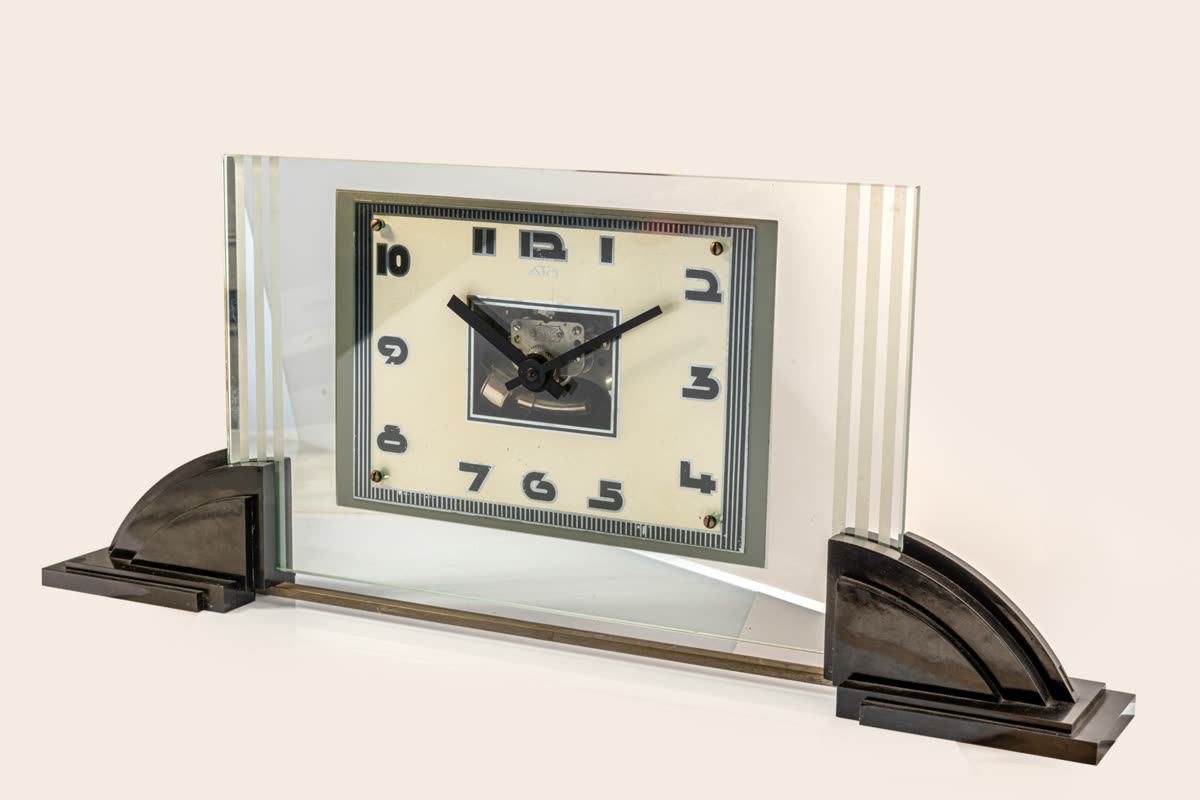
Clock · Electric clock
Léon Hatot ATO Electrique Art Deco Mantel Clock
This Art Deco electric mantel clock by Léon Hatot, model 'ATO Electrique', dates to circa 1930–1935 and features movement number 79 920. Constructed from etched glass, Bakelite, and chromium-plated metal, the clock rests on stepped geometric Bakelite side supports. The rectangular dial features stylized Art Deco Arabic numerals, framed by etched striped borders on the glass panel, and contains a central aperture displaying portions of the battery-powered electromagnetic pendulum mechanism. Measuring 210 mm in height, 520 mm in width, and 105 mm in thickness, both the dial and movement bear signatures from the maker.
Full description
catalog.antiquorum.swiss · 7
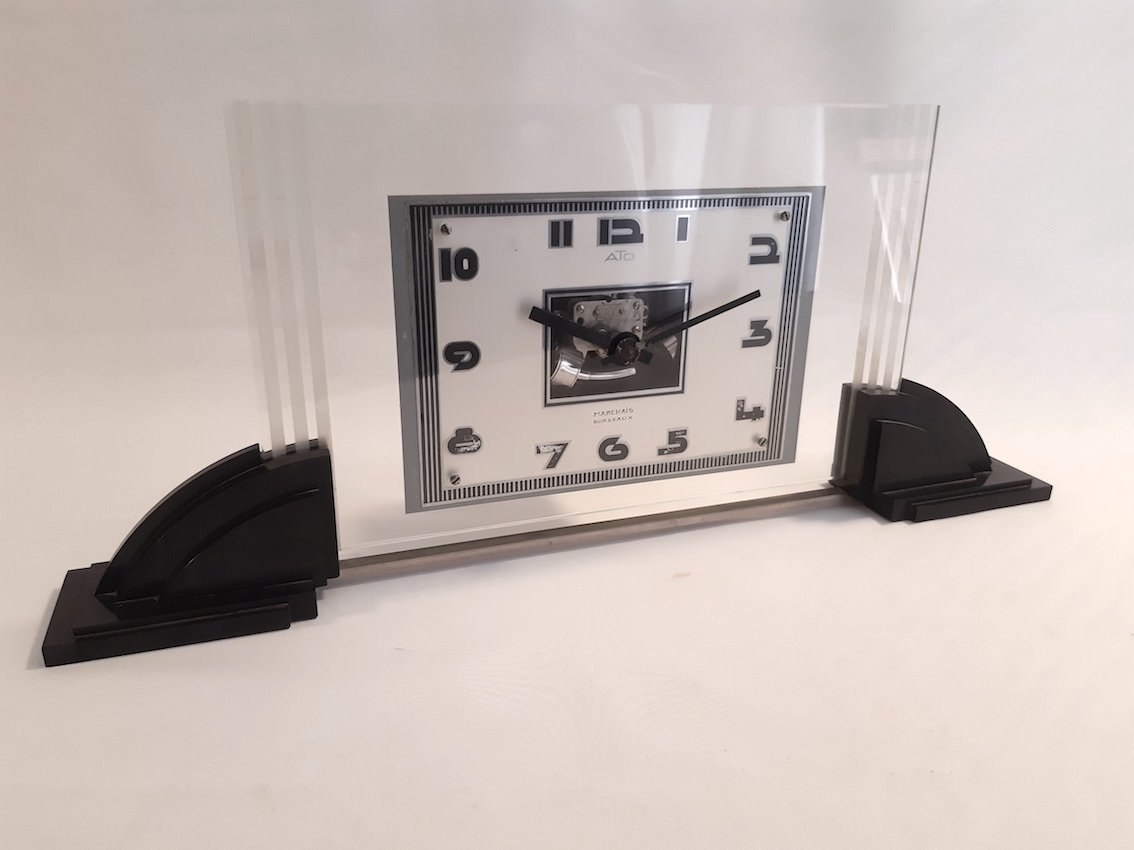
Clock · Electric clock
ATO Art Deco Electric Clock Signed Léon Hatot
This large Art Deco electric clock by ATO is signed Léon Hatot and dates to circa 1930 in France according to dealer documentation. The structure features a blasted glass plate flanked by stepped black bakelite side mounts positioned on a horizontal base bar. A rectangular dial plate displays stylized geometric Art Deco Arabic numerals, an ATO signature beneath 12 o'clock, and retailer text above 6 o'clock. A central rectangular cutout reveals mechanical components including the balance wheel.
Full description
www.proantic.com
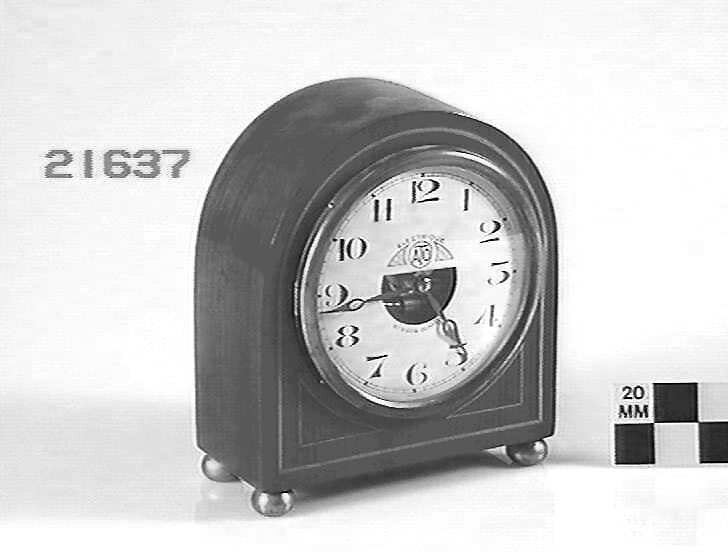
Clock · Electric clock
Leon Hatot ATO Pendulette Electric Clock
This ATO Pendulette, manufactured by Leon Hatot in Paris around 1935, is an electric impulse mantel clock. The object is housed within a wooden case characterized by a rounded arch profile and inlaid decorative lines. Its horological system features an electric impulse movement utilizing a 1/4 second pendulum. A distinctive aspect of the design is the cut-away section of the dial, which exposes the pendulum and its curved magnet. This magnet interacts with a solenoid pulsed by a 1.5-volt battery to drive the mechanism. Furthermore, a magnet positioned at the rear of the clock case serves as a regulator, allowing the rate to be accelerated or retarded by influencing the pendulum's motion. The timepiece carries official markings on both the dial and the backplate, identifying the manufacturer and the patented status of the electric system.
Full description
collections.museumsvictoria.com.au · ST 21637