
Skip to content
The Encyclopedia of Horology

Clock · Night timepiece

Night Timepiece

Partially verified

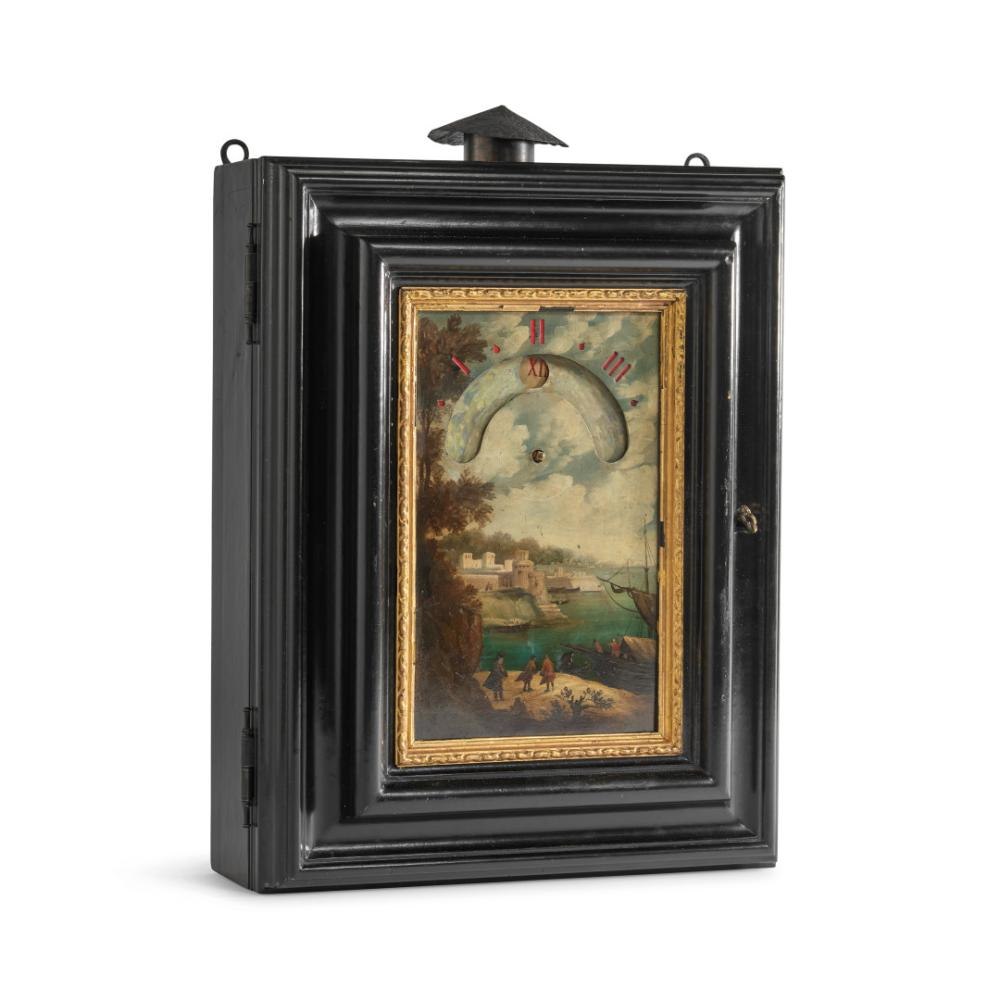
This night timepiece, dated to the second half of the 18th century, is presented in an ebonized wooden frame-shaped case. Measuring 53 x 41 x 18 cm, the object is designed to be illuminated internally, featuring an upper hood meant for a candle vent. The time is displayed via a dial painted on copper, which incorporates an aperture for a rotating hour disc and pierced numerals that allow light to pass through. The mechanical movement is unsigned and incorporates fusee winding, a verge escapement, and a fixed pendulum. The auction description notes a visual similarity between the landscape scene depicted on the dial and a specific timepiece held in the Museo Civico Luxoro in Genoa, where the painting is attributed to Ludovico Mattioli. The item functions as an atmospheric clock designed for nocturnal readability through rear or internal candle illumination.

Front view of the night timepiece showing the ebonized frame case and the painted maritime scene on the dial.
Front view of the night timepiece showing the ebonized frame case and the painted maritime scene on the dial. — Aste Bolaffi (via Invaluable). Rights pending — permission not yet requested. Original source

Catalogue identity

Source
www.invaluable.com
Category
Clock · Night timepiece
Maker / attribution
Not established
Reference
Not recorded
Catalogue / lot identifier
122
Source-reported date
Second half of 18th Century
Source-reported place
Not established

Source-reported attribution and specifications are not independent authentication. A listing does not establish present ownership, current display, availability or permission to reproduce.

Object description

Case and Illumination

The clock is housed in an ebonized wooden case structured in a frame style, measuring 53 x 41 x 18 cm. The construction includes a specific provision for illumination, featuring an upper hood located on the top of the case that serves as a vent for a candle. This internal lighting arrangement is intended to facilitate the reading of time in low-light conditions by directing light through the dial apertures.

The interior of the clock contains a holder designed for a candle, positioned to align with the back of the dial. The metal construction of the vent and holder assembly reflects the functional requirements for containing an open flame within a wooden cabinet. The ebonized exterior surface provides a dark, decorative frame for the painted scene on the dial.

Evidence for this section
  • “Cassa in legno ebanizzato a foggia di cornice, con una cappa superiore per lo sfiato della candela”

Dial and Mechanism

The dial is executed in paint on copper, depicting a detailed maritime landscape. A crescent-shaped aperture accommodates a rotating hour disc that moves to indicate the passing hours. The numerals on this disc are pierced, which enables the light from the internal candle to shine through the openings, rendering the time visible in the dark.

The internal mechanism is unsigned and utilizes a fusee winding system, indicating a reliance on standard 18th-century horological power delivery. It is equipped with a verge escapement and a fixed pendulum, which regulate the rotation of the hour disc. The combination of the painted decorative surface and the mechanical arrangement allows for the dual function of a decorative object and a night-time indicator.

Evidence for this section
  • “il quadrante dipinto su rame, apertura per il disco orario rotante e cifre traforate”
  • “Meccanica anonima con carica a conoide, scappamento a verga e pendolo fisso”

Provenance and Comparisons

The auction description provides a comparative note regarding the dial imagery. It states that the painting on this particular timepiece bears a resemblance to an example held within the collections of the Museo Civico Luxoro in Genoa. This comparison extends to the artistic execution of the scene depicted on the dial.

Regarding the attribution of the dial painting on the comparative piece in Genoa, the description references an attribution to Ludovico Mattioli. No formal attribution for the artist of the present lot is provided by the auction house, leaving the stylistic connection as a point of reference rather than a definitive statement of authorship.

Evidence for this section
  • “Una raffigurazione simile a quella dipinta sul quadrante di questo raro orologio notturno si trova su un esemplare conservato al Museo Civico Luxoro di Genova, il cui dipinto è attribuito a Ludovico Mattioli”

Open research questions

  • Is there physical evidence of a specific maker's mark hidden on the movement plates?
  • What is the technical origin of the pierced hour disc and its synchronization with the fusee movement?

Source evidence

Recorded claims and source quotations for Night Timepiece
FieldSource-reported valueSource quotation
MakerUnsigned“Meccanica anonima”
DateSecond half of 18th Century“Seconda metà del XVIII secolo”
Dimensions53 x 41 x 18 cm“53 x 41 x 18 cm”
MovementFusee winding, verge escapement, fixed pendulum“Meccanica anonima con carica a conoide, scappamento a verga e pendolo fisso”
CaseEbonized wood frame style“Cassa in legno ebanizzato a foggia di cornice”
LightingCandle vent and internal light source“con una cappa superiore per lo sfiato della candela”
DialPainted copper with rotating disc“il quadrante dipinto su rame, apertura per il disco orario rotante”

Visible details

  • Case features an ebonized wood finish
  • Painted copper dial shows a maritime landscape scene
  • Crescent-shaped aperture for the rotating hour disc
  • Internal candle holder with metal hood for ventilation

Research qualifications

  • Movement is unsigned and lacks a specific maker attribution
  • Attribution of the dial painting to Ludovico Mattioli remains a suggestion based on stylistic similarity

Photograph identity and source facts were screened before import; rights clearance remains pending.

Terms in this record

Glossary explanations for terms named in this object’s record.