
Skip to content
The Encyclopedia of Horology

Clock · Cuckoo table clock

Johann Baptiste Beha Black Forest cuckoo spring table clock

Partially verified

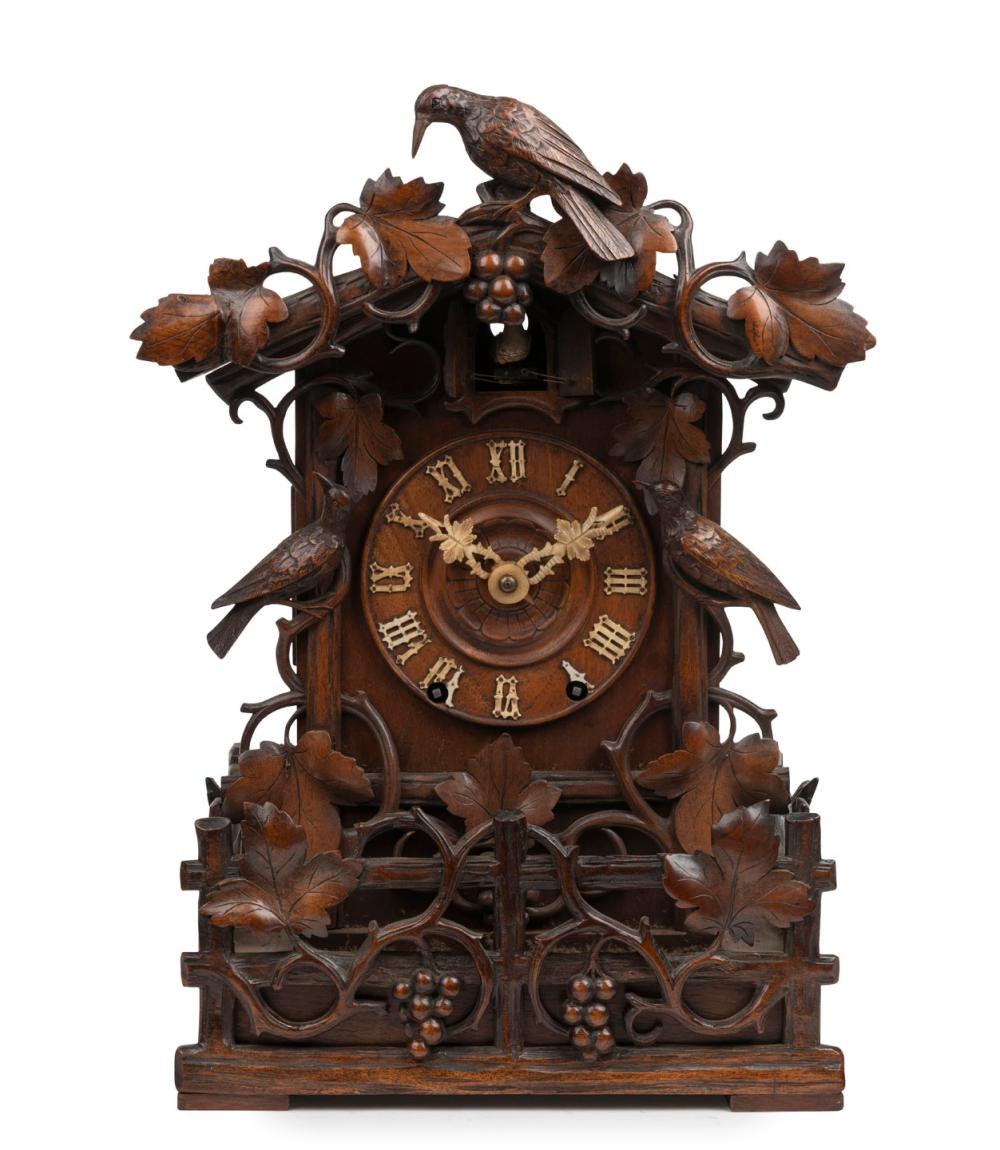
This German Black Forest cuckoo spring table clock, dated circa 1890 and attributed by the auction house to Johann Baptiste Beha, stands 48 cm high in a chalet-style walnut case. The carved wooden exterior features vine leaves, grape clusters, and three carved birds, including one surmounting the roof. The dial has carved bone hands with foliate motifs and applied Roman numerals. According to the cataloguer, the clock houses a two-train fusee movement with beechwood plates and retains remnants of a Beha label on the backboard.

Front view of the chalet-style carved walnut cuckoo table clock
Front view of the chalet-style carved walnut cuckoo table clock — Leski Auctions Pty Ltd. Rights pending — permission not yet requested. Original source

Catalogue identity

Source
www.invaluable.com
Category
Clock · Cuckoo table clock
Maker / attribution
Attributed to Johann Baptiste Beha
Reference
Not recorded
Catalogue / lot identifier
527
Source-reported date
circa 1890
Country
Germany

Source-reported attribution and specifications are not independent authentication. A listing does not establish present ownership, current display, availability or permission to reproduce.

Object description

Case Form and Carving

The clock is housed in a chalet-style walnut case described by the auction house as measuring 48 cm high and decorated with carved vine leaves, grape clusters, and bird figures. Directly visible observations show a carved bird surmounting the pitched roof above a cluster of carved grapes and a small cuckoo aperture door, with trailing vine foliage and two additional carved birds flanking the dial.

The lower section of the case incorporates a rustic trellis-style fence structure draped with carved vine leaves and grapes. According to the auction condition report, the case is in original order, patination, and finish, with no losses apparent to the carved decoration.

Evidence for this section
  • “The chalet style walnut case with well carved vine leaf, grape and cuckoo bird decoration.”
  • “48cm high.”
  • “A carved bird surmounts the pitched roof above a cluster of carved grapes and a small cuckoo aperture door.”
  • “The lower portion of the case incorporates a rustic trellis-style fence design draped with carved vine leaves and grapes.”
  • “Case in original order, patination and finish. No losses apparent to the carved decoration.”

Dial and Hands

The circular dial displays applied Roman numerals and carved bone hands featuring foliate leaf accents. The auction cataloguer identifies the hands as well carved bone and remarks that the old bone hands appear to be original.

The cataloguer notes alterations on the dial face, specifically that a few ivorine Roman numerals have been replaced.

Evidence for this section
  • “Well carved bone hands with applied Roman numerals to the dial.”
  • “Carved bone hands feature foliate leaf accents.”
  • “Old bone hands appear to be original.”
  • “A few ivorine Roman numerals replaced (which is often the case).”

Mechanism and Reported Condition

Internal components and rear features are not visible in the front photo and rely on cataloguer claims. The movement is reported as a two-train fusee mechanism on beechwood plates attributed to Johann Baptiste Beha, and the backboard is stated to retain remnants of a Beha label.

The auction condition report states that the movement is in good original order but in need of a professional overhaul, and notes that the bellows have been replaced.

Evidence for this section
  • “Two train fusee movement with beechwood plates attributed to Johann Baptiste Beha.”
  • “Remnants of Beha label to clock backboard.”
  • “Movement in good original order but in need of professional overhaul. Bellows replaced (often the case).”

Open research questions

  • What specific text, numbers, or trademark elements remain visible on the label remnants attached to the backboard?
  • Does the two-train fusee movement carry any stamped maker marks, plate numbers, or distinctive movement features confirming the attribution to Johann Baptiste Beha?
  • Which specific numeral positions on the dial are ivorine replacements rather than bone?

Source evidence

Recorded claims and source quotations for Johann Baptiste Beha Black Forest cuckoo spring table clock
FieldSource-reported valueSource quotation
Movement AttributionAttributed to Johann Baptiste Beha“Two train fusee movement with beechwood plates attributed to Johann Baptiste Beha.”
Case Style and MaterialChalet style walnut case“The chalet style walnut case with well carved vine leaf, grape and cuckoo bird decoration.”
Height48 cm“48cm high.”
Dial FeaturesCarved bone hands with applied Roman numerals“Well carved bone hands with applied Roman numerals to the dial.”
Backboard InscriptionRemnants of Beha label“Remnants of Beha label to clock backboard.”
Bellows StatusReplaced“Bellows replaced (often the case).”
Dial Numeral ConditionSeveral ivorine replacements“A few ivorine Roman numerals replaced (which is often the case).”

Visible details

  • A carved bird surmounts the pitched roof above a cluster of carved grapes and a small cuckoo aperture door.
  • Two carved birds flank the circular wooden dial, which is bordered by trailing vines and foliage.
  • Carved bone hands feature foliate leaf accents.
  • The lower portion of the case incorporates a rustic trellis-style fence design draped with carved vine leaves and grapes.

Research qualifications

  • The source report indicates replaced bellows and notes that several Roman numerals are ivorine replacements.
  • The internal two-train fusee movement and the rear Beha label are not visible in the provided front view.

Photograph identity and source facts were screened before import; rights clearance remains pending.

Terms in this record

Glossary explanations for terms named in this object’s record.