
Skip to content
The Encyclopedia of Horology

Clock · Cuckoo clock

Antique Black Forest Carved Walnut Cuckoo Clock

Partially verified

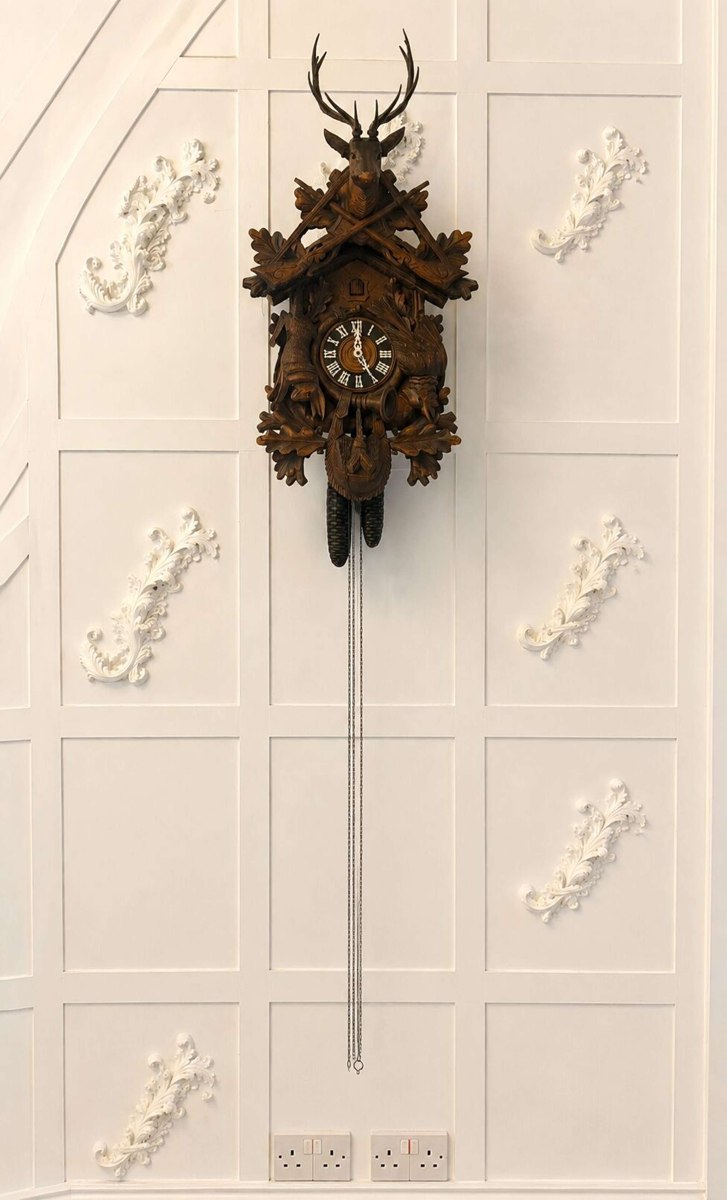
This antique German cuckoo clock dates from circa 1900 and features a solid walnut case carved in the traditional hunting lodge style. The architectural chalet pediment is surmounted by a carved stag's head positioned above crossed sporting rifles, framed by oak leaves, game, and woodland motifs. Its dark circular dial presents contrasting white Roman numerals and carved hands, set below an aperture door for the cuckoo automaton. The clock is powered by a weight-driven mechanical movement with suspended pine cone weights and chains.

Front view of the Black Forest carved walnut cuckoo clock with suspended weights and chains
Front view of the Black Forest carved walnut cuckoo clock with suspended weights and chains — London City Antiques Limited. Rights pending — permission not yet requested. Original source

Catalogue identity

Source
www.antiquesboutique.com
Category
Clock · Cuckoo clock
Maker / attribution
Not established
Reference
3176 (AB-296661)
Catalogue / lot identifier
itm296661
Source-reported date
circa 1900
Country
Germany

Source-reported attribution and specifications are not independent authentication. A listing does not establish present ownership, current display, availability or permission to reproduce.

Object description

Case Carving and Hunting Lodge Motifs

The clock case is described as carved from solid walnut in the traditional hunting lodge style, measuring 89 cm high, 43 cm wide, and 34 cm deep. The woodwork incorporates relief representations of sporting motifs, oak leaves, game birds, a hunting horn, and a game bag.

A carved stag's head with prominent antlers surmounts the peaked chalet pediment above crossed sporting rifles. These carvings surround the dial and form a framed architectural facade.

Evidence for this section
  • “Every element has been carved from solid walnut”
  • “Height:89cm(35.04Inches) Width:43cm(16.93Inches) Depth:34cm(13.39Inches)”
  • “decorated with a dramatic stag's head surmounted above crossed sporting rifles, surrounded by deeply carved oak leaves, game birds, hunting horn, game bag and woodland foliage”
  • “A carved stag's head with prominent antlers surmounts the peaked pediment.”

Dial and Automaton Aperture

The circular dial presents contrasting white Roman numerals set against a dark chapter ring, accompanied by light-toned carved hands. The dial face is framed by the wooden hunting trophies.

Above the dial, a small cuckoo aperture door is set into the chalet facade. According to the seller listing, this concealed door is intended to allow the cuckoo automaton to emerge on the hour.

Evidence for this section
  • “The circular dial is fitted with contrasting white Roman numerals against a black chapter ring, retaining its original carved hands”
  • “The dial features white Roman numerals with light-toned carved hands.”
  • “Above the dial sits the cuckoo door, discreetly concealed within the carved chalet, allowing the bird to emerge on the hour.”

Drive Mechanism and Evidence Limitations

The clock is powered by a weight-driven mechanical movement. Visual evidence confirms two pine-cone-shaped weights and metal chains suspended beneath the base of the carved case, and the listing notes it retains a pendulum.

The internal brass movement plates, striking mechanism, and maker hallmarks are neither documented in the text nor depicted in the photographs. Geographic origin in Germany and dating to circa 1900 reflect dealer attributions rather than visible manufacturer stamps recorded in this source.

Evidence for this section
  • “powered by a weight-driven mechanical movement”
  • “Two pine-cone-shaped weights and metal chains hang beneath the carved case.”
  • “The clock retains its traditional pine cone weights and pendulum”
  • “dating from around 1900”
  • “Origin:German”

Open research questions

  • What maker's trademark, stamp, or plate number is present on the internal brass movement?
  • What is the running duration of the movement (such as 30-hour or 8-day)?
  • What type of strike work is installed (count wheel or rack-and-snail) to operate the cuckoo bellows and gong?

Source evidence

Recorded claims and source quotations for Antique Black Forest Carved Walnut Cuckoo Clock
FieldSource-reported valueSource quotation
Datecirca 1900“dating from around 1900”
Case MaterialSolid walnut“Every element has been carved from solid walnut”
Height89 cm (35.04 inches)“Height:89cm(35.04Inches)”
Width43 cm (16.93 inches)“Width:43cm(16.93Inches)”
Depth34 cm (13.39 inches)“Depth:34cm(13.39Inches)”
OriginGerman“Origin:German”
Movement TypeWeight-driven mechanical movement“powered by a weight-driven mechanical movement”
Case AccessoriesPine cone weights and pendulum“The clock retains its traditional pine cone weights and pendulum”
Inventory Reference3176 (AB-296661)“Code 3176 (AB-296661)”

Visible details

  • A carved stag's head with prominent antlers surmounts the peaked pediment.
  • The dial features white Roman numerals with light-toned carved hands.
  • Two pine-cone-shaped weights and metal chains hang beneath the carved case.

Research qualifications

  • Internal movement maker marks are neither documented in the text nor visible in the photos.
  • The clock mechanism plates and interior movement construction are not shown.

Photograph identity and source facts were screened before import; rights clearance remains pending.

Consulted source

Antique Black Forest Carved Walnut Cuckoo Clock in Antique Wall Clocks

Reviewed 2026-10-21 · Record fbf3729bc9

Terms in this record

Glossary explanations for terms named in this object’s record.