
Watch family · Precision & certification
Railway-Approved Wristwatches
Partially verifiedWristwatches meeting railway timekeeping standards originally developed for pocket watches, specifying accuracy, legibility and reliability sufficient for train crews to keep to a timetable.
Movement & mechanism
- Movement regulated and tested to defined accuracy tolerances, in the same spirit as, though generally adapted from, earlier railway-grade pocket-watch standards
- High-legibility dial with bold Arabic numerals and a plain, easily read layout, prioritising unambiguous reading over decoration
Identification
- Case or dial marked with a railway-approval reference where the standard required formal certification
- Plain, high-contrast dial with large numerals
- Documented accuracy testing or certification, distinct from an ordinary commercial-grade wristwatch
Terminology
- Railway grade — a level of accuracy and reliability certified against a railway operator's or regulator's timekeeping standard
Known variations
- Railway-issue wristwatch
- Commercially sold watch meeting railway-grade accuracy without formal railway issue
Pocket-watch ancestry
Railway timekeeping standards were established for pocket watches in the nineteenth century, following well-documented accuracy and legibility requirements adopted after railway accidents attributed to timekeeping error; wristwatch railway standards inherited these accuracy and legibility principles directly, applying them to the smaller wrist format once wristwatches became accepted for professional use.
Collecting notes
Collected for their direct link to the well-documented American railway-grade pocket-watch tradition, with railway-marked or railway-issue wristwatch examples of particular interest where the chain of standards can be shown.
Background
Railroad-grade wristwatches emerged in the late 1950s as a successor to the pocket watches that previously served as the only timepieces approved for railroad service. These wristwatches were engineered to satisfy rigorous accuracy requirements previously established for the railway industry to ensure safe and dependable timekeeping. Early models included high-grade, manual-wind movements, while later versions incorporated self-winding mechanical or electronic tuning-fork technology to maintain official standards. Following these initial designs, quartz-movement wristwatches became available for railway employees in the early 1970s, offering inherent accuracy and cost efficiency.
Written from the sources listed under Sources (makers, museums, auction houses and specialist publications are paraphrased, not reproduced); each statement was checked against the cited text, and claims a maker makes about its own work are attributed to it.
Later development
- Ball introduced the Trainmaster in 1959, and Elgin launched the B.W. Raymond wristwatch in 1960, both as high-grade manual-wind wristwatches for railroad use.
- Bulova debuted a version of the Accutron tuning-fork watch in 1962, while Hamilton briefly produced an electric model that was later withdrawn due to reliability issues.
Photographs
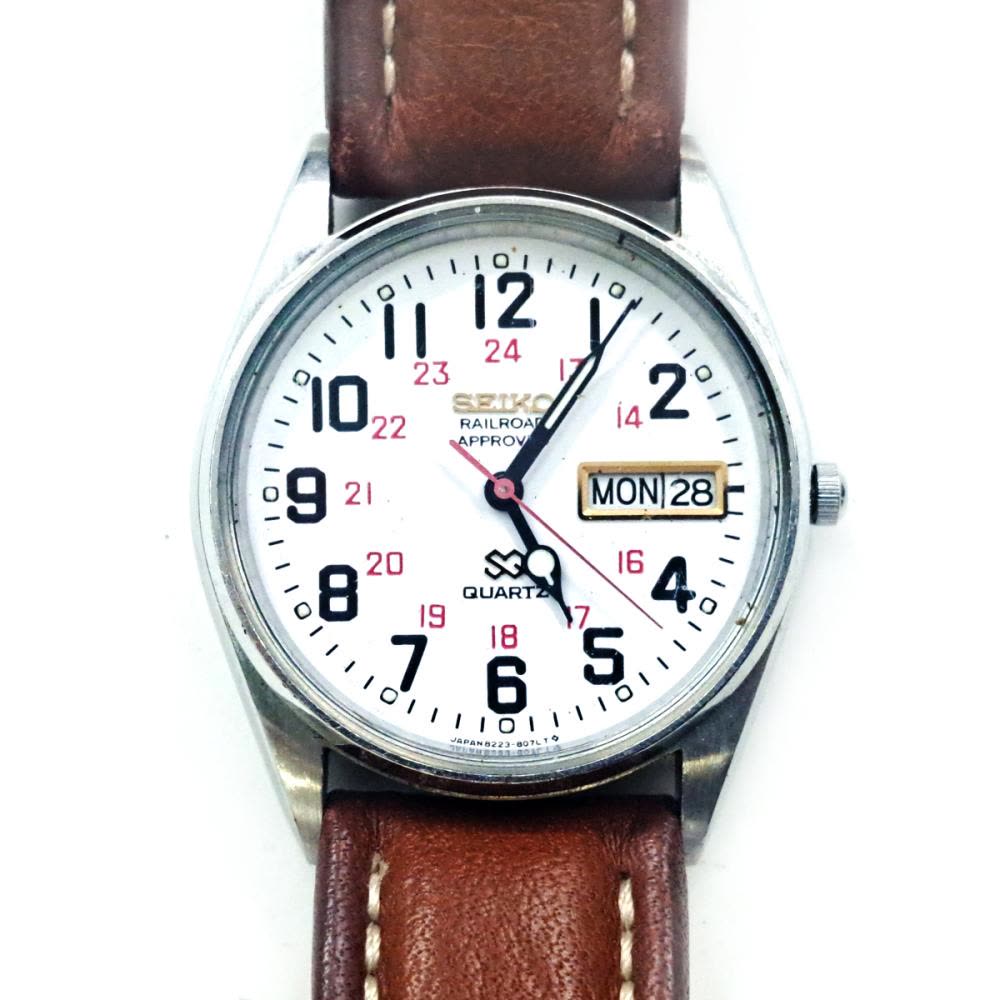
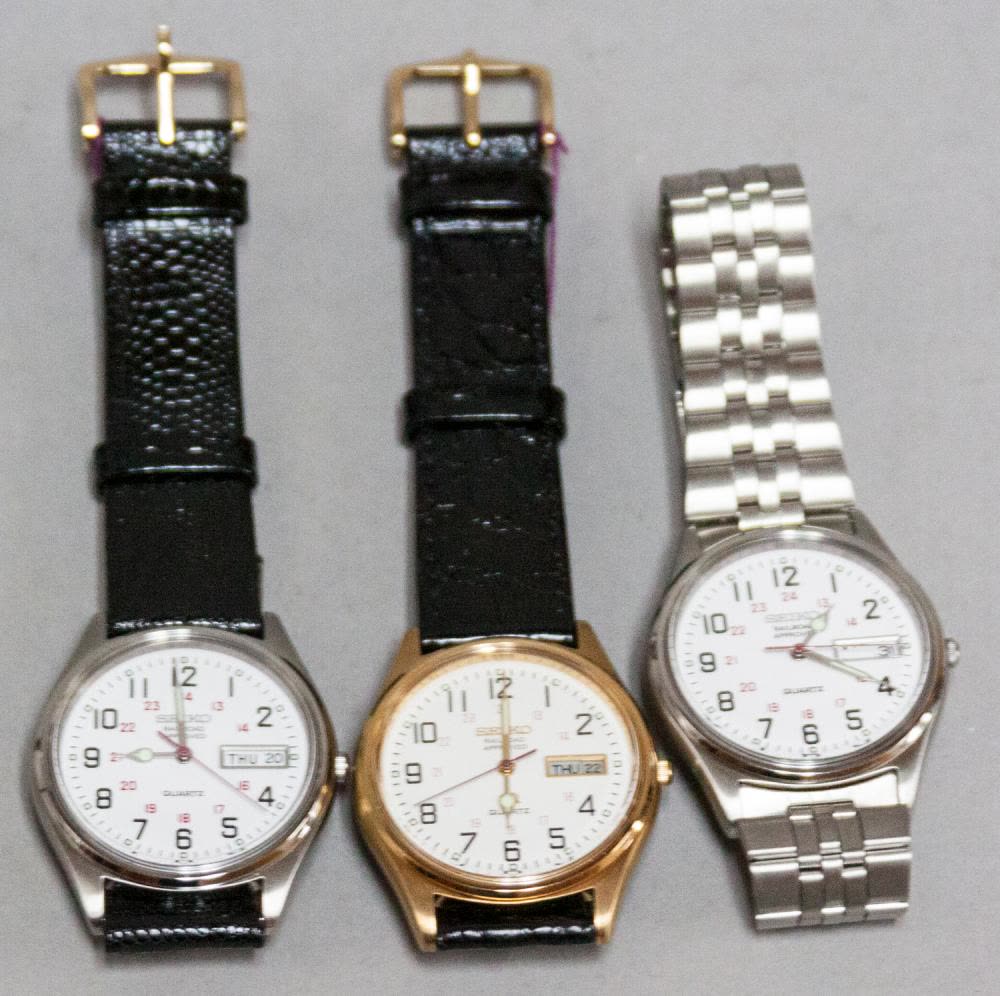
Photographs are illustrative examples of the type, not necessarily the exact object described. Verify details against the source file page.
Sources & references
- Approved railroad watches, RailsWest, retrieved 2026-10-30 (paraphrased; text © the publisher)
- Ball, Webb C., Encyclopedia of Cleveland History (Case Western Reserve University), retrieved 2026-10-30 (paraphrased; text © the publisher)
- General literature on American railway-grade pocket-watch standards and their later extension to wristwatches; precise standard-by-standard wristwatch documentation is limited here.
Where sources disagree, the disagreement is stated rather than resolved silently.