
Watch family · Style & purpose
Purse and Travel Watches
Needs researchSmall watches carried in a handbag, vanity case or dedicated travel case rather than worn on the wrist or a waistcoat chain, generally fitted with a folding stand, protective cover or a short strap or ribbon rather than a fixed wrist bracelet.
Movement & mechanism
- Small movement, frequently a reduced pocket-watch or early wristwatch calibre, set within a protective hinged or slide-on case
- Some examples fitted with a small folding stand allowing the watch to double as a miniature desk or travel clock
Identification
- Small case with a loop, ribbon fitting or folding stand rather than fixed wrist lugs
- Often sold as part of a matched vanity or travel case set
- Decorative treatment (enamel, guilloché) typical of the accessory rather than purely utilitarian trade
Terminology
- Purse watch — a small watch intended to be carried in a handbag rather than worn
- Travel watch — a small watch, often with a protective case or stand, intended for portable use away from home
Known variations
- Ribbon or fob-mounted purse watch
- Folding-stand travel watch
- Vanity-case-set purse watch
Pocket-watch ancestry
Purse and travel watches sit directly alongside, and in the same period as, the pocket watch: they use the same small movements and simply substitute a bag, ribbon or travel case for a waistcoat pocket and chain, illustrating that miniaturisation and portability concerns predate, and are not unique to, the wristwatch proper.
Collecting notes
Collected within the broader field of ladies' and travel accessory watches, where case, fitted box and decorative quality weigh heavily alongside the movement.
Background
The Ermeto watch originated in 1926 when the Huguenin Frères & Cie case manufacturer patented a sliding case design. Movado launched the timepiece to serve as a portable, protective watch that functions as both an elegant fashion item and a practical travel tool. These watches are defined by a case consisting of two sliding outer sleeves that conceal and protect the dial and mechanism when closed.
As described by Europa Star, the Ermeto functioned as a unisex watch that could be transported in a pocket or attached to a bag or suit. According to Bulang and Sons, the sliding mechanism allowed for an innovative automatic winding system where opening and closing the case rotated the crown. Many of these pieces were intended to serve double duty as desk or travel clocks, featuring integral kick-stands.
Written from the sources listed under Sources (makers, museums, auction houses and specialist publications are paraphrased, not reproduced); each statement was checked against the cited text, and claims a maker makes about its own work are attributed to it.
Defining features
- The sliding case offered protection from dust, moisture, and impact while also serving as the watch's winding system.
- Available sizes included the large Pullman, the Master, the Normal, and the smaller Baby model intended for purses or neck chains.
- A variety of decorative materials were used for the case covers, including leather, enamel, and lacquer.
Later development
- Prestigious retailers such as Cartier, Hermès, Tiffany & Co., and Van Cleef & Arpels collaborated on the branding or sale of these timepieces.
Where sources differ
- Period. This record gives: “c. 1900s–1930s”. Movado's Ermeto, the best-known sliding-case example, was introduced in 1926 and stayed in production until 1985, according to Bulang & Sons.
Photographs
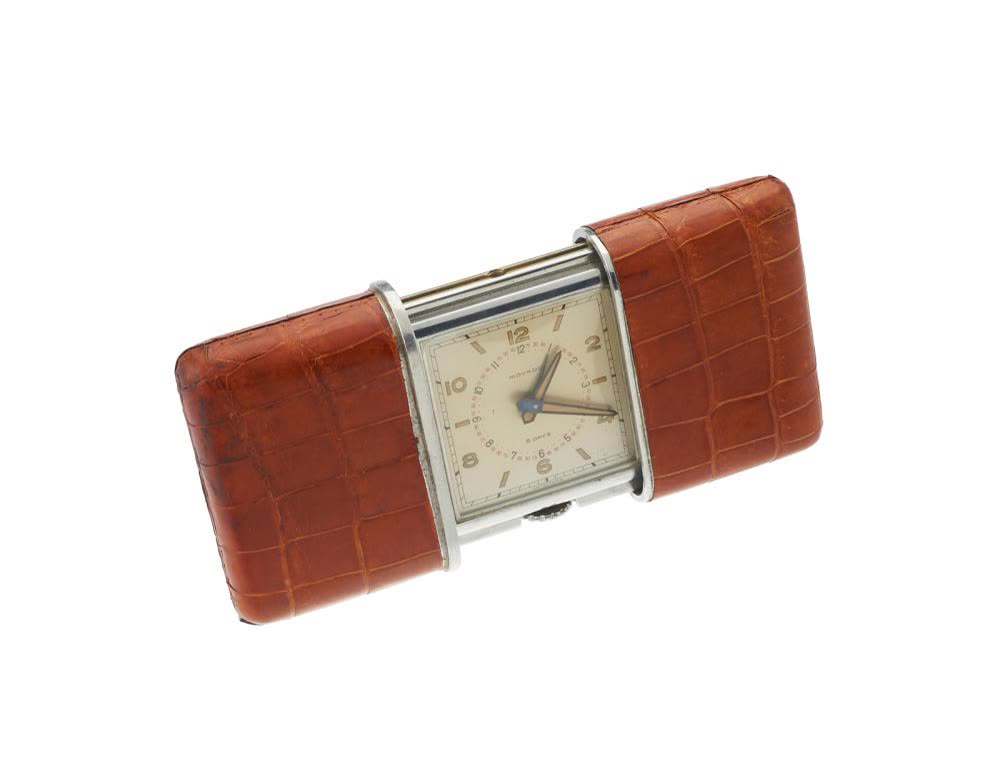
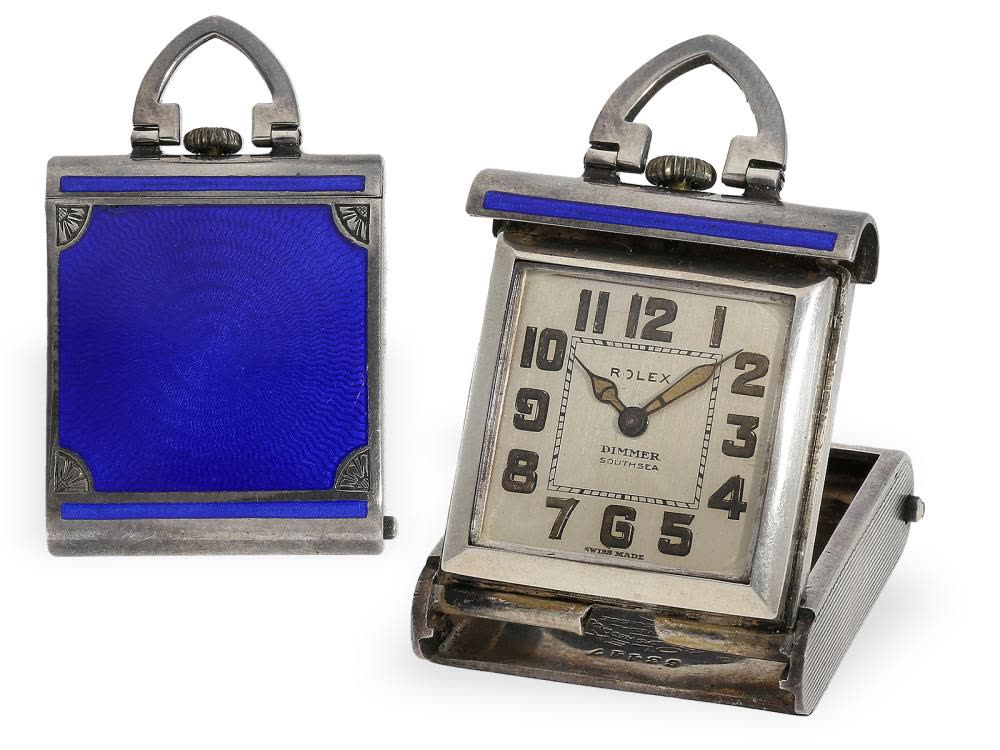
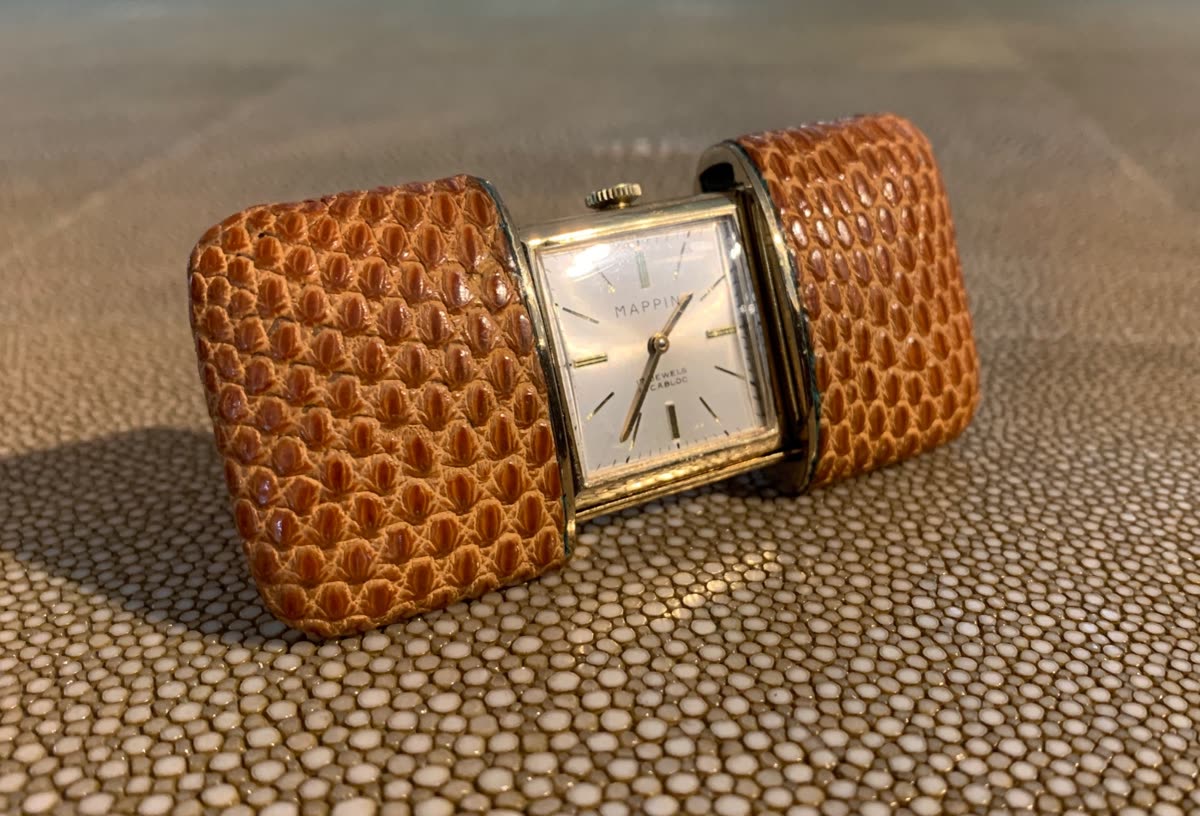
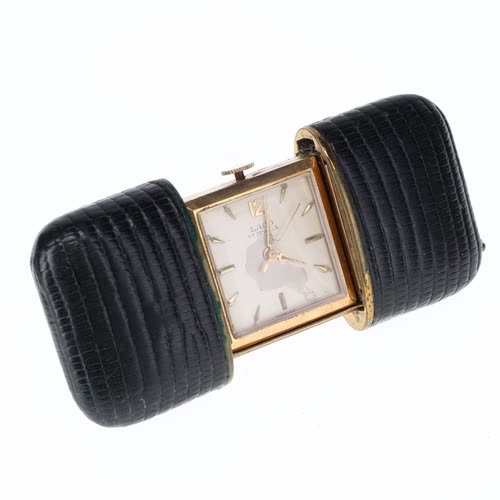
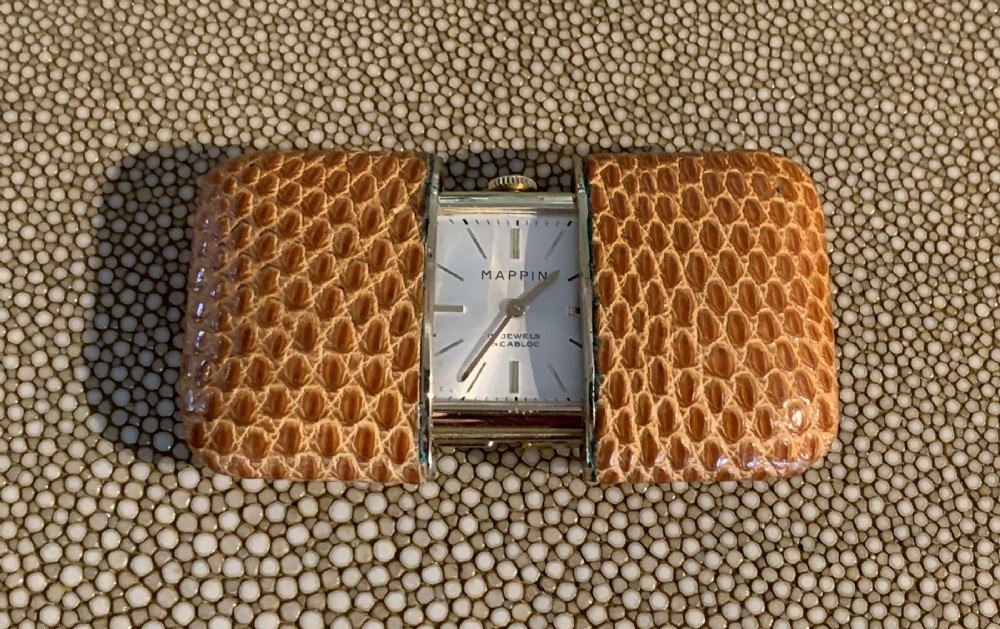
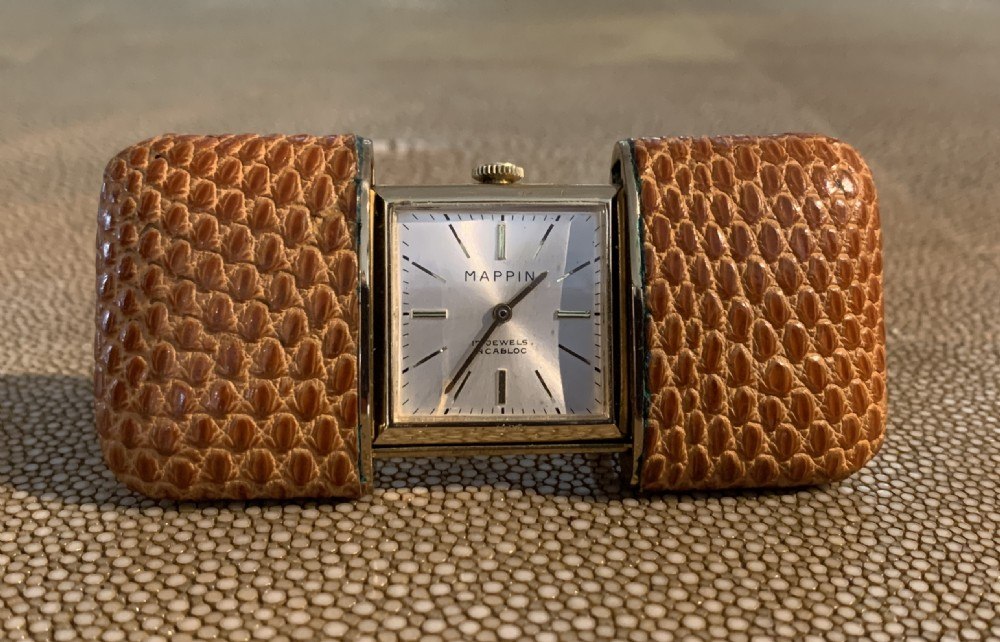
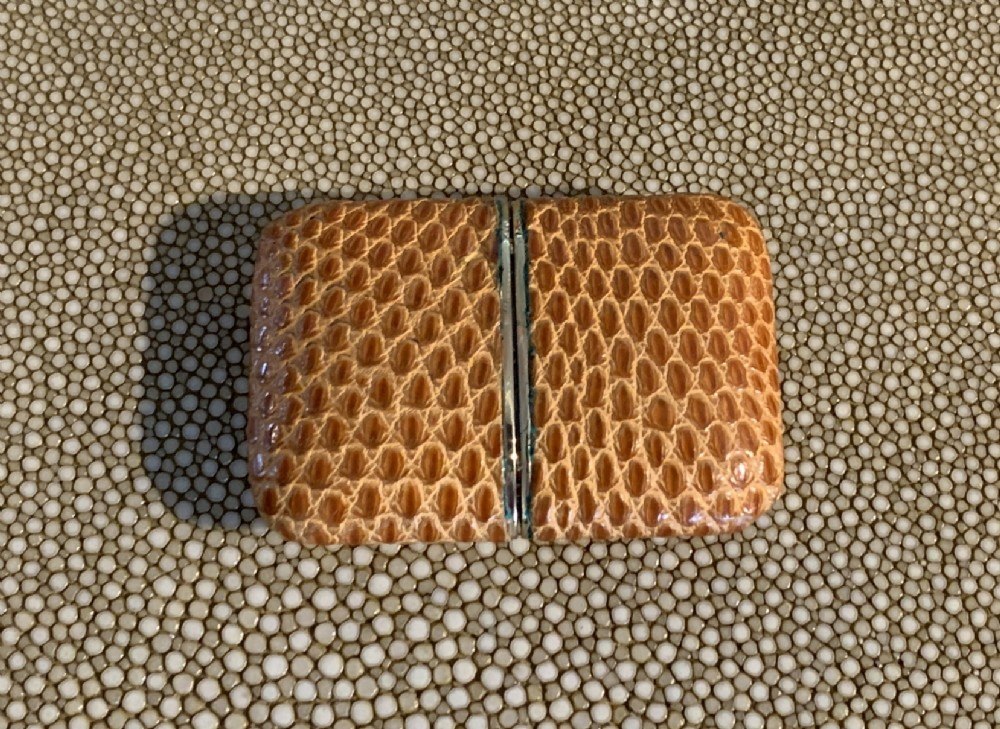
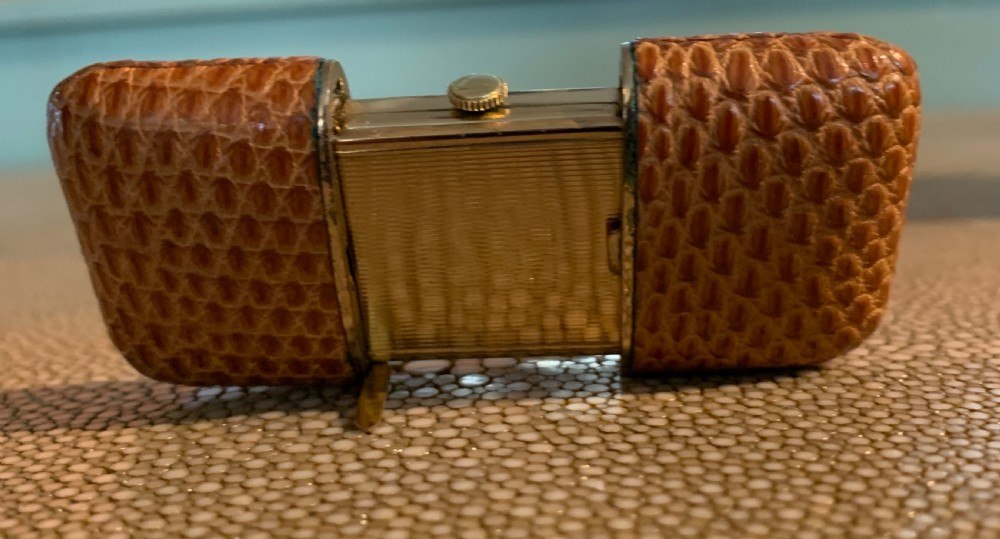
Photographs are illustrative examples of the type, not necessarily the exact object described. Verify details against the source file page.
Sources & references
- The Movado Ermeto: the original smart watch, Europa Star, retrieved 2026-10-30 (paraphrased; text © the publisher)
- Sliding doors: the Movado Ermeto watch, Bulang & Sons, retrieved 2026-10-30 (paraphrased; text © the publisher)
- An Art Deco enamel purse watch and cigarette case, Christie's, retrieved 2026-10-30 (paraphrased; text © the publisher)
- General literature on ladies' accessory and travel watches of the early twentieth century; systematic maker documentation is limited.
Where sources disagree, the disagreement is stated rather than resolved silently.