
Astronomical clock with jousting-knight automata · England
Wells Cathedral Clock
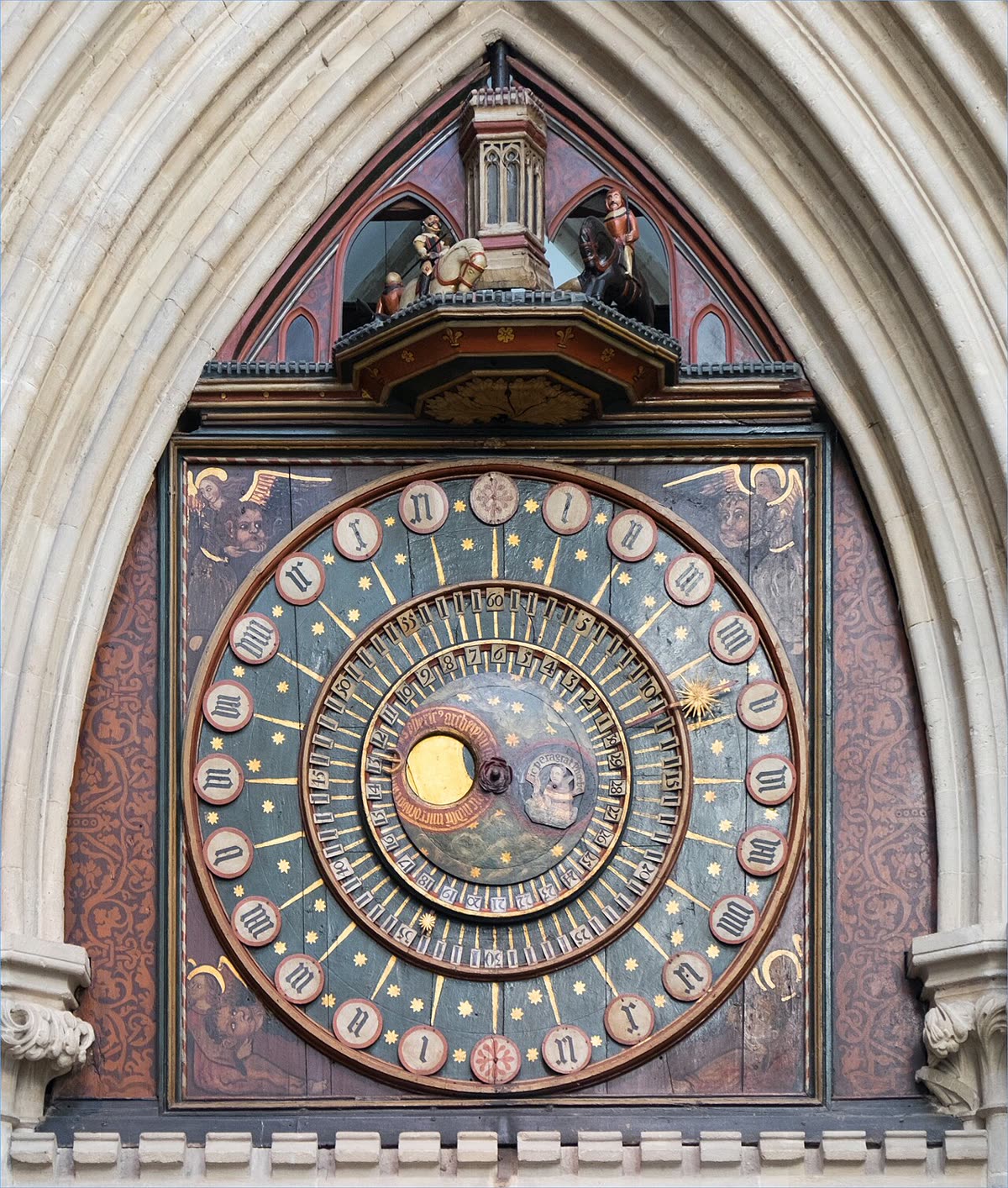
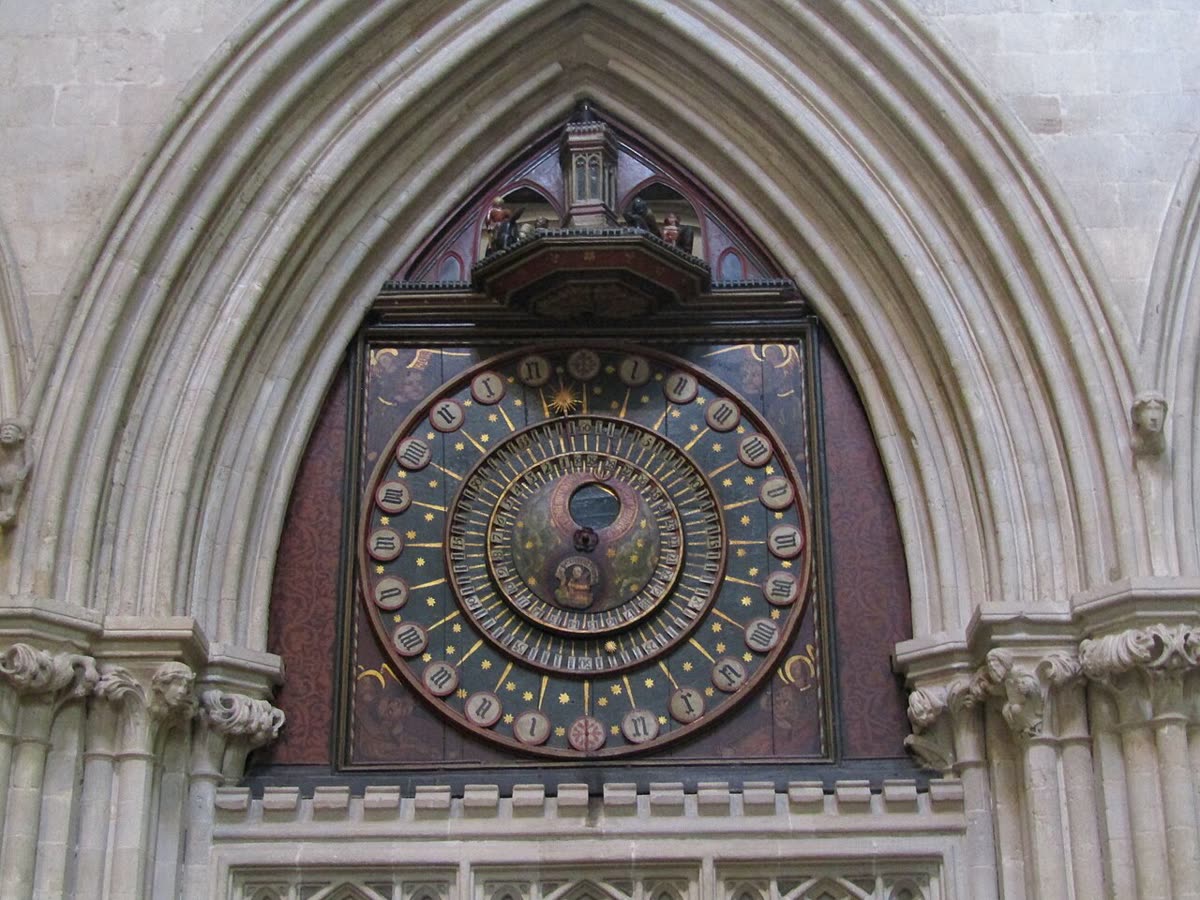
Partially verifiedOne of the oldest surviving astronomical clock dials in England, showing a geocentric (pre-Copernican) display of the sun and moon appropriate to its period of construction.
Technical facts
- Dial
- Geocentric astronomical display of sun and moon position, plus a 24-hour dial
- Automata
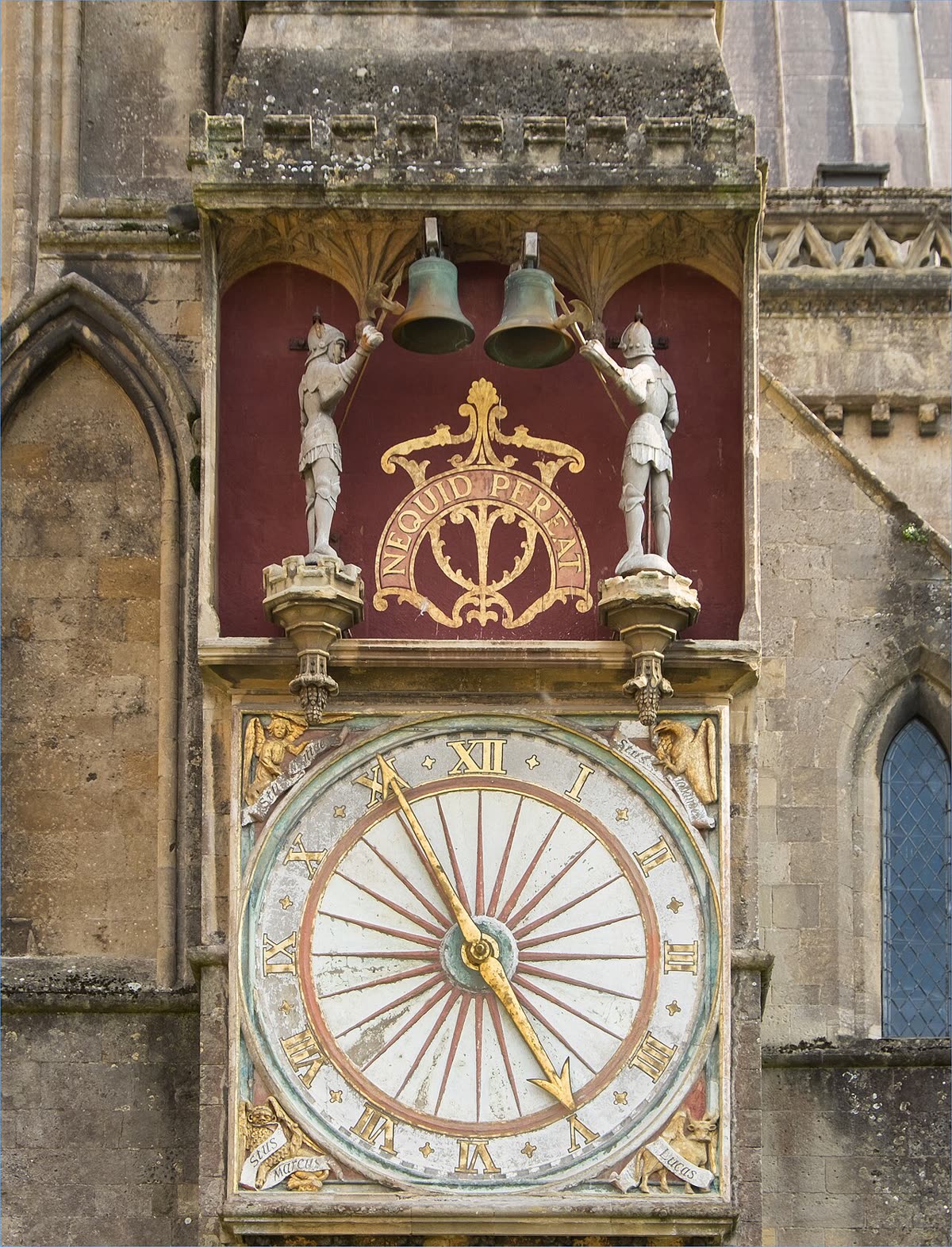
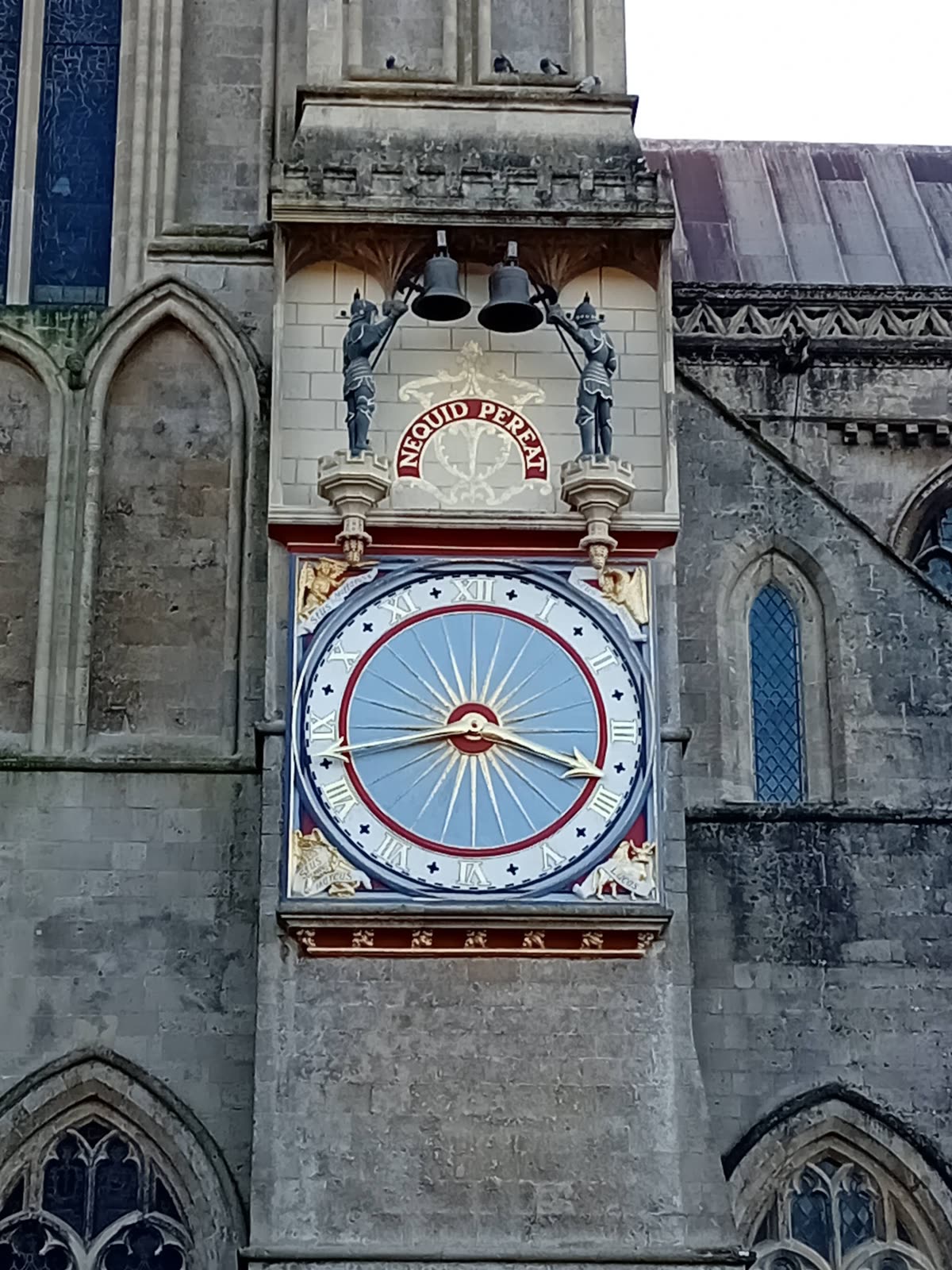
- Jousting knights that rotate on the quarter-hour
Historical significance
- One of the oldest surviving astronomical clock dials in England, showing a geocentric (pre-Copernican) display of the sun and moon appropriate to its period of construction.
- The original medieval movement was removed and is now displayed at the Science Museum, London, while the cathedral's visible dial is driven by a later replacement movement — a distinction researchers must state clearly rather than implying the original medieval mechanism still drives the public-facing clock.
Background
The Wells Cathedral clock is an astronomical clock situated in the north transept of Wells Cathedral, England. While historically linked to the Glastonbury Abbey clock, researchers have concluded that the clock was created specifically for Wells Cathedral following the Glastonbury construction. The dial functions as a philosophical model of the pre-Copernican universe, featuring a central fixed Earth surrounded by the revolving Sun, Moon, and stars.
The Sun rotates once every twenty-four hours to indicate the hour, while a smaller internal star tracks minutes against the dial. The clock mechanism also powers automata, including a figure known as Jack Blandifers who strikes bells and a set of jousting knights that perform every quarter hour.
Written from the encyclopedia entries listed under Sources; each statement was checked against the cited text.
Construction and mechanism
- The dial displays the lunar phase through a rotating moon plate window that reveals a black and gold surface representing the lunar month.
- Four angels are positioned in the corners of the interior dial, holding the four cardinal winds as potential sources of the universe's movement.
- The dial contains Latin inscriptions regarding the nature of the microcosm and the progression of the moon.
Later history
- The original medieval mechanism was replaced in the 19th century and is now preserved and operational at the Science Museum in London.
- The clock underwent a modification in the 17th century to incorporate a pendulum and an anchor escapement.
Photographs
Photographs are illustrative examples of the type, not necessarily the exact object described. Verify details against the source file page.
Sources & references
- Wells Cathedral clock, Wikipedia (English), retrieved 2026-10-28 (text CC BY-SA 4.0)
- Science Museum Group, collection records for the original Wells Cathedral clock movement
- Wells Cathedral, published visitor information
Where sources disagree, the disagreement is stated rather than resolved silently.