
Measuring instrument · Place not recorded
Wristwatch metronome
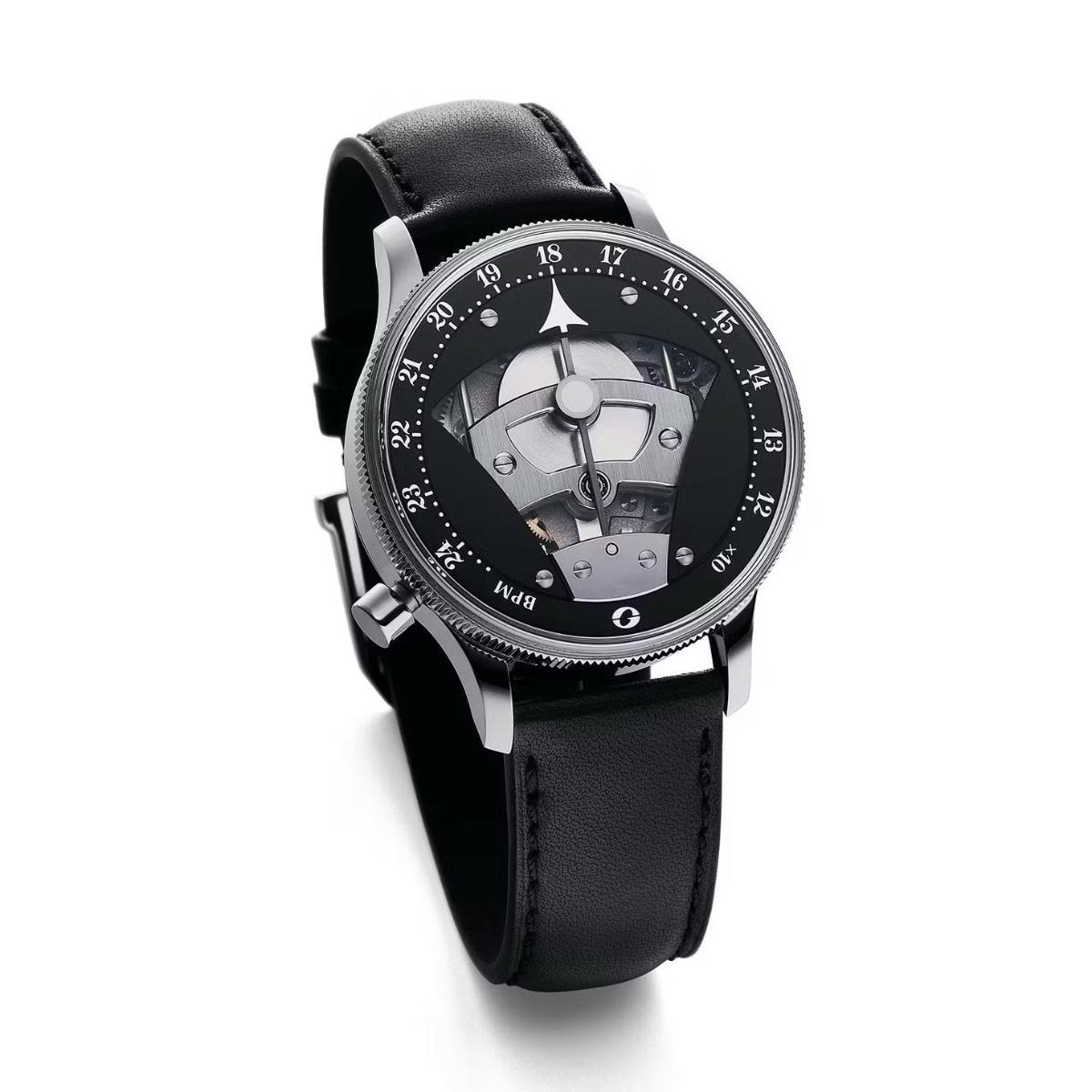
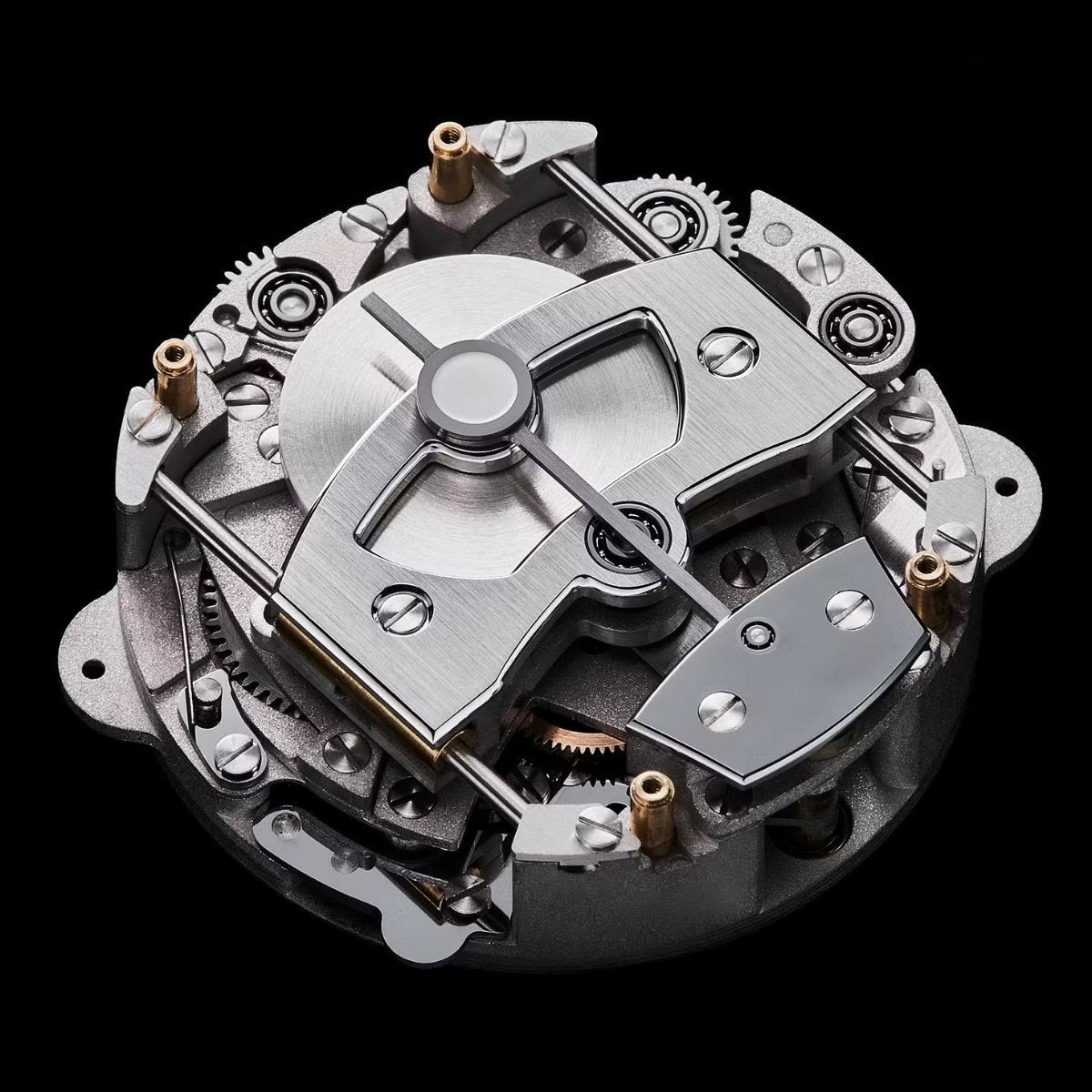
VerifiedAs the world’s first mechanical wrist-worn metronome, the “Tempo Rubato” employs the mechanisms of a mechanical watch, such as going train, springs, the balance wheel and escapement.
Technical facts
- Inventory number
- MIH V-843
- Object type
- Measuring instrument
- Dating
- 2025
- Dimensions (catalogue)
- Dimensions: 50 x 40 x 15 mm; poids: 85.5 g
Historical significance
- As the world’s first mechanical wrist-worn metronome, the “Tempo Rubato” employs the mechanisms of a mechanical watch, such as going train, springs, the balance wheel and escapement.
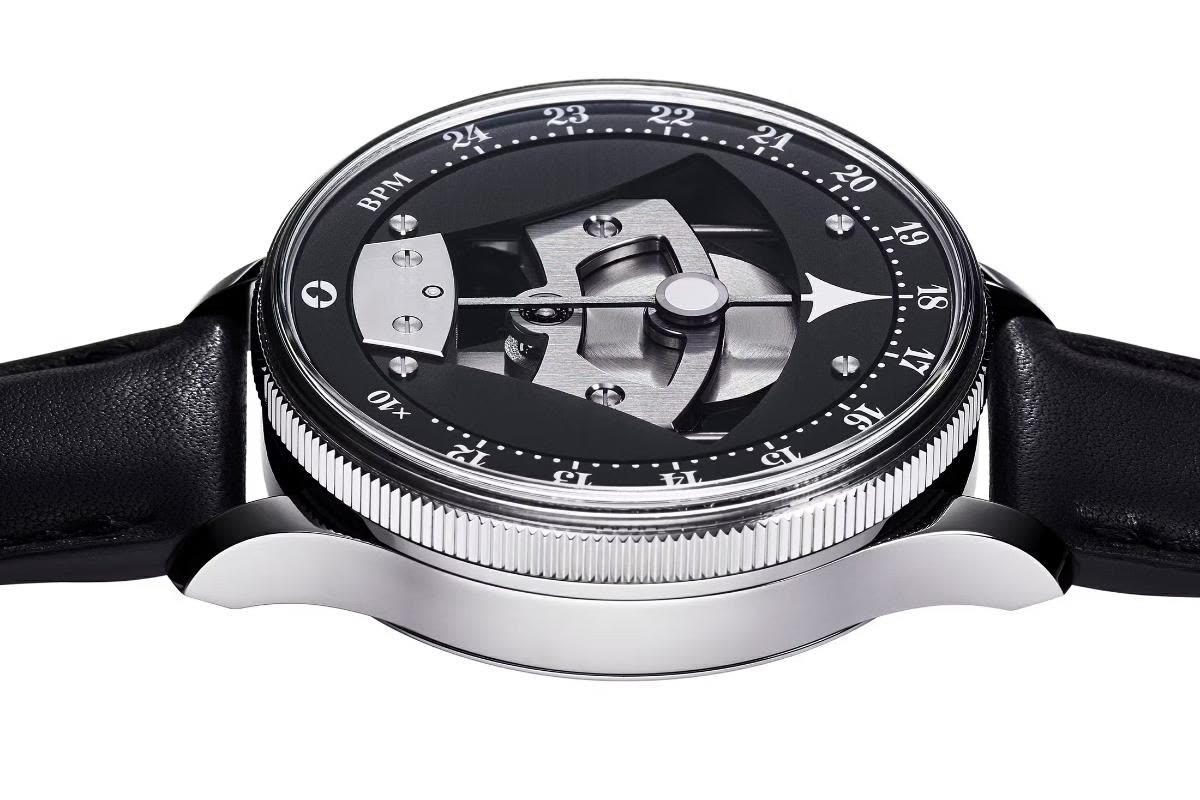
- The musical term "Tempo Rubato" refers to the practice of freely varying the tempo during a performance in order to adapt to the atmosphere or emotion of the moment. In this piece, the tempo (BPM) can be freely adjusted by rotating the bezel. The button at 8 o’clock starts and stops the metronome. The bezel regulates the BPM: clockwise rotation increases the tempo while winding the mainspring, whereas counterclockwise rotation decreases it, with stops in both directions. The BPM can also be adjusted while the metronome is running.
- The 39.5 mm stainless steel case houses the Cal. Tempo Rubato movement with 5 jewels and 15 ball bearings. It offers approximately 30 minutes of power reserve and operates at 7,200 to 14,400 vibrations per hour, corresponding to 120 to 240 beats per minute.
Photographs
Photographs are illustrative examples of the type, not necessarily the exact object described. Verify details against the source file page.
Sources & references
- Musée international d'horlogerie, online collection record, inv. V-843: https://collection.mih.ch/fr/collection/item/89988/
Where sources disagree, the disagreement is stated rather than resolved silently.