
Sundial · Paris
Pocket or travelling horizontal sundial
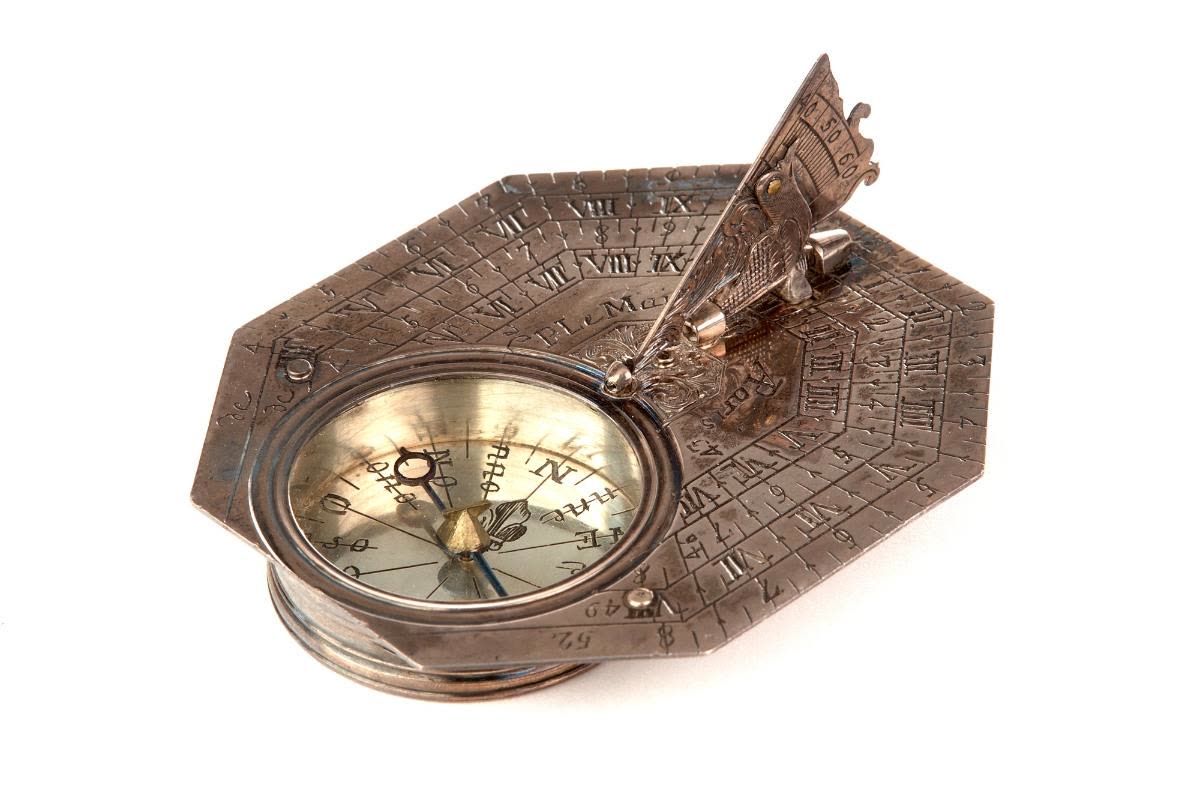
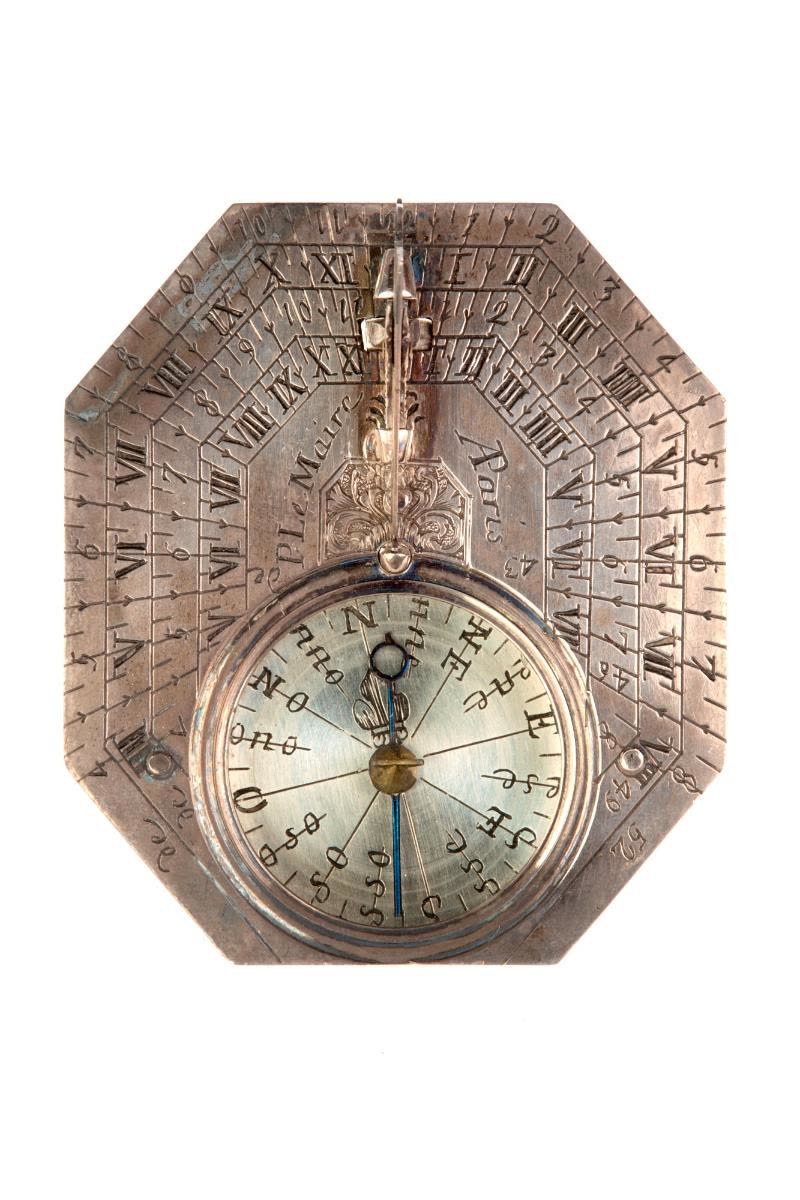
VerifiedOctagonal in shape, the silver dial is fitted with a compass and a folding triangular gnomon, held in place by a pierced and engraved bird-shaped ornament. The bird’s beak indicates the latitude, which can be adjusted on a graduated scale from 40° to 60°. Four lines, engraved alternately in Roman and Arabic numerals, allow the time to be read according to the selected latitude (43°, 46°, 49°, and 52°).
Technical facts
- Inventory number
- MIH V-38
- Object type
- Sundial
- Place of production
- Paris
- Dating
- first half of the 18th c.
- Materials and techniques (catalogue wording)
- Argent
- Dimensions (catalogue)
- dimensions: 57.7 x 49.8 mm
- Inscriptions (catalogue)
- P. le Maire A Paris (Cadran)
Historical significance
- Octagonal in shape, the silver dial is fitted with a compass and a folding triangular gnomon, held in place by a pierced and engraved bird-shaped ornament. The bird’s beak indicates the latitude, which can be adjusted on a graduated scale from 40° to 60°. Four lines, engraved alternately in Roman and Arabic numerals, allow the time to be read according to the selected latitude (43°, 46°, 49°, and 52°).
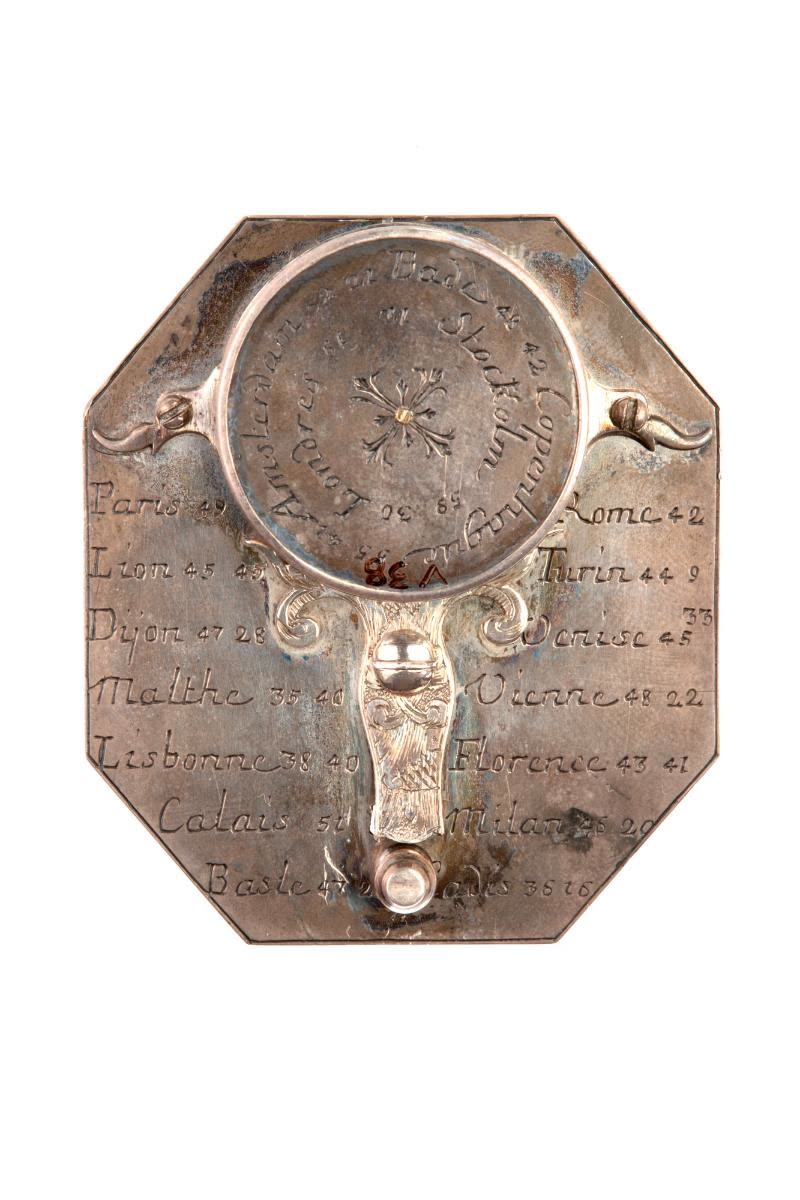
- On the reverse appear the names of nineteen European cities, together with their respective latitudes.
- Michael Butterfield (?–1724), an instrument maker established in Paris, gave his name to this compact, robust, and practical type of sundial, which enjoyed considerable success from the late seventeenth century onward.
Photographs
Photographs are illustrative examples of the type, not necessarily the exact object described. Verify details against the source file page.
Sources & references
- Musée international d'horlogerie, online collection record, inv. V-38: https://collection.mih.ch/fr/collection/item/28576/
Where sources disagree, the disagreement is stated rather than resolved silently.