
Table clock · Padoue
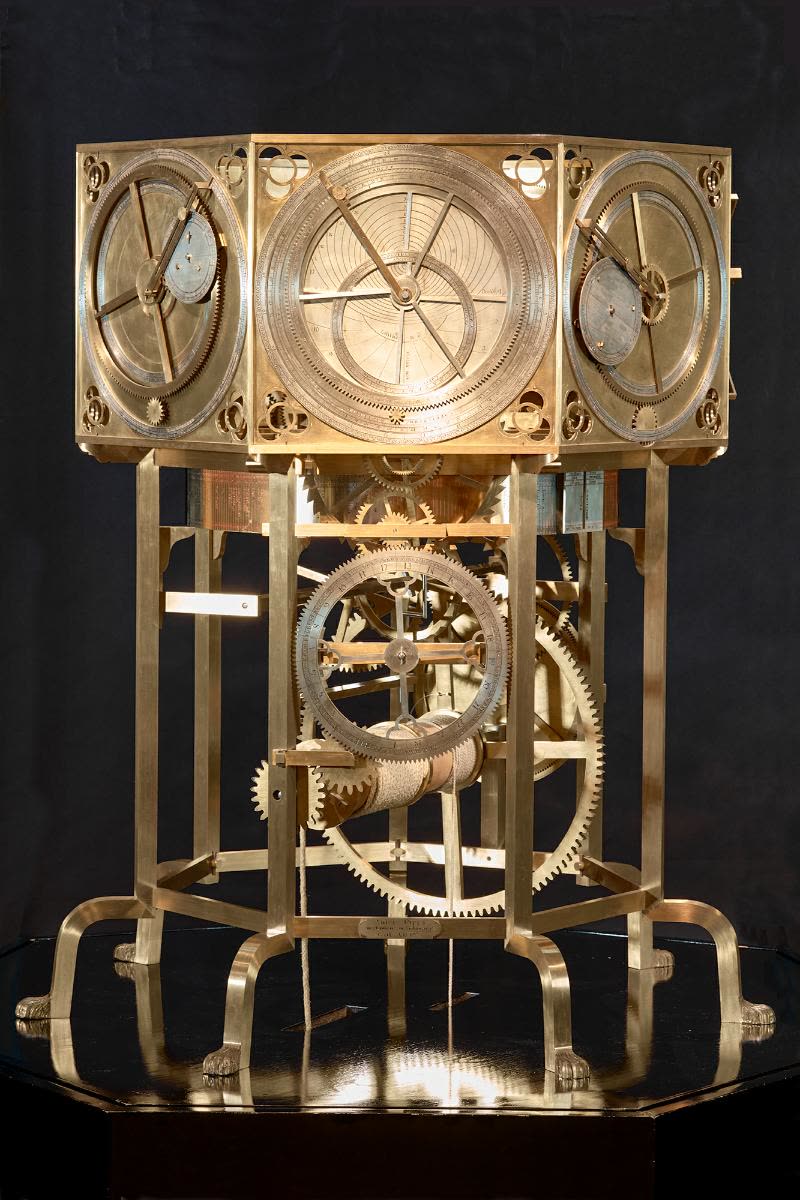
Astrarium (reconstitution)
VerifiedBetween 1365 and 1380, Giovanni Dondi from Padua built a remarkable clock that reproduced the movement of the planets in our solar system. The admiration it aroused in a world where astronomy, astrology and power were synonymous, did not save it from disappearing in the 16th century. Thanks to a richly illustrated description of it, a clockmaker from Milan, Luigi Pippa, was able to recreate it six centuries after its original construction.
Technical facts
- Inventory number
- MIH IV-625
- Object type
- Table clock
- Place of production
- Padoue
- Dating
- 1985
- Materials and techniques (catalogue wording)
- Laiton, Alliage ferreux, Métal
- Dimensions (catalogue)
- Dimensions: 110.0 x 96.0 x 96.0 cm; poids: env. 120.000 kg
- Inscriptions (catalogue)
- Luigi Pippa, mechanicus mediolanensis fecit AD 1985 (sur le bâti)
Historical significance
- Between 1365 and 1380, Giovanni Dondi from Padua built a remarkable clock that reproduced the movement of the planets in our solar system. The admiration it aroused in a world where astronomy, astrology and power were synonymous, did not save it from disappearing in the 16th century. Thanks to a richly illustrated description of it, a clockmaker from Milan, Luigi Pippa, was able to recreate it six centuries after its original construction.
- The astrarium is a mechanical reproduction of the geocentric system conceived by Ptolemy in the second century AD and used by most astronomers during the Middle Ages.
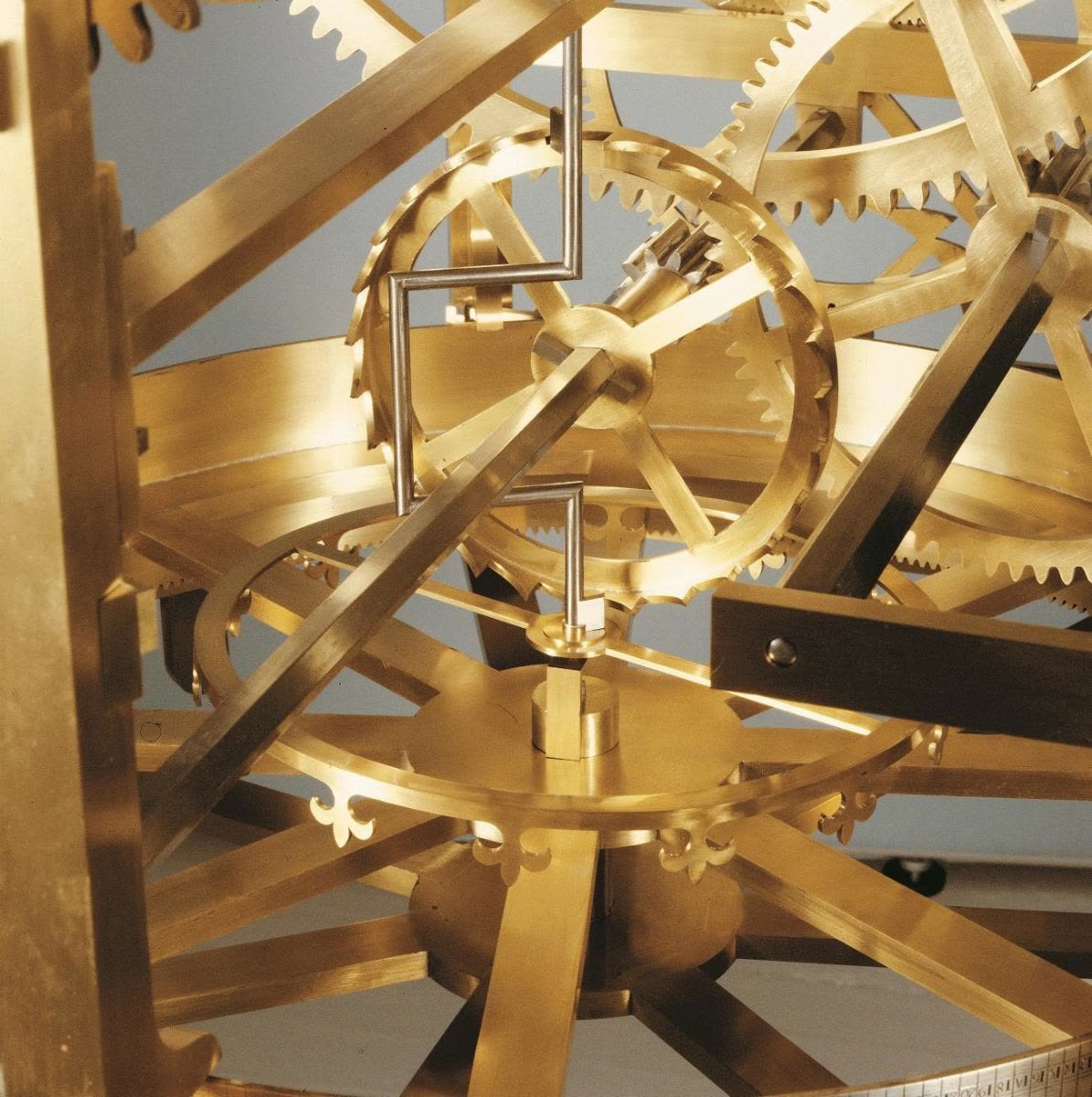
- It is shaped like a seven-sided tower with the clock on two levels. The weight-driven movement has a verge escapement and an annular balance decorated with fleur-de-lis.
- The lower level features a twenty-four hour dial, with a second dial forecasting the eclipses and showing a calendar. The date, the daylight hours, the day of the week (Dominical letter) and the saints' days appear in an aperture. The calendar is carried by a large horizontal wheel with 365 teeth that makes one revolution a year.
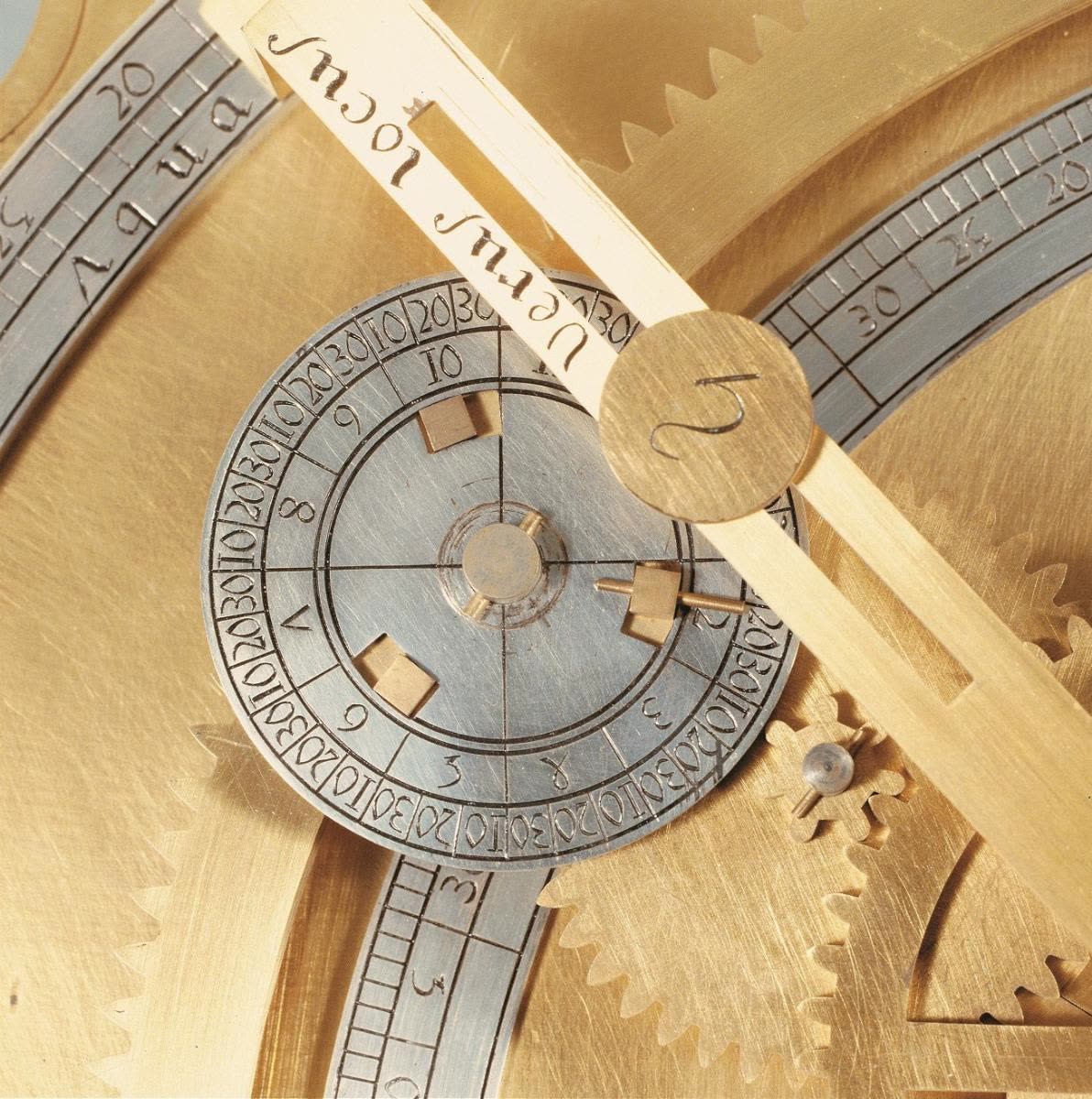
- The upper level comprises seven dials separately reproducing the circular and eccentric movements of the planets around the earth. Except for the moon, they are controlled by the year wheel. The sun, Venus, Mercury, the moon, Saturn, Jupiter and Mars are successively displayed.
Photographs
Photographs are illustrative examples of the type, not necessarily the exact object described. Verify details against the source file page.
Sources & references
- Musée international d'horlogerie, online collection record, inv. IV-625: https://collection.mih.ch/fr/collection/item/39737/
Where sources disagree, the disagreement is stated rather than resolved silently.