
Pocket watch · Le Brassus
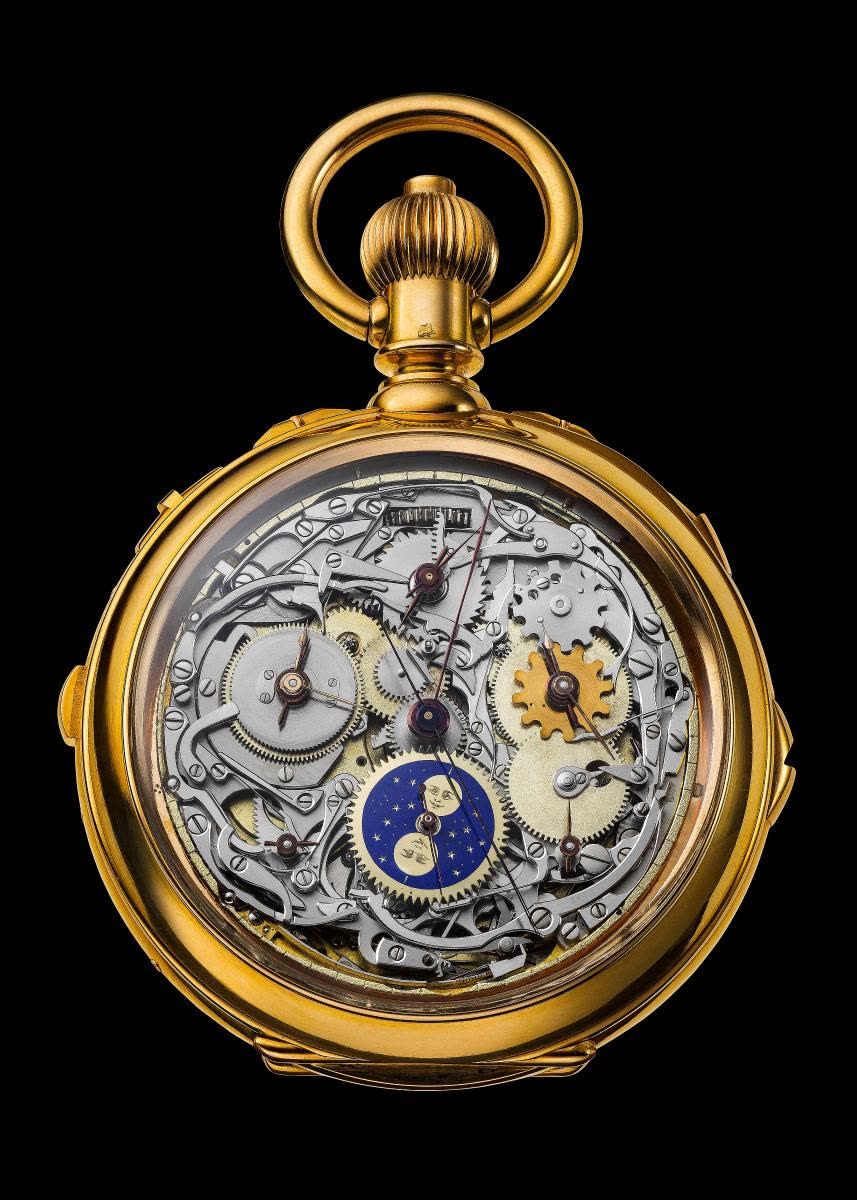
The polished gold case has several pushpieces and slides for operating a number of specific functions
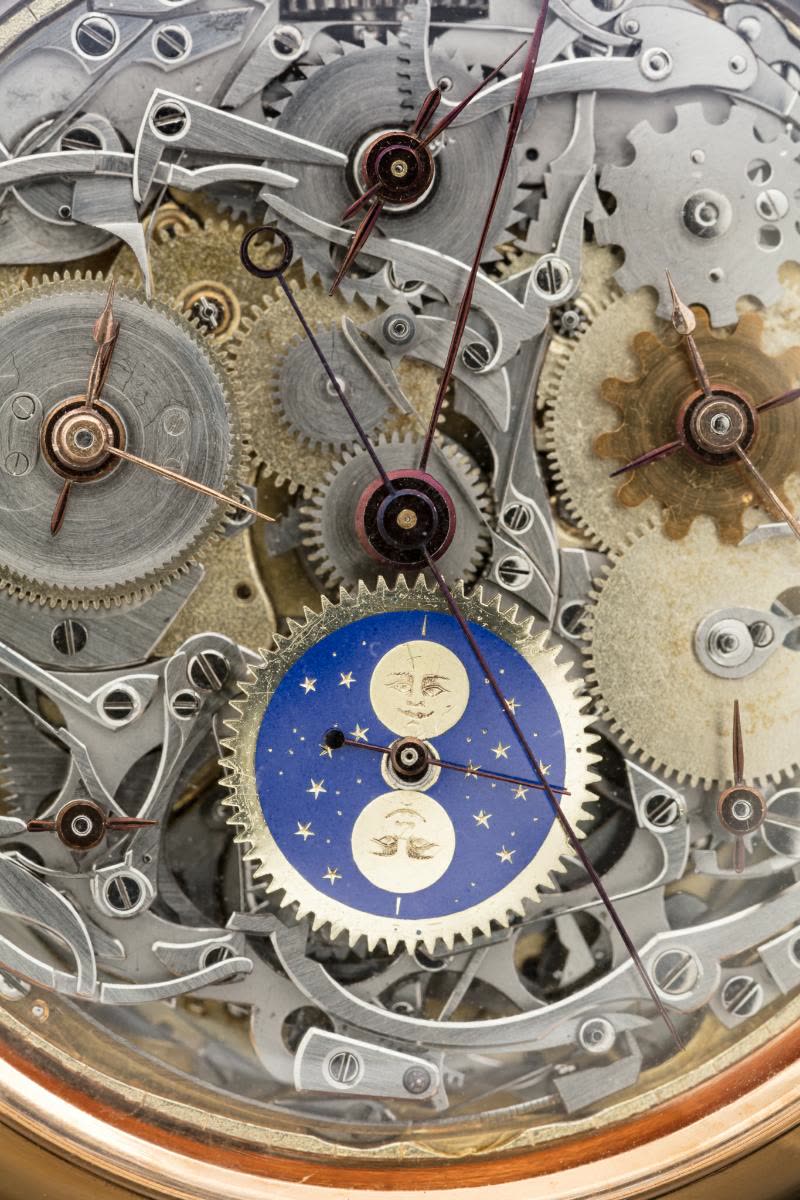
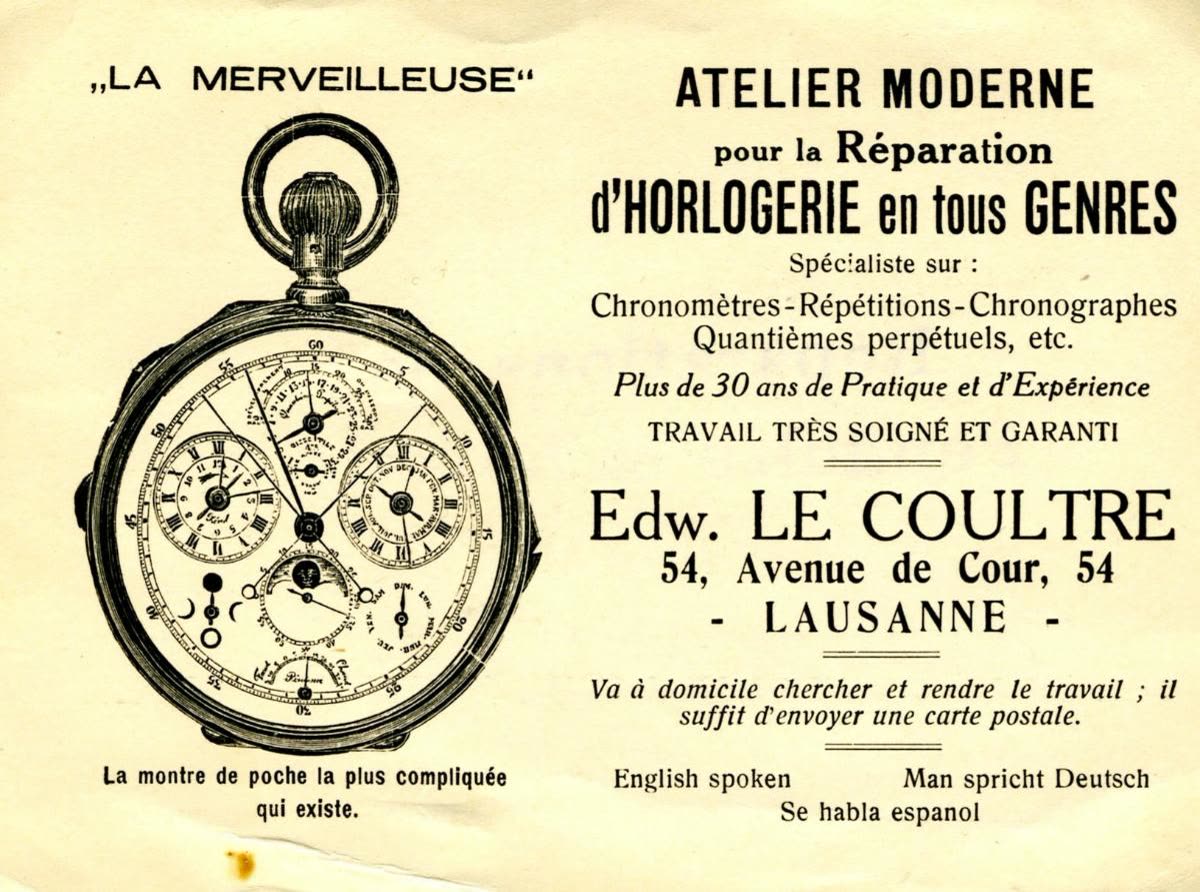
VerifiedThere are seventeen separate indications, with sixteen hands, on the white enamel dial. Centrally placed at the top, the mainspring state of wind is shown on a sector. The perpetual calendar date indication is on an inner chapter ring using the same axis for the hand. Below, the four-year cycle and leap year are indicated. Two small dials, symmetrically placed at right and left, show hours and minutes. Each of these dials has an additional hand: the one on the left is for setting the alarm release time and on the right to indicate the month. The small seconds dial is at the lower centre, with a shaped aperture for the phases of the moon. The age of the moon is indicated on the same scale as the seconds. A subsidiary dial to the left shows the quarter of the moon and to the right another dial shows the days of the week. Centrally placed at the bottom, a hand indicates the temperature on a Réaumur scale, graduated from – 15° to + 35 °
Technical facts
- Inventory number
- MIH I-501
- Object type
- Pocket watch
- Place of production
- Le Brassus
- Dating
- 1875
- Materials and techniques (catalogue wording)
- or, émail, laiton, acier
- Dimensions (catalogue)
- dimensions min/max: 51 x 60 mm; ép.: 21.20 mm
- Inscriptions (catalogue)
- Ami Le Coultre Brassus Suisse (Mouvement)
Historical significance
- There are seventeen separate indications, with sixteen hands, on the white enamel dial. Centrally placed at the top, the mainspring state of wind is shown on a sector. The perpetual calendar date indication is on an inner chapter ring using the same axis for the hand. Below, the four-year cycle and leap year are indicated. Two small dials, symmetrically placed at right and left, show hours and minutes. Each of these dials has an additional hand: the one on the left is for setting the alarm release time and on the right to indicate the month. The small seconds dial is at the lower centre, with a shaped aperture for the phases of the moon. The age of the moon is indicated on the same scale as the seconds. A subsidiary dial to the left shows the quarter of the moon and to the right another dial shows the days of the week. Centrally placed at the bottom, a hand indicates the temperature on a Réaumur scale, graduated from – 15° to + 35 °
- The outer divided circle of the dial is for the split-seconds chronograph, with minutes and seconds, the latter subdivided into fifths. The central minute-recording hand is of the continuous action type. Finally, there are the two superimposed seconds hands which can function together or separately.
- The clock-watch movement strikes the hours and quarters in passing. Either full strike or quarters only mode /grande or petite sonnerie) may be selected by the user. In addition, the watch can repeat hours, quarters and minutes. The movement has a lever escapement, compensation balance with gold screws and a blued steel balance spring with a Breguet overcoil. The three mainsprings, for going, striking and the alarm, are all wound via the winding button.
- This watch, nicknamed "La Merveilleuse", took four years to make. It is signed by Ami Le Coultre (1843-1921), who worked with Louis-Elisée Piguet (1836-1924). Both worked in Le Brassus. Its seventeen complications reflect the high degree of workmanship in complicated timepieces attained at this time by watchmakers in the Joux Valley. This particular watch was shown at the Universal Exhibition in Paris in 1878, at which Ami Le Coultre’s watches were awarded a bronze medal. In his Report on Watchmaking at the exhibition, Claudius Saunier stressed the quality of Swiss complicated watches as follows: "Switzerland produces some exceptional complicated watches and is unrivalled in this field”.
Photographs
Photographs are illustrative examples of the type, not necessarily the exact object described. Verify details against the source file page.
Sources & references
- Musée international d'horlogerie, online collection record, inv. I-501: https://collection.mih.ch/fr/collection/item/35569/
Where sources disagree, the disagreement is stated rather than resolved silently.