
Wristwatch · Bienne
Electronic watch with tuning fork
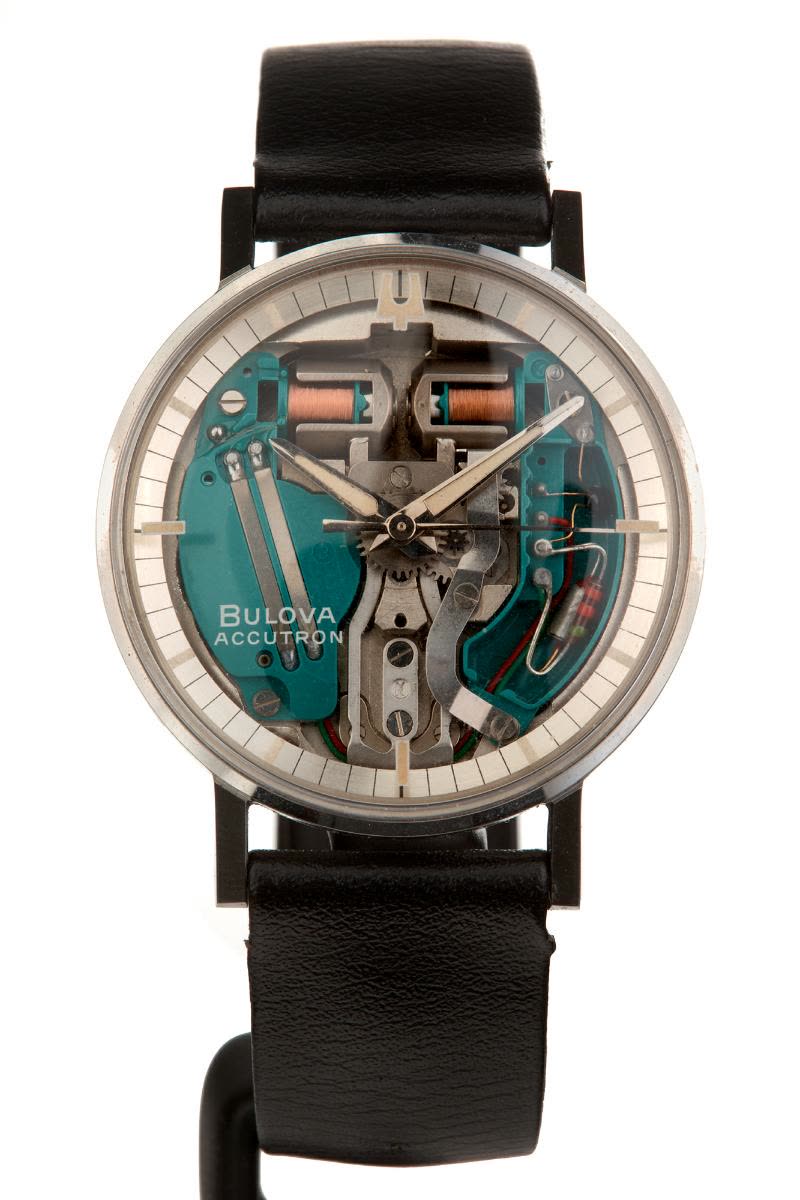
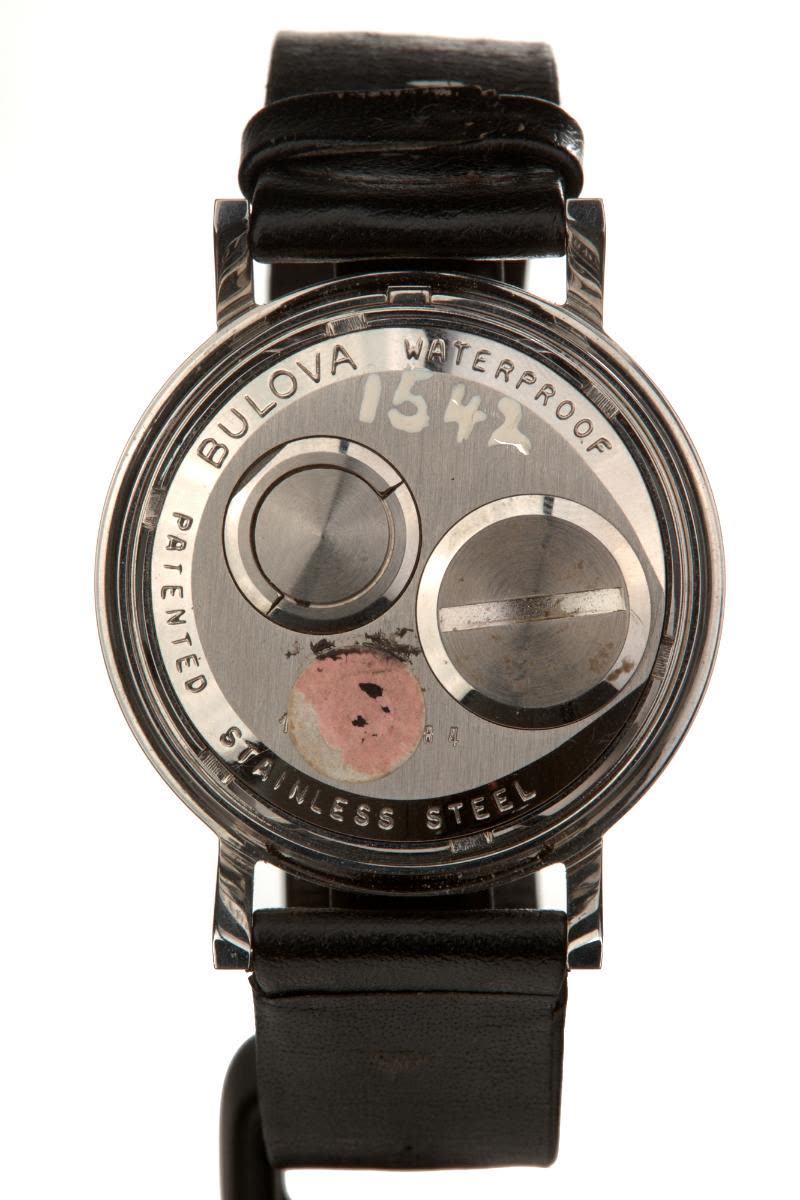
VerifiedInstead of a dial, there are four appliques under the crystal and a graduated chapter ring surrounding the movement. This leaves the mechanism visible, particularly the regulating organ, which is a tuning fork vibrating at 360 Hertz. In the “Spaceview” model presented here, the hands are set from behind.
Technical facts
- Inventory number
- MIH I-1542
- Object type
- Wristwatch
- Place of production
- Bienne
- Dating
- 1960
- Materials and techniques (catalogue wording)
- Acier, Matières plastiques
- Dimensions (catalogue)
- Dimensions: 230.0 x 35.4 x 13.0 mm; poids: 38.500 g
- Inscriptions (catalogue)
- BULOVA Waterproof Patented Stainless Steel (Boîtier); BULOVA ACCUTRON (Verre)
Historical significance
- Instead of a dial, there are four appliques under the crystal and a graduated chapter ring surrounding the movement. This leaves the mechanism visible, particularly the regulating organ, which is a tuning fork vibrating at 360 Hertz. In the “Spaceview” model presented here, the hands are set from behind.
- Invented by the Swiss engineer Max Hetzel and perfected by the Bulova Watch Company, this wristwatch is the result of considerable research into the use of tuning forks as the regulating organ of a watch. The MIH has a clock dating from the mid-19th century, made by Niaudet Breguet (Inv. IV-337), which is fitted with the same sort of device, but vibrating at 100 Hertz. Hipp's vibrating-blade escapement, used in precision-measuring instruments at the end of the 19th century, was also based on the same principle.
Photographs
Photographs are illustrative examples of the type, not necessarily the exact object described. Verify details against the source file page.
Sources & references
- Musée international d'horlogerie, online collection record, inv. I-1542: https://collection.mih.ch/fr/collection/item/36511/
Where sources disagree, the disagreement is stated rather than resolved silently.