
Marine timekeeper (watch form) · England
Harrison H5
Partially verifiedA refinement of H4, tested by King George III at Kew, which helped Harrison secure further reward from Parliament in 1773.
Technical facts
- Form
- Large watch-form timekeeper
Historical significance
- A refinement of H4, tested by King George III at Kew, which helped Harrison secure further reward from Parliament in 1773.
Background
John Harrison began work on his second sea watch, later designated H5, while testing was conducted on his previous timekeeper. Frustrated with the Board of Longitude, Harrison sought an audience with King George III to address his treatment. The King personally conducted daily observations of the watch at his palace over a ten-week period between May and July 1772.
The test results showed that the timekeeper maintained an accuracy within one third of one second per day. Following the successful test, the King advised Harrison to petition Parliament, which eventually led to a monetary award of £8,750 in 1773.
Written from the encyclopedia entries listed under Sources; each statement was checked against the cited text.
Later history
- The watch was later restored by Lieutenant-Commander Gould, who is credited with ensuring it survived as a working mechanism.
- The Worshipful Company of Clockmakers acquired the H5 in 1891.
- The timepiece is currently part of the Clockmakers' collection displayed at the Science Museum in London.
Photographs
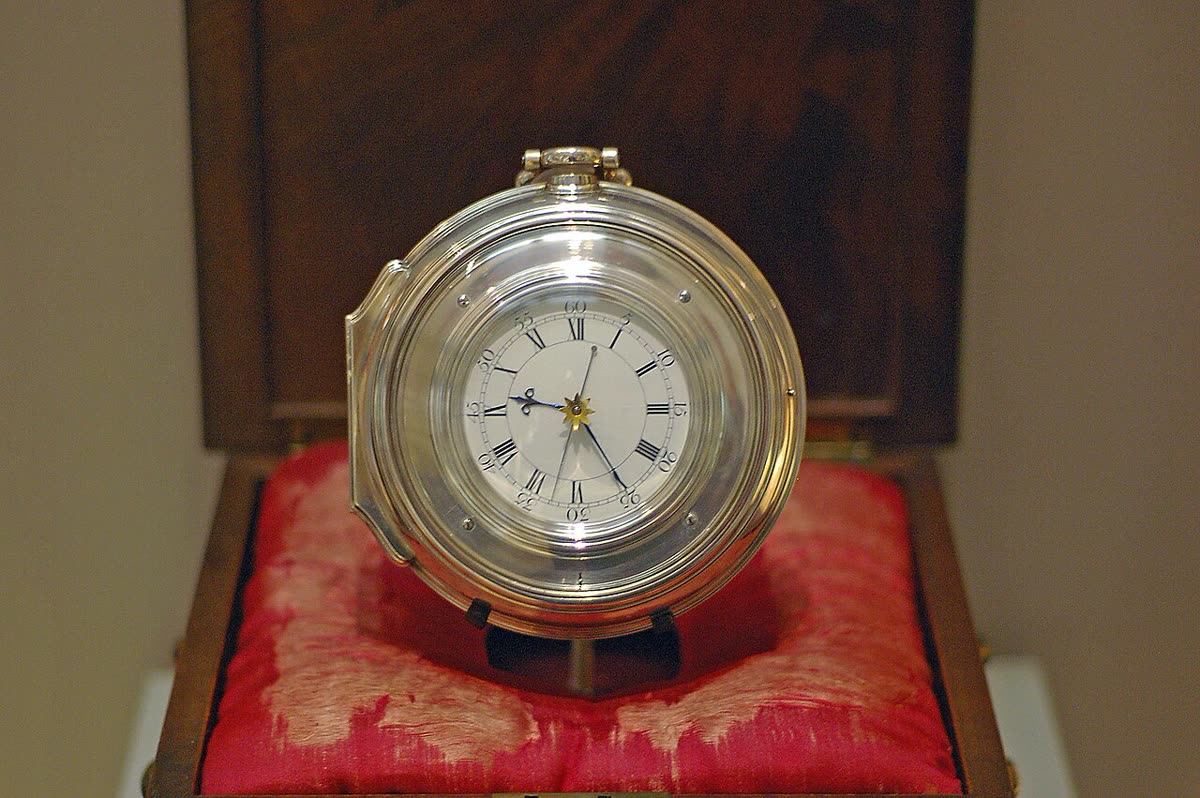
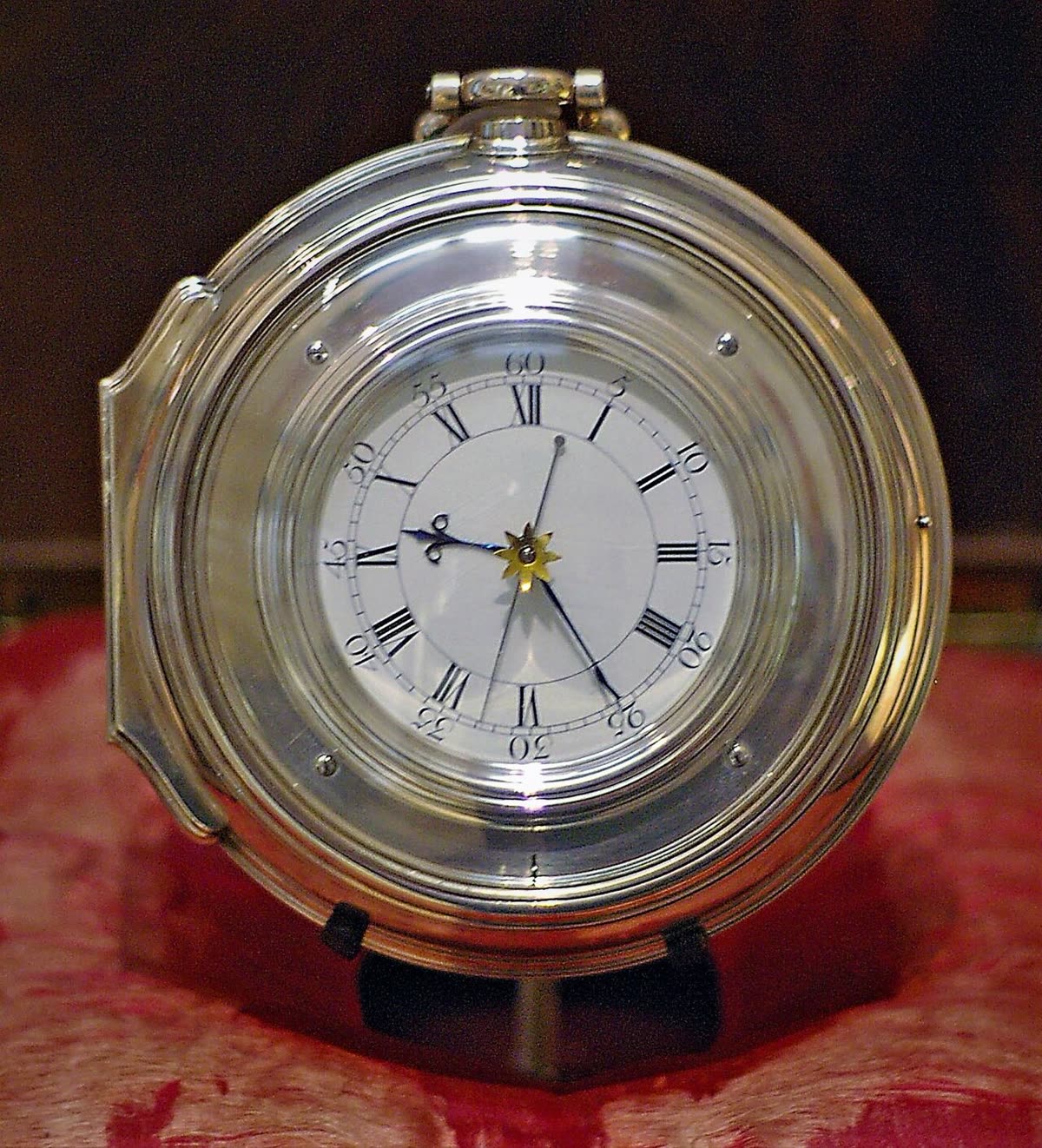
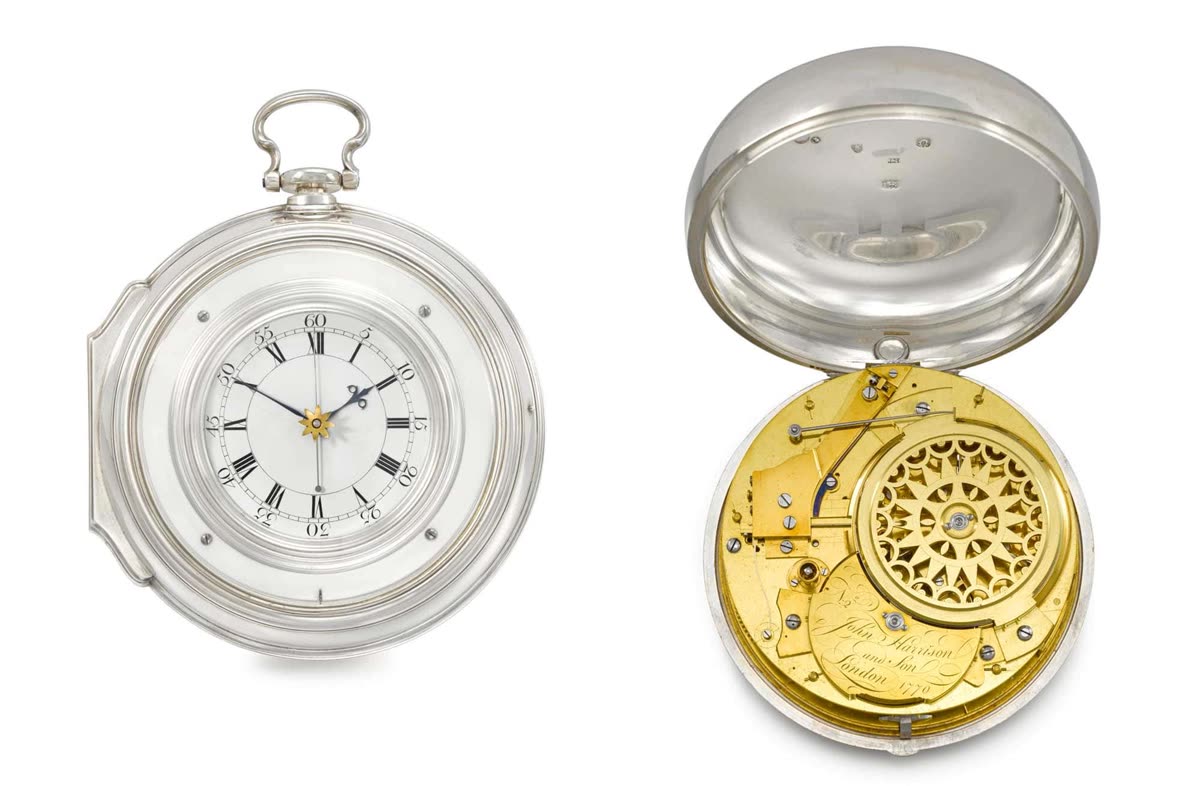
Photographs are illustrative examples of the type, not necessarily the exact object described. Verify details against the source file page.
Sources & references
- John Harrison, Wikipedia (English), retrieved 2026-10-28 (text CC BY-SA 4.0)
- Clockmakers' Museum, Wikipedia (English), retrieved 2026-10-28 (text CC BY-SA 4.0)
- Clockmakers' Museum collection notes
- Betts, J., Harrison
Where sources disagree, the disagreement is stated rather than resolved silently.