
Astronomical clock · Italy (Padua)
Giovanni de' Dondi's Astrarium (original)
Partially verifiedA seven-faced planetary clock described in de' Dondi's detailed manuscript; the original is lost, and the surviving knowledge comes from the manuscript and modern reconstructions.
Technical facts
- Survival
- Original lost; manuscripts survive
Historical significance
- A seven-faced planetary clock described in de' Dondi's detailed manuscript; the original is lost, and the surviving knowledge comes from the manuscript and modern reconstructions.
Background
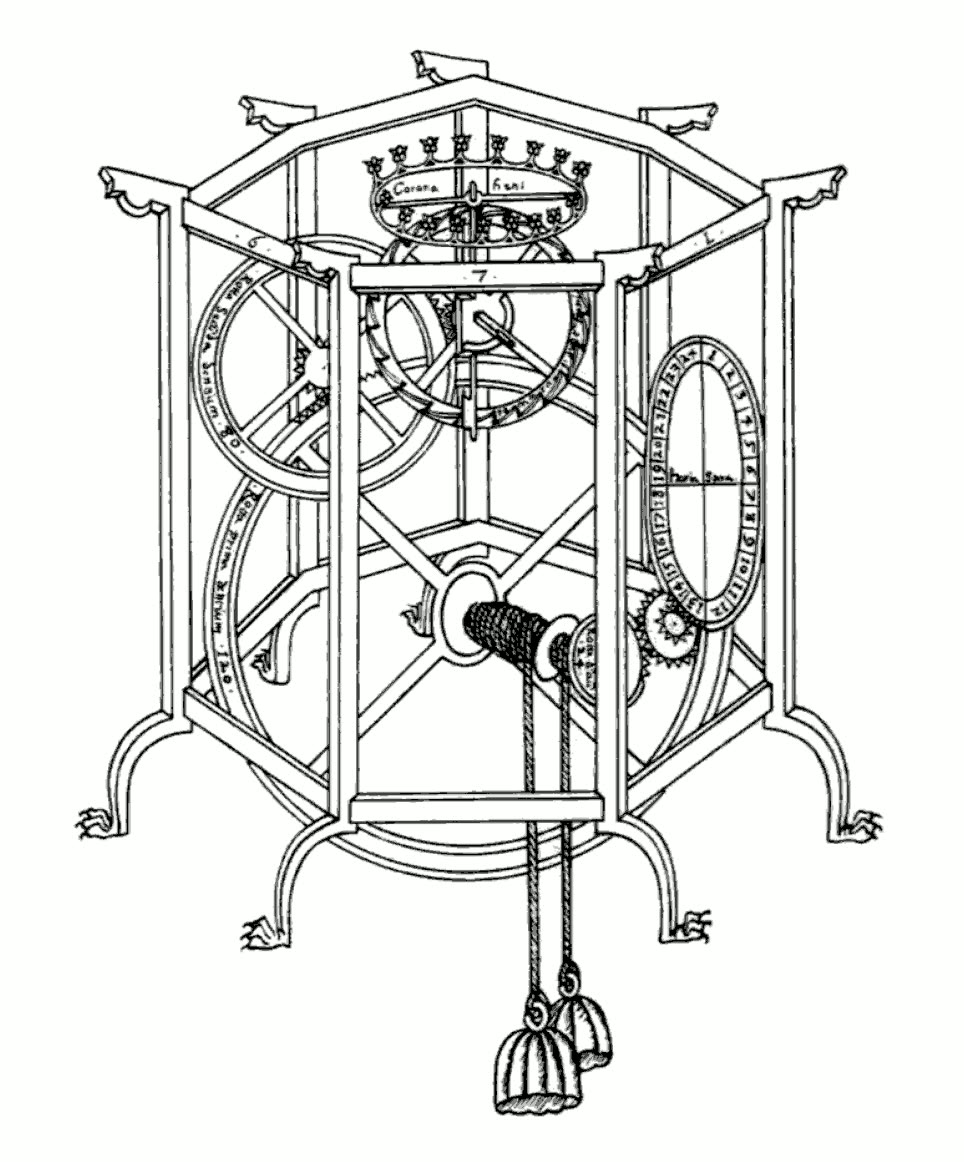
The Astrarium was a complex astronomical clock created by the doctor and clock-maker Giovanni Dondi dall'Orologio in Padua between 1348 and 1364. Dondi built the machine to validate descriptions of celestial motion by Aristotle and Avicenna, utilizing the theories of Giovanni Campano da Novara. Designed as a clockwork equatorium, it served to display the positions of the Sun, Moon, and five known planets, as well as various calendars. The framework of the device stood about one meter high and was supported by seven decorative feet.
Written from the encyclopedia entries listed under Sources; each statement was checked against the cited text.
Construction and mechanism
- The upper section of the clock featured seven separate dials representing the Primum Mobile and the five known planets plus the Moon.
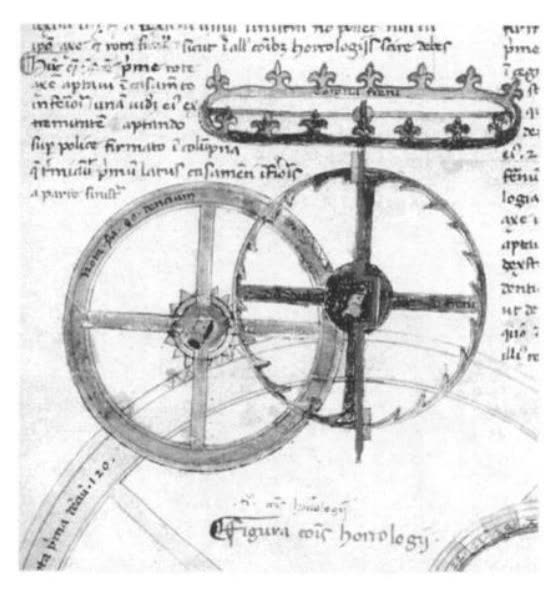
- Dondi incorporated near-elliptical wheels into the gear train to accurately model the irregular planetary motions described by Ptolemaic theory.
- The annual calendar drum displayed the saint for each day, the length of daylight, and the day of the month.
Photographs
Photographs are illustrative examples of the type, not necessarily the exact object described. Verify details against the source file page.
Sources & references
- Astrarium of Giovanni Dondi dall'Orologio, Wikipedia (English), retrieved 2026-10-28 (text CC BY-SA 4.0)
- de' Dondi, G., Tractatus astrarii (manuscript)
- Smithsonian Institution, reconstruction records
Where sources disagree, the disagreement is stated rather than resolved silently.