
Novelty regulator using a ball rolling down a zigzag tilting track as the escapement's timekeeping element · England
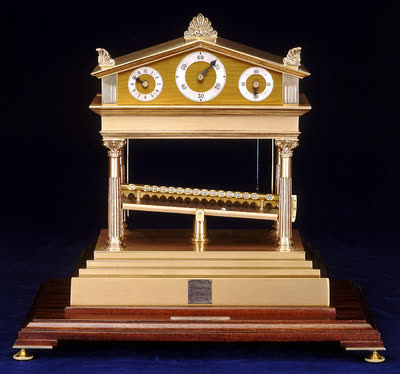
Congreve Rolling-Ball Clock (type)
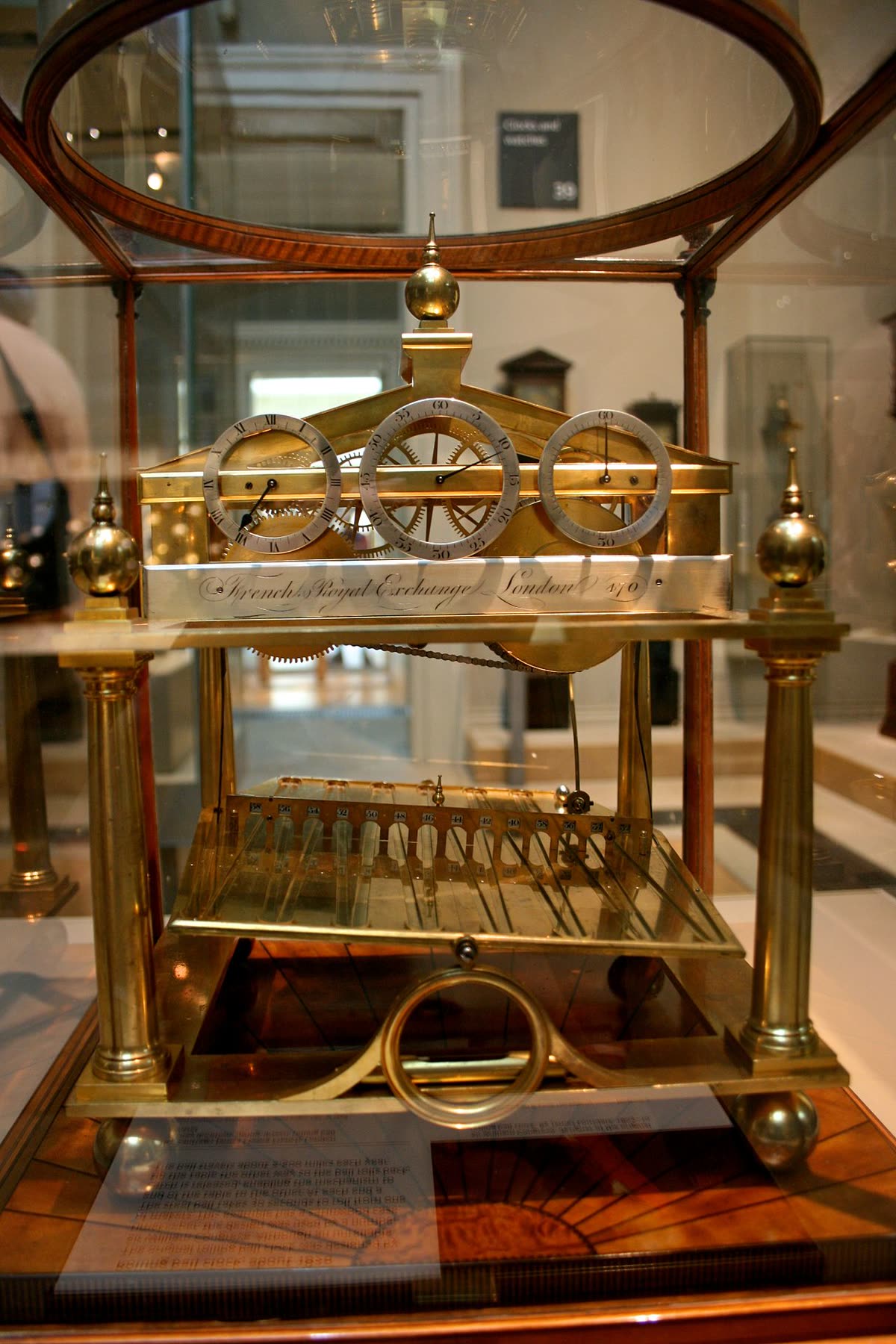
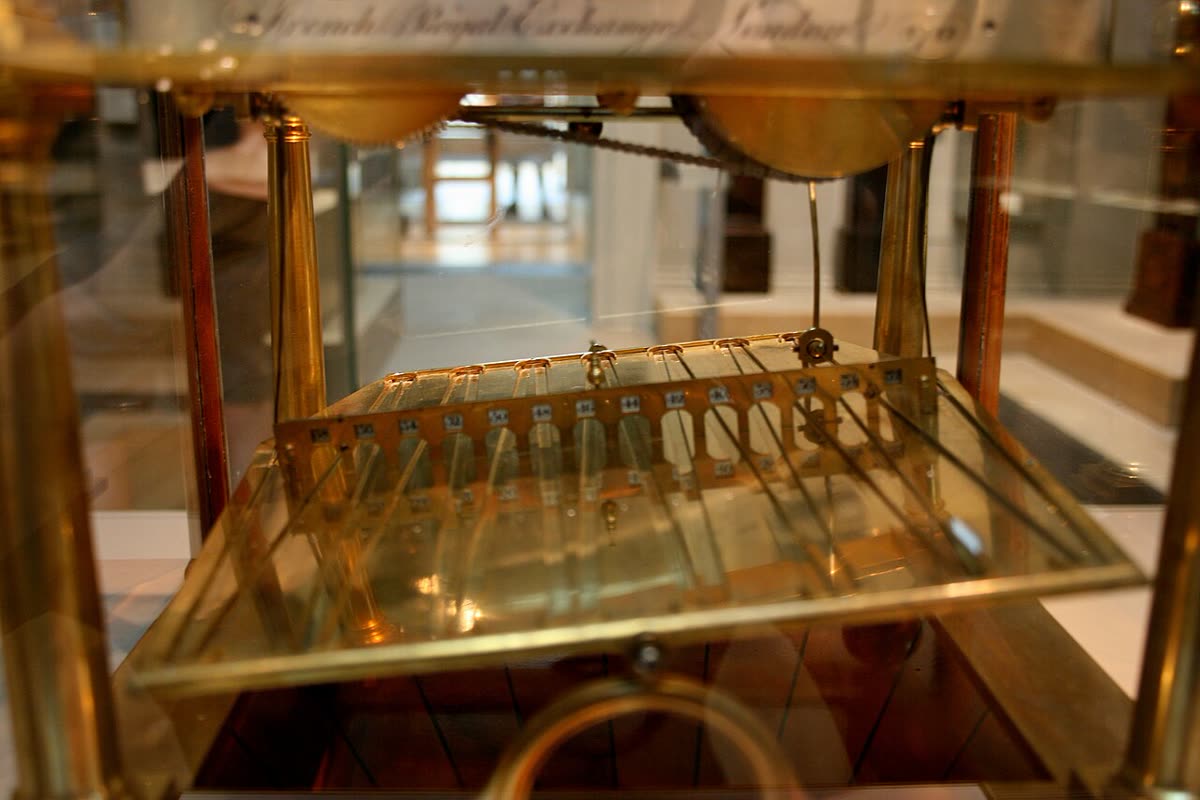
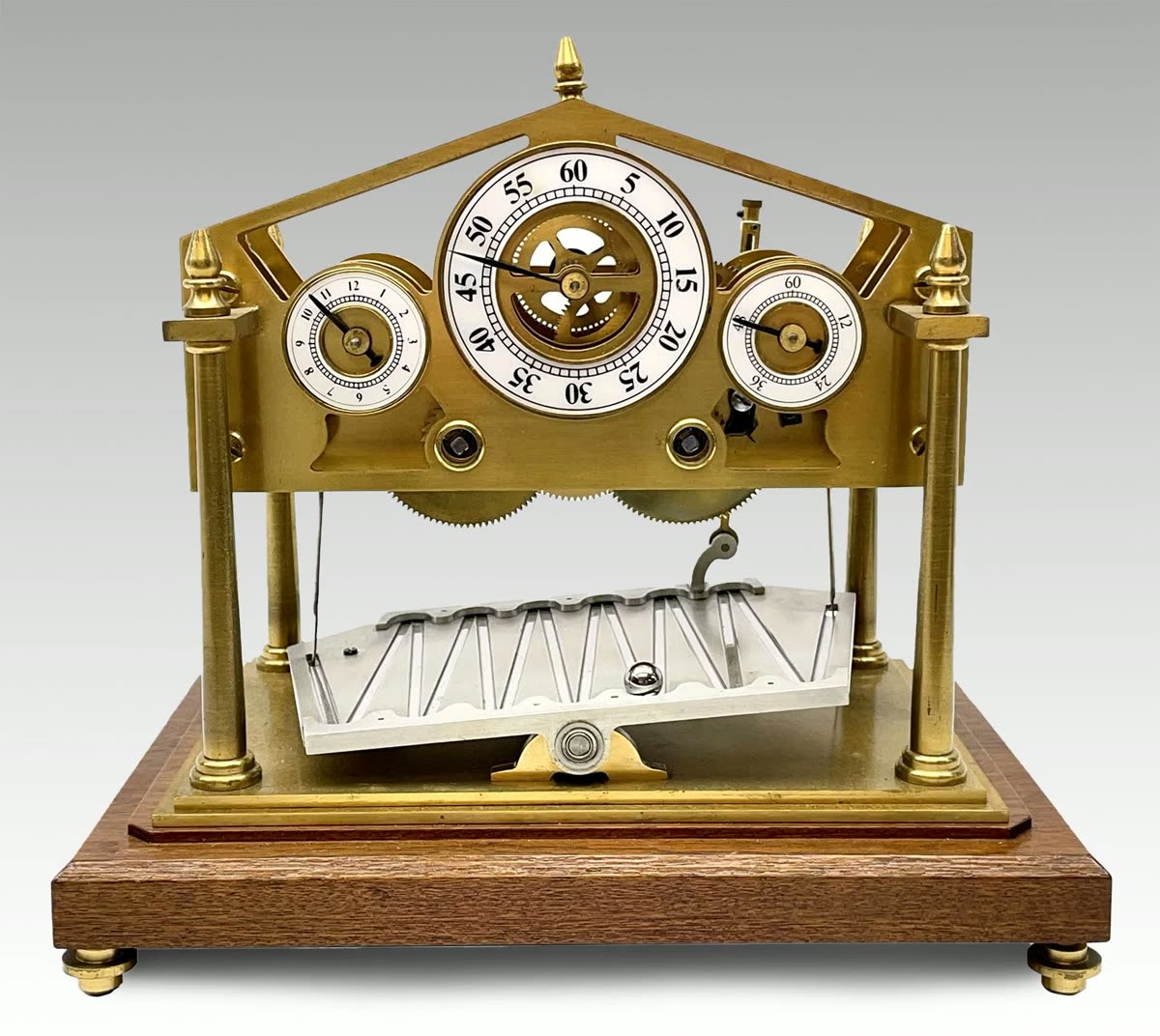
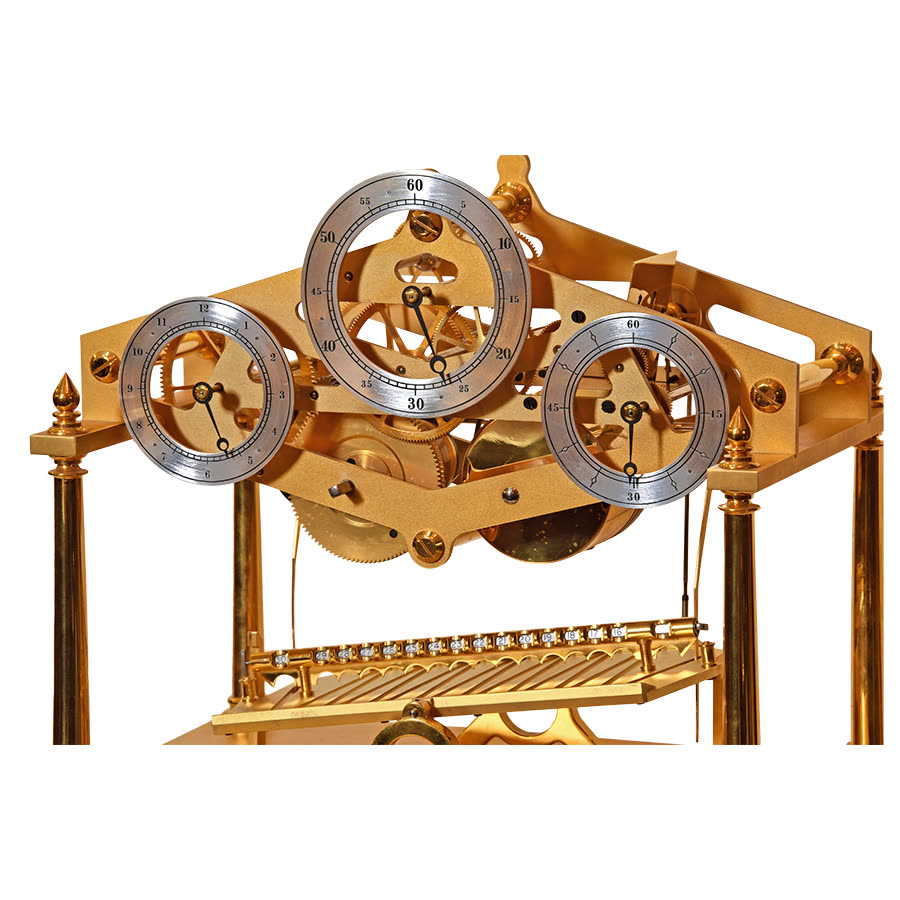
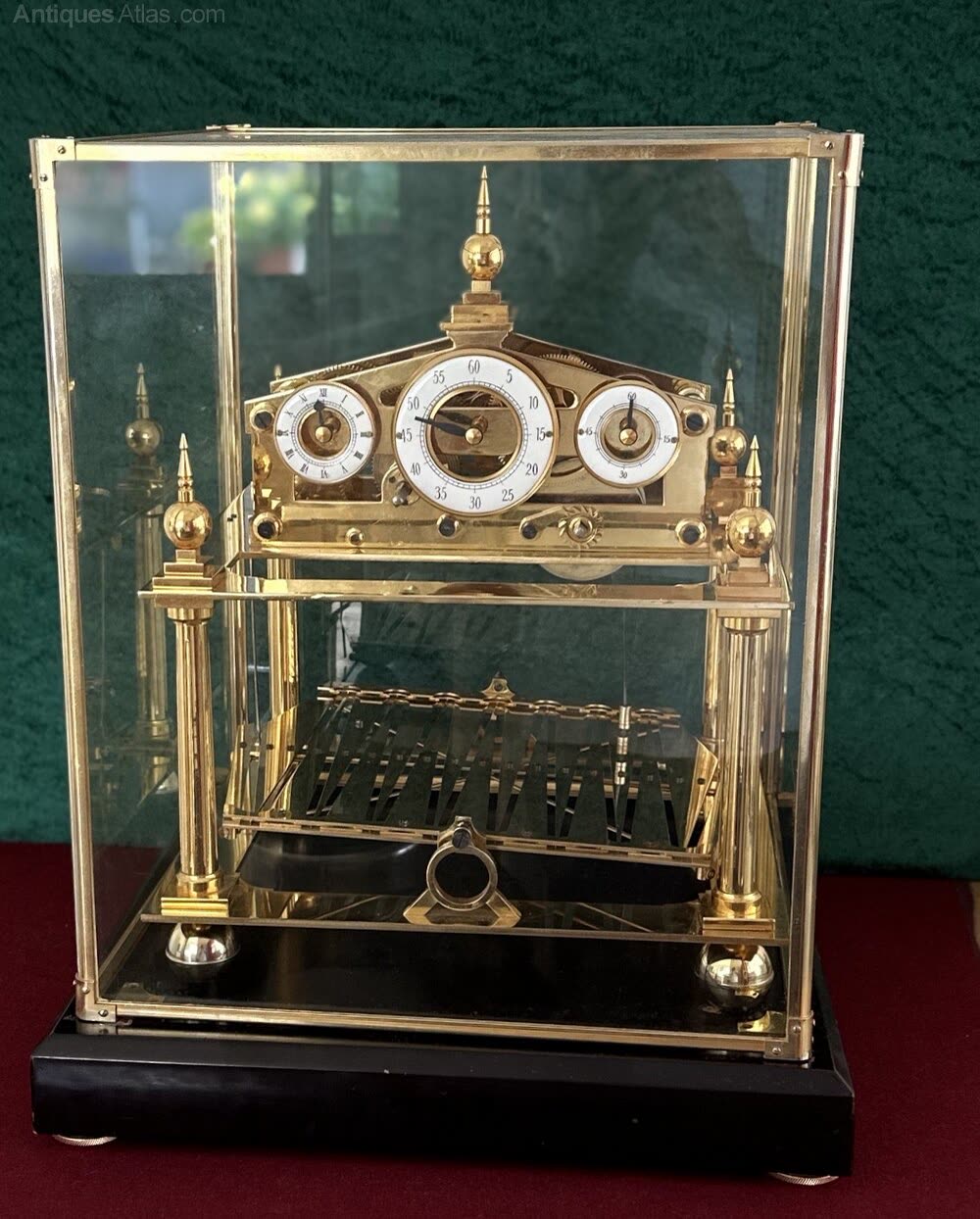
Partially verifiedAn unusual escapement type in which a ball rolls along a grooved, tilting plate; when the ball reaches one end, the plate tilts the other way (driven by the clock's going train) and the ball rolls back, each traverse taking a set time.
Technical facts
- Regulator
- Ball rolling on a tilting zigzag-grooved plate
- Typical period per traverse
- Often around 30 seconds, varying by individual example
Historical significance
- An unusual escapement type in which a ball rolls along a grooved, tilting plate; when the ball reaches one end, the plate tilts the other way (driven by the clock's going train) and the ball rolls back, each traverse taking a set time.
- More a horological curiosity and engineering demonstration than a precision standard — accuracy is markedly inferior to a good pendulum clock, and this should be stated plainly rather than presented as a serious rival timekeeper.
Background
The Congreve clock, also known as Congreve's Rolling Ball Clock, is a specialized timekeeping device that regulates time by utilizing a ball rolling along a zigzag track. Designed by Sir William Congreve, the clock was patented in 1808 as an "Extreme Detached Escapement." Although Congreve was not a professional clockmaker, he commissioned Gravell & Tolkien to manufacture the first functional iteration of the design.
The clock functions by having a ball travel down a tilting tray, which trips an escapement to reverse the tray's angle while advancing the clock's hands. The mechanism is considered an unreliable timekeeper because the ball's travel speed is heavily influenced by the accumulation of dust on the horizontal track.
Written from the encyclopedia entries listed under Sources; each statement was checked against the cited text.
Construction and mechanism
- Depending on the specific configuration, the second hand advances in 15 or 30-second increments during each oscillation.
- The tray tilts once every few seconds, causing the clock hands to move forward up to four times per minute.
Later history
- The first working version of the clock was presented to the Prince of Wales in 1808.
- A second, spring-driven model of the clock is currently held in the collection of Buckingham Palace.
Photographs
Photographs are illustrative examples of the type, not necessarily the exact object described. Verify details against the source file page.
Sources & references
- Congreve clock, Wikipedia (English), retrieved 2026-10-28 (text CC BY-SA 4.0)
- Antiquarian Horological Society, articles on Congreve's rolling-ball clock
Where sources disagree, the disagreement is stated rather than resolved silently.