
Manually wound chronograph wristwatch · Switzerland
Omega Speedmaster (NASA-qualified, worn on Apollo missions)
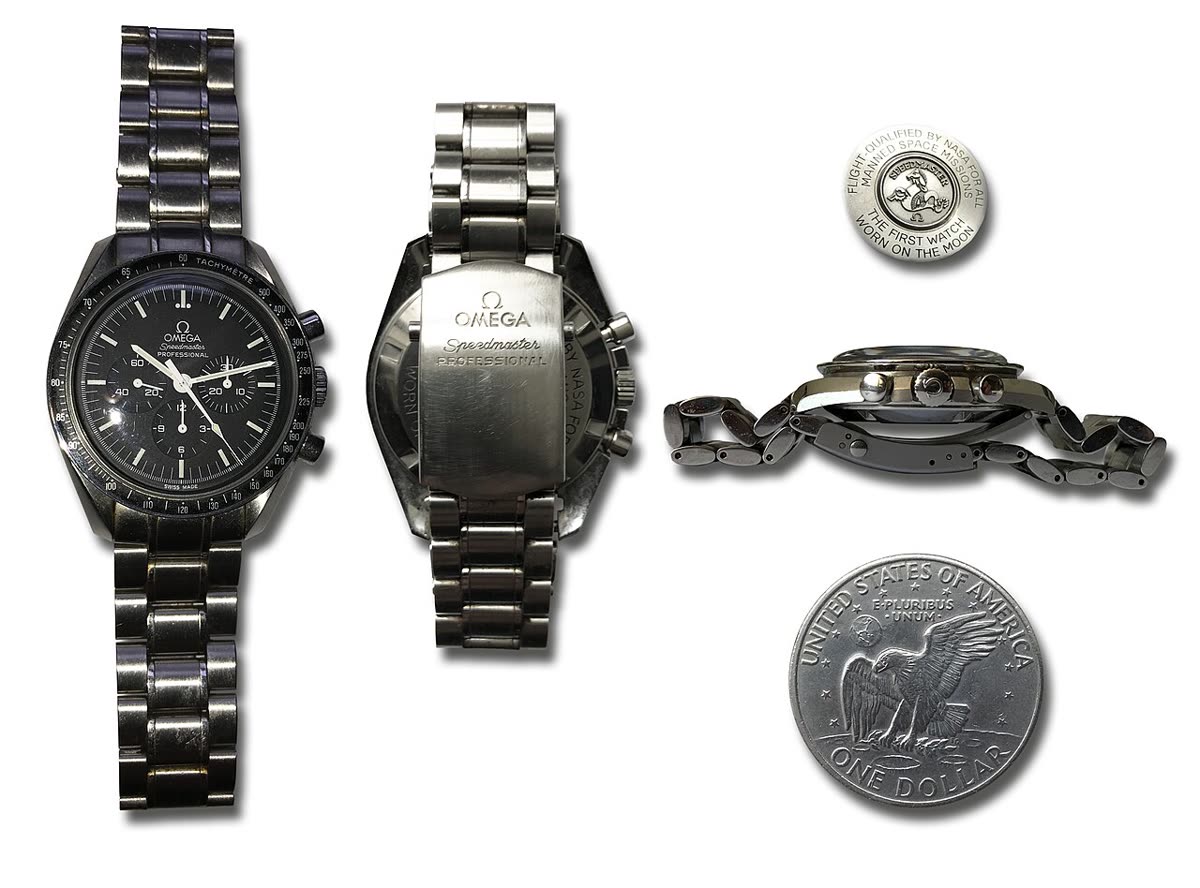
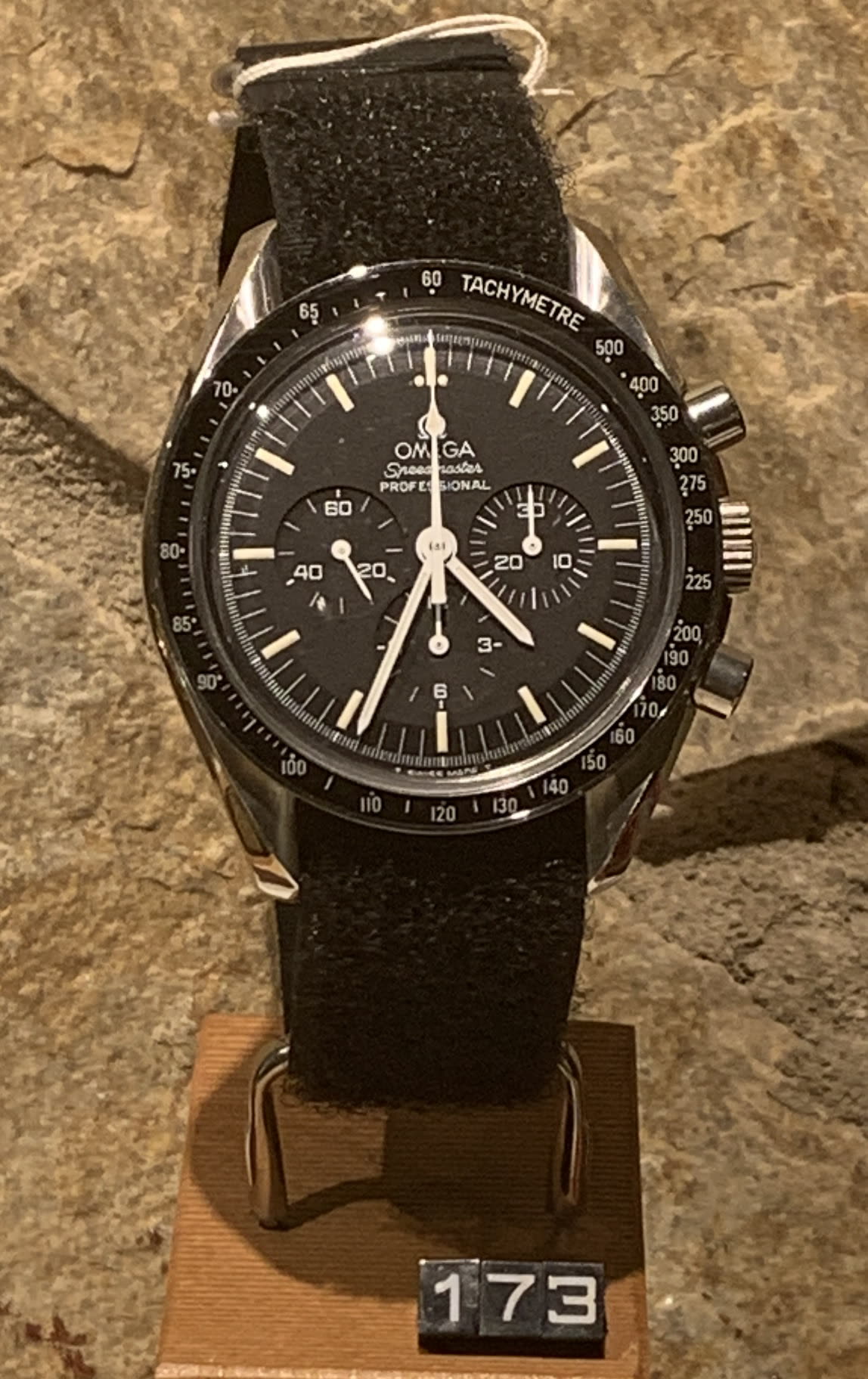
VerifiedQualified by NASA in 1965 after documented environmental testing for use on manned spaceflights, and worn during Gemini and Apollo missions, including on the surface of the Moon.
Technical facts
- Movement
- Manually wound column-wheel chronograph calibre (calibre 321 in the qualification-era examples)
- Case
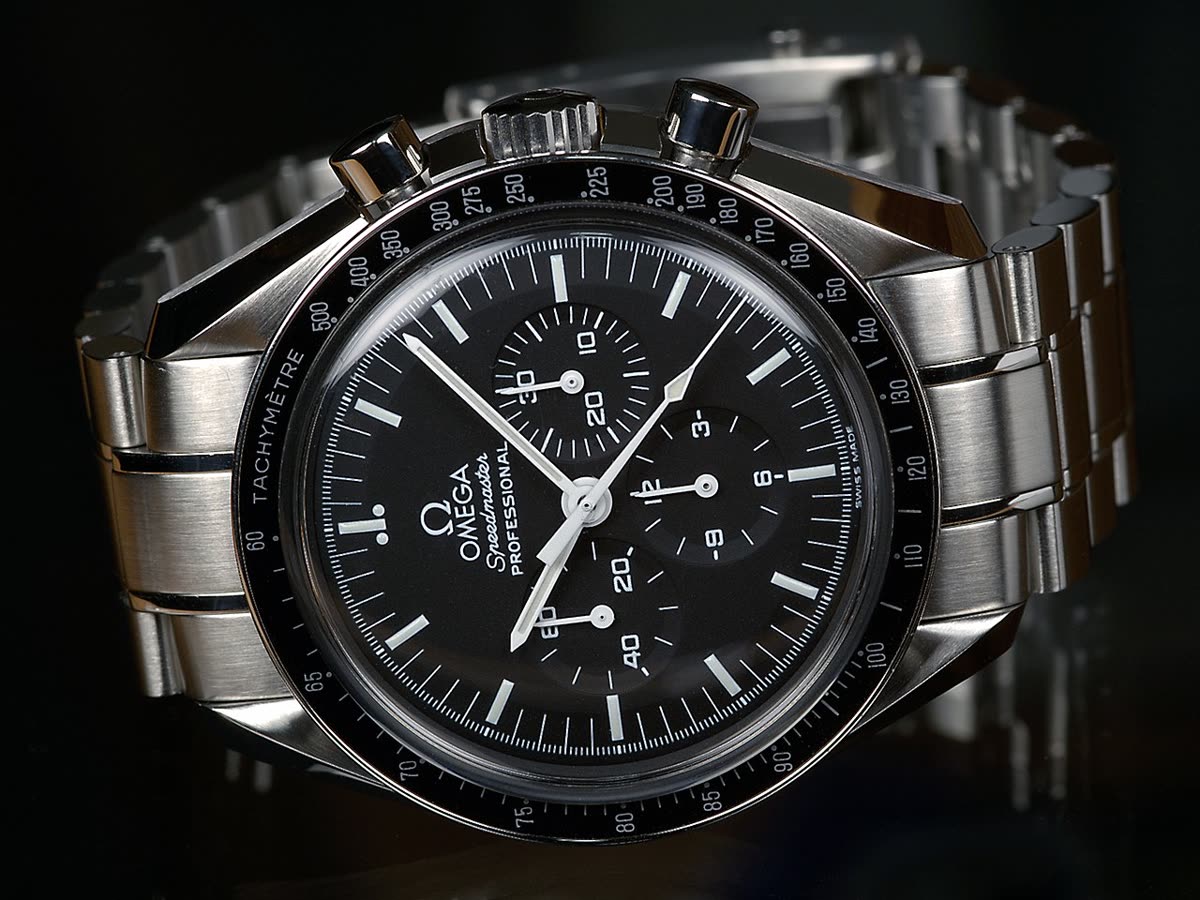
- Steel, screw-back with asymmetric chronograph pushers
Historical significance
- Qualified by NASA in 1965 after documented environmental testing for use on manned spaceflights, and worn during Gemini and Apollo missions, including on the surface of the Moon.
- Individual mission-flown examples have specific, separately documented provenance; general 'Moonwatch' marketing claims about the model line should not be conflated with the documented history of specific flown pieces without checking NASA and astronaut-collection provenance directly.
Background
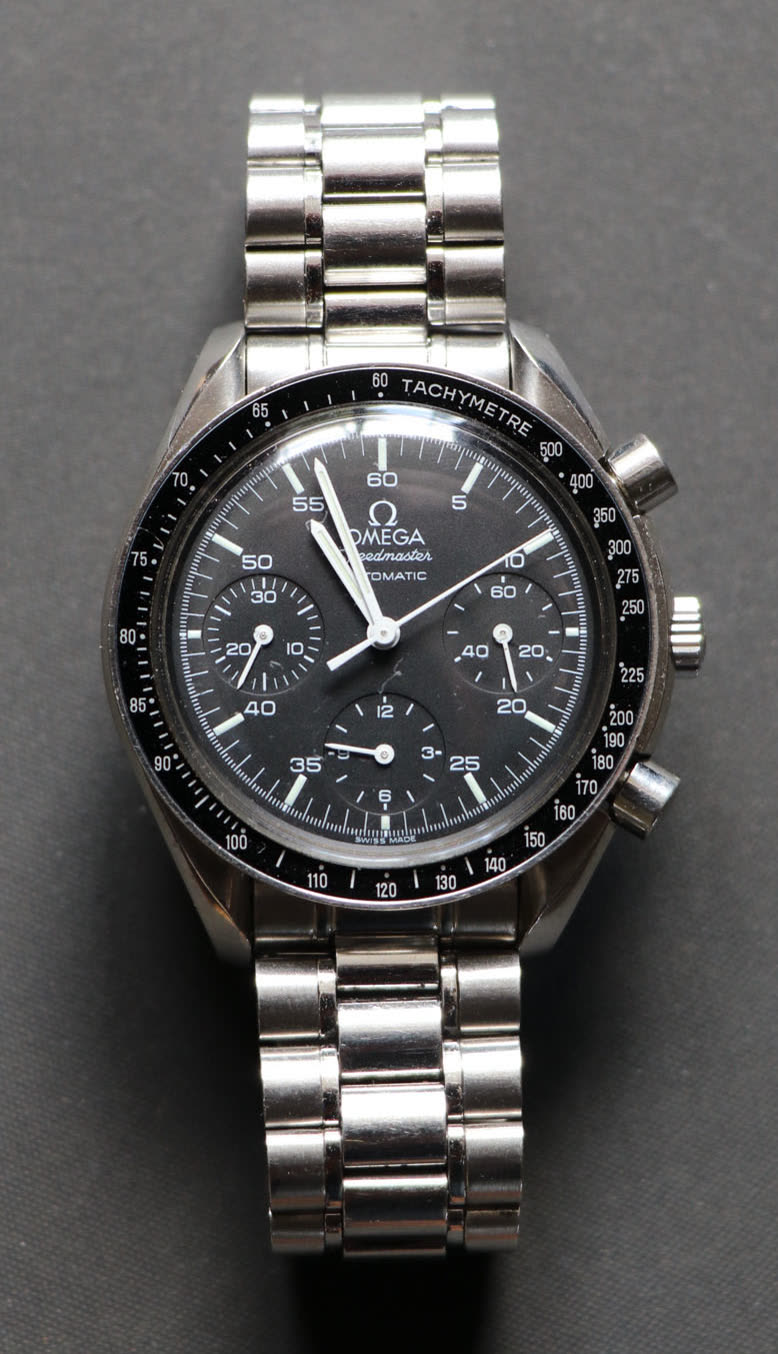
Omega introduced the Speedmaster line in 1957 as a sport and racing chronograph, following earlier models like the 28.9 chronograph. The original reference CK 2915 featured a tachymeter scale on a brushed stainless steel bezel and a 12-hour, triple-register layout. Following testing, the Speedmaster became a choice for NASA and was eventually worn by astronauts during Gemini and Apollo missions.
Buzz Aldrin wore his Speedmaster on the surface of the Moon during the Apollo 11 mission. The watch design was updated over time, with the 105.012 reference featuring an asymmetrical case.
Written from the encyclopedia entries listed under Sources; each statement was checked against the cited text.
Construction and mechanism
- Early models of the watch were powered by the Calibre 321 movement developed by Lemania.
- The watch typically featured a domed Plexiglas crystal known as Hésalite.
- The reference 105.012 and later models utilized an asymmetrical case to protect the chronograph pushers and crown.
Photographs
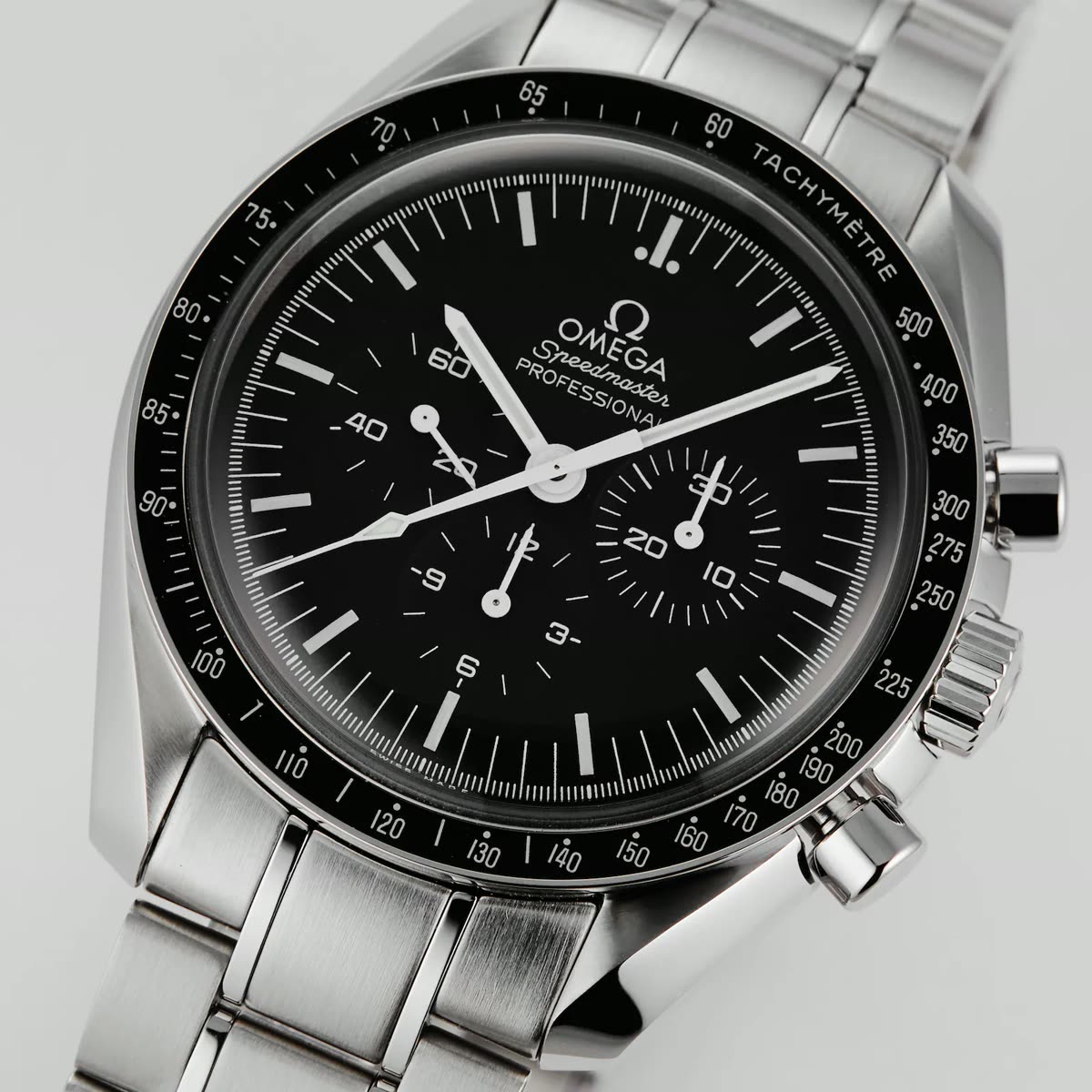
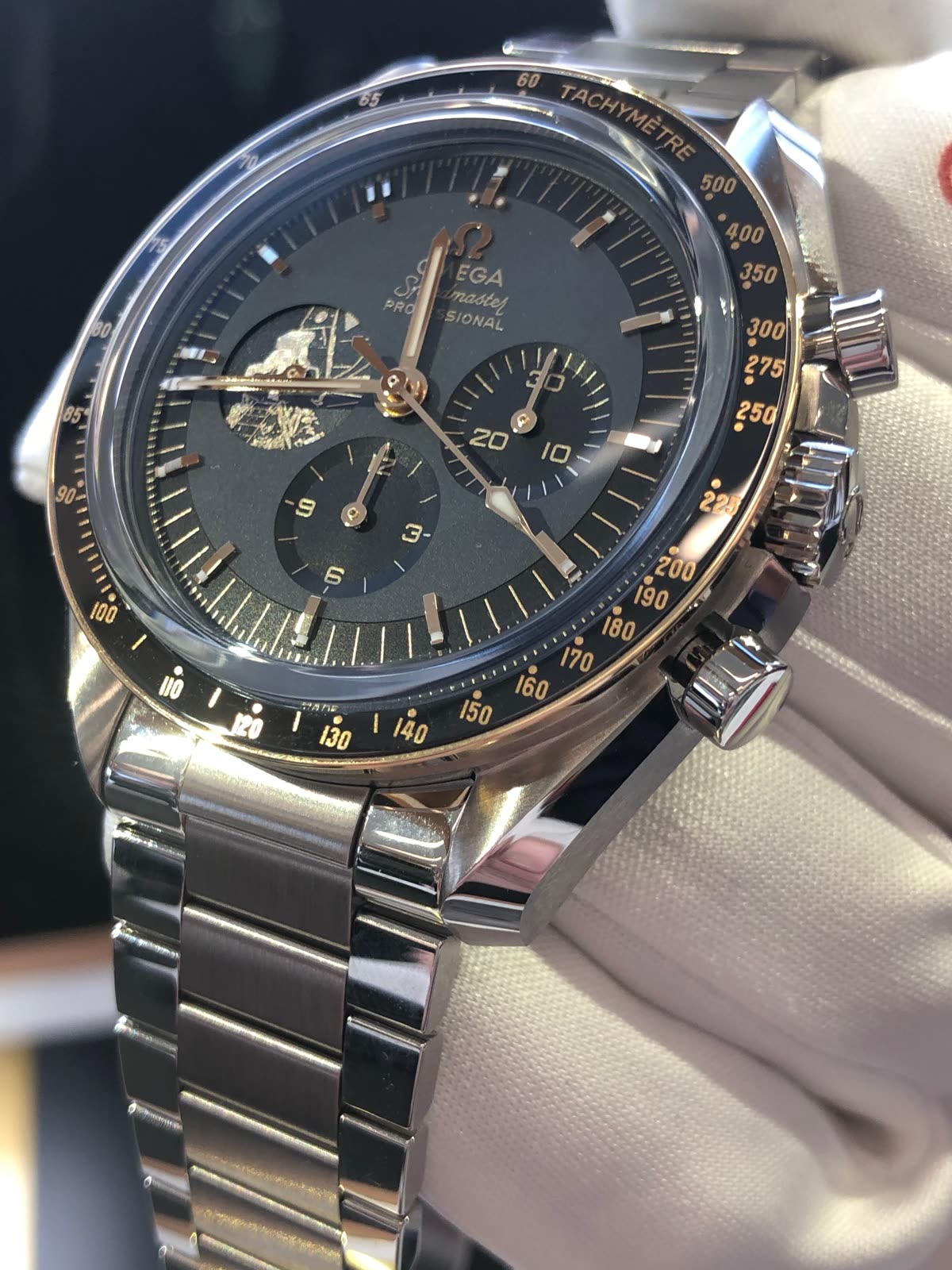
Photographs are illustrative examples of the type, not necessarily the exact object described. Verify details against the source file page.
Sources & references
- Omega Speedmaster, Wikipedia (English), retrieved 2026-10-28 (text CC BY-SA 4.0)
- Omega, published history of NASA qualification testing
- Smithsonian National Air and Space Museum, collection records
Where sources disagree, the disagreement is stated rather than resolved silently.