
Movement record · Russia
Poljot 3133
Partially verifiedManual chronograph derived from a Swiss cam-switched design
Technical specifications
- Diameter
- Approx. 30 mm
- Height
- Not recorded in the sources consulted
- Jewels
- 23
- Frequency
- 21,600 vph (3 Hz)
- Power reserve
- Approx. 42 hours
- Winding
- Manual, stem wind
- Setting
- Pendant set
- Escapement
- Swiss lever
- Balance
- Monometallic balance
- Complications
- Chronograph with minute register
Identification features
- Cyrillic or Latin markings depending on market
- Architecture closely related to a Swiss predecessor
- Cam-operated with two registers (seconds at 9, 30-minute counter at 3)
- 23 jewels
- Date in most versions
- The 3133 is identified as a two-register chronograph movement with a 30-minute counter.
Known variants
- Variants with differing dials and registers
- 3133 with date
- 31659 and 31681 (later derivatives)
Servicing notes
Cleaning, lubrication, mainspring and pivot work belong with a qualified watchmaker working from calibre-specific documentation. Conserve original parts: replacing a worn component with a modern substitute changes the object, and refinishing plates or dials destroys evidence.
General guidance only. Antique movements should be serviced by a qualified watchmaker.
Historical significance
Soviet manual-wind chronograph introduced in the mid-1970s, based on tooling and the design of the Valjoux 7734; one of the most widely used Russian chronograph movements.
The Poljot 3133 was introduced in 1979 when Poljot acquired the production line equipment from Valjoux for their 7734 coulisse cam-lever chronograph movement. This manual-wind chronograph movement is a two-register design featuring a 30-minute counter. The calibre is used in various watches, including models for the Russian space program and Air-Force.
The added history summarises the open references listed under Sources; each statement was checked against the cited passage.
Photographs
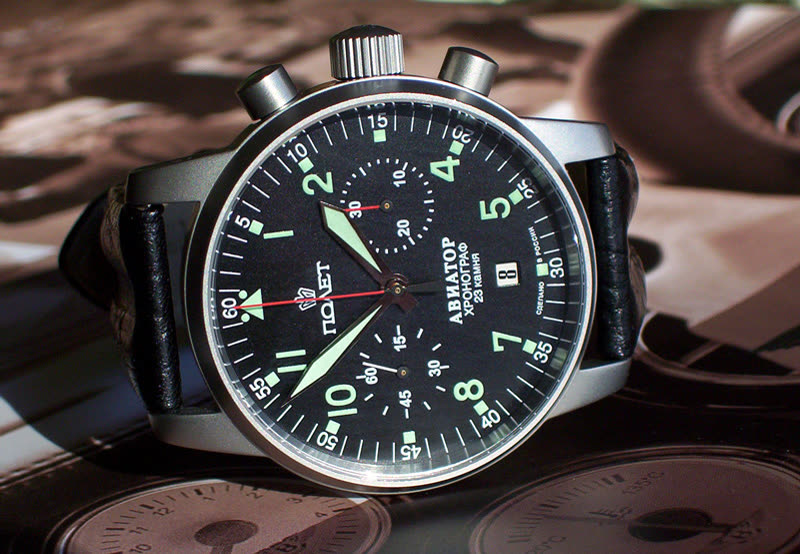
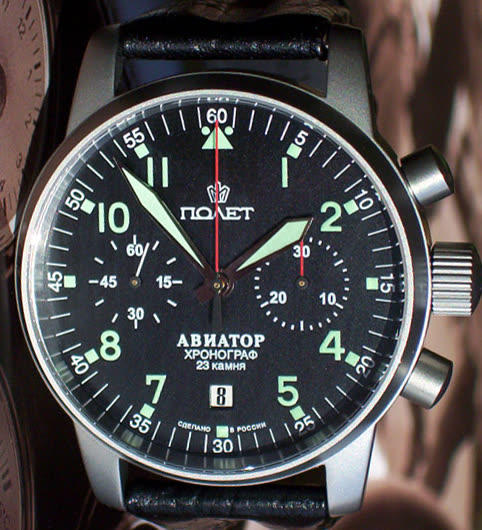
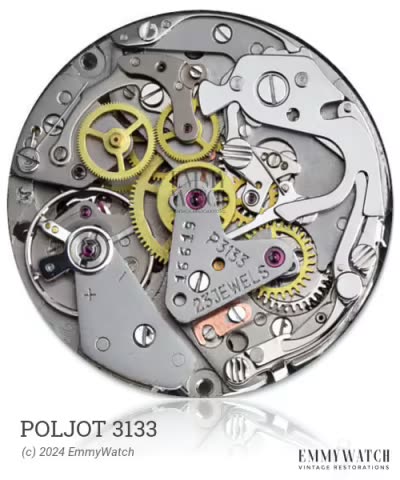
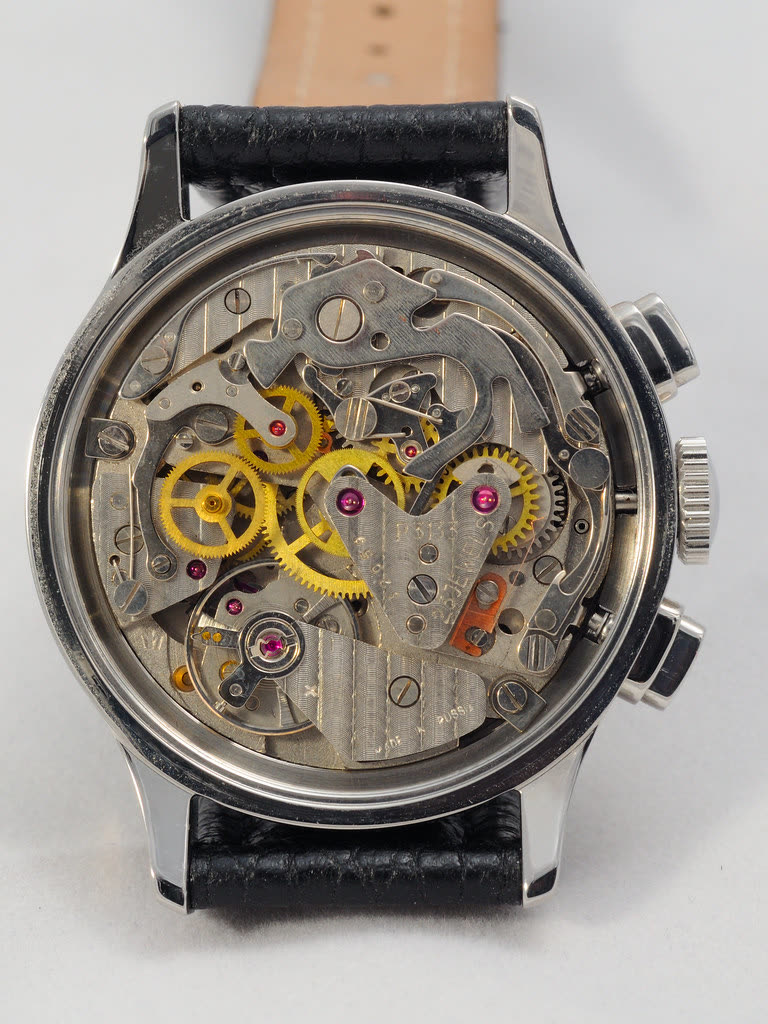
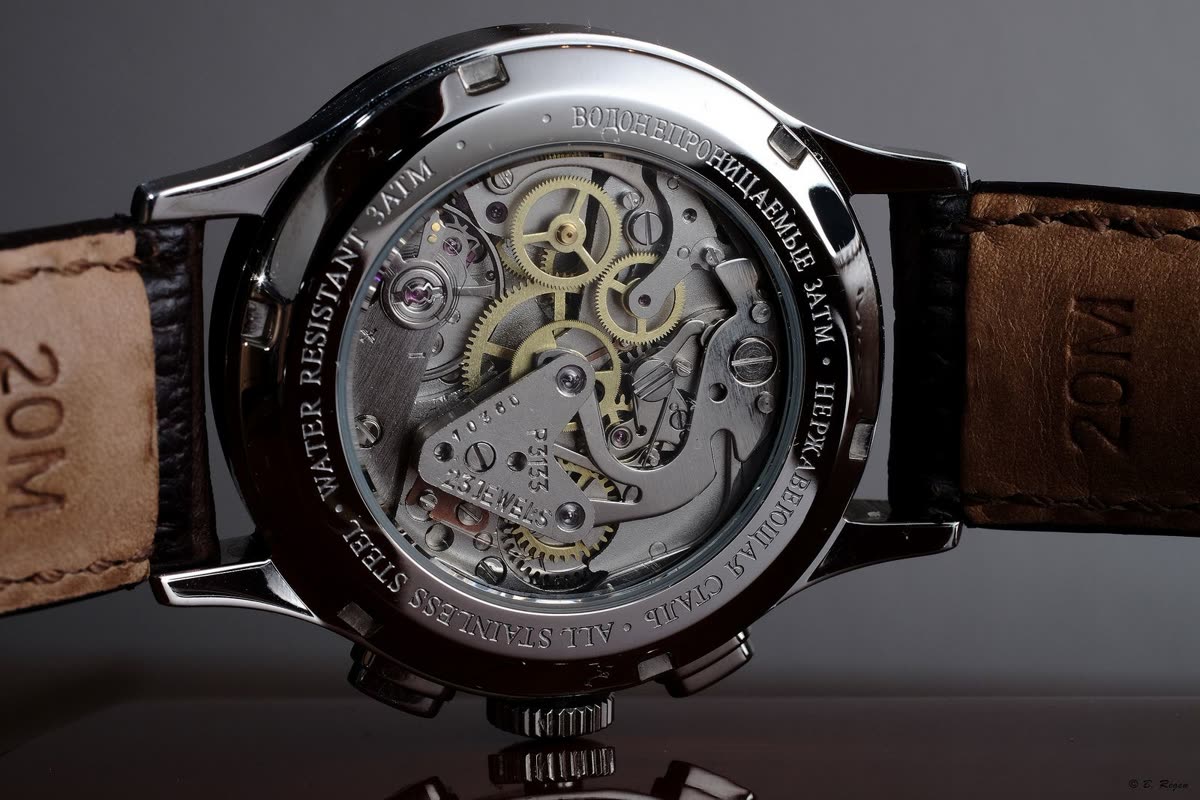
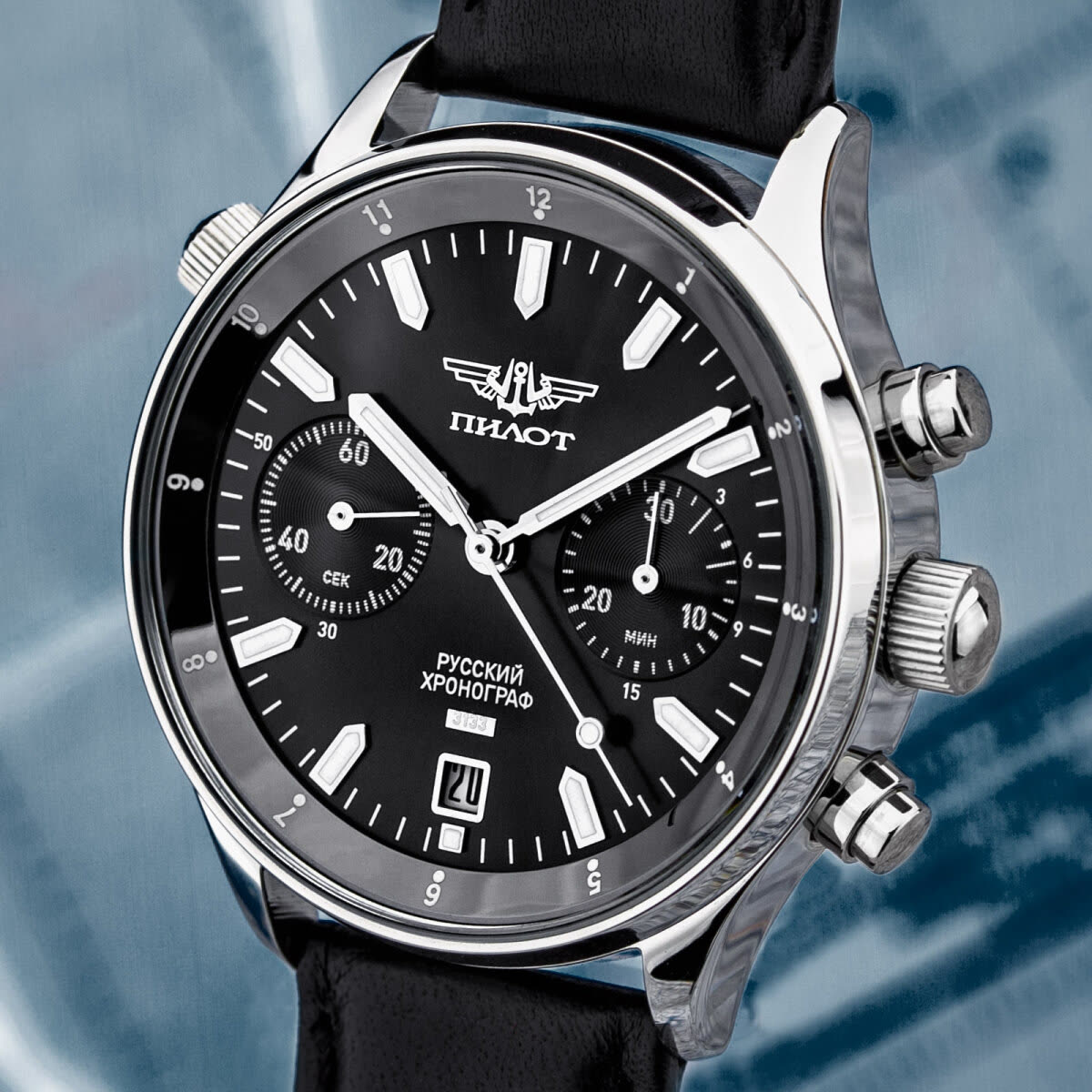
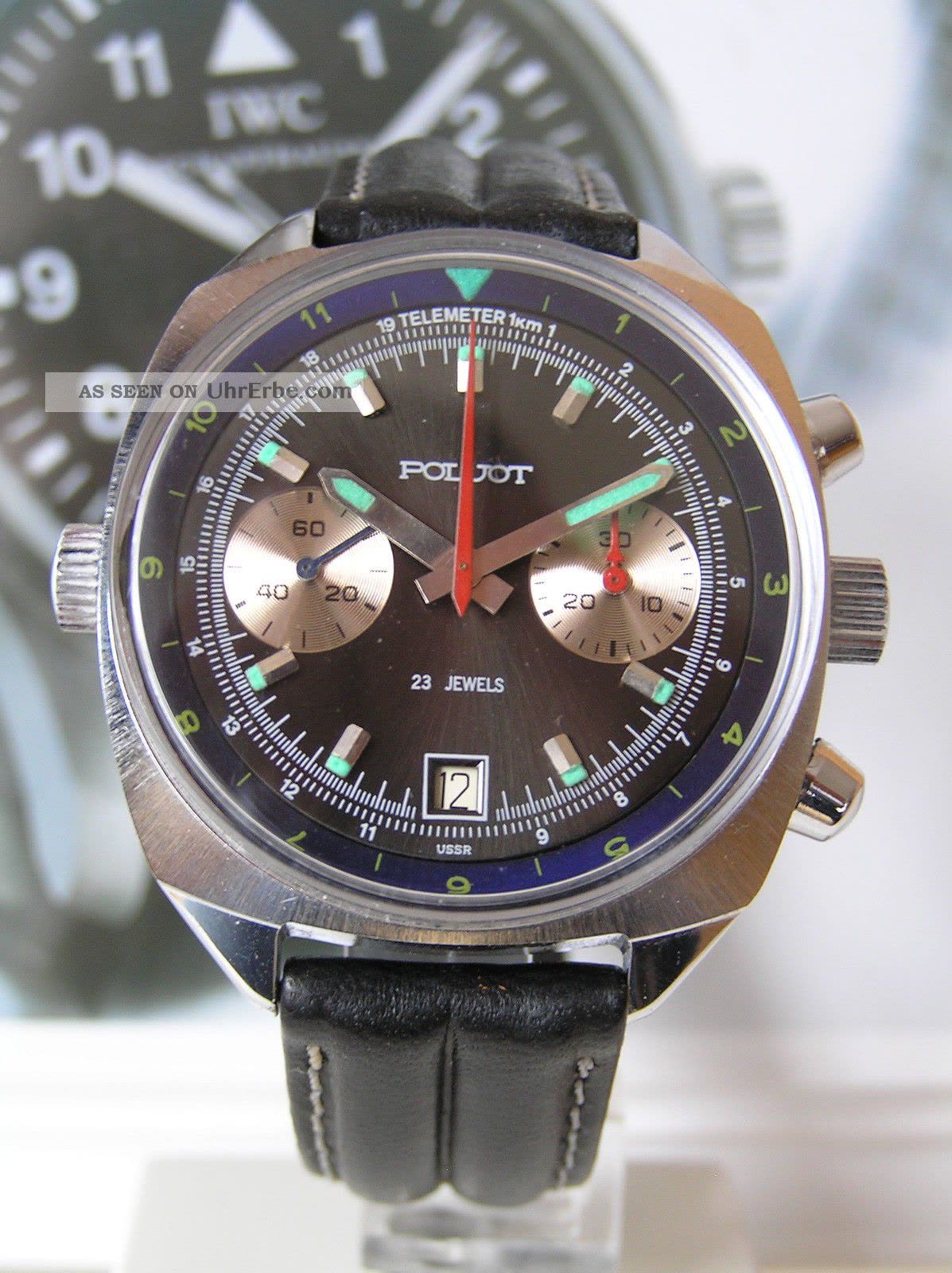
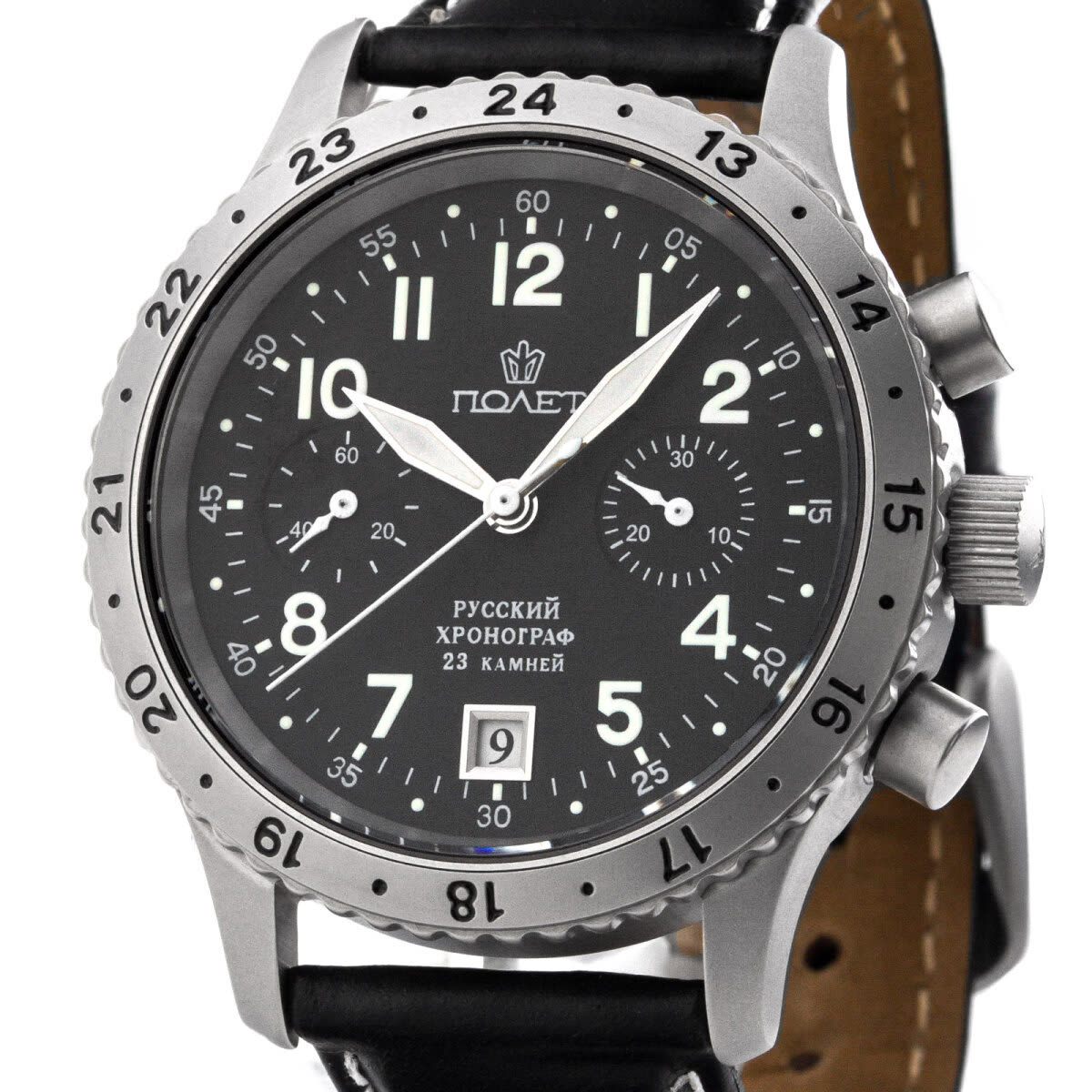
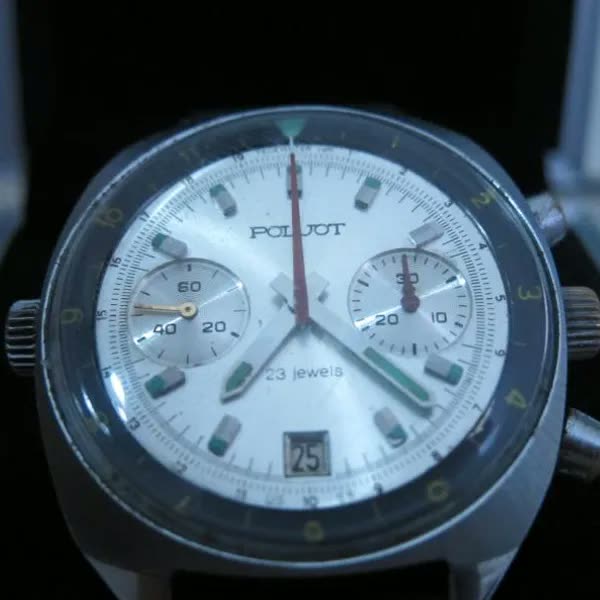
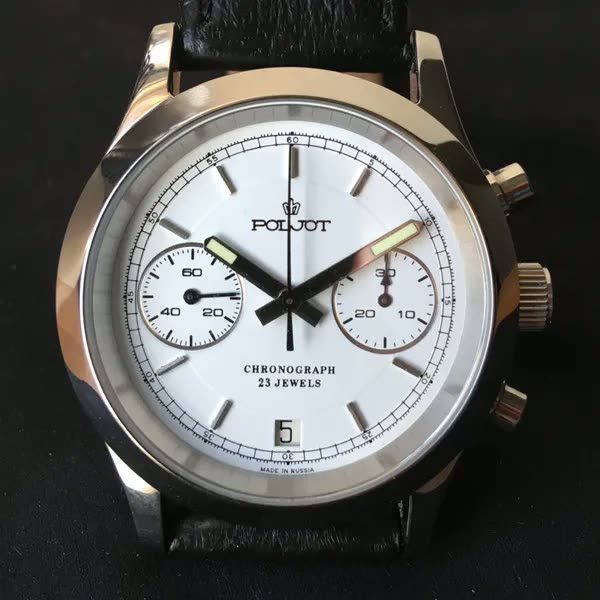
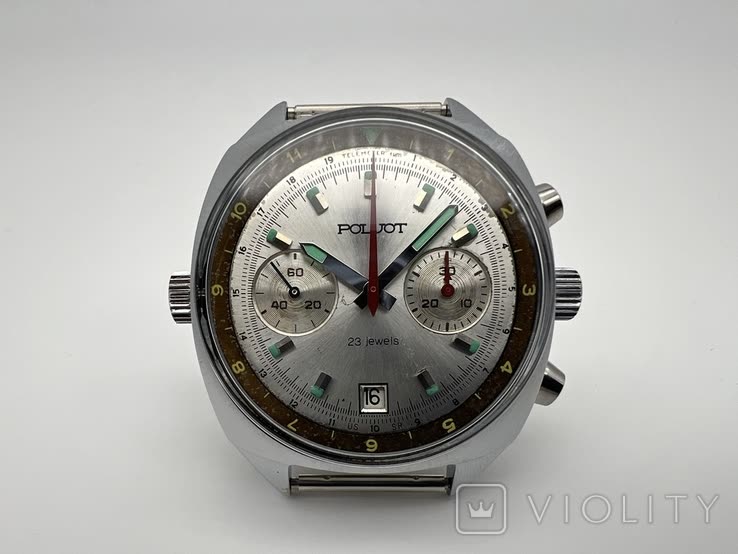
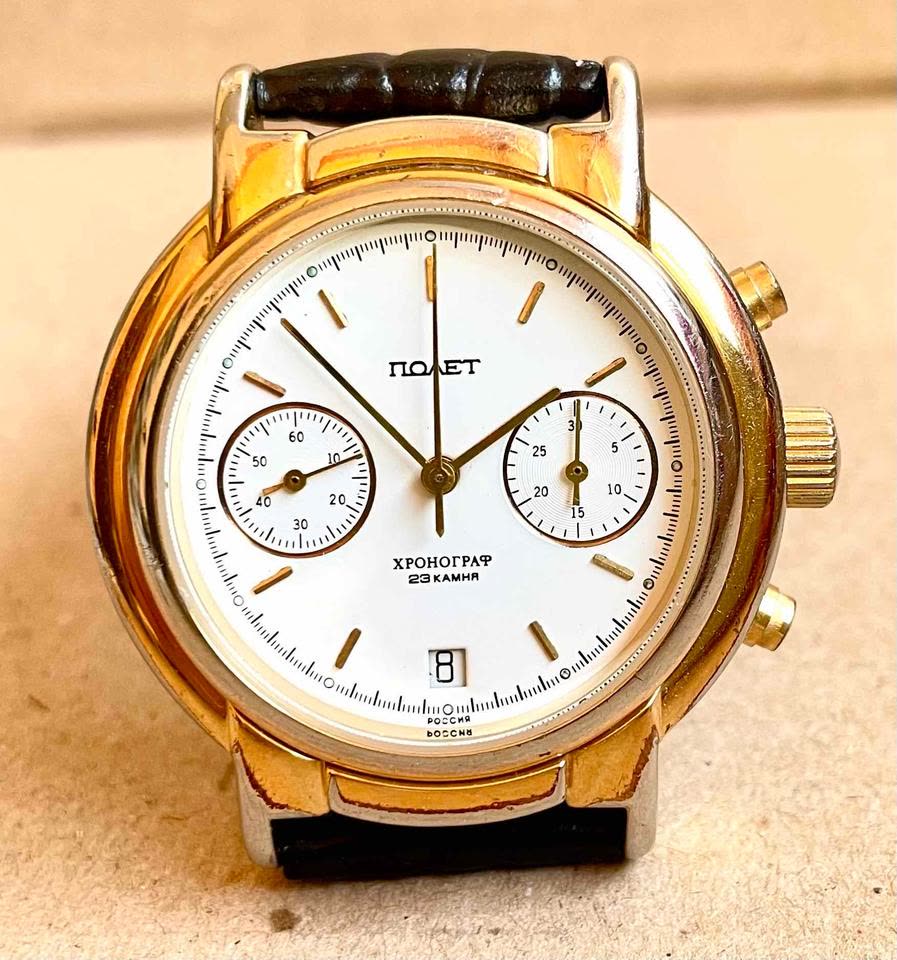
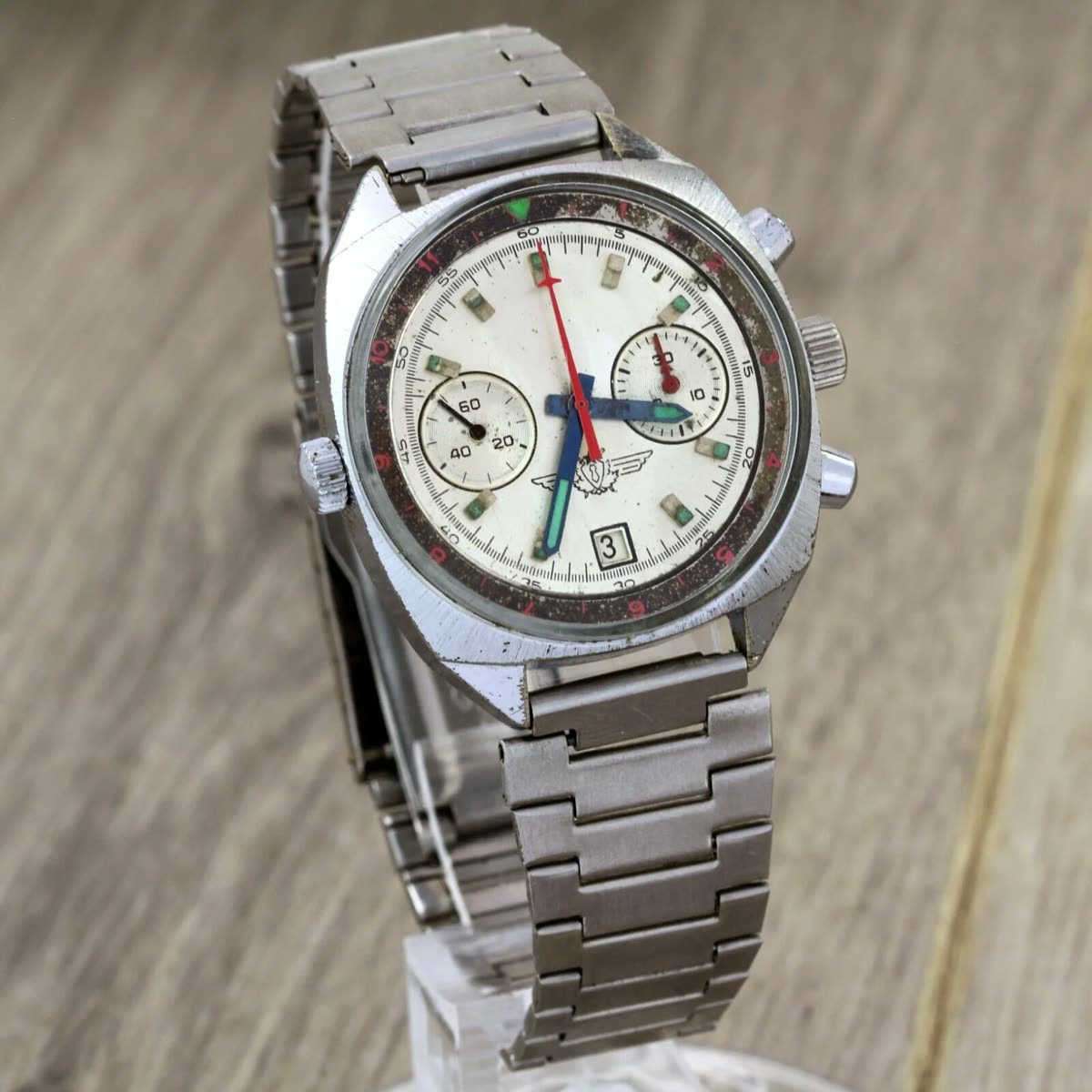
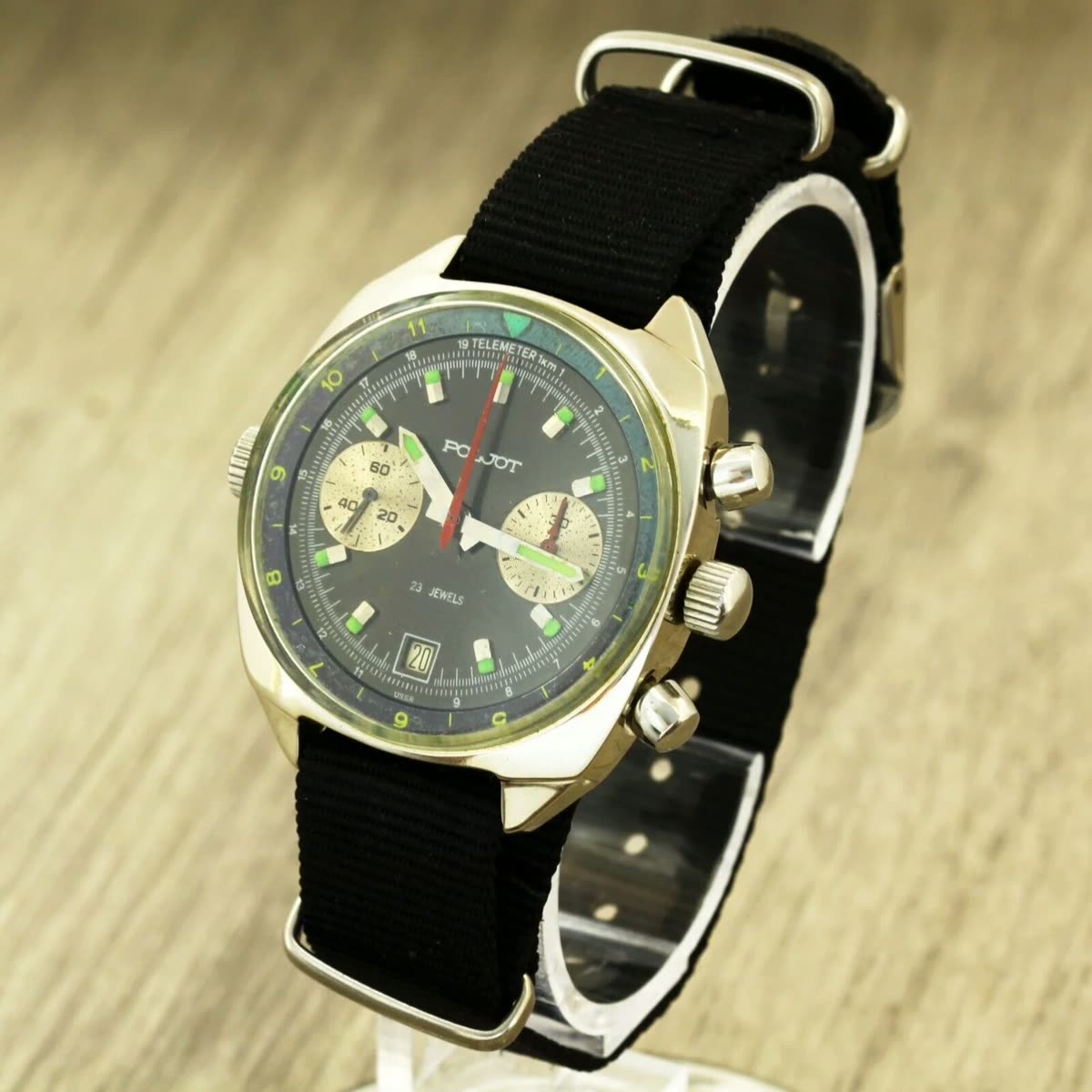
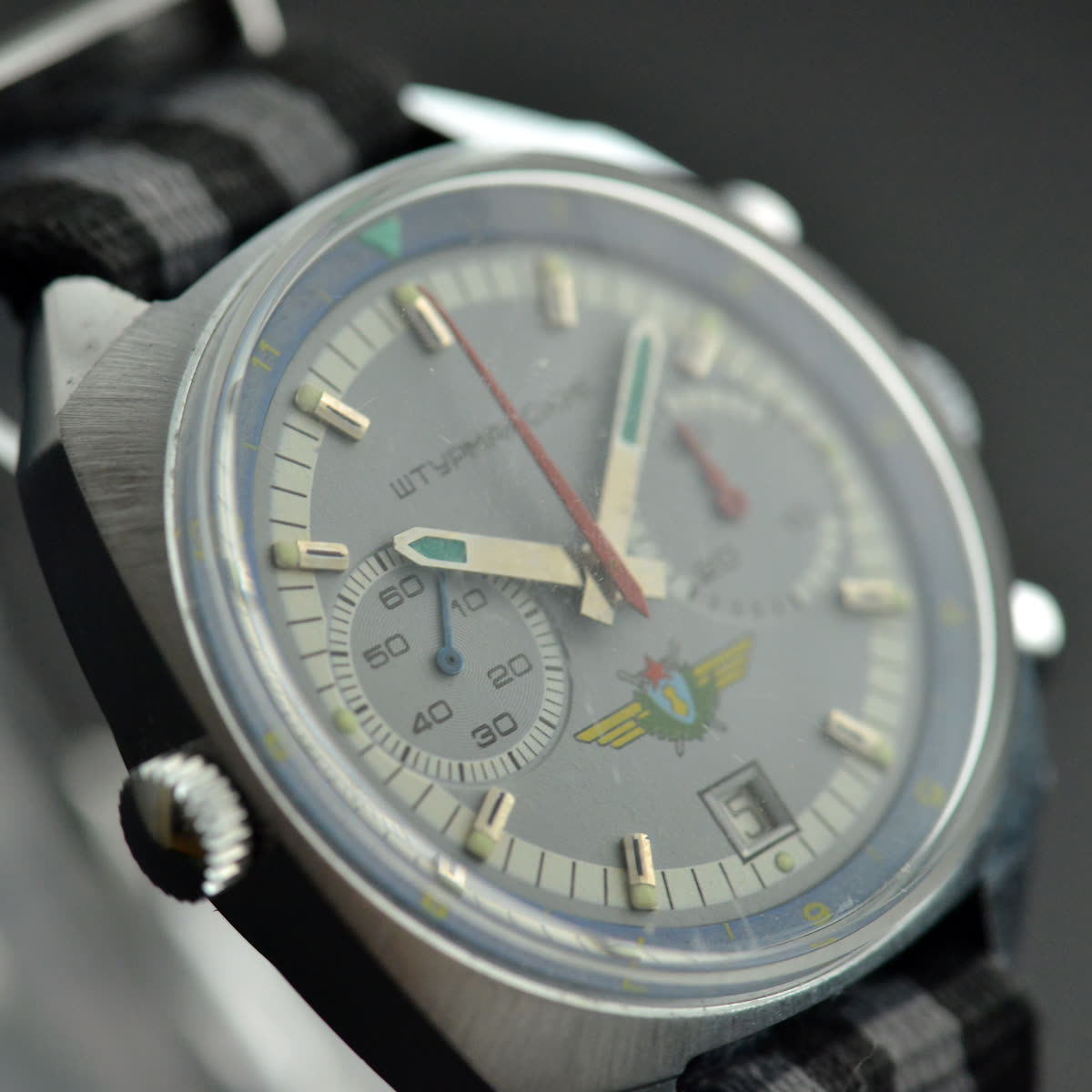
Photographs are illustrative examples of the type, not necessarily the exact object described. Verify details against the source file page.
Sources & references
- Poljot Strela, Wikipedia (English), retrieved 2026-10-27 (text CC BY-SA 4.0)
- de Carle, D., Watch and Clock Encyclopedia
- Period trade material catalogues and calibre reference compilations (edition-dependent)
- Published manufacturer technical documentation where available
Where sources disagree, the disagreement is stated rather than resolved silently.